







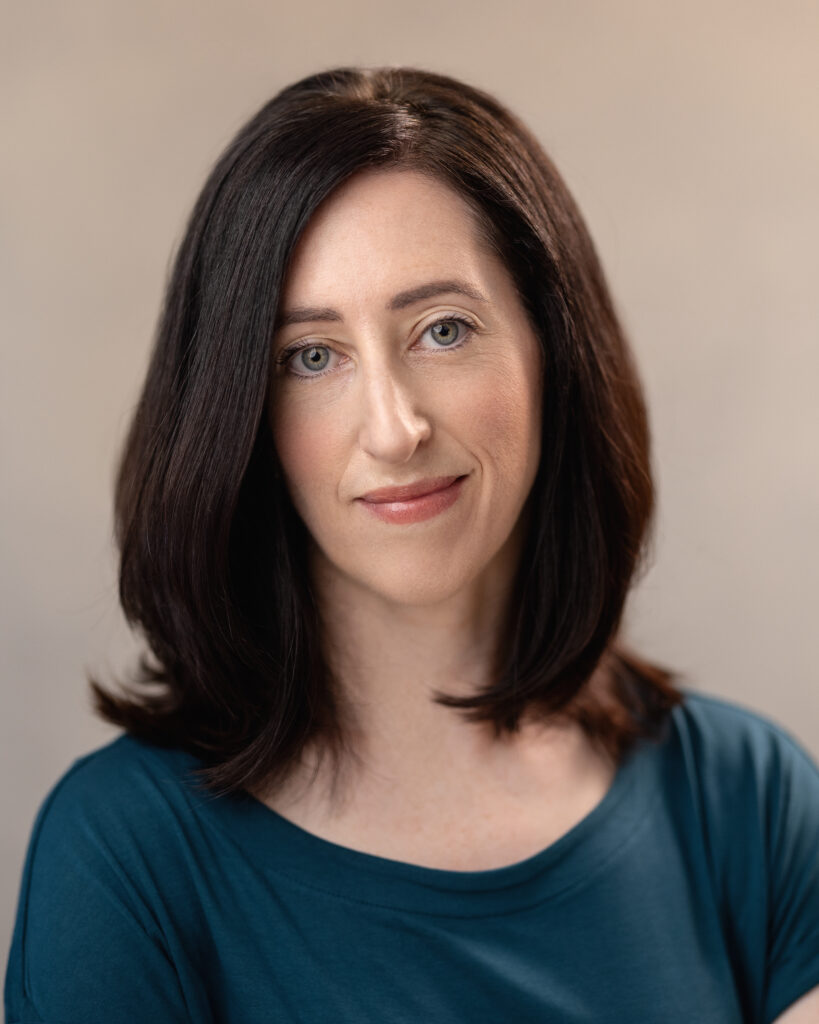
How a person survives the unsurvivable is the stark subject of a Dublin GP’s debut novel. David Lynch talks to author Dr Claire Gleeson
In November, Show Me Where It Hurts (Sceptre, Hachette, 2025), the debut novel from Dublin GP Dr Claire Gleeson, won the newcomer of the year prize at the An Post Irish Book Awards.
The book features Rachel, her husband Tom, and their two children. Their ‘ordinary’ existence concludes dramatically, when Tom seeks to end his own life by crashing his car with Rachel and children in the vehicle with him. By skilfully tracing the impact of this event on Rachel over an extended period, while also providing flashbacks to the early development of her relationship with Tom, the novel engages with a wide range of complex issues including mental illness, grief, and recovery.
The book is compelling, but certainly not shallowly so. It is a carefully written story of the pre-history, and resulting impact, of an almost unimaginably horrendous event.
Subject
Given the emotional magnitude of the subject matter, the Medical Independent (MI) asked Dr Gleeson if there was an extra pressure to get tone and characterisation correct?
“I absolutely felt that,” she replied.
“That was the thing I worried about most writing this. Because it is so sensitive. While I’m writing this as fiction, this is a reality for some families in Ireland and everywhere.”
When the manuscript was first sent to agents, the feedback was largely positive. However, several ultimately declined to take it on, citing the subject matter as too sensitive and delicate.
“I was very conscious and very deliberately tried not to sensationalise it, not to come across emotionally manipulative,” she told MI.
Dr Gleeson was also very keen not to reflect the detail of any real-life cases.
“I think when you are writing about this sort of subject, particularly when there are children involved, I mean it’s very easy to evoke emotions in the reader. But I wanted those moments earned when they came rather than something cheap. Some decisions – like not naming the children in the story – were part of that, to give it a bit of distance maybe.”
Although this is not a ‘medical book’, healthcare plays a significant role in the narrative. The main character, Rachel, is a nurse; there are engagements with mental health services, and passing references to capacity constraints in general practice.
Did Dr Gleeson’s profession, consciously or subconsciously, impact the plot?
“It’s definitely a mixture of both,” she said, describing the choice to make Rachel a nurse one of the “more conscious decisions”.
“I think it is hard to write authentically about a workplace and a career that you don’t have experience of, so it seemed like an easy decision to give her that role.”
The hospital environment is something “I’m very familiar with and I think I can write about comfortably”.
She said that looking back on her short stories written prior to the novel, none of them were “about a doctor as such, but there are a number of medical bits that slip in. That is often without me even realising that at the time or planning it.”
In a broader sense, working as a doctor and GP, in particular, “gives you such an insight into people’s lives, maybe that you don’t get in many [other] jobs.”
This is a “real privilege” and anything that widens your experience of “human life and what people are going through” can only make you a better writer.
“I was looking back when I first opened the document to write it [Show Me Where It Hurts]; it was sometime in 2019, and it was kind of in the back of my mind for a good while,” said Dr Gleeson.
Most of it was written “coming out of the Covid-era”.
In 2021, Dr Gleeson was awarded a Words Ireland literary mentorship, in which she was “linked in with a novelist”.
“I would send her parts of the book to review… and we would talk over it in sessions. So that gave me the impetus to get it written rather than just playing around with the idea, as I had been for a while. I always work better with a deadline, like most of us.”
While I’m writing this as fiction, this is a reality for some families in Ireland and everywhere
Writing life
But this was far from the first writing in Dr Gleeson’s life.
“Yeah, I think I read so much as a child, I think I just always assumed it [writing] was something that I would do,” she said. “But it was only after I got through the initial junior doctor years, when you really don’t have time for much else,” that she re-focused on the written word.
Around the age of 30, when she was working in general practice, Dr Gleeson started to “write more seriously”, with a view to getting something published. Short stories were written, some published in journals and shortlisted for competitions.
“I also wrote two novels before this one, that have never seen the light of day. I couldn’t get an agent or publisher for those.” She describes this period as a “long kind of apprenticeship” in her writing. Reflecting on those two unpublished works, she said she was glad Show Me Where it Hurts was her first to make it to the bookshelves.
“Because I don’t think that the earlier ones were ready looking back now.”
Although “never completely confident” of finding a publisher, during the writing of Show Me Where it Hurts, she felt “there was something more gripping about this [book] in concept”.
“But I also think you do improve with everything you write. You don’t necessarily see that at the time as it is happening, but looking back I can definitely see the progress over the years.”
Protagonist
Rachel is the central, fascinating character of the novel, as we follow her life through early adulthood and then after the car crash.
Dr Gleeson said that some readers have mentioned that Rachel “is too self-contained, or too quiet – not angry enough in the book – which I think is totally legitimate”.
“But the way I feel about her is that she is a very private person, somebody who is never dramatic or expresses herself to be the centre of attention. I think she certainly is angry, but that anger has nowhere to go to a certain extent.”
Rachel “sort of internalises a lot of her emotions”.
Dr Gleeson said she does not think there is “anything special about” Rachel that prepared her for loss. She noted that many of us may imagine how we might react in certain circumstances, but in the end “nobody knows” exactly until faced with a particular situation.
Dr Gleeson is currently writing her next book. “I work part-time as a GP and I have three young kids as well,” so often the writing “gets shunted onto the back burner a bit”.
However, despite the challenges, she said progress is being made.
General practice
On general practice, Dr Gleeson said there are some things that “have improved” in recent years, in particular noting the chronic disease management programme, which she believes has meant that GPs are “providing better care” to patients. Access to services within radiology for GPs is also better. “When I started out you couldn’t get an MRI scan as a GP, but now the access has improved massively.”
But she said the biggest challenge for GPs is a “longstanding one” – waiting lists for secondary and tertiary care. While some waiting times have improved, “many have got worse.”
“It is soul destroying with a patient in front of you, waiting for nine months to be seen about their hip pain and you’re telling them that it will be another nine months, at least, [and then] another couple of years to get surgery. That hasn’t got any easier.”
The best part of the job “is genuinely the people”.
“It’s the relationships you build with patients and the moments you feel you are doing something that is genuinely helping them… some days they are few and far between, but when they come, they do make it all worthwhile.”
Show Me Where It Hurts can be purchased at: www.hachette.co.uk/titles/claire-gleeson/show-me-where-it-hurts/9781399734721/








Leave a Reply
You must be logged in to post a comment.