







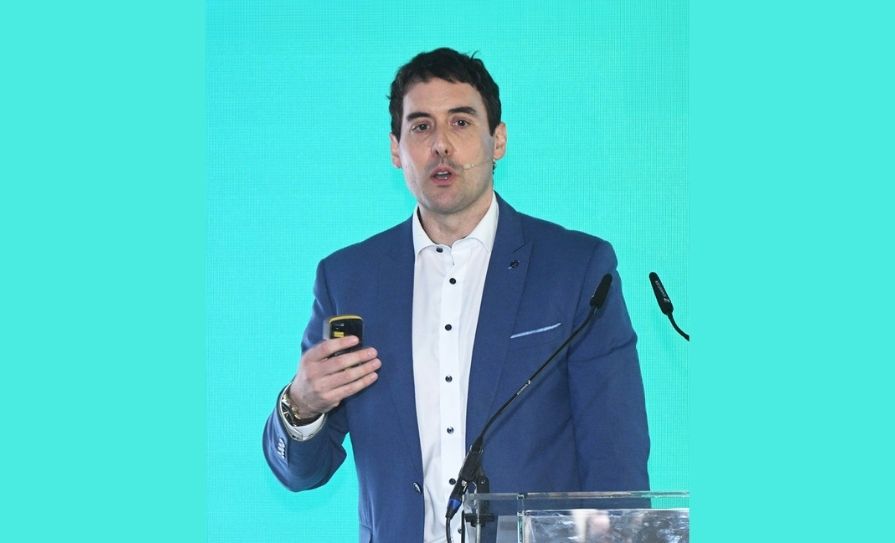
Opioid use disorder was the focus of an insightful presentation at the Irish College of GPs’ Annual Conference. Niamh Cahill speaks to Dr Bernard Kenny, Director of the College’s Addiction Management in Primary Care Programme, about key trends
Opioid use disorder was among the areas explored at the recent Annual Conference of the Irish College of GPs in Dublin.
Dr Bernard Kenny, Director of the College’s Addiction Management in Primary Care Programme, delivered an insightful presentation titled ‘Opioids and opioid use disorder in practice’.
Speaking to the Medical Independent (MI), Dr Kenny said codeine is the most commonly prescribed opioid in Ireland and the only opioid available over-the-counter (OTC) in pharmacies.
Dr Kenny qualified as a pharmacist before completing the Dublin North Inner City GP Training Scheme under Dr Austin O’Carroll. The GP has also spent time working in Canada, where the illegal supply of fentanyl is causing significant harm.
Currently based at a specialised addiction GP-led service at St Otteran’s Hospital, Waterford city, Dr Kenny also runs peripheral addiction clinics in Wexford and Dungarvan.
In his position as Director, Dr Kenny helps to oversee the College’s education programme on addiction management topics. He also provides support to GPs with clinical and contractual addiction-related queries.
Changes
“We’ve seen a lot of changes in the world of opioid use disorder,” Dr Kenny told MI.
“When doctors and patients think of opioid use disorder they typically think of heroin and methadone as the treatment option. The crux of my talk was to highlight the fact that we are seeing more codeine [addiction/dependency] presenting to treatment services, particularly over-the-counter codeine, but also prescription codeine and other prescription opioids and that’s taking up a bigger proportion of our practice. That’s particularly the case in treatment clinics outside of bigger city centre areas like Cork and Dublin.”
He continued: “I’m not saying that heroin is not still a big part of our practice, but more and more we are seeing incremental increases in over-the-counter and prescription codeine presenting to the practice.”
In terms of the numbers presenting, Dr Kenny said it was difficult to give a definitive figure. However, he said over 30 per cent of new presentations at his practice related to OTC and prescribed opioids. The majority of these are OTC codeine-related presentations.
“Probably the biggest non-illicitly sourced presentations for opioid use disorder would be related to over-the-counter codeine combined with ibuprofen,” according to Dr Kenny.
“The quoted figure would be 15 to 30 per cent of treatment would be for prescribed and over-the-counter opioids as opposed to illicitly sourced opioids,” he added.
Patients present to the service in a variety of ways. This includes self-referral and referral by GPs, counsellors, or psychotherapists, for example.
HPRA review
In 2022, the Health Products Regulatory Authority (HPRA) began a review of the sale of OTC codeine products in pharmacies.
The review is due to conclude this year and will make recommendations on whether codeine-containing medicines should continue to be available OTC or be prescription-only.
Dr Kenny said that several European countries, such as Italy and Sweden, only allow codeine products to be supplied on prescription.
“Any of us working in this sphere of addiction would welcome the HPRA review of the provision of codeine over-the-counter because we feel it poses significant risks. The problem not only comes from the addiction to codeine itself. A lot of the physical issues we would see are from the products that codeine are combined with over-the-counter,” he said.
“The most common presentation for non-illicitly sourced opioids to our practice would be for codeine combined with ibuprofen.”
He outlined that codeine taken with ibuprofen can cause damage to a person’s gastric tract and cause anaemia, kidney, and liver damage.
Furthermore, he warned that when codeine is combined with paracetamol in large quantities it can be hepatotoxic.
“It’s estimated that about 17 per cent or one in six people from large cohort studies across the UK and Ireland who are taking codeine, on an ongoing basis will run into issues with it. If people are exposed regularly to codeine there is a substantial cohort that will become addicted and dependent on it,” Dr Kenny stated.
On the potential to re-categorise OTC codeine products as prescription-only, Dr Kenny described the issue as a “balancing act” between a person’s autonomy to take control over their pain management versus the fact that some people become addicted to the substance.
“I certainly feel the harms and the potential risks of addiction and dependency outweigh the benefits of that patient autonomy component,” he stated.
Factors
Codeine-containing products have been available OTC for decades, so why is there only recently a surge in presentations to addiction services?
Dr Kenny outlined several reasons, including the changing nature of opioid use disorder and the possible tightening of prescription requirements.
“Part of the picture is we are seeing less injecting or intravenous opioid drug use. It has become more stigmatised among people and even among people who would have been considered previously heavy drug users. There are negative connotations around intravenous drug use, so it’s potentially due to the reduction in that.”
Another potential factor is the more careful prescribing of opioids in clinical practice, possibly resulting in some people seeking access to OTC products.
Dr Kenny added that while there are controls in pharmacies around the sale of OTC codeine-containing medications, some patients travel to various pharmacies to obtain these products.
Education
In the last two years, Dr Kenny has worked closely with Prof Des Crowley, Assistant Director of Substance Misuse at the Irish College of GPs, on the development of a new training curriculum for addiction management.
They have updated the foundation programme in addiction management and are updating the certificate programme.
Good training and grounding in the area provides GPs with the confidence to treat addiction issues appropriately, according to Dr Kenny. He said a perception that people with addiction are ‘difficult to manage’ is a significant barrier to care.
“But once you have the education and training it can be managed efficiently and effectively in practice and improve your practice dramatically…,” Dr Kenny maintained.
“We feel that a lot of these addictions should be managed in community practice where there is less stigma and less barriers to treatment, where people are less reluctant to seek care. So we’re trying to support and encourage clinicians to manage addiction care in their own general practices.”
So we’re trying to support and encourage clinicians to manage addiction care in their own general practices
However, for GPs to treat addiction in their practice, psychological and psychiatric support is required. Access to these services is lacking in many areas nationally, Dr Kenny outlined.
“It’s all very well to have good opioid agonist therapy as a treatment option, but you need to have a psychological support structure in place to address the underlying issues; that’s a key part of sustained recovery.
“The vast majority of people who fall into addiction have had severe psychological trauma or severe adverse experiences like sexual or physical abuse or severe emotional neglect. So people who present to addiction services often have had these major life events in the past and unfortunately that trauma tends to remerge in these damaging behaviours.”
Between 350 and 400 GPs hold the HSE’s opioid agonist therapy contract and provide this treatment at their practices. Separately, GPs are also involved in providing care at specialist HSE addiction clinics across the country.
Conference
The Irish College of GPs’ Annual Conference, which welcomed over 250 delegates, also featured presentations on topics such as women’s health, chronic disease management, and mental health. The keynote address was delivered by Dr Mike Ryan, former Executive Director of the World Health Organisation’s Health Emergencies Programme. Dr Ryan discussed the importance of access and equity in healthcare.










Leave a Reply
You must be logged in to post a comment.