








The introduction of the public-only consultant contract is the latest initiative to impact the role of the consultant applications advisory committee. David Lynch reports
The new annual report from the consultant applications advisory committee (CAAC) outlines a shifting landscape for its work, particularly since the introduction of the public-only consultant contract (POCC).
According to the 2025 report, between 2021 and 2025, Ireland’s public health service witnessed a “notable expansion” of its consultant workforce.
The total number of whole-time equivalent (WTE) consultants employed in the HSE has “risen significantly”, increasing from 3,847 in 2021 to 4,827 by 2025 – an overall growth of more than 25 per cent over the four-year period.
New role
The report states that following the introduction of the POCC in 2023, applications for replacement consultant posts are no longer required to be presented to the CAAC. However, posts requiring restructuring from original approval still require committee approval.
“This procedural change represents a significant evolution in the committee’s workload and oversight responsibilities.”
As a result, the CAAC’s role regarding replacement posts has shifted from high-volume, administrative scrutiny toward a more “targeted and strategic oversight” function.
“The committee’s focus is now concentrated on posts that involve restructuring, service redesign, or material deviation from original approval – areas where its evaluative and governance expertise adds greatest value,” according to the report.
The committee’s focus is now concentrated on posts that involve restructuring, service redesign, or material deviation from original approval
“This enables deeper consideration of workforce alignment, service reform objectives, and compliance with national policy, rather than routine confirmation of established approvals.”
The report states that “far from diminishing” the CAAC’s function, the revised procedure “strengthens” it by ensuring the committee’s time and expertise are directed toward matters of “greatest governance significance”.
Figures
The HSE National Doctors Training and Planning ‘consultants’ division’ is the secretariat to the CAAC. It processed a total of 400 applications in 2025. This figure includes new post applications, requests to restructure existing approved consultant posts, direct replacement applications, and change of contract type requests.
The volume of applications processed last year increased by 53 applications, or 15 per cent, compared to 2024.
Of the 400 applications, 275 were passed to the CAAC for consideration. The remaining 125 were direct replacement requests and were dealt with by the consultants’ division.
Of the 275 applications considered by the CAAC, 272 applications were recommended for approval, while three were deferred for further consideration.
The posts recommended for approval by the CAAC included 92 in general medicine, 42 in surgery, 31 in psychiatry, 30 in radiology, 23 in emergency medicine, 21 in pathology, and 17 in anaesthesiology.
The 125 direct replacement post approvals processed directly by the consultants’ division included 33 in psychiatry, 28 in general medicine, 15 in surgery, 10 in pathology, and 10 in obstetrics and gynaecology.
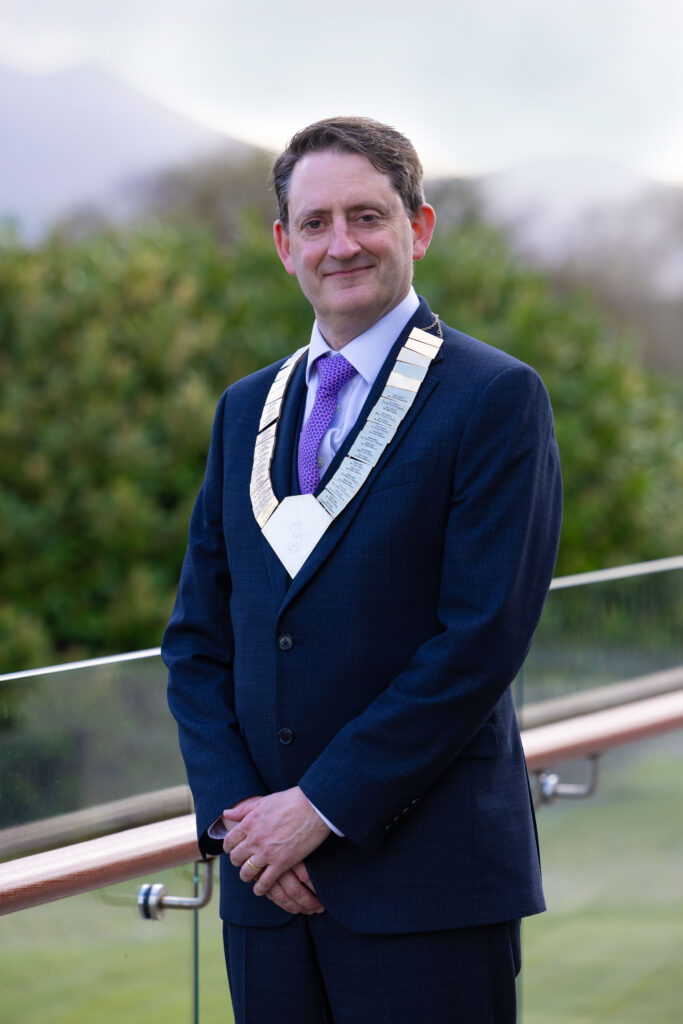
Prof Matthew Sadlier
IMO AGM.
Picture by Shane O’Neill, Coalesce.
Speaking to the Medical Independent (MI) at the IMO AGM in Killarney last month, IMO President Prof Matthew Sadlier noted that the CAAC became the successor of Comhairle na nOspidéal nearly two decades ago. That former body had “a very strong executive role” in the planning of consultant appointments around the country.
Prof Sadlier said the structures of the health service have evolved over time, which has impacted the CAAC. As the previous Chair of the IMO consultant committee, he was a member of the CAAC.
“You had the introduction of clinical programmes, which didn’t really exist when the CAAC was first implemented and also these national specialty lead roles,” Prof Sadlier told MI.
“So now the CAAC works in conjunction with these roles to ensure that posts match the clinical programme and the national clinical lead role.”
He added that “obviously… there is a contractual element as well to the CAAC’s work to make sure posts fulfil the consultant contract”.
Prof Sadlier pointed out that the CAAC provides “doctor expertise” through its membership.
“So if a post is split between Tralee, Bantry, and Cork, for example, then CAAC [members might say]: ‘That’s not possible, that’s too much; nobody could [cover] that sort of geographical area.’ You get that sort of input from members.”
Arising out of such considerations, the national consultant meeting at the IMO AGM passed a motion calling on the HSE to ensure work plans with split site commitments “include realistic travel times” from their base site. This is to ensure these consultants are not effectively expected to “work longer hours than colleagues” who are working at single sites.
On the changing role of the CAAC, Prof Sadlier told MI that the committee “has moved more from being the executive manager to [ensuring] new posts, when they are approved, fulfil certain criteria”.
The emergence of new models of care, following the Comhairle na nOspidéal era, has driven significant evolution across the health service and continues to shape how consultant posts are planned, structured, and aligned with national priorities.
Prof Sadlier suggested the CAAC process is “probably a better system” in terms of oversight. He noted that the committee has now transitioned “from a very controlling role in the consultant appointments system, to a sort of final check to make sure a new consultant post is fit-for-purpose”.
While he described this evolution as “ultimately a good thing”, he added that he does not necessarily agree with every model of care, acknowledging that “like any system, there’s a compromise involved in everything”.
Rotas
The new Chair of the IMO consultant committee, Dr Mick Molloy, told the Organisation’s AGM that the issue of consultant rotas often arose when discussing applications at the CAAC.
“As times have changed, people are more interested in a work/life balance,” he told the national consultant meeting.
A motion calling on the HSE and Department of Health to set minimum on-call rotas for consultants “to facilitate sustainable work patterns that allow for work/life balance” was put forward. IMO consultant members eventually voted to refer the motion back to the committee council for further discussion.
According to the new CAAC annual report, the average turnaround time for the processing of applications last year was six weeks, which is the same as in 2024. The length of time was raised at the IMO AGM last year, when the national consultant meeting called on the Department of Health and the HSE to work with the Organisation to review, and streamline, the consultant recruitment and appointment process to prevent delays.
The new CAAC annual report noted that 2025 saw increased application volumes across certain specialties compared with 2024, including emergency medicine (150 per cent increase), pathology (48 per cent), obstetrics and gynaecology (45 per cent), psychiatry (31 per cent), radiology (30 per cent), and surgery (27 per cent).
In contrast, several specialties recorded notable declines in application numbers, including anaesthesiology (40 per cent reduction), paediatrics (41 per cent), and public health medicine (50 per cent).
Over the longer term, the report highlights that there has been a 27 per cent increase in consultant posts established since 2021. The highest increase is in emergency medicine (69 per cent). The lowest increase is in intensive care medicine (11 per cent).
At the end of last year, there were 4,872 approved consultant posts in the public health service, an increase of 207 compared to the end of 2024.








Leave a Reply
You must be logged in to post a comment.