







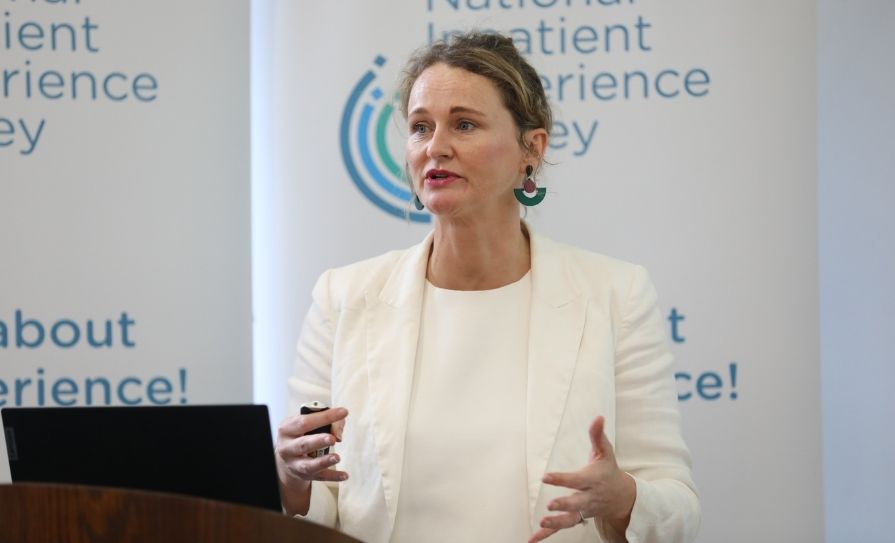
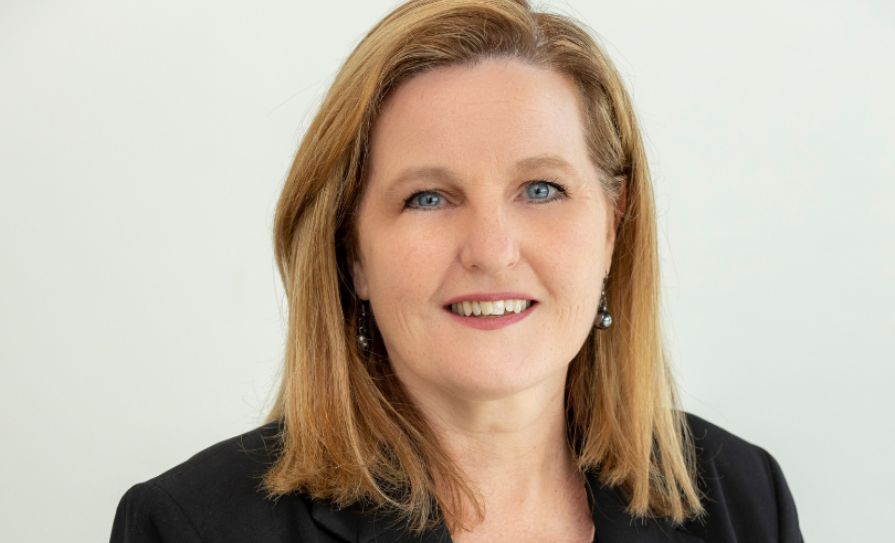
HIQA Director of Health Information and Standards, Ms Rachel Flynn, speaks to Niamh Cahill about the importance of high-quality health information and effective communication
Over the past decade the remit of HIQA has expanded significantly, with a growing number of healthcare settings coming under its oversight.
Ms Rachel Flynn was appointed as HIQA Director of Health Information and Standards in 2015. In a recent interview with the Medical Independent (MI), she spoke about the increasing importance of high-quality health information and effective communication across the healthcare system, outlining several initiatives currently underway at the Authority.
Ms Flynn’s remit spans three main areas: The National Care Experience Programme; the development of National Standards for Health and Social Care; and health information standards and compliance.
Change
Health information has become a major policy priority for governments across Europe. In Ireland, Ms Flynn said the landscape is undergoing rapid – and necessary – transformation.
Major developments include the introduction of the European Health Data Space (EHDS) Regulation, Ireland’s forthcoming Health Information Bill, the European Union (EU) Artificial Intelligence Act, and new cybersecurity requirements under the NIS2 Directive, which will be implemented domestically through the National Cyber Security Bill.
Ms Flynn pointed out the legislative and policy changes are happening in parallel with a substantial increase in investment in digital systems in the HSE. This includes funding for projects such as the national electronic health record (EHR), shared care record, and the HSE Health App.
“There is a huge amount of change in the area of health information generally and this is coming from Europe with the new European Health Data Space Regulation,” Ms Flynn told MI.
There is a huge amount of change in the area of health information generally and this is coming from Europe with the new European Health Data Space Regulation
“The idea is that in the future clinicians in Spain, for example, can see summary information about you so that they can treat you effectively. That’s the primary use of it.”
The EHDS Regulation aims to establish a common framework for the use and exchange of electronic health data across the EU.
The framework is one part of a significant body of changes currently taking place in Ireland that will ultimately see the creation of digital health records for every citizen.
Indeed, every EU member state will have digital health records in place in about four years’ time under proposed laws.
“The Health Information Bill is providing the legislation to allow the HSE to digitise the records. The national electronic health record – that got Cabinet approval recently to go to the next stage around procurement, which is positive too,” Ms Flynn stated.
She added that HIQA welcomes these changes and investments as they will enhance patient safety and modernise the health and social care system.
A key target is that all citizens have access to their medical records online by 2030. She said a national EHR is central to achieving this.
It is vital the public are informed and involved in this process, and that individual privacy rights remain central to the design and development of all national systems, according to Ms Flynn.
“HIQA’s role is to develop the standards around how that information should be collected,” she said.
Under the EHDS Regulation, each member state is required to appoint three supervisory authorities: A digital health authority to support the governance of health data for primary use; a health data access body to support the governance of health data for secondary use for research, innovation, and policy; and a market surveillance authority to monitor compliance of EHR systems with the Regulation.
HealthData@IE is the project underway that will establish the new data access body in Ireland. This is a collaborative effort between HIQA, the Department of Health, and the Health Research Board.
“It will allow researchers and policymakers to access data not only from Ireland but from Europe as well,” Ms Flynn explained.
“One of the programmes of work within that is we are setting up a national catalogue on the HIQA website; we’re putting that into a digital format. We are also doing a lot of work on data quality, which is probably not the most exciting of topics, but data quality is very important.”
The QUANTUM project, which includes 32 organisations across Europe, involves the development of a label, which will be applied to data in order to allow individuals to see what type of quality mark is attached to a piece of data.
“We’re developing national guidance as well on data quality aimed at anybody that collects data within hospitals and GP settings and then we will be doing more work on the QUANTUM label. It’s a very important piece of work,” Ms Flynn said.
She added that HIQA had completed two updates to national standards on demographics and discharge summaries and that forthcoming updates would be centred on e-prescribing and e-dispensing.
AI
The Department of Health recently published AI for Care – The Artificial Intelligence (AI) Strategy for Healthcare in Ireland 2026–2030. At its launch, Minister for Health Jennifer Carroll MacNeill said the strategy, which is the first of its kind in this country, marked a “major digital transformation of the Irish health service”.
Meanwhile, HIQA has held a public consultation on the use of AI in healthcare as part of plans to develop guidance for the sector.
“AI can potentially transform the healthcare service and the Department of Health have launched an AI strategy, setting out where efficiencies can be gained in relation to AI, which is really positive,” Ms Flynn outlined.
“At the same time [the Department] were developing the strategy, they asked us to develop a guide for people using services. A lot of people working in the health services wouldn’t be trained in AI, as there would have been very little training in undergrad and postgrad education. That is changing now.”
Ms Flynn said technology has the potential to improve efficiency across the health service. She noted that the Department commissioned HIQA to produce the guidance because of the forthcoming AI Act, and the need to establish strong governance frameworks for the area.
“We need to look at what AI technology we’re going to use in the health service and who’s responsible for them,” Ms Flynn said.
“If you’re a clinician and you’re using AI, do you understand what you’re doing? Do you have the ability to make sure there’s a human in the loop so that it’s assisting you in doing your work and it isn’t taking over from your clinical judgement, but hopefully allows you to make judgement quicker?
“If you look at the area of radiology, there are AI tools built in to radiology systems that allow a clinician to scan the scans in a much quicker way and alert them to abnormalities. But AI shouldn’t take away from clinician judgement and the treatment of an individual.”
She pointed out the development of AI comes at a time when there is a global shortage of healthcare workers, including in Ireland.
“So how can we leverage AI to assist us in doing the job in a more efficient but safe way? The big thing we feel around AI, and there is a big emphasis in the HIQA guidance on this, is around accountability.
“If people are using these systems they need to make sure they understand how they work. There is a big part around the patient and their rights too. It’s important to be transparent with people on the systems we’re using in assisting us in providing health and social care.”
National Standards for Home Support Services
HIQA developed Ireland’s first National Standards for Home Support Services in preparation for the implementation of a regulatory framework and licensing system for home support providers, currently being developed by the Department of Health.
In 2024, the Authority published the draft national standards; however, since this time there have been no developments.
Ms Flynn stated that a stakeholder involvement report, published in 2025, outlined changes to the standards that were made following public consultation.
“Following a policy decision to widen the scope to include children, additional work is ongoing to further develop the standards, while HIQA is also working on developing implementation support tools to support the sector.”
Ms Flynn said that once finalised, the national adoption and implementation of the standards would provide greater guidance and clarity for service providers and help ensure that both children and adults receiving home support services benefit from high-quality, person-centred care.
“I very much welcome it and we are happy to make changes to the standards to reflect that children are included because it’s very important,” she said.
“The Department are keen on supporting this sector, because it’s an unregulated sector. HIQA needs to support that sector in developing guidance and tools to support its implementation. One particular area that has come up is around governance. We are working with them to see what tools they would like to be included, to support the sector to be ready for what is to come.”
Care experience and learning
The National Care Experience Programme – a partnership between HIQA, the Department of Health, HSE, and more recently the Mental Health Commission – routinely conducts national surveys to assess how service users experience the health service.
The results of these surveys and more information about them are available through the website: yourexperience.ie.
There are seven national surveys underway in the following areas: Hospital inpatients; maternity bereavement; maternity; end-of-life; nursing homes; mental health; and cancer. Two of these areas are new and are in the process of being rolled out, Ms Flynn stated.
“We’re now in the process of rolling out two additional surveys, one in the area of mental health, which will look at acute care in over 30 centres, private, voluntary or HSE-run. And the last survey is the national cancer experience survey, and that is being completed in collaboration with the National Cancer Control Programme with the HSE, looking at the experience of people that have had a diagnosis of cancer,” she explained.
“It’s a really comprehensive programme and the whole idea is to provide meaningful knowledge back to service providers so that they can respond to what patients are saying about them. We have an IT system to support that. Hospitals can log on and look at their results and say what patients said about care.”
Findings from all surveys feed into the development of national standards, national guidance, and e-learning modules, Ms Flynn explained.
“We like to take the findings from patient experience surveys and to take what patients are saying and develop tools and guides to support services in making improvements.”
In 2023, HIQA launched its Learning Hub. This service hosts implementation support tools and aims to provide quick and easy access to information for frontline staff, students, and academics, as well as people using health and social care services.
Online learning courses, videos, and guides are available there. For ease of access, Ms Flynn said the tools in the Hub are categorised into two categories: Supporting children and supporting adults.
Some topics covered in the Hub include: Adult safeguarding; advocacy; human rights-based approach to health and social care; data quality; communicating in plain language; and infection prevention and control in community-based settings.
HIQA’s online learning courses are also available on HSeLanD. To date, they have been completed over 460,000 times by people from across health and social care services.
“The Learning Hub provides a one-stop shop for people delivering services on our national standards, guidance, and e-learning modules,” Ms Flynn said.
Plain language
The care experience surveys have revealed that communication between healthcare professionals and patients is an issue where improvements are needed.
“Communication is an area people talk about in the surveys,” Ms Flynn said.
“Either they don’t understand what is being communicated to them or they don’t have enough time with people to tease out key messages from healthcare providers.”
Because of this, HIQA developed national guidance last year on good communication in health and social care and the importance of using “plain language” when communicating with service users.
“In acute settings, sometimes, the information isn’t delivered in an understandable way, we learned, so we tried to place more emphasis on good communication,” she said.
In acute settings, sometimes, the information isn’t delivered in an understandable way, we learned, so we tried to place more emphasis on good communication
Ensuring that healthcare professionals, who are often under time pressure, understand new standards is key, Ms Flynn added.
“One of my jobs is to break down that knowledge into something that’s meaningful for people working on the ground, who are often stretched for time,” she said.
“We try to make the e-learning modules short and concise so that people can do them in their workplace and we use videos a lot in the modules to showcase what we mean by safeguarding or to showcase what we mean by advocacy.”
Ms Flynn stated one of the findings from the National Care Experience Programme in the nursing home survey was that people did not understand what advocacy meant and who they could contact. “It was a surprising finding,” she said.
As a result, HIQA launched a national campaign on the issue. The Authority also developed an e-learning module on the role played by staff in health and social care services in relation to advocacy.
“We [aimed] this at people working in nursing homes, to convey what their role is around advocacy so they could explain their role to a resident and their family,” Ms Flynn said.
“We take on board that staff are really busy and quite stretched and don’t have a lot of time. But we feel it is important to develop tools that are appropriate to support learning.”







Leave a Reply
You must be logged in to post a comment.