







The recent online release of the 1926 Census prompted Bette Browne to examine the health crises
faced by our young nation 100 years ago
Ireland was far from a picture of health when the infant Free State carried out its first census 100 years ago. Life expectancy averaged 57.4 years, infectious diseases were rampant, and mortality rates were especially high among infants and young people. The country was plagued by poverty and poor nutrition and exhausted after years of conflicts.
Resources were inadequate to meet the scale of the health challenges the Government faced. Ireland was one of the few European countries whose population was still declining in peacetime and with it economic growth. On census night, 18 April 1926, the population was just 2.97 million, a 5.3 per cent decrease from 1911. Although the Famine took place eight decades earlier, its consequences still reverberated as emigration, delayed marriage, and low birth rates continued to suppress growth in what was an overwhelmingly rural economy.
Despite the scale and enormity of the challenges, including those in health, there must have been a certain sense of pride among many in the young nation on completing such an historic census. The 1926 census was not the country’s first, but it was the first one carried out under the Statistics Act 1926 and the first to be administered by the institutions of the Irish Free State.
However, independence also meant that the new nation was now responsible for the societal problems which needed to be addressed. In health, infectious diseases, malnutrition, poor sanitation, and slum housing were huge issues that had to be urgently tackled with limited resources.
TB
Tuberculosis (TB) was a particular scourge throughout the early 20th Century and was a leading cause of death in Irish children, driven by overcrowded, damp, and inadequately ventilated housing, particularly in Dublin slums, and high levels of poverty.
Nationally, TB caused 12,848 deaths in 1900 (14.6 per cent of all deaths), 10,016 (13.3 per cent) in 1910, and 7,651 (11.5 per cent) in 1920.
“Close-quartered, damp tenement houses in the lanes of Irish cities, where between five and 15 people occupied small rooms, provided the perfect conditions for the spread of airborne diseases,” noted Dr Ciara Breathnach (PhD), Associate Professor in History at the University of Limerick, and a research team from the University in a 2023 paper on the issue.
“Women’s National Health Association members tackled the disease through raising public health awareness of detection and modes of prevention. They travelled around the country in a caravan named Éire, which was covered in bilingual public health messages. They gave public lectures and published a magazine, Sláinte, to dispel myths and promote better public hygiene.”

Despite some progress, people suffering from TB continued to endure social stigma and isolation. The Tuberculosis Prevention (Ireland) Act of 1908 did allow county councils to establish local sanatoria, but effective treatment remained limited. It was not until 1943 that streptomycin – the first successful antibiotic against TB – was discovered, and it only became widely accessible in Ireland during the 1950s, when Minister for Health Dr Noel Browne led major efforts to combat and ultimately eliminate the disease.
At the same time, the health system was grappling with other crises. Acute gastroenteritis posed a serious threat, particularly to infants. During the 1930s, as many as 600 infants died each year from TB, and by the late 1930s into the early 1940s, overall infant deaths were averaging around 1,000 annually. Dublin was especially affected, with crowded tenement housing contributing to death rates nearly double those seen in rural areas.
By 1926, the country was still dealing with the aftermath of the so-called ‘Spanish Flu’ pandemic. This had swept through Ireland between 1918 and 1919, killing around 23,000 people and infecting approximately 800,000 more in just over a year.
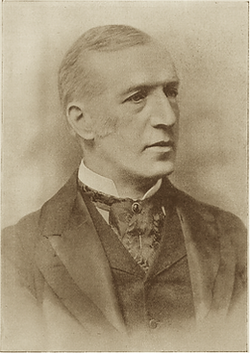
The Registrar-General for Ireland from 1909 to 1926, Sir William Thompson, stated: “Since the period of the Great Famine with its awful attendant horrors of fever and cholera, no disease of an epidemic nature created so much havoc in any one year in Ireland as influenza in 1918.”
Typhus and typhoid, which had devastated the country during the Famine, were still lingering in parts of the country, with an outbreak in Connemara in 1913 that affected 40 people, of whom five died. Unhygienic living conditions and lack of clean water were still major problems in the early 20th Century, particularly in poor urban and rural areas in many parts of the country.
Urban mortality
But in this period urban and rural areas did not suffer equally from diseases and the poor living conditions that drove them, a phenomenon referred to as the ‘urban mortality penalty’. This can be seen in the statistics referenced earlier for infant mortality. While death rates for infants were exceptionally high with a national rate of 74 per 1,000 births, the urban rate was 110 per 1,000 births, and the rural rate was 56 per 1,000 births.
In housing, major cities like Dublin faced severe slum conditions, often in dangerous and overcrowded tenements that lacked clean water and proper sewage disposal, which accelerated the spread of infectious and respiratory diseases. Many rural houses also lacked basic ventilation, windows, and clean water, facilitating the spread of infection, but at a lower rate.
Respiratory diseases and TB were major contributors to this ‘penalty’, with 32 per cent of all deaths in urban districts attributed to these causes, compared with 25 per cent in rural areas. The ‘penalty’ was not fully eliminated until the mid-1950s, when urban and rural rates converged following improvements in sanitation, food safety, and public health policies.
Severe levels of malnutrition in 1924 and 1925 also horrified – and shamed – the young Free State, so much so that it sought to cover it up, as revealed in State files in 2014. The crisis was triggered by disastrous harvests in 1923 and 1924 due to exceptionally wet weather, causing potatoes to rot. Newspapers in Clare and Galway reported at least 10 deaths from starvation or related diseases in early 1925.
Before February 1925, the State had provided £500,000 in relief and had acknowledged “acute distress” in several western counties. But after only three years of independent rule, the Government was sensitive about the country’s image and international reputation and played down the crisis. The country was eventually saved from a larger disaster by a significantly improved harvest in the autumn of 1925.
One of the Government’s least popular decisions around this time was the 10 per cent reduction in the old age pension in 1924 – a scheme originally introduced in 1909 under British administration.
By 1924, the pension had risen to 10 shillings per week. However, citing serious financial pressures, Minister for Finance Ernest Blythe reduced it to nine shillings. The original 10-shilling rate was reinstated in 1928 – a year that also coincided with local elections.
Health service
From 1922 to 1947 healthcare provision came under the Department of Local Government and Public Health. The 1920s and 1930s were essentially a transition period where the State struggled to move away from the Victorian ‘Poor Law’ medical system (see panel) towards a modern public health framework, amidst high poverty and disease rates.
The Free State faced immense difficulties in managing these crises. It had inherited a system where many hospitals were merely repurposed workhouses, lacking proper sanitation, heating, or modern equipment.
The health sector was based on a relief-type system rather than a public health service. Cash payments for sickness or disability were provided rather than direct medical or hospital benefits.
The ‘Democratic Programme’, which the first Dáil Éireann approved in 1919, had committed to abolishing the Poor Law system and replacing it with “a sympathetic native scheme for the care of the nation’s aged and infirm”.
For multiple reasons – including political instability, economic recession, and the necessity for fiscal prudence – the Democratic Programme was never translated fully into practice, according to a report by the Health Insurance Authority (HIA): Historical and Comparative Review of the Irish healthcare system.
The Free State began the task of dismantling the Poor Law system. Its functions were transferred to boards of health and public assistance, in effect sub-committees of the county councils that had been established a quarter of a century earlier.
“The intention was that each county should have a central county home to accommodate the aged and infirm poor and a county hospital, with a number of auxiliary district hospitals, to cater for the acutely ill,” according to the HIA report.
“The county infirmaries, which had come under the control of the county councils in 1898, were subsumed into this system. By the mid-1920s, county homes, county hospitals, district hospitals, and fever hospitals had been, or were in the process of being, established throughout the new State, many in former workhouses.”
These schemes marked the beginning of a separation between public healthcare services and poor relief. Both were managed at a local level by county councils and funded through a county-wide rate. County and district hospitals offered medical care to people in their area regardless of their ability to pay, though their primary focus was on serving the poor. Publicly funded hospitals run by local authorities were legally required to prioritise these patients and provide treatment free of charge.
In earlier periods, voluntary hospitals served a similar group of people. However, financial pressures in the early decades of the 20th Century led them to rely more heavily on patients who could pay fees. By 1935, only 40 per cent of patients in voluntary hospitals were treated without charge.
During the challenging economic conditions of the 1920s and 1930s, efforts were made to reduce spending wherever possible, and there was strong resistance to increasing taxes. As a result, securing funding became the central concern for the restructured public hospital system, just as it was for voluntary hospitals in Dublin, Cork, and other urban areas. Although voluntary hospitals maintained their status and independence well into the century, by the time Ireland gained independence, dwindling resources, and financial instability were putting their survival at risk.
At the time, the National Maternity Hospital (NMH) in Dublin was the most exposed and vulnerable institution in terms of funding, according to the HIA report.
However, a “uniquely Irish solution”, the legalisation of sweepstakes on horse races to raise funds for the NMH, and other financially pressed hospitals, resolved the difficulty.
The Irish Hospitals Sweepstake began in 1930. For the following decades, it provided essential funding for the evolution of the country’s local authority and voluntary hospital networks.
The Public Hospitals Act 1933 established a statutory body, the Hospitals Trust Board, to administer funds raised by sweepstakes on each year’s principal horse races.
“The injection of sweepstake funds secured the future of the voluntary hospitals,” according to the HIA.
The report notes that although efforts to consolidate and streamline the sector were largely unsuccessful, they did result in certain improvements to general hospital services. Among these was the development of a wide network of county, district, and fever hospitals across the country.
A dedicated Department of Health was not established until the 1947 Health Act which granted the Minister for Health sweeping powers to tackle urgent public health issues. It was the beginning of a new era. The country was still struggling and would continue to face major healthcare challenges, but few would be as severe as those which our forbears handled in far tougher times.
The evolution of a health system
▶ What was the ‘Poor Law’: The Poor Law Act was introduced in Ireland in 1838. The legislation divided the country into 130 administrative areas known as Poor Law unions, each centred on a workhouse. These workhouses were typically located near market towns to serve the surrounding district.
The system was funded by a compulsory property tax, the poor rate, which was based on a nationwide valuation, known as the Poor Law or Griffith’s valuation. The administration of each union was entrusted to a board of guardians, which was composed both of individuals elected by the ratepayers and by justices of the peace resident in the union.
▶ What did it provide: The Relief of the Poor (Ireland) Act 1838 did not provide the Irish poor with a legal entitlement to assistance. Relief was not an automatic entitlement, but depended on whether space was available in the workhouses. Because outdoor relief was largely refused, public assistance was effectively capped by workhouse capacity, which amounted to roughly 100,000 places. Support was also tightly constrained in financial terms. Most importantly in the Irish context, the system was fundamentally ill-equipped to respond to a large-scale crisis such as famine.
▶ Call for reform: In May 1920, the Irish Public Health Council – appointed the previous September to advise and assist the Government in promoting health policies generally – informed the Chief Secretary for Ireland that the country’s medical and health services required urgent reform.
According to the Council, the voluntary hospitals were in financial difficulties, the public hospital system was “disjointed and unsatisfactory”, and the dispensary service was in need of complete reorganisation and modernisation.
The Council submitted a proposal for a State medical and public health service – independent of the Poor Law – which, given the evolving political situation in Ireland, could be implemented in any part of the country in the event of partition.
In the 70 years between 1851 and 1921, the Irish Poor Law provided both inpatient and outpatient care for the sick poor. Those requiring hospital treatment were admitted to workhouse infirmaries and fever hospitals, while patients with less serious conditions were treated free of charge at dispensaries.
▶ Dispensary system: This situation did not change fundamentally over the period. Care for the poor was provided either in their own homes or through independent facilities dispersed across the country. As a result, dispensaries were largely free from the stigma associated with inpatient treatment under the Poor Law.
By the beginning of the 20th Century, workhouse or union infirmaries and fever hospitals were largely obsolete. However, their separation from the Poor Law system and the establishment of a State medical service were not achieved before the creation of the Irish Free State.
▶ Voluntary hospitals: The voluntary hospitals in Dublin and other Irish cities drew their patients largely from the same social groups as the county infirmaries: Self-supporting poor from the labouring and lower middle classes.
Although additional income was obtained from fee-paying patients, it was insufficient to cover running costs and capital expenditure, and by the time of Irish independence many voluntary hospitals were in severe financial difficulty.
The Poor Law unions were abolished in 1923, followed by the boards of guardians in 1925. Their responsibilities were transferred to boards of health and public assistance – effectively sub-committees of the county councils established 25 years earlier.
During the War of Independence, a number of workhouses were destroyed, and the remainder were either amalgamated or abolished and replaced by poor relief and medical services organised on a county basis. The intention was that each county would have a central county home for the aged and infirm poor, alongside a county hospital, with auxiliary district hospitals for acutely ill patients. County infirmaries were absorbed into this system.
By the mid-1920s, county homes, county hospitals, district hospitals, and fever hospitals had either been established or were in the process of being established, often in former workhouse buildings. These reforms marked the beginning of a structural separation between public medical services and poor relief. Both services continued to be administered locally by county councils and funded through county-wide rates.
▶ Sweepstake to the rescue: In the difficult economic climate of the 1920s and 1930s, funding became the central issue for the reorganised public hospital system, as it did for voluntary hospitals in Dublin, Cork, and elsewhere. By the time of Irish independence, however, depleted resources and financial uncertainty threatened their survival, with the National Maternity Hospital, Holles Street, Dublin, which was established in 1894, being among the most vulnerable.
The introduction of the Irish Hospitals Sweepstake in 1930 resolved these financial pressures. The influx of sweepstake funding secured the future of the voluntary hospitals and contributed to improvements in the general hospital service, including the development of an extensive network of county, district, and fever hospitals across the country.
(Source: ‘The Irish Healthcare system: An Historical and Comparative Review.’
A report commissioned by the Health Insurance Authority, September 2018)









Leave a Reply
You must be logged in to post a comment.