







The lack of specialty status for interventional radiology is a serious concern for clinicians in the field. Catherine Reilly reports
Specialty recognition for interventional radiology (IR) is an “urgent” requirement, the RCSI Faculty of Radiologists and Radiation Oncologists has warned.
The Medical Council rejected the Faculty’s application for specialty recognition in June 2025 following a five-year process, show documents released by the regulator under Freedom of Information (FoI) law. The application was focused on ‘body IR’. It was the second time the Faculty applied for specialty status for IR (the process was paused to new applications on the first occasion).
When contacted for comment, the Faculty described the decision as “not in the interest” of patients or the development of postgraduate training in Ireland.
The lack of specialty status for IR “continues to create significant and avoidable risks” for patients and the healthcare system. These risks relate to workforce and service fragility, “particularly in emergency and out-of-hours IR, where lack of recognition undermines investment and staffing.”
IR is a specialty combining advanced imaging competency, procedural competency, and patient care competency. The required skills and knowledge are developed over “an extensive period of time”.
Specialty recognition would facilitate funding of the IR training pathway, delivery of “optimally trained and accredited” interventional radiologists, improved workforce planning, and equitable and timely access for patients.
It would counter any perception among trainees that IR is “less secure or less valued than recognised specialties, which can deter potential applicants and complicate long-term succession planning”.
“Currently there are deficits in out-of-hours emergency care based on geographic patient location and there are too few specialists in Ireland in comparison to international benchmarks,” explained the Faculty.
“This IR training pathway is required to deliver the increase in interventional radiology physicians and on-call IR care based on the HSE workforce analysis up to 2040. These challenges will intensify unless specialty recognition is addressed by the Medical Council urgently.”
This IR training pathway is required to deliver the increase in interventional radiology physicians and on-call IR care based on the HSE workforce analysis up to 2040
The Faculty also expressed concern about an 18-month period – from the time of the decision – before it can submit another application.
Asked how the process could be improved, it added: “Everybody involved in this process should be working collaboratively to achieve safer healthcare for patients. The current specialty recognition process is not a collaborative process, it is time-consuming and adversarial by design.”
The Council’s assessor team “may have benefitted from subject experts in active medical practice who were familiar with the impact of interventional radiology on patient care in hospital practice”.
Model of care
IR is a clinical specialty that uses minimally invasive, image-guided techniques to treat a range of acute and chronic conditions, often in patients who are acutely unwell or for whom surgery carries significant risk.
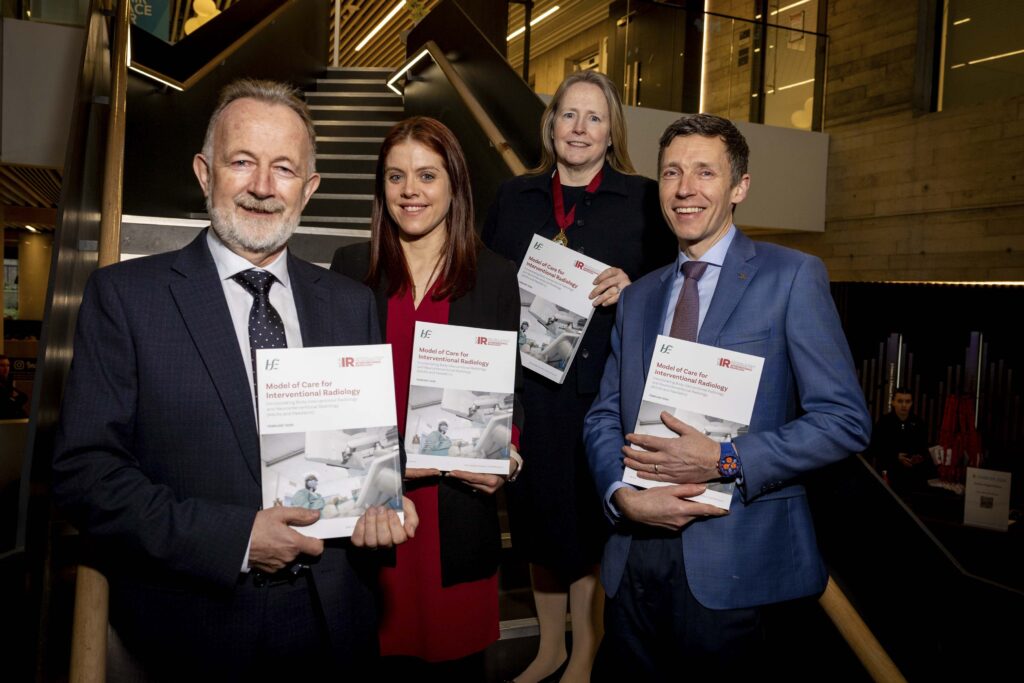
In February 2026, the first national Model of Care for Interventional Radiology was published by the RCSI/HSE National Clinical Programme for IR.
The document, which encompasses body IR, neurointerventional radiology, and paediatric IR, provides a comprehensive framework to ensure access to high-quality services, both in- and out-of-hours.
IR procedures have become “an integral part” of medicine, with the potential to provide life-saving emergency care, it outlined. Many specialties now acknowledge the availability of IR as “essential” to the safe delivery of their service.
The broad range of conditions and organs that can be treated by IR was “continuously expanding” and included diseases of the vascular, gastrointestinal (GI), hepatobiliary, and genitourinary systems.
Emergency IR procedures include embolisation for acute haemorrhage (eg, GI, variceal, iatrogenic, haemoptysis, and postpartum haemorrhage); image-guided drainage procedures for source control of sepsis; and thrombectomy for stroke (provided by neuro-interventionalists). Elective procedures include uterine fibroid embolisation; varicocele embolisation; placement of tunnelled catheters or ports in the chest for delivering dialysis or chemotherapy; and chemoembolisation and radioembolisation for liver tumours.
The Irish health system has “significant” service deficits and geographic variations in availability of IR. Most notably, “there are inconsistent out-of-hours emergency IR services within and across health regions, a lack of formal transfer arrangements, and deficits in workforce resources.”
The future vision for ‘body IR’ services for the adult population involves 24/7 emergency services (ie, formal on-call staffing rotas) organised in a hub-and-spoke model with agreed pathways for the transfer of patients. The model of care says this requires an increase in IR consultants and “increased IR training”. All new IR consultant job plans should have an 80 per cent IR component that is adequately resourced.
Currently, the nine model 4 hospitals and 10 of the 17 model 3 hospitals provide an IR service within core working hours. Only three model 4 hospitals provide an out-of-hours service (two in the same health region), resulting in four of the six regions having no out-of-hours IR service.
Paediatric IR is “currently an unfunded service with limited resources and no out-of-hours service”. Adult neuro-interventional procedures are performed by neuro-interventionalists at Beaumont Hospital, Dublin, and Cork University Hospital (these services are 24/7). The model of care sets out recommendations across all of these areas.
The document states IR has “key structural and governance challenges”. These include a lack of specialty status, training gaps, current and future workforce shortages, limited time for clinical practice, and poor visibility within the Irish healthcare system.
IR trainees are sought from the general pool of diagnostic radiology (DR) trainees, with “variable” recruitment success. The radiology training programme does not have “the structure and funding” to deliver two years of IR training (the period required to develop advanced IR skills). Currently, radiology trainees pursuing IR subspecialise in their fifth (final) year and then undertake a fellowship abroad. “There is no predictable workforce supply of IR consultants.”
Prof Michael Lee, Clinical Lead of the IR Clinical Programme, told the Medical Independent specialty recognition would undoubtedly make implementation of the model of care “more robust”.
It would enable IR to attract doctors – interested in this “hands-on” specialty – into a tailored training pathway, with access to clinical practice and IR procedural training from the start of training.
“This would provide a clear roadmap for those interested in pursuing IR,” Prof Lee stated.
“I believe full independent specialty status is what we require in Ireland to deliver a robust IR training pathway that will deliver the competent and safe IRs to deliver the care that Irish patients deserve into the future.”
The Faculty and Clinical Programme are working to develop an IR training programme within current structures. It will entail four years of training in DR followed by two years of IR specialisation.
“The difficulty will be in funding for the sixth year of training, and we are working with the NDTP [National Doctors Training and Planning], who have been very helpful, to secure funding. However, the funding pathway is not ringfenced at this point in time,” said Prof Lee.
Specialties
The Council determines the medical specialties recognised for the purpose of its functions under the Medical Practitioners Act, 2007. Specialty status also requires the approval of the Minister for Health. The training body must then apply to the Council for accreditation of the training programme. HSE NDTP has dedicated funding streams in place for accredited training programmes.
There are 57 recognised specialties, the newest of which was military medicine in 2015. Since then, the application mechanism has been paused for substantial periods of time.
In 2017, a Council-commissioned review identified “enhancements” to the process. The revised mechanism reopened in 2019. In June 2022 a Council meeting heard the process was previously suspended due to concerns about “too many specialties recognised in Ireland, resulting in fragmentation of a very stretched health service”. At this meeting, it was agreed that the process would be paused again. The process has remained closed to new applications since late 2022.
Currently, the Department of Health is working with the Council to review the process.
According to Council guidance, it must assess the proportionality of introducing a new specialty and justify the need for recognition. This ensures compliance with EU law and is “in keeping” with its own policy in the area, according to the guidance document.
The process comprises of screening, stage one, and stage two. Stage one establishes whether there is a case for a “full assessment”, which takes place in stage two.
Applications are “unlikely” to proceed to stage two if the aspirant specialty is an area of practice limited to a specific geographic area or demographic group; limited to the treatment of a single disease or based on a limited number of techniques; based on a single modality of treatment; or already recognised (fully or partly) under a different specialty title.
The aspirant specialty must demonstrate it is a distinct and legitimate area of medical practice with a sustainable base in the medical profession. It is asked to show how specialisation is demonstrably contributing to substantial improvements in the quality and safety of healthcare.
If the proposed specialty were to be broadly available, the applicant must describe how it would not adversely affect the quality of healthcare (eg, unnecessary fragmentation of medical knowledge and skills/care). The applicant must also outline the planned model of care to underpin development of the specialty to meet future demand for services.
Other elements include evidence of public consultation with stakeholders on the proposed specialisation and a high-level training plan.
The guidance document does not reference the need for a “cost/benefit analysis” of introducing the new specialty. However, the application form for the IR submission asked what research/assessment had been completed – including risk prevention or cost/benefit analyses.
Stage two also involves the submission of a “detailed” training programme plan and a public consultation exercise by the Medical Council.
Application
The Faculty’s application for IR was submitted in 2020. The development of the application was led by Prof Colin Cantwell, Consultant Interventional Radiologist, St Vincent’s University Hospital, Dublin.
The submission amounted to hundreds of pages, including numerous supporting documents. It included letters of support from a wide range of parties, including HSE NDTP (whose support is required), HSE National Cancer Control Programme, Irish Society of Medical Oncology, Irish Thoracic Society, Irish Society of Gastroenterology, Institute of Obstetricians and Gynaecologists, Cystic Fibrosis Ireland, Diabetes Ireland, and Irish Kidney Association, among others.
As with the Clinical Programme’s model of care, the application outlined the importance and evolving role of IR in modern healthcare. “These treatments may be elective or emergent. IR procedures are also becoming more complex and being performed in sicker and frailer patients.”
Access to IR services “can be lifesaving” – for example, embolisation procedures to treat uncontrollable GI haemorrhage, variceal bleeding, haemoptysis, and post-partum haemorrhage.
The application also noted that the national trauma strategy stated IR should be promptly available during routine hours in all trauma units and at the major trauma centres outside these times via patient transfer protocols.
“Emergent IR services also include stroke thrombectomy, drainage procedures (nephrostomy for obstructed kidneys, abscess drainage, drainage of obstructed biliary systems in jaundiced patients with sepsis). Well recognised advantages of these minimally invasive techniques include reduced risks, shorter hospital stays, lower costs, greater comfort, quicker convalescence, and return to work. The above emergent procedures are uniquely provided by IR teams. The role IR plays in source control of infection has been acknowledged in the HSE Sepsis Management, National Clinical Guideline No 6 (2020 update).” The application further outlined international data on the clinical- and cost-effectiveness of numerous IR procedures. It also included available data showing a growing demand for IR procedures in Ireland and projections of future needs. A sizable current shortfall in consultants was identified.
The application explained that IR was now primarily a therapeutic discipline, whereas DR is largely a diagnostic specialty. “As IR procedures are image-guided, an expert knowledge of imaging physics, pathophysiology, anatomy, and image-based diagnosis is required. This forms the strong common bond between IR and DR and also makes IR very different from all other surgical or endoscopic specialties.
“DR and IR also share commonality in that all trainees undergoing radiology training learn non-vascular biopsy and drainage procedures in years one to four. Further IR specialty training is required to become competent in vascular/venous IR, embolisation, and interventional oncology. The common trunk of DR training focuses primarily on how to safely and accurately diagnose disease entities, whereas IRs need to understand clinical issues such as patient selection, indications and contraindications, technical aspects, anticipated results, complications, preoperative care, and longitudinal care.” In addition, the interventional radiologist must be competent in the use of a vast array of equipment specific to IR.
It also maintained that IR recognition would not adversely impact the radiology training programme, which it said was “extremely successful” at attracting and training doctors. Recognition would enhance the already high numbers applying to the radiology intake, it indicated. Enhanced provision of IR services would require “further consultant staffing that will not compete with the diagnostic radiology recruitment in Irish centres”.
Decision
The Medical Council’s team of assessors for specialist training (TAST) met between May and December 2021. The four-person TAST included two medical professionals – a GP, and a retired paediatrician and member of the education and training committee (ETC). It also included a member of the Council and a senior Council staff member. Its draft report was sent to the Faculty in December 2021 for comment, which was provided.
According to the final TAST report, the aspirant specialty made “a very good case for the services of IR”. It had provided “documentary evidence, which fully supported a number of criteria outlined in this report”. The application “demonstrated the need for the services of specialised IR”, but did not demonstrate that specialty recognition was required for “training and patient services to be well managed”.
In addressing a number of the criteria, the application “lacked risk prevention or cost benefit analysis” to support the requirement for specialty recognition as distinct from the need for these services. It cited a “lack of evidence” to support the assertion that recognition would not impact on other specialties.
The TAST maintained “inadequate consideration” was given to the risks of “further fragmentation of existing radiology services”. The sustainability of the proposed training pathway was also “a concern”.
The application noted that IR had achieved specialty recognition from medical regulators in a number of countries. The TAST report outlined that IR was recognised as a sub-specialty in many of these cases, rather than as a full independent specialty. “There is no provision in the Medical Practitioners Act 2007 (as amended) to recognise a sub-specialty.”
The TAST recommended that the application should not proceed to stage two. The ETC agreed with this recommendation in September 2022. However, the Council sought further information from the HSE Chief Clinical Officer (CCO) before considering the ETC recommendation. The Council sent its request to the CCO in December 2022 with a questionnaire for completion.
The IR Clinical Programme – which became fully operational in late 2023 – responded on behalf of the CCO, indicated the FoI records. A Clinical Programme document, dated November 2024, provided detailed answers to the questions posed by the Council.
Regarding a cost/benefit analysis describing the benefit to the population, the Clinical Programme stated it had consulted widely with various subject matter experts.
In summary, the experts had advised that “the cost benefit analysis, as articulated in the IMC questionnaire, is not possible or practical for IR”.
The Clinical Programme provided information on gaps in patient services it believed specialty recognition would help to address, as well as procedures requiring the IR skillset or which could not be met by other specialties due to sheer volume.
It stated all the other acute national programmes recognised the value of IR. It highlighted that a key reason for the Clinical Programme’s establishment was the death of a patient from GI bleeding in a major hospital without an out-of-hours IR service. It said a second death had occurred from the same condition more recently in a major hospital with no IR out-of-hours service.
“Without specialty status for IR, the [Clinical Programme] is of the opinion that the current training arrangements in Ireland will not produce enough trained IRs to fulfil these [out-of-hours] obligations which poses a significant risk to the Irish population.”
On the implications for staffing in smaller hospitals, the Clinical Programme said it was envisaged that the overall WTEs allocated to DR would expand in tandem with the expansion of the IR workforce. A failure to deliver the required IR workforce would ultimately disincentivise applicants from other specialties to accept posts in model 3 hospitals.
The Medical Council finalised its decision in June 2025. According to Council minutes, it had received “extensive” oral and written submissions on the matter. It said IR was “an increasingly important clinical sub-specialty” at the interface of radiology and surgery.
“It is clear that those radiologists at the forefront of their specialty development see recognition by the Council as an important milestone for them.”
However, “no convincing argument” was presented to explain how specialty recognition would enable training programmes to be created. The submissions did not “adequately address” the impact that an IR specialty would have on radiology. The Council was “not presented with sufficient evidence” to overturn the ETC’s recommendation.
Next steps
Seven body IR trainees are required every year to complete a two-year body IR training pathway to sustain and expand the adult consultant workforce to deliver the full spectrum of care, according to modelling by NDTP, the Faculty, and Clinical Programme. In July 2026, three trainees will enter body IR fellowships in year five of the radiology training programme.
The Faculty said it will continue to develop the national IR training pathway and advocate for the “central role” of IR in modern Irish healthcare. It intends to reapply for specialty status.
According to a Medical Council spokesperson, two specialty recognition applications have been rejected in the last five years (forensic psychiatry in 2021 and IR in 2025) and no applications have been withdrawn.
“The assessor team assembled to review any specialty recognition application are not just medical professionals, they are also trained assessors with a wealth of experience undertaking inspections and accreditation activity on behalf of the Medical Council,” said the spokesperson. The assessor team for stage two can also include a “specialty expert relevant to the aspirant specialty”.
It is “not typical” for the process to take as long as five years. “With the IR assessment process, there were a number of factors contributing to this length of time including changeover in [Council] staff, dependency on stakeholder input, and other factors.”
They added: “The Medical Council recognises there are improvements which could be made to the current process. The current application process is paused while the Medical Council reviews the specialty recognition process – which will include reviewing stakeholder feedback such as the feedback provided by the Faculty of Radiologists.”










Leave a Reply
You must be logged in to post a comment.