



Reference:
Start this Module
Module Title
Diagnosis and management of hypoglycaemia in adults with diabetes mellitusModule Author
Yvonne Moloney, Cathy Breen, Lisa Devine, Majella Corkery, and Eoin NoctorCPD points
2Module Type
TutorialHypoglycaemia remains one of the most common adverse effects of glucose-lowering therapy and continues to represent a major barrier to optimal diabetes management. While efforts to achieve tighter glycaemic control reduce the risk of long-term microvascular complications, these benefits may be offset by an increased risk of hypoglycaemia, particularly among people treated with insulin or sulphonylureas.1,2
By completing this module, the learner will expand their general understanding of hypoglycaemia, particularly in terms of its:
✽ Clinical impact
✽ Pathophysiology
✽ Classification and diagnosis
✽ Long- and short-term consequences
✽ Risk factors
✽ Clinical presentation and hypoglycaemia unawareness
✽ Management in acute and non-acute settings
✽ Diabetes technology
✽ Enteral feeding considerations.
Epidemiology and clinical impact
The burden of hypoglycaemia extends beyond the immediate episode. Severe hypoglycaemia is associated with increased healthcare utilisation, including emergency department attendances, hospital admissions, and prolonged inpatient stays. Episodes may result in falls, fractures, road traffic incidents, cardiovascular events, and, in rare cases, death.1,3
The psychological impact of hypoglycaemia is increasingly recognised. Fear of hypoglycaemia may lead individuals to intentionally maintain higher glucose levels, skip insulin doses, or alter prescribed treatment regimens. This phenomenon can negatively affect glycaemic control, increase diabetes-related distress, and reduce quality of life.4,5
Hypoglycaemia is also increasingly viewed as a cardiovascular risk factor. Experimental studies have demonstrated associations between hypoglycaemia, inflammatory activation, endothelial dysfunction, and pro-thrombotic states.6,7 Consequently, contemporary diabetes management aims not only to achieve glycaemic targets, but to also minimise hypoglycaemia exposure and reduce treatment burden.2
Pathophysiology
Glucose is the primary fuel source for the brain and under normal physiological conditions blood glucose concentrations are tightly regulated. Falling glucose levels trigger a coordinated series of counter-regulatory responses designed to restore normoglycaemia. The first response is suppression of endogenous insulin secretion, followed by increased glucagon release from pancreatic alpha cells and stimulation of the sympathetic nervous system with release of adrenaline. Additional hormonal responses include secretion of cortisol and growth hormone.5,8
These mechanisms promote hepatic glucose production through glycogenolysis and gluconeogenesis while reducing peripheral glucose utilisation. In individuals without diabetes, these responses are usually sufficient to prevent clinically significant hypoglycaemia.8
In people with diabetes, particularly those with long-standing type 1 diabetes, many of these protective mechanisms become impaired. Defective glucagon responses combined with attenuated sympathoadrenal activation result in a reduced ability to detect and correct falling glucose concentrations. This physiological impairment contributes to increased frequency and severity of hypoglycaemia.5,8
The consequences of hypoglycaemia extend beyond symptoms alone. Acute neuroglycopaenia may impair judgement, concentration, coordination, and reaction time – increasing the risk of injury. Severe hypoglycaemia has been associated with an increased risk of mortality, inflammatory activation, and adverse cardiovascular outcomes, although the exact mechanisms remain incompletely understood.6,7,9 Repeated episodes may further impair awareness and create a cycle of recurrent hypoglycaemia that becomes increasingly difficult to break.5
Consequences of hypoglycaemia
Hypoglycaemia is associated with a wide range of short- and long-term consequences that extend beyond the immediate symptoms experienced by the individual. The clinical impact of hypoglycaemia depends on its severity, duration, and frequency, as well as individual patient factors such as age, comorbidity, and level of awareness.¹
| Classification | Definition |
|---|---|
| Level 1 | Blood glucose <3.9mmol/L and ≥3.0mmol/L |
| Level 2 | Blood glucose <3.0mmol/L |
| Level 3 | Severe event requiring assistance from another person |
TABLE 1: Classification of hypoglycaemia
| Treatment factors | Patient factors | Lifestyle/ behavioural factors |
|---|---|---|
| Excessive, inappropriate or ill-timed insulin therapy | Renal impairment | Alcohol consumption/alcohol or drug use disorder |
| Excessive, inappropriate or ill-timed sulphonylurea therapy | Liver impairment | Exercise |
| Tight glycaemic targets | Hypothyroidism | Weight reduction |
| Lipohypertrophy | Hypopituitarism | Missed meals or snacks |
| Glucocorticoid deficiency | Breastfeeding | |
| Growth hormone insufficiency | ||
| Intercurrent illness/sepsis | ||
| Impaired hypoglycaemia awareness |
TABLE 2: Risk factors for hypoglycaemia
Acute hypoglycaemia impairs cognitive function and may affect concentration, memory, judgement, and reaction time. These effects can compromise an individual’s ability to perform daily activities safely, including driving, operating machinery, and administering medications. In severe cases, hypoglycaemia may lead to seizures, coma, and loss of consciousness, placing individuals at risk of serious injury.1,5
Cardiovascular consequences are increasingly recognised. Hypoglycaemia results in activation of the sympathetic nervous system, causing increases in heart rate, blood pressure, and myocardial oxygen demand. Studies have demonstrated associations between hypoglycaemia and cardiac arrhythmias, myocardial ischaemia, endothelial dysfunction, and pro-thrombotic changes.6,7 These mechanisms may contribute to adverse cardiovascular outcomes in vulnerable populations, particularly older adults and those with established cardiovascular disease.
Recurrent hypoglycaemia also has important psychological consequences. Fear of future episodes may result in anxiety, reduced confidence, and avoidance behaviours that adversely affect glycaemic management. Some individuals intentionally maintain higher glucose levels to prevent hypoglycaemia, potentially increasing the risk of long-term diabetes complications. Education, reassurance, and use of diabetes technologies can help reduce this burden and improve quality of life.4
Classification and diagnosis
Hypoglycaemia is classified according to the American Diabetes Association (ADA) framework, which has been adopted within the HSE National Clinical Guideline.1,2 Level 1 hypoglycaemia is defined as a glucose concentration <3.9mmol/L but ≥3.0mmol/L, while Level 2 hypoglycaemia refers to glucose concentrations <3.0mmol/L. Level 3 hypoglycaemia is characterised by a severe event requiring assistance from another person, irrespective of blood glucose level.1,2,10
| Symptom group | Clinical features | Clinical significance |
|---|---|---|
| Neurogenic (autonomic) | Sweating, palpitations, shaking, fatigue, tingling lips, pallor, hunger | Usually, the earliest warning symptoms of falling blood glucose and provide an opportunity for self-treatment |
| Neuroglycopaenic | Confusion, worsening confusion in dementia, drowsiness, behaviour change, dizziness, irritability, speech difficulty, incoordination, impaired/loss of consciousness, seizures, hemiplegia | Reflect inadequate glucose delivery to the brain and indicate more severe hypoglycaemia requiring urgent intervention |
| Hypoglycaemia unawareness | Absence of symptoms despite low glucose levels | Associated with increased risk of severe hypoglycaemia and requires prompt treatment and review of management strategies |
TABLE 3: Signs and symptoms of hypoglycaemia
Diagnosis should combine glucose measurement with clinical assessment. Capillary blood glucose remains the standard method for confirming hypoglycaemia, while continuous glucose monitoring (CGM) provides valuable information regarding glucose trends and impending hypoglycaemia.1,11 Where symptoms are inconsistent with CGM readings, capillary blood glucose testing should be performed.1
Risk factors
Hypoglycaemia is rarely caused by a single factor. Instead, episodes typically occur because of interactions between diabetes therapy, food intake, physical activity, and coexisting illness. Identification of risk factors is essential both for prevention and for reducing recurrence following a hypoglycaemic episode.1,5
Attention should be paid to older adults, individuals with renal impairment, individuals with alcohol/drug use disorders, and those with recurrent hypoglycaemic episodes, as these groups are at higher risk of severe hypoglycaemia and associated complications.1,12
Clinical presentation and hypoglycaemia unawareness
Symptoms of hypoglycaemia can be divided into neurogenic and neuroglycopaenic manifestations. Neurogenic symptoms result from activation of the autonomic nervous system and usually represent the earliest warning signs. As blood glucose concentrations continue to fall, neuroglycopaenic symptoms emerge due to insufficient glucose supply to the brain.1,8
Some patients may be asymptomatic (ie, hypo unawareness). However, treatment must still be carried out.
Hypoglycaemia unawareness
Hypoglycaemia unawareness represents a significant clinical challenge and is a major risk factor for severe hypoglycaemia.¹ It occurs when individuals lose their ability to recognise the early autonomic symptoms of falling glucose levels. As a result, treatment is delayed until neuroglycopaenic symptoms develop or assistance from another person becomes necessary.5
The condition is often the result of recurrent exposure to hypoglycaemia. Repeated episodes lower the glucose threshold at which autonomic warning symptoms occur, leading to a blunted physiological response. This phenomenon increases the likelihood of future severe episodes.5
Certain groups are at particularly high risk, including individuals with long-standing type 1 diabetes, those receiving intensive insulin therapy, and people with a history of recurrent severe hypoglycaemia. Cognitive impairment, advanced age, and co-existing neurological disease may further reduce symptom recognition.
Recognition of hypoglycaemia unawareness is important during routine diabetes reviews. Management may involve avoidance of hypoglycaemia, review of glycaemic targets, structured education, and optimisation of diabetes technology.1,4
Management in acute settings
Rapid and effective treatment is essential to prevent progression to severe hypoglycaemia and its associated complications. Management depends on the individual’s level of consciousness, ability to swallow safely, and the clinical setting.1,13 The HSE guideline recommends that conscious adults should initially receive 15g of fast-acting carbohydrate followed by reassessment after 15 minutes. Treatment should be repeated if blood glucose remains below 3.9mmol/L. Once recovery has occurred, long-acting carbohydrate should be provided to prevent recurrence.1,13
For individuals who are unconscious, unable to swallow safely, or displaying significant cognitive impairment, urgent medical assessment is required. Treatment options include intravenous glucose or glucagon, depending on local protocols and availability of intravenous access.1,14
Management of hypoglycaemia in non-acute settings
The principles of hypoglycaemia management remain similar in community and ambulatory care settings. Conscious adults should receive 15g of fast-acting carbohydrate, with glucose reassessment after 15 minutes and repeated treatment if required. Once blood glucose has recovered, a long-acting carbohydrate snack should be consumed.1,13 In severe hypoglycaemia, emergency services should be contacted immediately and glucagon administered where appropriate.1,13
Driving
Hypoglycaemia has important implications for driving safety and is a significant cause of concern for both individuals with diabetes and healthcare professionals. Even mild hypoglycaemia can impair concentration, visual processing, co-ordination, and reaction times, increasing the risk of road traffic incidents.¹
The HSE guideline emphasises the need for people treated with insulin or medications associated with hypoglycaemia to understand their responsibilities regarding driving. Blood glucose should be checked before commencing a journey and at regular intervals during prolonged travel. Individuals should always carry a source of rapid-acting carbohydrate within the vehicle.¹
Following treatment of hypoglycaemia, the guideline recommends ensuring that blood glucose has recovered to at least 3.9 mmol/L before leaving the clinical setting. For those intending to drive, blood glucose should exceed 5.0mmol/L for at least 45 minutes before resuming driving.¹ This recommendation reflects the time required for cognitive recovery after an episode of hypoglycaemia.
Healthcare professionals should routinely discuss driving during diabetes consultations and document relevant advice when appropriate. Attention should be paid to people with recurrent severe hypoglycaemia or impaired awareness, as these individuals are at increased risk of driving-related incidents.
Diabetes technology
Advances in diabetes technology have transformed the prevention, detection, and management of hypoglycaemia. CGM systems provide real-time glucose measurements, trend information, and alerts for actual or impending hypoglycaemia, allowing earlier intervention than traditional capillary blood glucose monitoring alone. The HSE guideline recognises CGM as an important tool in reducing exposure to hypoglycaemia, particularly among individuals at increased risk of severe episodes or impaired hypoglycaemia awareness.¹
CGM systems provide a comprehensive picture of glycaemic patterns throughout the day and night, enabling identification of asymptomatic and nocturnal hypoglycaemia that may otherwise go undetected. In addition to displaying current glucose values, trend arrows indicate the direction and rate of glucose change, allowing individuals to take corrective action before hypoglycaemia develops.
Low glucose alerts and alarms further enhance safety by warning users when glucose levels are approaching or have fallen below predefined thresholds. These features are particularly valuable for individuals with hypoglycaemia unawareness, those who live alone, and those with a history of recurrent severe hypoglycaemia.1,11,15
The increasing use of CGM has also changed how glycaemic control is assessed. While HbA1c (glycated haemoglobin) remains an important measure of overall glycaemic exposure, additional metrics are now used to evaluate glucose patterns and guide treatment decisions.
‘Time in range’ (TIR) refers to the percentage of time that glucose levels remain within the target range, while ‘time below range’ (TBR) measures the proportion of time spent below target glucose values. TBR is particularly important when assessing hypoglycaemia risk as it provides information regarding the frequency, duration, and severity of low glucose episodes. Reducing TBR has become a key therapeutic goal in modern diabetes management.4
One of the most significant developments in diabetes care is the introduction of hybrid closed loop (HCL) insulin delivery systems. These systems integrate CGM technology with insulin pump therapy and sophisticated algorithms that automatically adjust insulin delivery in response to real-time glucose measurements. By reducing or suspending insulin delivery as glucose levels fall, HCL systems have been shown to increase TIR, reduce TBR, and significantly decrease hypoglycaemia exposure.15
The HSE guideline includes specific recommendations for managing hypoglycaemia in people using HCL systems. Because insulin delivery is often automatically reduced before hypoglycaemia occurs, less carbohydrate is required for treatment than in individuals using conventional insulin therapy. In circumstances where there is minimal insulin-on-board and glucose levels are below 3.9mmol/L, only 8-10g of rapid-acting carbohydrate may be required, compared with the standard recommendation of 15g. Additional carbohydrate may be necessary if active insulin remains from a recent meal bolus or correction dose.¹
Unlike traditional insulin regimens, additional long-acting carbohydrate following treatment is frequently unnecessary in HCL users because the automated reduction in insulin delivery helps prevent recurrent hypoglycaemia. However, repeated episodes should prompt review of insulin pump settings, carbohydrate counting accuracy, and glucose targets by the diabetes specialist team.¹
Future developments in diabetes technology are expected to include increasingly sophisticated automated insulin delivery systems, improved predictive low-glucose algorithms, and greater integration between CGM data, smartphone applications, and cloud-based monitoring platforms. These innovations have the potential to further reduce hypoglycaemia burden, improve quality of life, and support safer, more personalised diabetes management.15
Special circumstances: Enteral feeding
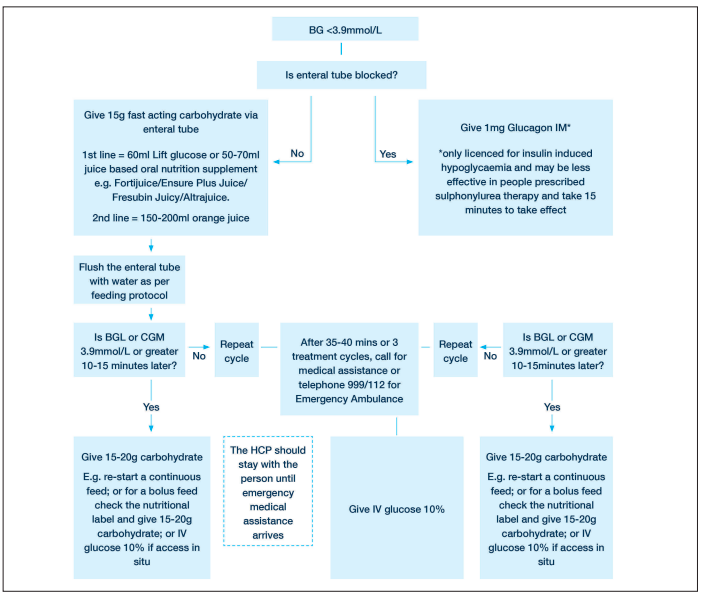
People receiving enteral feeding represent a unique group at increased risk of hypoglycaemia due to interruptions in carbohydrate delivery, feeding tube displacement, vomiting, changes in feeding regimens, and alterations in concurrent medications.1,16 Management should be delivered through the enteral feeding tube whenever possible. If the tube is patent and the individual is conscious, 15g of fast-acting carbohydrate should be administered via the tube.1,16 When the feeding tube is blocked or displaced, or if the individual is unconscious, glucagon should be administered and urgent medical review sought.¹
The role of healthcare professionals following a hypoglycaemic event
Management of hypoglycaemia does not end when blood glucose levels have been restored. Every episode should prompt consideration of the factors that contributed to the event and opportunities to reduce future risk. The HSE guideline highlights the important role of healthcare professionals in ensuring a systematic approach to follow-up. ¹
Following a hypoglycaemic episode, healthcare professionals should document presenting symptoms, glucose values, treatment provided, and patient response. Documentation assists communication between healthcare providers and facilitates identification of recurrent patterns.¹ A review of current diabetes treatment is often required.
This may include reassessment of insulin doses, timing of administration, injection technique, meal planning, and physical activity patterns. Attention should be paid to individuals receiving sulphonylureas or those with impaired renal function, as these factors are commonly associated with recurrent hypoglycaemia.¹
Patient education is a critical component of post-event care. Individuals should be supported to recognise symptoms, understand appropriate treatment strategies, and identify personal risk factors. Family members and carers may also require education, particularly when severe hypoglycaemia has occurred. In selected cases, referral to specialist diabetes services may be required for structured education, medication review, or optimisation of diabetes technologies.¹
Prevention of recurrent hypoglycaemia
Every episode of hypoglycaemia should be considered an opportunity to identify contributing factors and prevent recurrence. A comprehensive review should include medication doses and timing, meal patterns, physical activity, alcohol use, injection technique, and the presence of lipohypertrophy.¹ Patient education remains central to prevention strategies.
Individuals should understand symptom recognition, treatment principles, driving regulations, and the importance of carrying rapid-acting carbohydrate.1,13 The increasing availability of CGM technologies, including low glucose alerts, has provided additional opportunities to prevent severe hypoglycaemia, particularly among individuals with impaired awareness.11,15
Patient safety
The management of hypoglycaemia extends beyond treatment of an individual episode and requires a coordinated systems approach. The HSE guideline emphasises the importance of standardised treatment pathways, hypoglycaemia treatment boxes, staff education, and regular audit as patient safety measures.¹ All healthcare professionals involved in diabetes care should be familiar with local hypoglycaemia management protocols and understand their responsibilities following an episode. Documentation should include the glucose value, presenting symptoms, treatment provided, response to treatment, and potential contributory factors.¹
Treatment algorithms available online
References
- Health Service Executive. HSE National Clinical Guideline for the Diagnosis and Treatment of Hypoglycaemia in Adults with Diabetes Mellitus in Acute and Non-Acute Settings. National Clinical Programme for Diabetes: HSE; 2025.
- American Diabetes Association Professional Practice Committee. Glycaemic goals and hypoglycaemia: Standards of care in diabetes – 2025. Diabetes Care. 2025;48(1 Suppl 1):S128-S145. doi:10.2337/dc25-S006.
- Demirbilek H, Vuralli D, Haris B, Hussain K. Managing severe hypoglycaemia in patients with diabetes: Current challenges and emerging therapies. Diabetes Metab Syndr Obes. 2023;16:259-273. doi:10.2147/DMSO.S313837.
- Agiostratidou G, Anhalt H, Ball D, et al. Standardising clinically meaningful outcome measures beyond HbA1c for type 1 diabetes: A consensus report of the American Association of Clinical Endocrinologists, the American Association of Diabetes Educators, the American Diabetes Association, the Endocrine Society, JDRF International, The Leona M and Harry B Helmsley Charitable Trust, the Paediatric Endocrine Society, and the T1D Exchange. Diabetes Care. 2017;40(12):1622-1630. doi:10.2337/dc17-1624.
- Cryer PE. Hypoglycaemia in diabetes: Pathophysiology, prevalence and prevention. 3rd ed. Alexandria: American Diabetes Association; 2016.
- Verhulst CEM, van Heck JIP, Fabricius TW, et al. Sustained proinflammatory effects of hypoglycaemia in people with type 2 diabetes and in people without diabetes. Diabetes. 2022;71(12):2716-2727. doi:10.2337/db22-0246.
- Chow E, Iqbal A, Walkinshaw E, et al. Prolonged prothrombotic effects of antecedent hypoglycaemia in individuals with type 2 diabetes. Diabetes Care. 2018;41(12):2625-2633. doi:10.2337/dc18-0050.
- Mitrakou A, Ryan C, Veneman T, et al. Hierarchy of glycaemic thresholds for counterregulatory hormone secretion, symptoms, and cerebral dysfunction. Am J Physiol. 1991;260(1 Pt 1):E67-E74. doi:10.1152/ajpendo.1991.260.1.E67.
- Bonds DE, Miller ME, Bergenstal RM, et al. The association between symptomatic, severe hypoglycaemia and mortality in type 2 diabetes: Retrospective epidemiological analysis of the ACCORD study. BMJ. 2010;340:b4909. doi:10.1136/bmj.b4909.
- International Hypoglycaemia Study Group. Glucose concentrations of less than 3.0mmol/l (54mg/dl) should be reported in clinical trials: A joint position statement of the American Diabetes Association and the European Association for the Study of Diabetes. Diabetes Care. 2017;40(1):155-157. doi:10.2337/dc16-2215.
- El-Abd S, Poole R. The accuracy of capillary blood glucose testing versus real-time and intermittently scanned continuous glucose monitoring. Pract Diabetes. 2023;40(5):40-43A.
- Diabetes Canada Clinical Practice Guidelines Expert Working Group: Lega IC, Yale JF, et al. Hypoglycaemia in adults. Can J Diabetes. 2023;47(7):548-559. doi:10.1016/j.jcjd.2023.08.003.
- Villani M, de Courten B, Zoungas S. Emergency treatment of hypoglycaemia: A guideline and evidence review. Diabet Med. 2017;34(9):1205-1211. doi:10.1111/dme.13379.
- Joint British Diabetes Societies for Inpatient Care (JBDS-IP). The hospital management of hypoglycaemia in adults with diabetes mellitus. JBDS-IP; 2023. Available at: https://abcd.care/jbds-ip
- Diabetes Technology Network UK. Clinical Guidelines for Managing Continuous Subcutaneous Insulin Infusion (CSII) Therapy in Hospitalised Patients. Diabetes Technology Network UK; 2018. Available at: https://abcd.care/dtn/resource/archived/clinical-guideline-guidelines-managing-continuous-subcutaneous-insulin
- Joint British Diabetes Societies for Inpatient Care (JBDS-IP). Glycaemic management during enteral feeding for people with diabetes in hospital. JBDS-IP; 2024. Available at: https://abcd.care/resource/current/jbds-05-glycaemic-management-during-enteral-feeding-people-diabetes-hospital







Leave a Reply
You must be logged in to post a comment.