







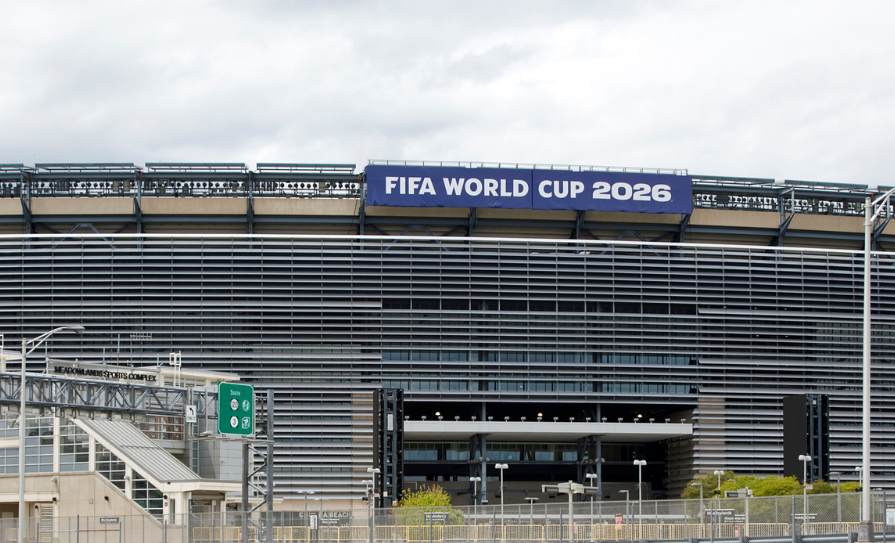
By the time you are reading this, the FIFA World Cup 2026 will be underway, with all the associated pomp and pageantry. Sadly, and as usual, our team is left at home twiddling their thumbs and dreaming of what might have been, but that’s another topic in itself. For this issue, we’ll take a glance at some of the lesser-known facts about this and previous World Cups that might make you see the event a little differently. For the busy doctor-on-the-go, we’ll break them into bite-size pieces designed for a coffee break, if you’re lucky enough to get one.
▶ The grass at each match venue is cared for like a precious infant. Each pitch incorporates a high-tech underground technology called SubAir, which uses a network of sensors and pipes that ‘suck’ moisture out of the soil 36 times faster than natural drainage to prevent it from becoming soggy. If it becomes too dry, SubAir pushes moisture back up into the grass, maintaining a consistent and perfect playing surface.
▶ The event is held across the US, Mexico, and Canada, but the first game took place in the Estadio Azteca in Mexico City, which is perched some 2,200 metres above sea level. Here, the air contains roughly 25 per cent less oxygen than at sea level. It is one of the most challenging places on earth to play, not just due to the altitude’s effect on the human body, but because the thin air also makes the ball travel faster and more directly through the air, forcing the players to adjust their playing strategies.
▶ FIFA has officially mandated three-minute ‘hydration breaks’ in every half of every match, regardless of the temperature. Each player’s water bottle contains ‘electrolyte slushies’, isotonics, and antioxidants to aid recovery.
▶ As a new rule to combat time-wasting, when a player is injured during a game and receives on-pitch medical attention, they must leave the pitch and remain off it for one minute when play has resumed.
▶ The medical back-up at World Cup 2026 is strong – each of the 48 participating teams brings its own team doctor. This is complemented by venue medical officers, provided by FIFA, and local hospitals and clinics are ramping up to handle the hundreds of thousands of visitors expected in each host region. It’s the first time in history that so many teams have participated.
▶ Games played in Miami, Kansas City, and Philadelphia could be dangerously hot for the players. World Weather Attribution, an organisation that studies extreme weather events, has warned that up to 25 per cent of the games could be played in heat that poses physical dangers for the players and fans.
▶ The Super Bowl in the US has inspired the entertainment strategy. The final will feature an 11-minute half-time show featuring Madonna, Shakira, and BTS. Just in case, like me, you have only heard of the first two acts, BTS are a Korean boy band otherwise known as Bangtan Boys, and are the best-selling musical act in South Korean history.
▶ The first balls used in early World Cups were hand-stitched and made of heavy cowhide leather around an inflatable bladder. The leather would become extremely heavy when it absorbed water and many arguments were had due to teams wanting to use their own ball in early tournaments. This came to a head in the 1930 final, when both Argentina and Uruguay insisted on using their own balls for the match. The dispute was resolved when the referee decided each respective ball would be used for one half of the match each. In contrast, the balls used in this year’s tournament incorporate a side-mounted tracking sensor that communicates with stadium cameras to generate real-time 3D player avatars for instant offside checks. The balls themselves have to be plugged in to charge before every match.
▶ The shirts the players wear are similarly high-tech. They incorporate a cooling system that combines open and closed mesh zones to move air across the body and lift the fabric off the skin. This delivers more than twice the airflow of the fabrics used in the earlier days of the game.
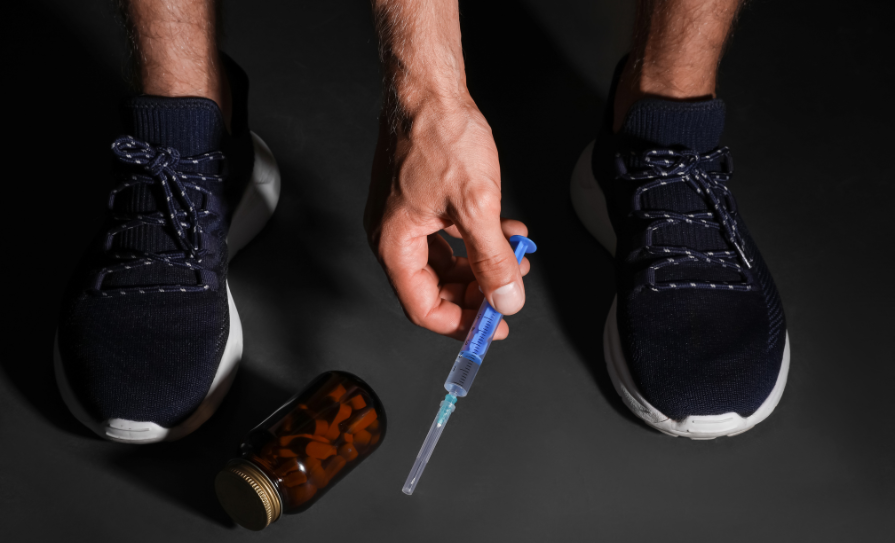
▶ A historical anecdote to finish and a lesson on handling medications. The 1930 US–Argentina semi-final was a notoriously bad-tempered affair. US trainer Jack Coll was required on several occasions to administer what used to be called the ‘magic sponge’. In one of his excursions onto the pitch, Coll accidentally dropped his medical bag, in the process breaking a container full of chloroform. When he opened the bag, he was overwhelmed by the fumes and had to be carried off the pitch, while the player he came on to treat made a full recovery.







Leave a Reply
You must be logged in to post a comment.