







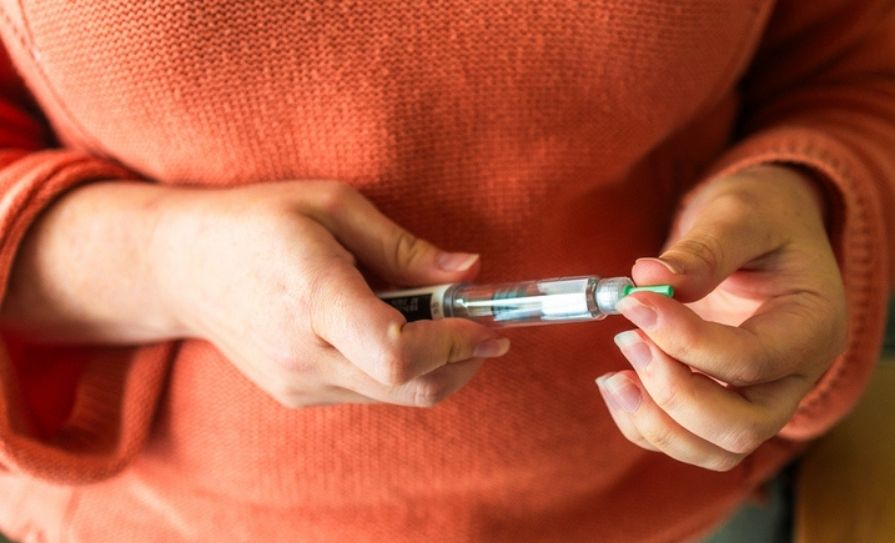
The field of drugs to manage body weight is constantly evolving, to the point where it becomes a little challenging to keep up with, unless it’s your specific field.
One area of this research is examining what happens when weight management medications (WMMs) are discontinued. A study on the topic was published in the BMJ in January this year.
The systematic review and meta-analysis also included participants in behavioural weight management programmes (BWMPs). The authors noted that real-world observations estimate that 50 per cent of people with obesity discontinue GLP-1 receptor agonists within 12 months of initiation. They also quantified the rate of weight regain after the cessation of any WMM and the associated changes in cardiometabolic health markers. “Given the greater effectiveness and increasing use of newer incretin mimetic treatment, we specifically examined the rate of weight regain after use of these drugs,” they wrote. “Lastly, we examined the rate of weight regain after WMM compared with BWMPs.” Some 9,288 titles and abstracts were screened and 228 full texts assessed.
Their conclusion was somewhat stark: “This review found that cessation of WMM is followed by rapid weight regain and reversal of beneficial effects on cardiometabolic markers. Regain after WMM was faster than after BWMP. These findings suggest caution in short-term use of these drugs without a more comprehensive approach to weight management.”
Now, even newer research, presented at Digestive Disease Week 2026 in Chicago, US, this month, suggests that a simple, minimally invasive procedure can ‘reset’ the gut and help people to keep the weight off after discontinuing WMMs. The outpatient procedure is called ‘duodenal mucosal resurfacing’. Researchers say it points the way to keeping weight off after discontinuation, with no other medications involved.
This endoscopic treatment uses controlled heat to remove damaged tissue from the inner lining of the duodenum. Basically, the unhealthy mucosal layer is ablated and this encourages the growth of healthy new tissue. The trial, titled REMAIN-1, assesses whether this intestinal lining regrowth results in a lasting metabolic ‘reset’.
Their findings are derived from an early group of participants, with six-month follow-up data. There were 45 people in the cohort, with 29 receiving the resurfacing treatment, while 16 were given a placebo procedure. All the participants had lost a minimum of 15 per cent of body weight using a WMM, before discontinuing it. On average, the participants lost approximately 18kg while taking their GLP-1 medication.
Six months following the discontinuation of their GLP-1, those who had the fake procedure regained about 40 per cent more weight than those who had the real mucosal resurfacing.
Not only that, but patients who underwent more extensive resurfacing only regained around 3kg and managed to retain approximately 80 per cent of their weight loss. The control group regained around 100 per cent more weight. The authors noted that this regain gap even widened six months after the procedure, which indicates that the benefits of the procedure may become even more significant over time.
Lead author Dr Shelby Sullivan, Director of the Endoscopic Bariatric and Metabolic Programme at Dartmouth Health Weight Centre and Professor of Medicine at Dartmouth Geisel School of Medicine, US, commented: “As effective as GLP-1 medications are, many people stop taking them because of cost, side-effects, or simply not wanting to take a drug long-term. But if they stop these medications, weight regain occurs in the vast majority of patients, and the metabolic benefits are lost. Finding a treatment that allows patients to stop these medications without weight regain or loss of metabolic benefit is a huge unmet need. These findings indicate that this minimally-invasive procedure may provide lasting weight-loss maintenance.”
No significant complications were reported from the procedure and recovery was as quick as one day. “Other than recovering from the general anaesthesia, there isn’t much recovery time involved,” Dr Sullivan added. “You can be back to your daily routine in about a day. Participants could not tell if they had the ‘sham’ or real procedure, because there are not a lot of symptoms after the procedure.”
If the results are confirmed in a larger scale study, this could solve one of the central conundrums in managing longer-term weight-loss strategies.










Leave a Reply
You must be logged in to post a comment.