







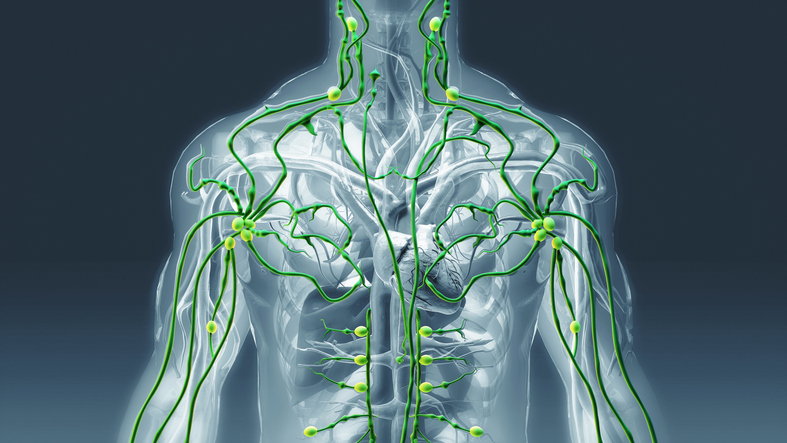
As researchers reassess the role of the tonsils in health and immunity, attention is also turning to another long-overlooked organ: The thymus gland.
The thymus is, of course, best known for its role in immune function during childhood, and for a long time it had been assumed that in adulthood, it is a largely redundant organ, having basically served its purpose during the early years of life. However, a recent study has turned this assumption on its head. This research suggests that the gland continues to have an important role in overall health, and even influences longevity and cancer immunotherapy response.
The team, led by Harvard Medical School, US, used imaging studies from 27,000 adults and artificial intelligence (AI) to deal with the huge amount of data. They found that people with healthy thymuses were less likely to contract serious diseases, as well as benefitting from increased longevity. Moreover, the research suggests a link between thymus health and a patient’s response to immunotherapy.
There was a reduced risk of cardiovascular disease and lung cancer among the people with healthy thymuses. Among the 3,400 participants who had cancer, a healthy thymus was strongly associated with immunotherapy response and survival beyond standard tumour biomarkers. Also interestingly, obesity, smoking, metabolic syndrome, and chronic inflammation were implicated in poor thymic health, so some risk factors are modifiable.
The findings were published in two separate papers in the same issue of Nature (March 2026) and provide a better understanding of this previously overlooked little organ. One of the papers looked at responses to immunotherapy, while the other examined longevity, rates of cardiovascular disease, and cancer. In the first of these studies, AI was used to evaluate a vast amount of CT scans and the size, composition, and structure of the thymus were assessed. From the resulting data, the researchers created a ‘thymic health score’. When compared to those who had a low thymic health score, those with a good score had a 36 per cent lower risk of developing lung cancer, and a 63 per cent lower risk of death from cardiovascular disease, even after accounting for age and other factors.
In the other study, cancer patients with a higher thymic health score and treated with immunotherapy had a 37 per cent lower risk of cancer progression and a 44 per cent lower risk of death, even after adjustments for differences in tumours and treatment approaches.
The authors postulate that lower thymic health means less T-cell diversity, impeding the immune system’s ability to deal with and eradicate threats, including cancer. Previous studies have found connections between T-cell diversity and ageing and immune system decline, but most of that research was conducted using small, blood-based tests. In these studies, however, the authors examined more than 25,000 adults in a national lung cancer screening trial, as well as more than 2,500 participants in the Framingham Heart Study.
There are, of course, caveats. More research is needed as always and the researchers acknowledge that there is currently no imaging method for measuring thymic health that is ready for clinical use. There is also another ongoing study to look at whether unintended radiation exposure to the thymus during lung cancer treatment could influence patient outcomes. Given the scale of the potential benefits, improving thymus health is clearly an area that warrants further attention.
The authors also referenced recent work by Kooshesh et al, which showed that “adults who had their thymus removed experienced adverse health consequences across multiple diseases and outcomes, where penetrance can be decades after thymectomy…. While the consequences of thymectomy are impactful, only a small fraction of the population is exposed to this procedure, whereas individual and lifestyle-dependent differences in thymic decay affect everyone.”
Prof Hugo Aerts, corresponding author on both papers, Director of the Artificial Intelligence in Medicine Programme at Mass General Brigham and HMS Professor of Radiation Oncology at Dana-Farber Cancer Institute, US, commented: “The thymus has been overlooked for decades and may be a missing piece in explaining why people age differently and why cancer treatments fail in some patients. Our findings suggest thymic health deserves much more attention and may open new avenues for understanding how to protect the immune system as we age. Improving our understanding and monitoring of thymic health could eventually help physicians better assess disease risk and guide treatment decisions.”










Leave a Reply
You must be logged in to post a comment.