







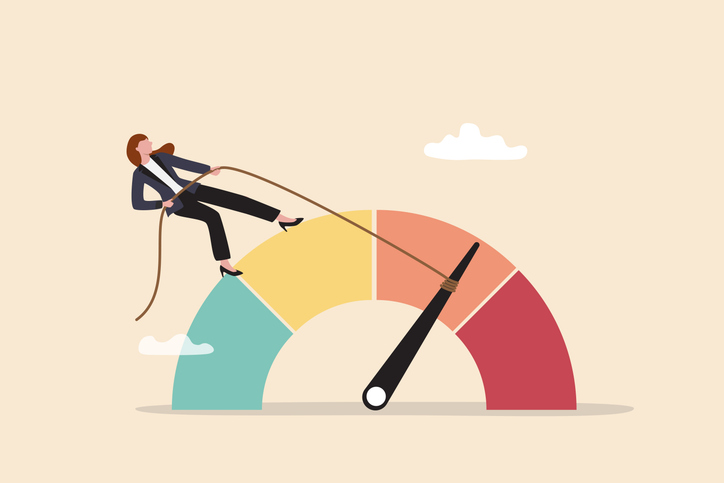
A round-up of news and oddities from left field
The benefits of humour have often been the focus of fascinating research.
For example, a 2021 study in Scientific Reports looked at how ‘humour interventions’ protect against psychological stress and attenuate cortisol.
The authors set out to investigate firstly whether a short humorous intervention reduces subsequent psychological and physiological stress and secondly to test whether this beneficial effect affects cognitive performance in the form of attention.
Short films approximately nine minutes long were shown to participants and they were also given stress tests and even aversive electric shocks. Salivary cortisol samples were taken as psychological markers of stress and visual stimuli were used in the form of ‘Greebles’, artificial objects for investigating face recognition. Humorous films were also shown to the control group and the ‘humour’ group. The effects of humour on pain tolerance levels were also recorded. The funnier the movie clip, the higher the participants’ level of pain tolerance, they found.
“Our results show that humour protects against psychological stress and effectively attenuates salivary cortisol levels, however, it is still unclear why participants may benefit from a humorous intervention,” the authors wrote.
“…. While being beneficial for attenuating stress and cortisol levels, humour was found to have had no impact on cognitive performance, specifically on visual attention. On the surface, this may contradict assumptions of the broaden-and-build theory, yet results of an exploratory analysis point towards influential roles of motivational intensity and arousal, respectively. Taken together, a short humorous intervention can be a powerful instrument, improving our mental and physical health – not just on the way to the job interview, but in many other situations of everyday life.”
Stress is sometimes seen as a facet of modern life, as is anxiety. Yet the recognition and classification of psychological distress have a long lineage.
Greco-Roman philosophers and physicians were even leaning towards classifying anxiety as a distinct and separate disorder.
Cicero (106 BC–43 BC), for example, distinguished angor – a state of psychological distress associated with a sense of constriction – from related forms of emotional disturbance. The word anxiety itself derives from the Latin noun angor and the corresponding verb angō, meaning ‘to constrict’.
An excellent 2015 paper by Marc-Antoine Crocq in Dialogues in Clinical Neuroscience outlines the evolution of anxiety terminology, from ‘melancholia’, ‘panophobia’, and ‘the vapors’, to what we have today in the Diagnostic and Statistical Manual of Mental Disorders (DSM). Terms such as ‘PTSD’, ‘GAD’, and ‘panic disorder’ weren’t formally recognised until DSM-III.
Philosophers of ancient times, including Seneca, offered advice and techniques to deal with anxiety and some therapeutic techniques suggested by ancient Stoic and Epicurean philosophers would not look out of place in modern textbooks that are dedicated to cognitive psychotherapy.
Our approach to treating anxiety has evolved over time, with modern practice increasingly recognising the complex interplay between mind, body, and environment.
In terms of a clinical diagnosis, as previously noted in these pages, a team from the Indiana University School of Medicine has developed a blood test that examines biomarkers that help to objectively determine someone’s risk for developing anxiety, the severity of their current anxiety, and even which therapies would be most effective.
Professor of Psychiatry at the University, Prof Alexander Niculescu, was previously responsible for developing blood tests for pain, depression/bipolar disorder, and post-traumatic stress disorder.
“There are people who have anxiety and it is not properly diagnosed, then they have panic attacks, but think they’re having a heart attack…,” he commented.
“If we can know that earlier, then we can hopefully avoid this pain and suffering and treat them earlier with something that matches their profile.”
There is potential for this test to become a standardised part of screening, Prof Niculescu said.
“This is something that could be a panel test as part of a patient’s regular wellness visits to evaluate their mental health over time and prevent any future distress. Prevention is better in the long run, so our goal is to be able to provide a comprehensive report for patients and their physicians using simply one tube of blood.”
The research was published in Molecular Psychiatry in 2023.








Leave a Reply
You must be logged in to post a comment.