







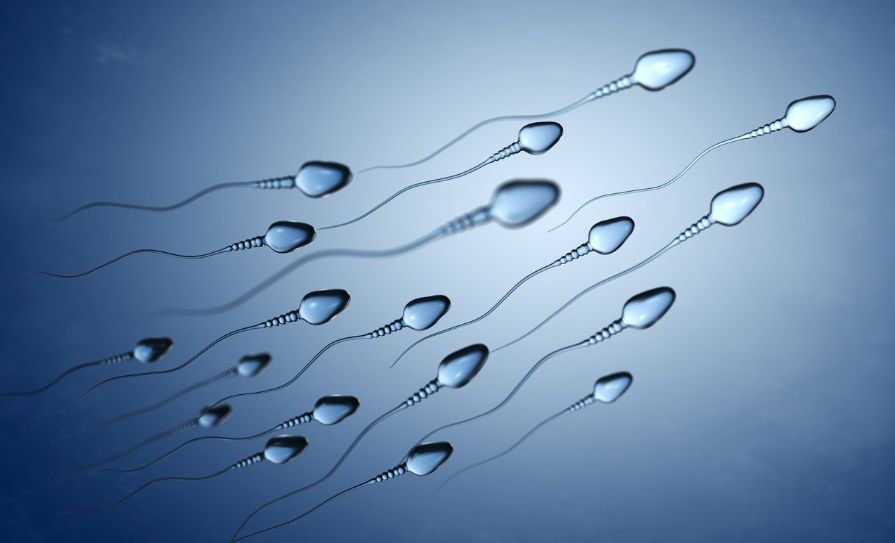
New research has emerged to show that sperm are not simply ‘solo competitors’ as was previously thought, but rather are capable of acting in co-ordinated ‘teams’ to achieve the objective of reproduction.
The study was carried out by researchers at Syracuse University, US, University of Siena, Italy, and University of Szeged, Hungary, and the results challenge the previously held view that the ‘fastest sperm wins’ in the process of fertilisation.
One of the more striking findings was that co-operation between sperm is widespread among arthropods, and has emerged and disappeared again and again over hundreds of millions of years in many species. They found that in arthropods – of the nearly 1.8 million animal species that have been described by science, about 84 per cent are arthropods – sperm have joined into organised structures that help them to reach and fertilise an egg and this ability has been intermittent in species over millions of years.
The term is ‘sperm conjugation’, and it has turned our understanding of fertilisation somewhat on its head. The concept of sperm conjugation was discussed around 100 years ago, but it was thought to be a rare phenomenon. This new research shows that it is a lot more common among arthropods than was previously assumed.
It highlights how sperm conjugation provides distinct advantages in terms of mobility and longevity for the sperm.
The science: This collaboration between sperm involves sperm-associated material (SAM), which is a membrane-enclosed substance. SAM has the ability to attach sperm to each other or even create ‘structures’ that organise the sperm into groups. This process may have helped to proliferate the process of sperm conjugation, possibly to protect the sperm.
Different species have repeatedly lost and regained the sperm conjugation ability over millions of years.
One conclusion from the research was that the common ancestor of all insect life had the benefit of conjugated sperm.
The researchers carried out a detailed comparison of sperm structures across arthropods from previously published research that spanned decades. An evolutionary ‘family tree’ resulted, which allowed the researchers to estimate how often sperm conjugation occurred over a period of roughly 500 million years.
Prof Steve Dorus, Professor of Biology at Syracuse University’s College of Arts and Sciences and co-author of the study, explained: “Fertilisation is often viewed as a competition among individual sperm, but in many species we see cells working together in ways that can influence reproductive success. What makes this pattern so fascinating is that evolution keeps arriving at similar co-operative solutions in very different groups and across vast expanses of time. These examples remind us that co-operation can be just as important as competition in shaping biological success.”
The work offers valuable insights into reproductive traits throughout evolution and future studies will look at sperm groups within actual reproductive systems. However, the study was limited by the fact that sperm behave differently on a glass slide in a laboratory than they do inside a body.
Prof Scott Pitnick, Weeden Professor of Biology, Syracuse University’s College of Arts and Sciences and senior author of the study, added: “Sperm are the most rapidly evolving cell type. They are shaped by the unique challenge of operating outside the body in the complex environment of the female reproductive tract.” He referenced the spotted lanternfly, the sperm of which differs from arthropods in that rather than joining into organised groups, their individual sperm are encased in SAM.
As is often the case, the research raises some questions, and answers others. “Their [lanternfly] sperm are highly unusual,” he commented. “They do not have conjugation, but each individual sperm is completely embedded in this material and we do not even know how they are motile.”
Answering questions like these also opens the door to more effective pest control of some insect populations. If you would like to read more about this emerging area, the research was published recently in Nature Communications.











Leave a Reply
You must be logged in to post a comment.