



Geriatrician and Epidemiologist Dr Stefania Maggi speaks with Pat Kelly about preventing disease in older adults and people who are immunocompromised, and the sometimes unseen consequences of preventable illness
Dr Stefania Maggi is a renowned Geriatrician and Epidemiologist and author of approximately 600 publications in international medical and public health journals. Dr Maggi is Scientific Director of the European Interdisciplinary Council on Ageing and past-President of the European Geriatric Medicine Society (EuGMS). She contributes to several EuGMS Working Groups and holds a range of other prominent roles, including serving on the Board of Directors of the European Scientific Working Group on Influenza, and advising the international and independent Adult Immunisation Board. She is also a member of the Accademia Galileiana di Lettere, Scienze ed Arti in Italy.
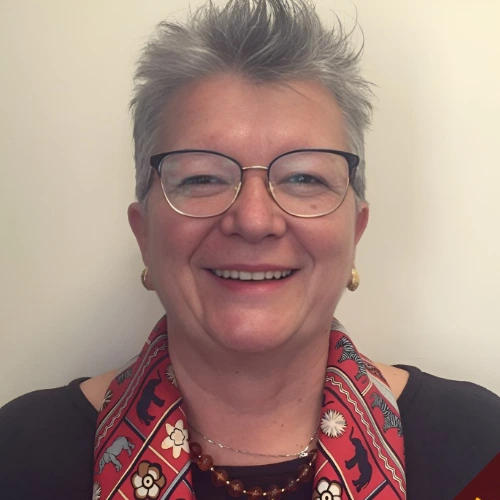
Dr Maggi is a Senior Fellow at the Neuroscience Institute – Ageing Branch of the National Research Council of Italy. Her research focuses on the epidemiology of ageing and the determinants of healthy ageing across the life course, and she has particular expertise in nutrition, immunisation, and prevention.
She was in Ireland recently to deliver a talk at the Irish Gerontological Society (IGS) 73rd Annual and Scientific Meeting in Cork. The subtitle of the meeting was ‘Ageing with innovation: Are we ready?’
At the meeting, Dr Maggi discussed the impact of vaccine-preventable diseases (VPDs) on older adults, including the indirect effects that are not always recognised.
During her visit to Ireland, she spoke with the Medical Independent (MI) about the need to prioritise healthy ageing, VPDs, and more. “I greatly enjoyed my experience of Ireland. I was impressed not only by the warmth and hospitality of the Irish people, but also by the enthusiasm and openness of the new colleagues I met,” said Dr Maggi. “Of course, some others are good friends of mine since long ago, we meet regularly at the EuGMS conferences. By the way, their contributions to the activities of the European societies are outstanding.”
In her presentation, titled ‘Impact of vaccine-preventable diseases in older adults’, Dr Maggi focused on the impact of VPDs on the health status of older adults, including beyond the acute phase of illness. She also discussed how vaccines can promote healthy ageing by decreasing both the burden of VPDs and their downstream effects, and by enhancing physical and cognitive function at any age. She lauded the multidisciplinary dimension of the conference, which brought together clinicians, nurses, social workers, and researchers working across different areas of ageing, creating a stimulating and thought-provoking basis for discussion and exchange.
[INSERT IMAGE HERE]
Health strategies
Bearing in mind the ageing population globally, Dr Maggi was keen to stress the need for a stronger emphasis on healthy ageing to be integral to governmental health strategies. “An ageing population inevitably brings a higher prevalence of chronic diseases, multimorbidity, frailty, and disability. However, ageing itself should not be equated with disease,” Dr Maggi told MI. “A greater focus on prevention and health promotion throughout the life course can help maintain functional capacity, reduce avoidable morbidity, and delay dependence.”
This requires a shift from a predominantly disease-centred model towards a life-course, prevention-oriented approach, she said. This approach should integrate vaccination, healthy nutrition, physical activity, mental and cognitive health, social participation, and early detection and treatment of diseases into health strategies. Importantly, prevention should not stop in older age – it remains valuable throughout the entire ageing process, said Dr Maggi.
“Healthy ageing should therefore become a central objective of health systems and public health policies, with specific investments that anticipate the needs of ageing populations rather than responding only after disease, disability or dependency has developed. Such an approach can benefit individuals, families, and communities while contributing to the long-term sustainability and resilience of health and social-care systems that, otherwise, will collapse,” she warned.
Dr Maggi also spoke about the burden of VPDs, both for patients and healthcare systems. For patients, VPDs can lead to hospitalisation, functional decline, loss of independence, and prolonged recovery. Infections may precipitate or worsen underlying conditions such as cardiovascular disease, chronic respiratory disease, diabetes, or frailty. In older adults, an infection can have consequences that extend well beyond the infectious episode itself, she explained.
“From my experience, the burden of VPDs is often underestimated, particularly in adults and older people. We tend to focus on acute infection and mortality, but the impact is much broader,” said Dr Maggi.
“The burden is also substantial for healthcare systems. VPDs generate primary-care consultations, emergency visits, hospitalisations, rehabilitation and long-term care needs, while also increasing the complexity of managing patients with multimorbidity. During seasonal respiratory infections, this can translate into considerable pressure on hospitals and healthcare professionals.”
Prevention
She continued: “What is particularly important is that this burden is, at least in part, preventable. Vaccination should therefore be viewed not only as a tool to prevent infection, but as an intervention that can help preserve health and functional capacity, reduce avoidable healthcare utilisation, and protect the sustainability of health systems.”
Vaccination should therefore be viewed not only as a tool to prevent infection, but as an intervention that can help preserve health and functional capacity, reduce avoidable healthcare utilisation, and protect the sustainability of health systems
“This is why I believe we need to move from thinking of vaccination as an isolated infectious-disease intervention, to considering it as an integral component of healthy ageing and chronic disease prevention.”
Dr Maggi noted that among healthcare professionals, the level of awareness around VPDs is generally good, “but there is an important gap when we move from childhood vaccination to adult and older-adult immunisation”. The challenge for medical professionals is to keep pace with the expanding evidence, new vaccines, and increasingly complex recommendations for older people and those with multimorbidity and frailty. Vaccination needs to become a more routine part of adult healthcare, with doctors feeling confident to proactively discuss prevention rather than waiting for patients to ask, she said.
Another potential gap in awareness relates to often unrecognised and indirect impacts of VPDs, Dr Maggi told MI.
“We often measure the burden of VPDs by counting infections, hospitalisations and deaths. But in older adults, the consequences can be much broader,” she explained.
“An infection can destabilise chronic diseases, trigger frailty, accelerate functional decline, and result in loss of independence, even when the patient survives the acute illness. There are also consequences for families and caregivers and for the healthcare system through rehabilitation, long-term care, and increased healthcare utilisation.
“So, when we talk about prevention, we should ask not only how many infections or deaths we prevent, but also how much loss of function and independence we can prevent. This is where vaccination becomes an important component of healthy ageing.”
RSV
Respiratory syncytial virus (RSV) is recognised as a serious disease in infants and people who are immunocompromised, and Ireland’s monoclonal antibody programme has significantly reduced hospitalisations in these cohorts. However, RSV also poses serious risks for older adults. In 2025, there were 43 deaths in Ireland among people aged over 65 due to RSV. Dr Maggi was asked why she feels governments are hesitant to recognise the burden of RSV in older adults, and how decision makers need to make more progress in protecting that vulnerable patient population.
“First, RSV has been strongly associated with paediatric disease for decades. Bronchiolitis and infant hospitalisation are very visible clinical events, whereas in older adults, RSV may present as pneumonia, exacerbation of heart or lung disease, frailty, or a deterioration of function at status. The infection may therefore be less likely to be recognised as the primary cause of the patient’s decline.
“Second, the burden in older adults has been partly hidden by underdiagnosis and competing diagnoses, also in the hospitals,” she continued.
“There are studies showing that less than 25 per cent of patients hospitalised with acute respiratory infections are assessed for RSV and, sometimes, even if they test positive, the RSV infection is not reported in the discharge letter. Older patients frequently have multimorbidity, and RSV may be recorded as a respiratory or cardiovascular complication rather than as RSV itself. This can make the true burden appear smaller than it is.”
“However, the evidence is increasingly difficult to ignore,” Dr Maggi pointed out. “In Europe, approximately 160,000 adults are hospitalised with RSV each year, with more than 90 per cent of these hospitalisations occurring in people aged 65 years and older. European evidence also shows that older adults are among those at greatest risk of severe outcomes and death.
“At the same time, we now have effective and safe vaccines for older adults that we did not have a few years ago,” said Dr Maggi. “RSV vaccines are authorised in Europe, and real-world evidence is already demonstrating reductions in RSV-related hospitalisation in older adults.
“So my message to decision-makers would be very simple – we should celebrate the progress made in protecting infants, but we should not allow that success to create the impression that the RSV problem has been solved. The epidemiological reality is that RSV affects vulnerable people at both ends of the age spectrum. We have made major progress in protecting newborns and infants through maternal vaccination and long-acting monoclonal antibodies. The mortality in children in the last decade has significantly decreased, but not in older adults.
“The next step is to ensure that older adults, particularly those with cardiovascular disease, chronic respiratory disease, diabetes, frailty, or other risk factors are also appropriately protected,” she stressed.
On the whole, this type of protection is part of a broader shift towards healthy ageing, Dr Maggi pointed out. “If we are serious about helping people live longer with good health and functional independence, we need to prevent infections that can precipitate hospitalisation, functional decline, and worsening of chronic disease, and RSV is surely one of them.
“So I would say to policymakers: The question is no longer whether RSV matters in older adults; the question is how quickly we can translate the evidence we already have into equitable and sustainable prevention programmes. The European Centre for Disease Prevention and Control is now developing EU/EEA technical guidance on RSV vaccination in adults, reflecting the growing evidence-base and the need for national strategies.”
Infection and myocardial infarction
In her presentation to the IGS meeting, Dr Maggi identified a fascinating association between influenza and Streptococcus infection, and acute myocardial infarction (MI) and cardiovascular risks. She was asked to elaborate on this point, and whether this is also the case for other viruses such as RSV and herpes zoster.
“What I find particularly interesting is that the cardiovascular consequences of infections may be substantially greater than we traditionally recognise,” she replied.
“Influenza provides one of the clearest examples. Acute influenza can produce a strong systemic inflammatory and prothrombotic response, increase physiological stress, and potentially destabilise an already vulnerable atherosclerotic plaque. This provides a plausible biological pathway linking an acute respiratory infection with acute MI. Recent systematic-review evidence estimates that laboratory-confirmed influenza is associated with approximately a six-fold increase in the short-term risk of acute MI.
“The association with Streptococcus pneumoniae is also important,” Dr Maggi added. “Pneumococcal disease can generate intense systemic inflammation and physiological stress, particularly in older people and those with cardiovascular disease. The interesting question is not simply whether infection causes pneumonia, but whether an infectious episode can act as a trigger for an acute cardiovascular event in a person who is already biologically vulnerable.
“And this phenomenon is not unique to influenza and Streptococcus pneumoniae.
“RSV is increasingly recognised as having a cardiovascular dimension. In older adults, RSV infection can be associated with heart failure, myocardial infarction, stroke, and atrial fibrillation. A Canadian study of adults aged 65 years and older hospitalised with RSV found that 18.5 per cent experienced a cardiovascular event during the subsequent year; heart failure was particularly prominent. Importantly, the association with heart failure was observed both in people with and without pre-existing cardiovascular disease. More recent comparative evidence also suggests that RSV, and influenza, can both be associated with cardiovascular events in the week after the acute infectious disease symptoms.”
Responsibility
She emphasised the overarching objective of all these suggestions is to promote healthy ageing for older adults and proactive care for people who are immunocompromised. This responsibility falls not only on healthcare professionals, but also on governments and policymakers. “This was the topic of my lecture a few weeks ago, when I received the EuGMS Lifetime Achievement Award,” Dr Maggi said.
“I believe that currently, our Ministries of Health are, indeed, ‘Ministries of Disease’, and I believe that we should move from a model that mainly responds when people become ill, to one that proactively protects health and function, bringing together vaccination, nutrition, physical activity, cardiovascular and respiratory prevention, and cognitive health during the life course.
“The Minister for Health should not be the Minister responsible for all health determinants, but should be the minister who co-ordinates all ministries around a shared health objective,” she added.
“The Ministry of Health would set priorities, ensure equity, monitor outcomes, and evaluate impacts, but also how much health responsibility for the determinants of health remains in its own spheres.”
This means in the health sphere, focusing on prevention, vaccination, primary care, chronic disease, and healthy ageing. In education, health literacy, healthy behaviours from childhood, and life-long learning need to be promoted, while in agriculture and food, healthy and sustainable food environments, including Mediterranean Diet guidelines, should be implemented. Environmental challenges include tackling air pollution, climate issues, and providing green spaces, while transport and urban planning need to include walkable cities, mobility, and age-friendly environments.
In the field of labour and social protection, healthy working lives, retirement, social participation and poverty must be addressed, and in sport, physical activity across the life course has to be promoted. All of this work should be backed up by research and innovation based on evidence, monitoring, and evaluation, she said.
“So, I would make healthy ageing a cross-government objective – with the Ministry of Health co-ordinating, other ministries contributing, and all sectors accountable for their impact on population health,” said Dr Maggi.
“And I would measure success not only by diseases treated, but by healthy life expectancy, functional independence, and avoidable hospitalisations. In other words, we should aim to not only treat people as they age, but also to help them age in good health. This has to be a collective effort.”
Take-home messages
On foot of her visit to Ireland, Dr Maggi was asked for the main takeaway points she would like Irish doctors to retain from her presentation and her visit generally. “I would leave Irish doctors with the following messages,” she said.
“First, look beyond the infection itself and the real burden in an older person may be cardiovascular complications, worsening of chronic disease, functional decline, or loss of independence. Secondly, don’t underestimate RSV: It is a significant disease of older adults, not only of infants.
Secondly, don’t underestimate RSV: It is a significant disease of older adults, not only of infants
“Also, remember that clinical presentation can be misleading, so appropriate testing matters. We should use vaccination as part of healthy ageing, not simply as infectious-disease prevention. And finally, be proactive – don’t wait for older patients to ask about vaccination; start the conversation yourself and train the nurses working with you about it.”







Leave a Reply
You must be logged in to post a comment.