


The future fracture burden as a result of osteoporosis may be lower than past projections have indicated, according to a new Irish study.
The study, published in Archives of Osteoporosis in August, examined more than 66,000 people having their first bone density scan at University Hospital Limerick and St Camillus Hospital between 1998 and 2024.
[INSERT IMAGE HERE]
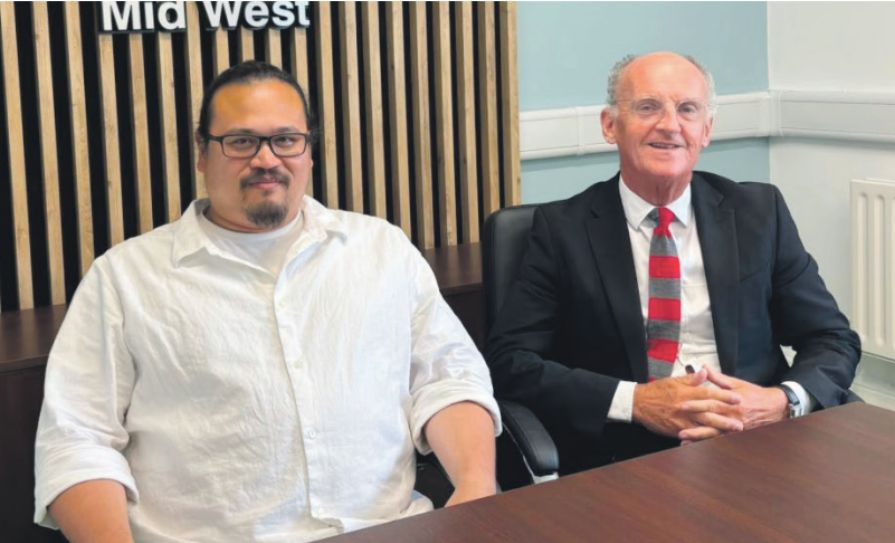
Pictured L-to-R: Dr Azrin Muslim and Prof Declan Lyons
Around 81 per cent of the people included in the study were women.
Researchers used the regional bone density registry to track changes in osteoporosis rates over time, focusing on patients’ first scans to reduce the influence of treatment and repeat monitoring.
The findings showed that osteoporosis at the hip fell from 19.4 per cent in 1998 to 7.4 per cent in 2024. At the lumbar spine, the rate decreased from 30.2 per cent to 8.4 per cent across the same period.
The decline remained evident after researchers accounted for differences in the age and sex of those scanned, as well as changes in the number of scans carried out.
The study said the findings could have implications for future healthcare planning.
According to the study, reports of rising global fracture burden largely reflect population ageing and growth rather than worsening age-specific skeletal risk.
It stated international analyses confirm that while absolute fracture numbers have risen, age-standardised rates in many high-income settings have stabilised or fallen.
“The present study addresses a complementary question: Whether skeletal health at first clinical assessment has itself improved, even as the absolute population burden continues to grow,” according to the paper.
Several limitations were noted. For example, the study cohort comprises individuals referred for clinical assessment rather than a screening population, limiting inference about community prevalence.
Also, fracture outcomes were not examined, “though linkage to fracture and hospitalisation datasets is underway.”
“Non-linear temporal trends are possible and warrant further investigation,” the study stated.
The study noted that the scenario-modelling estimates are illustrative and non-causal. These estimates should be “interpreted cautiously pending formal linkage to fracture outcomes”.
Dr Azrin Muslim, Research Directorate, St Camillus Hospital, was the lead author of the study; and Prof Declan Lyons, Director of Research, HSE Mid-West, was the co-author.
“This is a very important study and I think it’s of international significance,” Prof Lyons told the Medical Independent.
“It’s a reminder of how disease patterns change all the time. The assumption has been that if people navigate the midlife risks of cardiac disease and cancer, they would then face a basket of age-associated diseases in later life, with osteoporosis and fracture risk among the greatest.
“This data suggests that basket of risks isn’t going to contain the same collection of diseases we might have thought and that has big implications not just for us in the Mid-West, but nationally and internationally.”








Leave a Reply
You must be logged in to post a comment.