







Dr Cathal Ó Broin, Consultant in Infectious Diseases at St Vincent’s University Hospital, Dublin, speaks to Niamh Cahill about the steps required to further advance HIV prevention and care
Significant improvements in HIV prevention and care have occurred in Ireland in the last 10 years, according to Dr Cathal Ó Broin, Consultant in Infectious Diseases, St Vincent’s University Hospital, Dublin.
Speaking to the Medical Independent (MI), Dr Ó Broin welcomed these developments, including the introduction of a pre-exposure prophylaxis (PrEP) programme.

But he underlined that greater investment and new strategies are needed to eliminate HIV transmissions in line with global commitments.
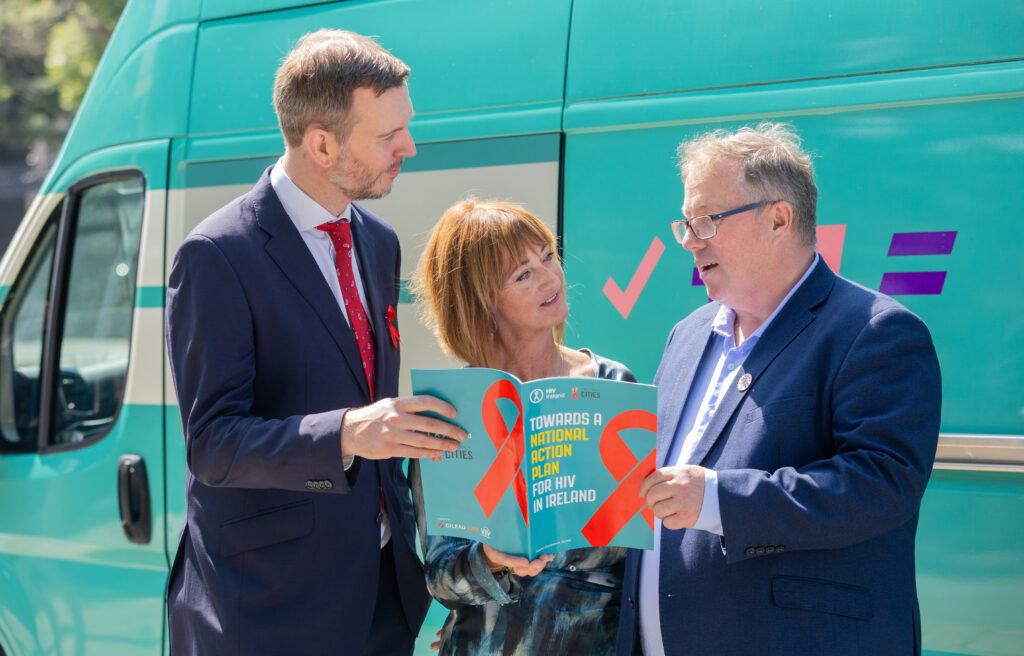
Dr Ó Broin made the remarks following the publication of a new HIV Ireland report – Towards a National Action Plan for HIV in Ireland. The report warned that Ireland was unlikely to meet its goal of ending HIV transmissions by 2030.
It is estimated that around 8,000 people in Ireland are living with HIV. In 2024, Ireland had the second highest HIV transmission rate per capita in Europe, according to data from the HSE Health Protection Surveillance Centre.
Dr Ó Broin has worked in the area of infectious diseases since 2014, becoming a consultant in 2020. He believes that the planned HIV national action plan and the National Sexual Health Strategy 2025-2030 will help to build on “huge improvements” in HIV prevention and care.
“Certainly from a prevention perspective, I think there has been significant investment by the Department of Health,” Dr Ó Broin told MI.
According to the new HIV Ireland report, achieving the 2030 goal is possible, but only with immediate political commitment, sustained investment and a willingness to adopt proven interventions at scale.
“The cost of complacency is stark with the report’s findings estimating that the total cost of care for people living with HIV in Ireland between 2025 and 2030 could reach over €694 million, with the additional lifetime costs associated with new diagnoses alone estimated at €2.02 billion,” it outlined.
The charity called for the introduction of routine opt-out testing for HIV in emergency departments (EDs), wider access to testing and treatment, the elimination of waiting lists for HIV PrEP, and the provision of treatment in the community outside of secondary care settings.
“Ireland has the knowledge and the tools to end new HIV transmissions. What this report makes clear is that we are not currently applying them at the scale or speed required,” said Mr Stephen O’Hare, HIV Ireland’s Executive Director.
“Ireland is reporting rising cases of HIV in certain demographics, we continue to see unacceptable levels of late diagnosis and people seeking pre-exposure prophylaxis are waiting up to a year. We urgently need the Government to publish a national action plan for HIV.”
Prevention
One of Dr Ó Broin’s lead roles at St Vincent’s is in the area of HIV prevention. The hospital has 1,450 patients on HIV PrEP, an oral antiretroviral therapy taken by people at risk of HIV. When taken correctly, HIV PrEP reduces the risk of acquiring HIV by about 99 per cent. The therapy does not protect against other sexually transmitted infections (STIs).
The HSE commenced a HIV PrEP programme in November 2019, following a HIQA health technology assessment which found that the introduction of a PrEP programme would be safe, effective, and cost-saving. Nationally, there were 8,521 patients on PrEP in the first quarter of 2026, according to data from the HSE.
“In the last six or seven years, we have seen a really big improvement in prevention and, certainly in people born in Ireland, we’ve seen a small reduction in new cases acquired,” Dr Ó Broin noted.
“But I think we can lose focus because while HIV is a very chronic, manageable infection, it is an incurable infection. We have a lot of the tools to get this under control and we’ve done amazing work, but the last hurdle is always the most difficult. Now it’s about finding the patients who are a little bit more challenging to find. We need to work harder. We need to have processes in place that are more accessible to everyone in the country; that’s the next level of challenge we face.“
At St Vincent’s, there is a 30 per cent STI detection rate at every HIV prevention clinic, according to Dr Ó Broin. He said it is a statistic that reflects the fact that the right patients are being seen at clinics.
But the demand for HIV prevention services remains high and other more creative ways of meeting the needs of patients are required, he underlined.
“There is a huge demand for HIV prevention and whenever any resources are allocated they are very quickly saturated,” he said.
Similar to services in place in the UK, Dr Ó Broin suggested ways in which care and treatment could be offered more efficiently – for example, by making greater use of digital technology to improve the patient journey.
A further expansion of the role of nurses in PrEP, who Dr Ó Broin stated are “highly competent”, and the utilisation of all multidisciplinary team staff would also lead to improvements.
Dr Ó Broin said the HSE SH:24 home testing service, introduced in 2021, is “outstanding” and has provided an avenue to testing for patients who heretofore did not have access. However, he argued Ireland needs to go further and embed testing in certain healthcare processes.
Opt-out Testing
In 2024, there were 239 first-time HIV diagnoses, up from 182 in 2023. Data for 2025 has not yet been published.
Around 40 per cent of people in Ireland are diagnosed late, which means that HIV is already negatively affecting their immune system.
Research shows that many people have attended healthcare services several times before they are offered a HIV test.
Dr Ó Broin believes that routine opt-out testing should be introduced more widely.
“Routine opt-out testing picks up many more cases of hepatitis in addition to HIV,” he noted. The service is in place in some UK hospitals and data has shown it is effective.
Currently, St James’s Hospital, Dublin, is the only hospital in Ireland offering routine opt-out HIV and hepatitis (B and C) testing in its ED.
Dr Ó Broin noted that the Mater Hospital in Dublin did “an outstanding study” over 10 years ago, demonstrating that cases are picked up much earlier this way.
Other Irish hospitals are hoping to introduce the service, but accessing funding for such initiatives remains challenging, he said.
“When you have opt-out testing, you pick people up earlier. [The] 40 per cent of people who are being diagnosed too late – we need to tackle that group. Because that 40 per cent who are diagnosed too late, they are the ones who suffer with more infections, they have a weakened immune system, they are the ones who end up in hospital in intensive care. There is a significant cost to the patient and individuals’ health, as well as an economic cost in terms of care. If we diagnose people earlier, everyone wins,” said Dr Ó Broin.
Injectable Therapies
Injectable therapies are an important part of HIV prevention and treatment and are likely to have an even greater role in the future.
“There is a lot of research into HIV cures, but where we’re ultimately headed is towards injectable therapies that control the virus effectively, so patients do not have to take tablets. That’s the most realistic thing we’re going to see in the next five years,” Dr Ó Broin stated.
Rekambys injection (rilpivirine) and Vocabria injection (cabotegravir) are used together as a complete long-acting injectable antiretroviral therapy for HIV. The therapy, which is available in Ireland, is licensed for two dosing regimens – once-monthly or once every two months. Where patients are suitable for this therapy, it removes the need for daily oral antiretroviral therapy. However, new injectable therapies administered every six months are in development and will help to reduce the stigma around HIV, Dr Ó Broin outlined.
“Stigma is one of the greatest barriers to HIV testing. Patients carry stigma, healthcare staff carry stigma and it’s in the general public. There is a lot of Irish data to show this. There have been some really great public health campaigns in Ireland on reducing HIV stigma, but I think we need to do more. We need to keep that message strong.”
There are also injectable therapies for the prevention of HIV, but these are unavailable in Ireland currently.
It is clearly established that certain populations face particular barriers to adherence to daily oral PrEP. “[For example] we see that with heterosexual women and the studies actually have highlighted that where women have a risk of HIV there is also a risk of other things like domestic violence. So perhaps a woman [in these circumstances] doesn’t have the ability to take a tablet because their personal safety is at risk, some studies have highlighted that risk very clearly,” Dr Ó Broin stated.
“We’re a little bit ahead in [the area of HIV] prevention globally in Ireland, but we need to get these injectable therapies available for patients here, and there is no sign of that happening anytime soon.”
Global Concerns
The US administration under President Donald Trump has made severe cuts to the President’s Emergency Plan for AIDS Relief (PEPFAR) programme. The situation is of major concern to all those working in the area of HIV.
PEPFAR has provided billions of dollars for HIV treatment and prevention since its establishment in 2003.
The funding cuts will have a significant negative impact on progress made in reducing HIV transmissions, and will have a global impact, Dr Ó Broin warned.
“There was initially a pause and now there is going to be a steady reduction [of funding] to PEPFAR and South Africa has suffered hugely as a result of this funding reduction. UNAIDS has estimated there will be a significant rise in HIV infections, HIV deaths, and also orphaned children.
“HIV knows no borders. Infections know no borders. I think we need to be aware in Ireland that anything that happens in the world is also going to affect us. At a global level we need to have a political commitment to supporting people with HIV.”
Access to Care
As efforts continue to reduce HIV transmission in Ireland, less traditional models of care must be utilised, Dr Ó Broin stated.
In Ireland, it is estimated 90 per cent of people living with HIV have a diagnosis. The vast majority are on treatment and have an undetectable viral load.
“So they’re doing really well,” noted Dr Ó Broin. “It’s the last 10 per cent we’re trying to find, the ones that are not controlled.”
“We have to think about the current model of hospital-delivered care and how that doesn’t always meet the patient in the right place,” he said.
“If you’re homeless, if you have mental health issues, if you have substance [misuse] issues, if you don’t speak the language, if you have to travel four or five hours to your nearest clinic with your kids and no childcare, that’s going to be a huge barrier. I think we need to be able to meet the patient where they are if we’re to deliver on the commitment to eliminate HIV transmission.”
He would like to see a model that is adaptable to patient needs. It would involve close connections between the hospitals and the community, “where if someone requires a nurse to see them in the community, we can offer that, where we can go out in the community and give someone an injection every two months, which controls their HIV….”
The system needs to be more creative to ensure access to diagnosis and care is provided for under-served populations, he emphasised.











Leave a Reply
You must be logged in to post a comment.