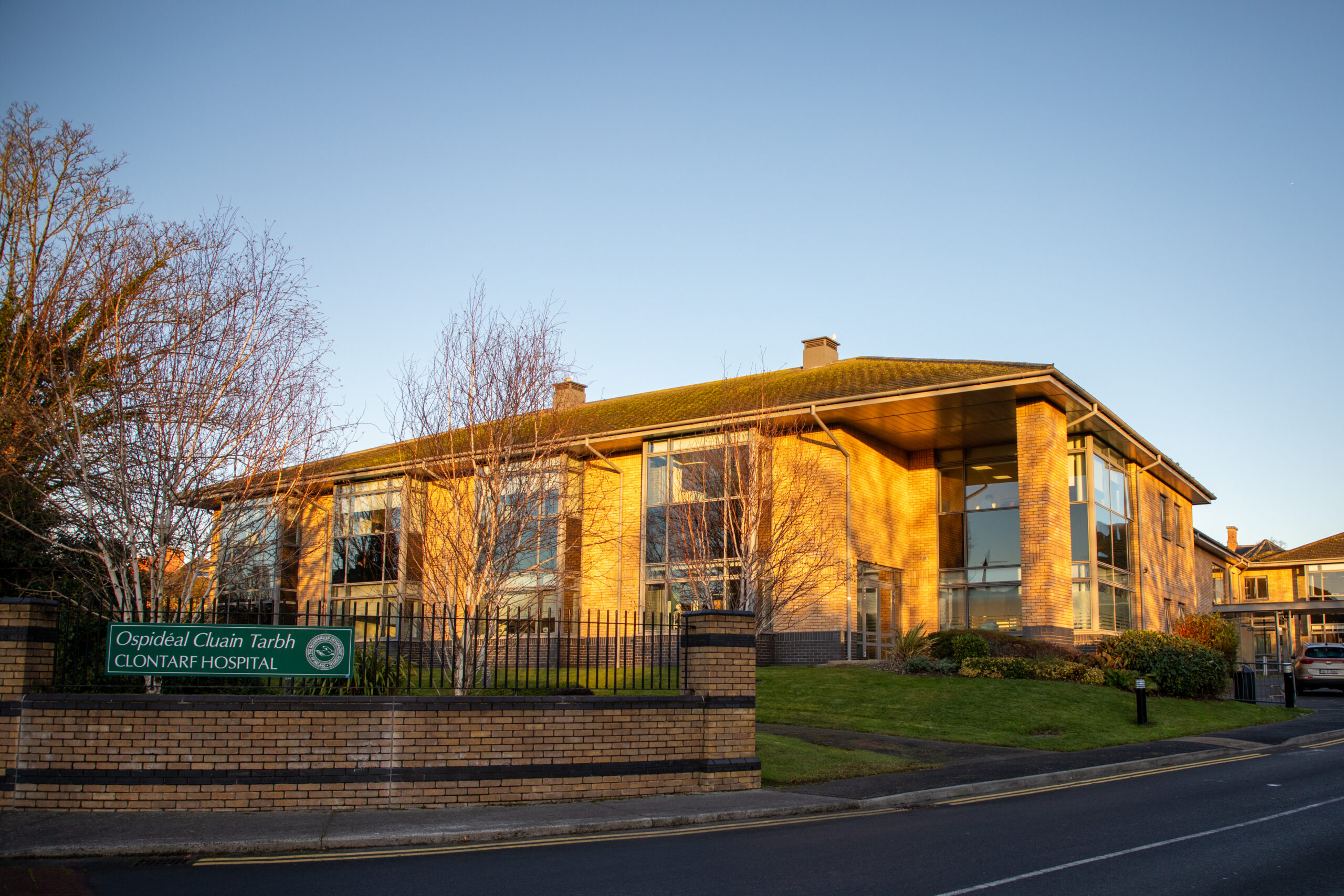
Clontarf Hospital, Dublin
As we celebrate our 150th anniversary, Clontarf Hospital continues to evolve, while remaining firmly committed to excellence and patient-centred care
This year marks a significant milestone for Clontarf Hospital, Dublin, as we celebrate 150 years of service to patients, families, and the community. While much has changed since our foundation in 1876, our core purpose remains the same: Helping people recover, regain independence, and return to the fullest lives possible.
The story of Clontarf Hospital reflects both fascinating aspects of Dublin’s social history and the remarkable advances in healthcare that have transformed patient outcomes. Originally established to provide essential orthopaedic services to children, the hospital navigated four relocations across the city centre before becoming firmly rooted at our current site in Clontarf in 1942. Then, responding to the shifting healthcare needs in the early 1970s, the hospital strategically transitioned its focus to the provision of adult rehabilitation services. Despite these changes, our guiding principle remains the same: Recovery extends beyond clinical treatment alone. It requires restoring function, confidence, independence, and quality-of-life. This philosophy continues to guide our multidisciplinary teams today.
As Ireland’s population grows and ages, the demand for high-quality consultant-led rehabilitation services continues to increase. Concurrently, advances in acute medical and surgical care mean that more people survive serious illness, injury, and complex health events. However, survival is only part of the journey. Many patients require specialist rehabilitation to maximise their recovery and return to meaningful participation in family, community, and working life.
Rehabilitation is an increasingly critical component of the healthcare continuum. Effective post-acute rehabilitation pathways improve patient outcomes and quality-of-life. They also reduce long-term disability, prevent avoidable complications, and support timely discharge, thereby reducing acute hospital bed days, and delayed transfers of care from our acute hospitals.
At Clontarf Hospital, our dedicated staff provide expert, compassionate care tailored to each patient’s individual needs. Every day, we witness the transformative impact of rehabilitation: Patients taking their first steps after life-changing illness or injury, regaining independence in everyday activities, and rebuilding confidence and autonomy. Rehabilitation is not simply about restoring function; it is about restoring possibility.
Consultant-led care
Today, Clontarf Hospital is recognised as a leader in consultant-led multidisciplinary team rehabilitation care – this model is central to our success. Our teams include: Medical consultants; nurses; physiotherapists; occupational therapists; speech and language therapists; dietitians; social workers; pharmacists; and care staff, working together to support each patient’s recovery journey.
Rehabilitation is a highly specialised field requiring clinical leadership, coordinated care planning, and evidence-based interventions tailored to complex needs. Through this approach, we deliver integrated, patient-centred care focused on outcomes that matter most to patients across our six rehabilitation pathways, including:
Older persons rehabilitation pathway
In 2025, we supported 786 older persons on this pathway following an acute admission to the Mater Misericordiae University Hospital and Beaumont Hospital in Dublin for illness or injury, with over 80 per cent of patients successfully returning home.
ICPOP pathway with the Mater Hospital
Last year, we supported 133 admissions on this pathway under the clinical governance of an integrated care for older persons (ICPOP) consultant geriatrician. Some 81 per cent of patients were admitted to Clontarf Hospital directly from the Mater Hospital’s emergency department and 19 per cent of patients were admitted directly from home through GP and primary care team referral to the ICPOP team consultant.
Specialist rehabilitation pathways with Beaumont and the Mater Hospitals
We also supported 152 adult patients on our specialist rehabilitation pathways. By providing earlier discharge options from both the Mater and Beaumont Hospitals, we ensured faster access to specialist rehabilitation for patients with complex needs including stroke, head injury, other neurological conditions, and amputees. In doing so, we are actively reducing the waiting lists for tertiary rehabilitation hospital care, ensuring that greater than 90 per cent of our patients can transition directly and safely back to their own homes.
Orthopaedic rehabilitation pathway
A total of 630 patients were supported on this rehabilitation pathway last year, including both elective orthopaedic and trauma patients.
Looking forward
As we celebrate our 150th anniversary in 2026, we continue to evolve and innovate, while remaining firmly committed to excellence and patient-centred care. As rehabilitation becomes increasingly important within modern healthcare, Clontarf Hospital remains dedicated to leading this evolving field.
We will continue to foster clinical excellence, innovation, education, research, and service development, while strengthening partnerships across the healthcare and education sectors and firmly advocating for the vital role rehabilitation plays in delivering high-quality, person-centred care.
For 150 years, Clontarf Hospital has helped people rebuild their lives. We look forward to continuing that vital mission for generations to come.
“As rehabilitation becomes increasingly important within modern healthcare, Clontarf Hospital remains dedicated to leading this evolving field”
A 150-year timeline of Clontarf Hospital
1876: Clontarf Hospital was established by Dr Robert Lafayette Swan – President of the RCSI from 1898 to 1900 – in his house on Usher’s Island, Dublin 2. The six-bed facility was established to treat children with orthopaedic and bone conditions, such as rickets and knock-knees. The children often required surgery followed by a lengthy period of recovery and rehabilitation. The hospital’s first patient was the four-year-old son of a painter from Capel Street, Dublin 1.
1883: The hospital moved to Great Brunswick Street (now Pearse Street), Dublin 2.
1902: Another relocation took place when the facility transferred to the then government-owned No 22, Upper Merrion Street, Dublin 2. Today this is the location of the Merrion Hotel. Inpatients usually numbered 60 to 70 children at this time.
1911: A primary school opened in the hospital to support children’s education.
1942: The hospital moved to Castle Avenue in Clontarf, Dublin 3, with the intention of giving patients the benefit of fresher air and more space. The house in which the hospital was based required extensive renovations for it to function as a healthcare facility.
Early 1970s: After 95 years providing rehabilitation services to children, it changed to an adult hospital. This was due to a decline in the number of children with orthopaedic and bone conditions as a result of improvements in diet and living conditions, and advances in public health and medical treatment. With this change, Clontarf Hospital was able to ease bed shortages in other Dublin hospitals, including the Adelaide, Jervis Street, St Laurence’s, St Vincent’s, the Meath, and Dr Steevens’.
2026: Clontarf Hospital is the only dedicated public rehabilitation hospital in the HSE Dublin North and East region. Its staff provide expert rehabilitation care across six pathways, working closely with its acute hospital colleagues, and its community and academic partners.












Leave a Reply
You must be logged in to post a comment.