Related Sites

Related Sites

medical news ireland medical news ireland medical news ireland

NOTE: By submitting this form and registering with us, you are providing us with permission to store your personal data and the record of your registration. In addition, registration with the Medical Independent includes granting consent for the delivery of that additional professional content and targeted ads, and the cookies required to deliver same. View our Privacy Policy and Cookie Notice for further details.


Don't have an account? Register

ADVERTISEMENT

ADVERTISEMENT

Additional NCHDs required to implement agreement – Department

By Catherine Reilly - 08th Jan 2023

NCHDs

The Department of Health has acknowledged that additional NCHDs will be required to fully implement the recent agreement reached with the IMO. In December, the union’s NCHD members overwhelmingly accepted the agreement with healthcare management that aims to address unsafe and illegal working hours and improve overall working conditions.

A Department spokesperson told the Medical Independent (MI) it “recognises and accepts” implementation will “require a range of measures and solutions across different sites, including the appointment of additional NCHDs”.

It would be a “matter for the HSE to develop solutions and to implement rosters in accordance with the agreement”, they outlined.

Asked about additional funding for posts, the Department spokesperson said “replacing any excessive overtime hours worked by NCHDs with standard hours through the recruitment of additional NCHDs would not require additional funding”.

Speaking to MI in late December, IMO NCHD committee Chair Dr John Cannon said the Organisation considered that implementing the terms of the agreement was achievable without severely impacting service provision.

According to Dr Cannon, some sites could implement the rostering rules “straight away without issue” and others would be capable of implementation with some exceptions. However, he said there were also sites that would find it “very hard” to implement the rules and would require an increase in NCHDs. Dr Cannon also said the new financial penalty system for breaches of the European Working Time Directive would “incentivise” sites to change their practice. In addition, the agreement sets out a system of compensatory rest days where rostering rules are breached and additional payment for NCHDs if these rest days are not provided.

Dr Cannon said a key difference with the old system was the union would have “line of sight” on the financial penalties and their distribution. According to the agreement, the monies must be used to support and benefit NCHDs employed in the relevant hospital, and at national level, 10 per cent of the fund from each hospital will be paid directly to medical schools running programmes for students from disadvantaged backgrounds.

“This is a very good agreement,” said Dr Cannon, “it is a stepping stone to a proper health system that protects its doctors.”

It was also agreed that negotiations on the development of a new NCHD contract would commence this month.

ADVERTISEMENT

Latest push

ADVERTISEMENT

HSE property insurance audit finds system ‘unsatisfactory’

By David Lynch - 08th Jan 2023

audit

An internal audit into HSE property insurance found that the level of assurance about the “adequacy and effectiveness” of the governance, risk management and internal control system was unsatisfactory.  

The HSE told this newspaper that it established a working group to implement the recommendations arising from the findings of the internal audit of HSE property insurance. The audit was issued on 15 July 2022.

“This working group includes members of Capital and Estates and the National Finance Division including internal insurance specialists,” the spokesperson told the Medical Independent (MI)

The objective of the group is to determine a plan to systematically address the recommendations arising from the internal audit report.

“Progress is ongoing with three of the findings currently implemented. The remaining recommendations (six) are expected to be implemented by quarter three 2023.” 

The audit findings were discussed at the HSE audit and risk committee’s meeting in September, according to minutes.

A “key component” of the audit was to establish the accuracy and completeness of internal databases and registers used to record properties and their associated values, the meeting heard.

In response to the discussion, the committee “requested that major assets such as acute hospitals” should be revalued.

The HSE’s spokesperson told MI it has since conducted an “initial review of its insurance valuation and an initial uplift of its property portfolio has taken place”.

“The working group are tasked with delivering an updated detailed review which will determine if any further uplift on these valuations is required for insurance purposes. They are being assisted by external specialists in construction and property insurances, which will inform the outcome of the review as noted.”

ADVERTISEMENT

Latest push

ADVERTISEMENT

GORD in infants and children

By Eamonn Brady MPSI - 08th Jan 2023

GORD

Gastro-oesophageal reflux disease (GORD) is reflux which is associated with troublesome symptoms or complications in infants and children

Gastro-oesophageal reflux disease (GORD) is also called ‘gastric reflux disease’ or ‘acid reflux’. It is a condition which develops when the reflux of stomach contents causes troublesome symptoms such as heartburn, or complications such as oesophageal ulcers.

How common is GORD in the general population?

The most common cause of indigestion in Ireland, GORD affects up to one-in-four people. Some 10-to-20 per cent of people in the Western world have at least one bout of GORD per week. This figure is only about 5 per cent in Asia, which gives an indication that our Western diet, which tends to have a higher fat content, is a factor in GORD.

GORD can affect people at any age, including infants and young children. A typical sufferer is twice as likely to be male as female. It is also a common problem for babies and infants, leading to difficulty feeding in more severe cases. It can be controlled by food thickeners, alginates and removing cow’s milk from the infant’s diet if caused by lactose intolerance.

How common is GORD in infants?

The most obvious symptoms of reflux in infants is vomiting or regurgitation. All healthy infants have a tendency for GORD and it is natural for an infant to have a certain amount of regurgitation after feeding. The issue is whether GORD is causing a problem in an infant, rather than whether GORD is occurring at all. Reflux is most common between one-to-four months and approximately 67 per cent of infants have more than one daily episode of regurgitation at four months. Between the ages of six-to-seven months, symptoms of reflux decrease from 61 per cent down to 21 per cent. At 12 months of age, only 5 per cent have symptoms. By 12-to-18 months, most cases of GORD will resolve as the sphincter (valve between oesophagus and stomach) matures, the infant adopts an upright posture and begins having a more solid diet.

Symptoms of reflux in infants

Reflux causes frequent or recurring vomiting. This is not the small mouthfuls of vomit seen in all infants, but the vomiting of large amounts. This can happen straight after a feed, or right up until the next feed. When the infant’s oesophagus becomes sore from exposure to the regurgitated acid (the equivalent of heartburn), this leads to irritability, pain, and poor feeding. If GORD is severe, the infant may have difficulty gaining weight.

Other common symptoms of reflux include:

  • Sometimes screaming suddenly when asleep. Infants can be inconsolable, especially when laid down flat.
  •  Poor sleep habits, typically with arching their necks and back during or after feeding.
  • Frequent burping or frequent hiccups.
  •  Swallowing problems.
  • Frequent ear infections or sinus congestion.
  •  Infants are often very windy and extremely difficult to burp after feeds; failure to wind them successfully usually means reflux and vomiting are worsening.
  • Refusing feeds or frequent feeds for comfort.
  • Night-time coughing.
  • Sometimes reflux can happen so quickly that it leads to the infant inhaling vomit, leading to respiratory problems such as asthma, bronchitis, and even chest infections.

When to refer?

It is very rare for reflux to lead to serious complications. But some infants do have problems and the parent should see a GP if the infant vomits severely or has any of the following symptoms:

  • Blood or bile in their vomit;
  •  Difficulty in swallowing or is choking easily;
  • A fever;
  • Is irritable, crying and hard to settle;
  • Listlessness, dark circles under the eyes, refusal to feed, and dry nappies;
  •  Breathing problems that could lead to apnoea;
  • Is losing weight or not gaining weight as per normal. 

Treatment

Avoid overfeeding and try increasing frequency and decreasing volume of feeds. The infant should be supported in an upright position whilst feeding and for at least 45 minutes after feeding to bring up wind. The infant should be handled very gently after feeding and during winding; avoid vigorous patting or rocking.

GORD tends to be worse when lying flat and therefore a gentle raise of the head of an infant’s cot can be useful, so that the infant’s head is higher than the rest of their body while they sleep. This can be done by putting a pillow or folded blanket under the mattress to create a gentle up-slope. Never attempt to let the infant sleep directly on a pillow, which could be dangerous.

The issue is whether
GORD is causing a problem in an infant, rather than whether GORD is occurring at all
 

Products to add to an infant’s food

By thickening their food, an infant is less likely to bring it back up. There are products to thicken an infant’s
milk, for example, Instant Carobel. There are also ready-thickened milk substitute formulas for babies who are bottle fed.

If breastfeeding and the infant is having problems with bringing up food, Gaviscon Infant sachets may be used.

Infants are less likely to bring up food if they have sodium alginate (Gaviscon Infant) mixed with their feed or dissolved in water after their meal. Sodium alginate works in three ways: It thickens the milk, making it easier for the infant to cope with; coats the oesophagus all the way down to the stomach; and in the stomach, it forms a raft over the stomach contents, helping to stop the contents of the stomach from escaping back up the oesophagus. Dosage depends on the weight of the infant. Gaviscon Infant sachet(s) can be mixed with cool boiled water, milk feed or expressed breast milk. Gaviscon Infant sachet(s) should not be administered more than six times in 24 hours.

Gaviscon Infant should not be given to premature infants, young children who are ill with a high temperature, diarrhoea, vomiting, or if already using a
food thickener. 

Medication

Anti-reflux medicines reduce the severity of the reflux by improving the downward movement (ie, motility) of the oesophagus and stomach. They may also reduce acidity so that the reflux is less damaging to the oesophageal lining. They are generally only used if other treatment options like thickeners do not work.

Domperidone helps tighten the valve (the sphincter) at the end of the oesophagus where it joins the stomach. This will help stop food from flowing back into the oesophagus. It comes in liquid or rectal (suppository) form for infants and children, but is only available with a prescription. Directions: By mouth – over one month and body weight up to 35kg, 250-500mcg/kg three-to-four times a day; body weight 35kg and over, 10-20mg three-to-four times daily, max 80mg daily. By rectum – body weight over 15kg, one 30mg Motilium suppository twice a day, body weight over 35kg, 60mg twice-daily. Some young children taking domperidone may get mild diarrhoea.

H2 blockers reduce the amount of acid in the stomach. Ranitidine, a type of H2 antagonist, was often used for GORD in infants until it was recalled in 2019.

Omeprazole liquid (available as an unlicensed medication in Ireland) and Losec MUPS (omeprazole) are the most used proton pump inhibitors (PPIs) for children. Losec MUPS can be dissolved in water, which is convenient for children’s dosage. A PPI reduces the acidity of the stomach’s contents and is more potent than H2 antagonists. The dose for infants and young children is based on body weight and the doctor will decide the correct dose. Directions: Newborn infant under four weeks, 700mcg/kg once-daily, increased if necessary after seven-to-14 days to 1.4mg/kg once-daily. Child one month to two years, 700mcg/kg once-daily, increased if necessary to 3mg/kg, max 20mg once-daily.

Dosage range for omeprazole by weight:

  • Child’s body weight 10-20kg: 10mg once-daily (max 20mg/day).
  • Child’s body weight over 20kg: 20mg once-daily (max 40mg/day).

Surgery

Surgery is required in a minority of infants with severe GORD who do not respond to treatment; surgery is not always successful. Sometimes medication needs to be continued after surgery.

Disclaimer: Brands mentioned in this article are meant as examples only and not meant as preference to other brands.

Bibliography

Galmiche JP, Janssens J; The pathophysiology of gastro-oesophageal reflux disease: An overview. Scandinavian Journal of Gastroenterology. 1995, Vol 30, No s211,
Pages 7-18

PJ Kahrilas. Gastro-oesophageal reflux disease. New England Journal of Medicine, 2008

All PPIs are equivalent for treatment of GORD (POEM). The Pharmaceutical Journal. Vol 275 No 7380 p736. Dec 2005

Nickless G, Morgan P. Gastro-oesophageal reflux disease and its management. The Pharmaceutical Journal,
1 Dec 2009

Patient information from the BMJ Group. GORD in young children. March 21, 2012

Stringer D, MS FRCS FRCP. Gastro-oesophageal reflux. TOF young children by TOFS (Tracheo-Oesophageal Fistula Support)

The Royal Young Children’s Hospital Melbourne. Clinical practice guidelines: GORD in young children. May 2012

Liburd J, Hebra A. GORD. eMedicine, May 2009; Paediatric article
ADVERTISEMENT

Latest push

ADVERTISEMENT

IMO NCHDs vote in favour of agreement

By Reporter - 20th Dec 2022

A ballot of NCHD members of the Irish Medical Organisation (IMO) has voted in favour of an agreement negotiated by the IMO with the HSE and the Department of Health which will help to eliminate unsafe and illegal working hours, according to the union.

This agreement will also aim to tackle difficulties in getting paid for hours worked, guaranteed access to leave for essential exams, payroll problems and it will see employers being penalised for noncompliance.

Additionally, the IMO secured negotiations on an entirely new NCHD contract, to commence in January.

The ballot concluded on 19 December at midnight. Of the votes cast, 81 per cent of the NCHDs were in favour of accepting the agreement.

Chair of the IMO NCHD Committee, Dr John Cannon, welcomed the outcome of the vote: “This agreement is a milestone in our campaign to reform working conditions for NCHDs in the Irish health services. However, it does not mark the end of our campaign.

“The real goal remains to negotiate a comprehensive, fit-for-purpose new contract for NCHDs, and that task begins in new negotiations in January. We expect that the HSE and all hospitals will now abide by the terms of this agreement and the IMO will be monitoring compliance.

“NCHDs have been left to deal with unsafe working conditions for too long and if the HSE does not ensure compliance we will take industrial action.”

The agreement follows extended negotiations between the IMO NCHD Committee and the HSE and the Department of Health. Those negotiations followed an overwhelming vote by NCHDs in a ballot conducted earlier this year, where 97 per cent voted for action up to and including industrial action.

Key elements of the agreement include:

  • Introduction of Rostering Rules where NCHDs must be granted appropriate rest and employers will be financially penalised where hours breach the legal limit.
  • Development of new centralised payroll system with interim measures to alleviate the ongoing problems of emergency tax for NCHDs each time they move hospital.
  • Nationally agreed timesheet to ensure NCHDs get paid for all hours worked.
  • Enhanced training supports and guaranteed study leave for gateway/mandatory exams.
  • Increased relocation expenses for NCHDs on training schemes and a commitment to address the “double renting” situation for NCHDs.
  • Agreement to begin negotiations on a completely new NCHD contract in January of next year.

ADVERTISEMENT

Latest push

ADVERTISEMENT

GP co-ops fearing unmanageable Christmas period

By Niamh Quinlan - 13th Dec 2022

GP out-of-hours services are preparing for a rise in presentations over the Christmas period and are seeking further funding to manage the increase.

Speaking to the Medical Independent, Chair of the National Association of GP Co-ops, Dr Ken Egan, said a quarterly national meeting of co-oops, held on 24 November, heard that out-of-hours services are currently “flooded with work”.

He said: “The co-ops are reporting now that we have Christmas figures across the board for the last two or three weeks. And there’s a concern as to if it keeps increasing, the actual Christmas [period] itself is going to be horrific.”

Dr Egan said that “at the moment” the services are managing and morale among GPs is “quite good… because co-ops are used to being busy”.

“But there is a certain fear… there will be a collapse of the system and patients won’t be able to access co-ops.”

Dr Egan added that there has been no allocation of resources to deal with the anticipated increase in presentations.

Each co-op has a service-level agreement with their local HSE area, which have been informed about the pressure services are under, he said.

However, there has been no official response received in terms of additional funds.

Dr Egan said without these extra resources there will be “a huge wait for patients who want to avail of the co-ops”.

“The public will have to realise that co-ops are not easily accessible and won’t be if it… gets busier than it has been.”

Dr Egan also highlighted the difficulty in attracting local GPs to take up work in co-ops or provide cover as locums due to high workloads in daytime practice and that “it’s looking as if it’s going to get more difficult”.

ADVERTISEMENT

Latest push

ADVERTISEMENT

HSE launches first National Genetics and Genomics Strategy for Ireland

By Reporter - 13th Dec 2022

The HSE has launched the National Strategy for Accelerating Genetic and Genomic Medicine in Ireland. The strategy, which is the first of its kind in Ireland, outlines the planned development of an enhanced patient and family-centred genetic and genomic service that will be coordinated nationally.

The strategy was developed in collaboration with the Department of Health and healthcare professionals, international experts, academics, patient representatives and advocates. Provided under this strategy is:

  • the creation of a new national office for genetics and genomics
  • the transition of genetics and genomics into routine care delivery
  • targeted workforce planning and development
  • ensuring Public and Patient Involvement (PPI) and partnership
  • the strengthening of Ireland’s infrastructure to drive advances in this area

Speaking at the launch, Dr Colm Henry, HSE Chief Clinical Officer explained: “Advancing Ireland’s genetics and genomics service means improving healthcare for everyone in Ireland, because it will allow for increased disease prevention, better diagnostics, more targeted treatments, and better patient and family outcomes.

“Through this new expert-informed strategy, we can work toward a future where genetic and genomic medicine will be part of routine care delivery that can be accessed equitably across the country, from visits to the GP to extended care for rare disease or cancer.”

Speaking to the Medical Independent in November, Dr Henry also said one of the first actions as part of the strategy will be establishing a national office.

“The key for us will be establishing this office, which will be the hub through which we will drive the different elements of the strategy and through which we will seek and secure funding, hopefully, from the department on a multi-annual basis,” he said. “So we can go from having islands of excellence to having a complete island of excellence in regard to genetics and genomics.”

Dr Mark Bale, former Genomics Advisor to the UK Department of Health and Chair of the National Genetics and Genomics Strategy Steering Group, said: “In the development of this strategy, we’ve noted examples of excellence in genetics and genomics evident throughout the country. However, because of the collective, invaluable contributions of over 100 experts, healthcare professionals, advocates and patient representatives, Ireland now has a comprehensive strategy.

“This provides a way forward for progressing this exciting field of medicine to improve citizen health and wellbeing whilst advancing research, innovation, and discovery. I have every confidence that Ireland will rise to this occasion, beginning with implementation in early 2023.”

Patient and public involvement was a key feature throughout the development of the strategy, and the HSE said they are committed to continuing to centre patient voices throughout its implementation.

Director of the HSE’s Strategic Programmes Office, Ms Deirdre McNamara said: “It was a pleasure and a privilege to have the input of so many patient representatives and advocates in this process, and their contributions certainly shaped the content of the strategy in many ways. It is essential that the needs of patients and their families continue to be at the heart of the design and development of any new genetic and genomic services or initiatives in Ireland.”

Genomics is the study of the body’s genes, their functions and their influence on the growth, development and working of the body. A genome is an organism’s complete set of DNA, including all of its genes. Genetic testing can be used to examine particular individual genes within the genome, and whether a person is carrying a specific inherited altered gene that causes a particular medical condition. Genomic medicine uses information about a person’s genetic makeup in devising innovative and effective new treatments and care pathways for patients.

ADVERTISEMENT

Latest push

ADVERTISEMENT

New GP training facility opens in Cork

By Reporter - 07th Dec 2022

The new fit-for-purpose GP training facility for the Cork GP Training Scheme was officially opened today (7 December) at St Mary’s Health Campus, in Gurranabraher, Cork.

The new facility provides an enhanced and larger learning environment for GP training in the city and region, with plans for further expansion.

It also represents a strong partnership between the Irish College of General Practitioners (ICGP), the HSE, University College Cork (UCC) and Cork City Council, the ICGP said in a press statement.

The ICGP’s National Director of GP Training, Dr Martin Rouse, said: “This is a significant milestone in the history of GP training in Cork. From its establishment in the early ’70s, the Cork GP Training Scheme has maintained huge support from the General Practice community, the old Southern Health Board (now HSE) and, in particular, UCC. The links with UCC have always been strong and while moving some distance from the main UCC campus on the Western Road, this modern fit-for-purpose facility will continue these links and ensure a healthy future for the training of General Practitioners for the region. “

He added: “It is a tribute to the vision of past Directors of GP Training in the region from Dr Owen Shorten, Prof Bill Shannon, Dr Harry Comber and most recently Dr Paddy Ryan whose foresight and persistence was key to delivering this wonderful facility.”

The ICGP is leading an expansion in GP training numbers nationally to help meet GP shortages, impending retirements and the growing diversity of GP services in primary care.

Last month, the ICGP received a record 968 applications for the 2023 GP Training Programme, “reflecting the growing popularity of general practice as a career for medical graduates”, the college said in a press statement.

Dr. Rouse also said: “There are currently 932 trainees enrolled in the GP Training Programme across the country, and we have increased our training numbers by 60 per cent in the past six years.”

The Director of the Cork GP Training Scheme, Dr Sheila Rochford, welcomed representatives from UCC, the HSE and the Lord Mayor’s office to the official opening.

“We are delighted to be based here in Gurranabraher while keeping our close links with UCC,” she said. “The expansion of GP training in the region will help strengthen primary healthcare services, and it’s a recognition of the strong support we receive from the HSE that this facility is now in place. From 12 training places, we have now 24 trainees on-site, and we look forward to growing those numbers in coming years.”

ADVERTISEMENT

Latest push

ADVERTISEMENT

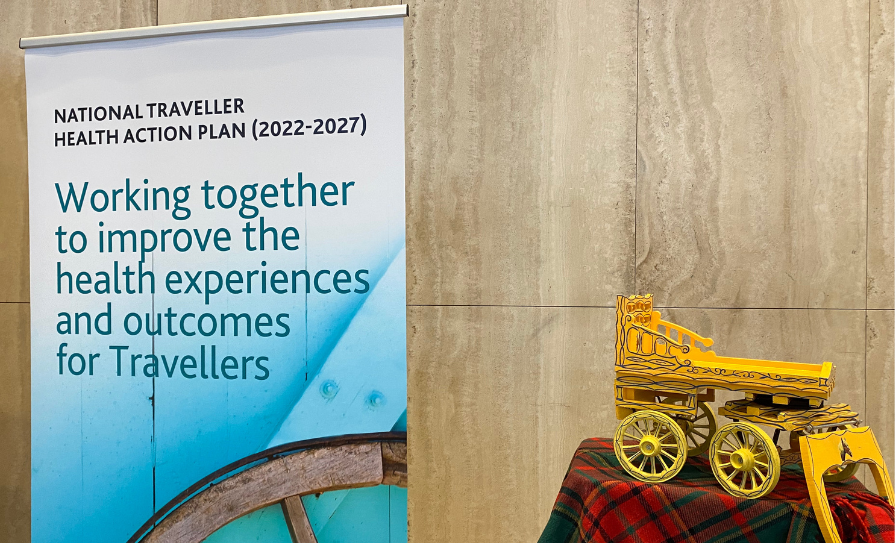
First National Traveller Health Action Plan launched

By Reporter - 28th Nov 2022

Traveller Health

The National Traveller Health Action Plan (NTHAP) 2022-2027 launched today (28 November) aims to improve the health experiences and health outcomes for Travellers.

The Department of Health is providing additional ring-fenced funding of €1 million in 2023 to support the implementation of the plan, with a further €300,000 specifically for mental health services.

The NTHAP acknowledges the health inequalities that Travellers experience, arising from the social determinants of health and the obstacles they can face in accessing healthcare services. It will provide a solid foundation upon which to build and maintain a legacy of success in addressing the additional health needs of the Traveller population, according to the HSE.

Minister for Health, Stephen Donnelly said at the launch: “Today is about accepting the reality, acknowledging that in the past enough has not been done, [and] putting in place a plan for the future to make sure that the services that are needed for Traveller men, women and children are provided.”

He also said in a press statement: “[The NTHAP] is a comprehensive public health response to the health needs of Travellers, that that sets out tailored and affirmative measures to prevent disease, promote health and prolong life, and are delivered in partnership with Traveller. In particular, I welcome the focus on the mental health needs of Travellers, which is in line with the prioritisation of Travellers in my Department’s mental health policies.”

“To address the needs of Traveller women who experience homelessness additional funding is being provided from the Women’s Health Action Plan,” he added.

The plan includes health and social care interventions that will have the most impact on Traveller health, including mental healthcare and chronic disease diagnosis, early interventions and management.

The NTHAP contains 45 actions, which include:

  • Continue to resource Primary Health Care for Traveller Projects (PHCTPs) in line with key responsibilities for marginalised communities
  • Identify resources to reinstate and expand PHCTPs in areas where they do not exist.
  • Consolidate the public health measures put in place to minimise the impact of Covid-19 and other communicable diseases on Travellers, including primary childhood immunisation programmes, control of outbreaks such as hepatitis A, and Covid-19 vaccinations.
  • Support and resource peer-led initiatives focused on Traveller men’s health to improve mental health and wellbeing.

Ms Mary Brigid Collins, Primary Health Care for Travellers representative on the National Traveller Health Action Plan Steering Group, said: “I am delighted at the publication of this much-needed National Traveller Health Action Plan. I believe it has the potential to bring about real positive change for Travellers around the country.

“It has Traveller inclusion at the centre of the plan and recognises the impact of racism, discrimination, poor living conditions, poor outcomes in education and unemployment have on health outcomes.

“It recognises also the importance of active Traveller participation and the role of Traveller Health Units and Traveller Primary Health Care Projects. Travellers look forward to continuing to work with the [HSE] and the Department of Health and will continue to highlight the need for recurring and realistic budgets if we’re serious about implementing the plan.”

The Minister for Children, Equality, Disability, Integration and Youth, Roderic O’Gorman said: “We know that Travellers have poorer health outcomes than that of the general population, and face particular challenges in accessing health care services.

“The development and implementation of a detailed action plan to address the specific health needs of Travellers is an action of the National Traveller and Roma Inclusion Strategy [NTRIS], which is led by my Department, and is a key commitment of the Programme for Government.”

The HSE plans to establish a steering group before the end of 2022 to monitor and report on the implementation of the plan at national and regional levels. Traveller Health Units will also develop a 5-year implementation plan and publish an annual report.

ADVERTISEMENT

Latest push

ADVERTISEMENT

Consultant talks reach final stages

By David Lynch - 25th Nov 2022

Department of Health

The Medical Independent (MI) understands that the contract negotiations between the Department of Health, the HSE and the representative bodies are in the “final stages”.

Officials with the Department of Health and the HSE have been involved in negotiations with the consultants’ representative bodies, the IHCA and the IMO, since June under the new Chair appointed at that time, Mr Tom Mallon.

Sources close to the talks told MI that the process was in the “final stages”, and that they “think a deal is close”.

In an interview with the Sunday Business Post on 13 November, Minister for Health Stephen Donnelly described the negotiations as “very close” to being finished.

Minister Donnelly said he believed talks will result in a “very attractive contract”. On 14 November, The Irish Times reported that the Cabinet committee on health was set “to discuss an improved salary offer” for consultants that could pave the way for a deal.

However, neither the IHCA nor the IMO would comment on the salary speculation or progress in the talks when contacted by this paper.

“Given the agreement between all parties on confidentiality, it would not be appropriate to say anything further in relation to the details of the negotiations,” a Department of Health spokesperson told MI.

“The Government is committed to introducing the new contract as soon as possible.”

An agreed new consultant contract is “critical” to attracting doctors back to Ireland, the Medical Director of HSE National Doctors Training and Planning (NDTP), Prof Brian Kinirons, told this newspaper.

Speaking to MI at the recent conference in Dublin marking the launch of the NDTP Strategic Plan 2022-27, Prof Kinirons said a new contract “does matter” in the context of recruitment.

“I think it is about creating an environment where people want to work in,” he said. “So the contract is critical. We want to create a contract that is actually attractive, that will actually bring people back to Ireland. We don’t want to create barriers to that.”

ADVERTISEMENT

Latest push

ADVERTISEMENT

NWC welcomes substantial progress in cervical screening programme 

By Reporter - 23rd Nov 2022

The National Women’s Council (NWC) welcomed Dr Gabriel Scally’s final report investigating the implementation of his recommendations after the CervicalCheck scandal.

The council commended the substantial progress and urge follow-up action on the gaps Dr Scally identified.

NWC Director, Ms Orla O’Connor said: “The country owes a debt of gratitude to Dr Gabriel Scally for his initial report on the CervicalCheck scandal, which identified a culture of misogyny and paternalism that dismissed women’s voices and experiences. It paved the way for the Women’s Health Action Plan, a milestone in women’s health, and which has significant potential to address systemic deficits.

“To truly create a culture of care which listens to women and recognises them as experts by experience, we need to revisit the training and supports given to professionals working in healthcare. As the Action Plan acknowledges education and training are the key levers for change. ”

The NCW said they echo Dr Scally’s statement that the best way to honour the late Ms Vicky Phelan is by implementing his recommendations in full, particularly on mandatory open disclosure for patients.

In the review, the recommendation that “a statutory duty of candour must be placed on both individual healthcare professionals and on the organisations for which they work” was marked red as “there has been no progress on this”. Speaking to the press, Dr Scally called the issue of open disclosure is “unfinished business”.

He said: “Of course there will be instances where open disclosure is not appropriate…. But we should start on the basis that we expect all of our health professionals in this country to be open and honest when an error has happened.”

The NWC also said in a press statement: “We urge the professional medical bodies to affect a culture change around duty of candour. We also urge An Taoiseach to progress the Patient Safety Bill.”

NWC’s Women’s Health Coordinator, Ms Alana Ryan said: “Women shouldn’t have to go to court to achieve the truth, an apology or guarantees that what happened to them won’t happen again. The Patient Safety Bill will be a welcome first step towards mandatory open disclosure, but it must be matched by reform from the professional regulatory bodies. There must also be a culture shift towards supporting patient feedback and resolving complaints swiftly.”

Dr Scally also underlined that there is now much less fragmentation in laboratory testing, with the use of a single quality-assured American laboratory now analysing all samples.

Ms Ryan continued: “Substantial progress has been made since Dr Scally’s report. The next step must be to resource and appropriately staff the National Cervical Screening Laboratory in the Coombe so that it can provide these services in Ireland.”

The NWC encourages women to keep attending for screening and to have renewed confidence in the cervical screening service as “cervical screening saves lives”.  

ADVERTISEMENT

Latest push

ADVERTISEMENT

Irish Family Planning Association releases new data on early abortion service

By Reporter - 15th Nov 2022

Department of Health

New data published in the Irish Family Planning Association’s (IFPA) Activity Report for 2020 and 2021 shows that its early abortion service is working well.

Speaking on the launch of the report, IFPA CEO Mr Niall Behan, said: “We see the positive impact of the legalisation of abortion every day in our clinics. Most women in Ireland now have timely access to local abortion care, without having to explain or justify their decision to anyone. This has been transformative for reproductive health.

“758 clients accessed abortion care through the IFPA in 2020 and 2021. 89 per cent of women who attended our service were less than nine weeks pregnant at the time of their abortion. This suggests that women know where and how to access care, which is very positive news.”

The vast majority of IFPA clients (92 per cent) self-managed their early medical abortion at home, according to the data. In line with HSE guidance, 8 per cent of IFPA clients whose pregnancies were between 10 and 12 weeks or who had other additional medical needs were referred to hospitals for their abortion care.

However, as the Department of Health abortion review nears completion, the IFPA warns that the 12-week limit and mandatory three-day waiting period are harming women and the law must be reformed.

According to Mr Behan: “Due to the rigid 12-week limit for abortion care, hospital referrals for pregnancies over 10 weeks can be intensely pressurised and very stressful for women, IFPA doctors and hospital staff.  Our experience reflects World Health Organisation (WHO) guidance, which is clear that gestational limits cause harm and should be removed.

“We also know from our specialist pregnancy counselling service that women are excluded from abortion care because of the 12-week limit. Our counsellors support women who are denied care in Ireland and forced to travel abroad for abortion services. These women experience significant stress, distress and stigma, as well as enduring the financial and logistical burdens of accessing healthcare in a different country. Forcing people to travel for abortion care is cruel and inhumane. It must stop.

“We also know from our services that the mandatory three-day waiting period causes distress and delay to our clients. It has no health rationale and interferes with women’s ability to make autonomous decisions about their healthcare. It is paternalistic and demeaning for women seeking care and it must be removed.”

Mr Behan concluded: “There is unfinished business for members of the Oireachtas with respect to abortion law. We know as a healthcare provider that legal restrictions – such as the 12-week limit and three-day wait – exclude, delay and cause harm to those seeking care.

“These barriers must be removed. Robust recommendations from the imminent abortion review will provide politicians with a critical opportunity to address legislative failings, reform the 2018 Act, and ensure access to abortion care for all who need it.”

ADVERTISEMENT

Latest push

ADVERTISEMENT

Lessons from WIMIN

By Dr Lucia Gannon - 04th Nov 2022

women in medicine

The optimism and positivity at the recent women in medicine conference was energising.

The Women in Medicine in Ireland Network (WIMIN) fourth annual conference was held in Limerick this October. WIMIN was founded in 2018 by Dr Sarah Fitzgibbon. Its aim is to support, encourage, and advocate for women in medicine in Ireland. Sarah is one of many women who are awake to the fact that despite four waves of feminism, gender inequality still exists in many professions, including medicine. Among other things, gender and pension pay gaps still exist and more women than men are employed in lower-paid jobs. But I am not going to dwell on these issues. Instead, I want to convey the sense of optimism and positivity that prevailed among conference delegates; the sense of solidarity that comes from many women acknowledging the constant tension between professional and personal lives, and to encourage anyone who feels alone in their struggle to join WIMIN, or at least put next year’s conference in your diary. 

Sarah is well qualified to support and advocate for women doctors. As well as being the founder of WIMIN, she is a GP, wife, mother, feminist, writer (well known to anyone who reads this paper), public speaker, event organiser, Primary Care Clinical Advisor with CervicalCheck, and, for me, a role model on how to live a full life despite significant challenges. (Sarah also lives with Stage 4 cancer). This conference did not just talk about supporting women; it showed how to it by including childcare facilities, and making sure that delegates could attend both in-person or online. Attendees also sponsored medical students who contributed valuable insights throughout the day. 

Through a mix of interview-style presentations and lectures, we heard stories from women who carved their own career paths despite gender barriers and others who are still experiencing bullying, racism, and sexual harassment at work. Dr Lisa McNamee is an example of the former. By her own admission, Lisa was no stranger to hard work when she completed Graduate Entry Medical School. But working as a doctor was different and she was not prepared for how drained she felt at the end of every day, how she missed the team spirit of her film-making days and the high levels of burnout evident all around her. Lisa went on to train in military medicine and to become co-founder of Space Medicine Ireland, an organisation for medics with an interest in aerospace medicine. 

Dr Syeda Amna Azim spoke honestly and bravely about her experiences of discrimination as an international woman doctor in Ireland. Syeda is the first Pakistani woman to obtain a dual qualification for oral and maxillofacial surgery. As a previous NCHD lead for surgery and a member of IMO subgroups for women and interns, Syeda is used to speaking about injustices in the workplace, both on behalf of herself and others. She had asked herself many times if the reason she experienced discrimination was because she was a woman, a woman of colour, a woman with a headscarf, or because she raised her voice. The woman next to me nudged me and whispered, “it’s because she raised her voice.” Her justified anger made many of the audience uncomfortable. I wondered if this was because we are not used to women raising their voices and expressing anger in public places. Perhaps we are scared of being branded as that archetypal feminist wielding an axe and so we stay silent. 

In Cinderella, (the Grimm and not the Disney version of the fairy tale) one of Cinderella’s sisters cut off her toe so that her foot would fit in the glass slipper. The second sister cut off her heel. Sometimes medicine feels like a glass slipper. Work practices devised by men in a time when there were very few women doctors are slow to change and women must cut off part of themselves to fit into the doctor mold. Increasing numbers of women in medicine are described as the “feminisation of medicine”, as if women were a rapidly spreading rash that will destroy everything. As if, maternity leave, breastfeeding breaks, time off for childcare, or the wish to blend work with personal life are inconveniences that disrupt the flow of the real world, making women feel that they must choose careers that are not so important that they cannot be interrupted. 

Women are still facing significant challenges in the workplace. The first step towards changing this is awareness. Second is to acknowledge our anger and express it honestly and respectfully as Syeda did. Thirdly we must work with men and not against them to change things. If we keep these thoughts, grievances, and insights to ourselves nothing will change. There are enough men who would be willing to help, but who may need to be awakened to the problems and invited to join us for the benefit of all. 

ADVERTISEMENT

Latest push

ADVERTISEMENT

ADVERTISEMENT

ADVERTISEMENT

Latest Issue
Medical Independent 9th December
Medical Independent 9th December 2025

You need to be logged in to access this content. Please login or sign up using the links below.

ADVERTISEMENT

Trending Articles

ADVERTISEMENT

ADVERTISEMENT

ADVERTISEMENT