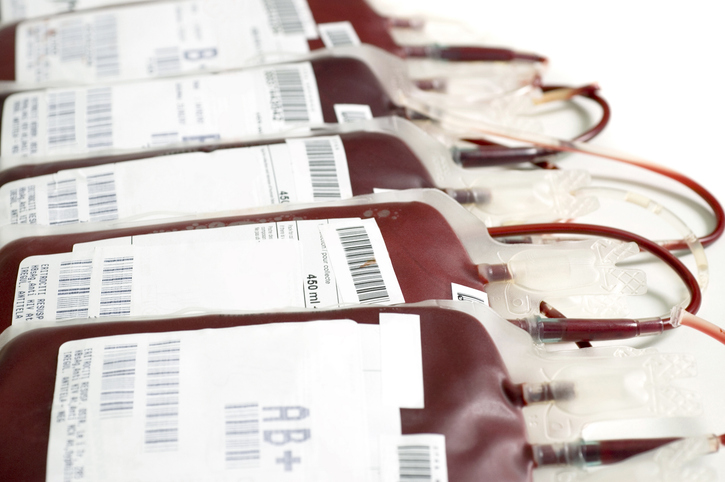
Credit: iStock.com/vladm
An insightful state-of-the-art lecture on blood transfusion in trauma patients was delivered by Prof Laura Green, Consultant Haematologist for NHS Blood and Transplant and Professor of Haemostasis and Transfusion Medicine, Queen Mary University of London, UK, at the Haematology Association of Ireland Annual Meeting 2026.
The title of the lecture was ‘Blood in the field: Separate or combined components?’.
The lecture compared whole-blood transfusion with conventional component-based transfusion in trauma patients.
Prof Green noted that whole-blood transfusion for the management of severe haemorrhage, particularly in pre-hospital settings, had recently gained traction, especially in the US.
However, large clinical trials evaluating the effectiveness of whole-blood transfusion had been lacking.
The SWiFT trial, led by Prof Green, aimed to address this evidence gap by investigating the use of whole-blood transfusion in frontline trauma care.
The study aimed to determine whether pre-hospital whole-blood transfusion was more effective than the current standard of care, which involves transfusing red blood cells and plasma as separate components.
The primary objective was to determine whether “pre-hospital leukocyte-depleted whole-blood transfusion is superior to standard care (component transfusion) in reducing the proportion of participants who experience death or massive transfusion within 24 hours of treatment”.
The trial involved 10 air ambulance services across England and included patients of any age with traumatic injuries requiring pre-hospital transfusion for major haemorrhage. Approximately 942 patients were enrolled in the study.
The trial found no evidence that one treatment is significantly superior to the other for the primary outcome, and that all-cause mortality at all timepoints (up to 90 days) and other secondary outcomes showed no evidence of a difference between arms.
“A higher percentage of participants in the whole-blood group had prothrombin time above normal range, but this did not result in any clinical difference,” Prof Green added, noting also that no differences were found in sub-group analyses.
“There were slightly more safety events reported in the control arm. No evidence of a difference was found in the number of participants reporting a thrombotic event.”






Leave a Reply
You must be logged in to post a comment.