


While rehabilitation medicine has expanded in recent decades, there remain significant resource constraints and gaps in service provision. David Lynch reports
In 2024, the World Health Organisation (WHO) estimated that about 2.4 billion people globally are living with a health condition that may benefit from rehabilitation.
Rehabilitation helps a child, adult, or older person to be as independent as possible in everyday activities and enables participation in education, work, recreation, and family life.
According to the WHO, the need for rehabilitation worldwide is predicted to increase due to changes in the health and characteristics of the population. For example, people are living longer, but with more chronic disease and disability.
These global trends are also seen in Ireland and were reflected in a number of presentations at the Annual Scientific Meeting of the Irish Association of Physical and Rehabilitation Medicine (IAPRM). The meeting took place on 2 October in the Talbot Hotel, Stillorgan, Dublin (see panels).
Dr John Macfarlane, President of the IAPRM, told the Medical Independent (MI) that resources remain “a big issue” for rehabilitation care in Ireland.
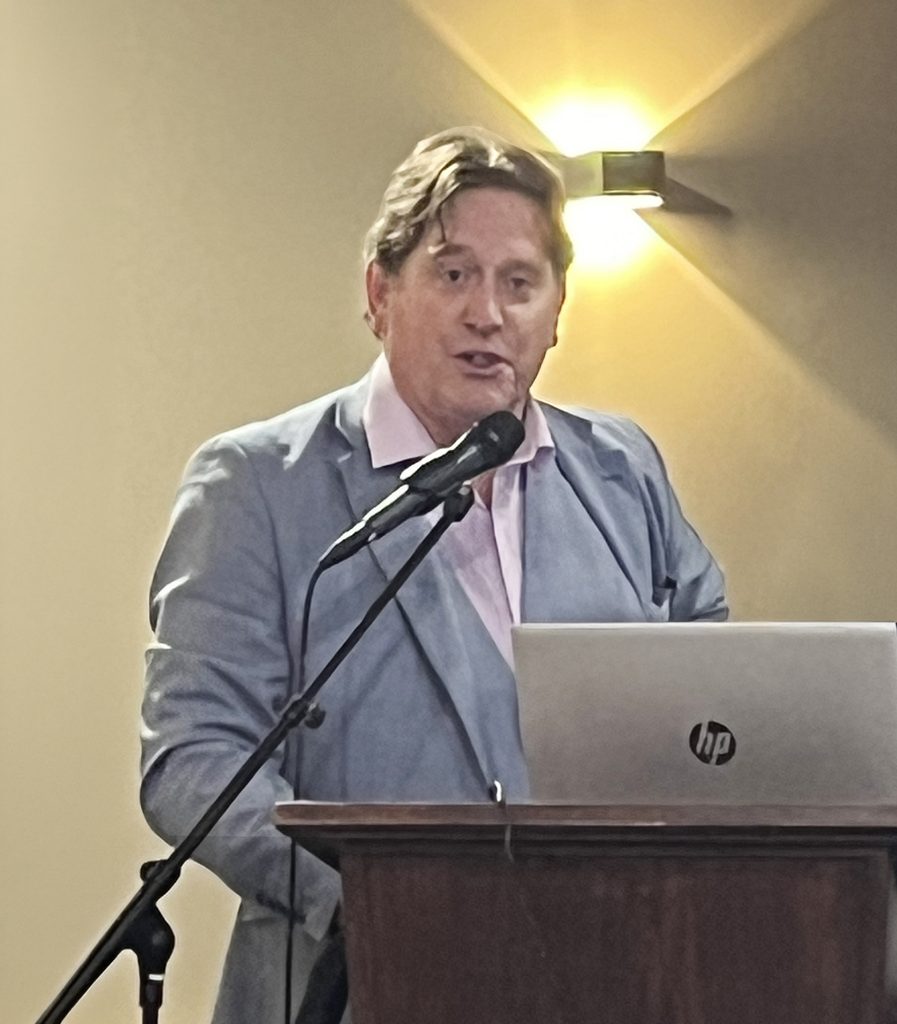
Speaking following his Presidential address at the conference, Dr Macfarlane said rehabilitation medicine is “one of the smaller specialties and our patients often don’t have a strong voice to advocate for their needs”.
“So I think resources often get neglected,” he said.
Dr Macfarlane noted that rehabilitation medicine has grown since he entered the specialty.
He recalled that when he began his training, there were only three consultants in the country, all based at the National Rehabilitation Hospital (NRH). This number has since increased to 19 consultants nationally, although the majority remain based at the NRH.
According to data extracted from the HSE Doctors Integrated Management E-System (DIME) on 28 August 2026, these posts amount to a whole-time-equivalent (WTE) total of 16.6 (DIME is dependent on clinical sites inputting details on their consultant workforce).
Dr Macfarlane said it was important to recognise that rehabilitation services need to expand and “integrate” with existing services.
Referring to a presentation by Prof Philip O’Halloran, Consultant Neurosurgeon, the Mater Misericordiae University Hospital, Dublin, on current and future biomarkers in traumatic brain injury, Dr Macfarlane highlighted the potential of such research to advance rehabilitation care.
Dr Macfarlane added that this potential extends beyond neurological rehabilitation, “which has historically been what is delivered in Ireland.” He also highlighted opportunities for growth in “the musculoskeletal area and cancer rehabilitation”, among others.
In its detailed 2024 statement, the WHO emphasised that rehabilitation is an essential health service for anyone with an acute or chronic health condition, impairment or injury that limits functioning, and should be available for anyone who needs it.
Dr Macfarlane also highlighted the broad scope of the specialty and the many areas in which rehabilitation medicine consultants could contribute to patient care.
He said a central focus is to help “people get back to what they want to do”, such as returning to employment.
“What’s their ability to participate in society again? That is one of the key outcomes that we look at in rehabilitation.”
While some medical specialties may focus primarily on diagnosis and treatment, Dr Macfarlane noted that rehabilitation medicine places particular emphasis on long-term outcomes.
He stressed the importance of promoting this broader, patient-centred approach across medicine, stating that rehabilitation medicine specialists have a role in educating colleagues in different specialties about the value of considering patients’ functional abilities and participation in society as key outcomes.
Despite the challenges, Dr Macfarlane said there has been increased awareness of the value of rehabilitation medicine over the past 25 years.
“…. Resources have improved, the number of consultants has increased, also the number of services,” he said.
“We have started rolling out community neuro-rehabilitation teams in the last year or so, which is an important addition to the rehabilitation structure around the country.”
There is also widespread recognition that demand for rehabilitation services continues to grow, reflecting the increasing patient need.
Dr Macfarlane noted that this is linked to the growing and ageing population and advances in medical care, including in trauma and cancer services.
Older people
The ageing population and the related increasing demand for rehabilitation medicine is also a challenge raised by the Irish Society of Physicians in Geriatric Medicine (ISPGM).
In 2024, the ISPGM published a document, ‘A strategy for rehabilitation for older people in Ireland’.
According to the document, there has been inadequate provision of rehabilitation services for older people.
This has arisen “from a lack of a policy framework for geriatric rehabilitation, a lack of available geriatric medicine, gerontological nursing, and health and social care professional resources, and [the] determination of rehabilitation pathways based upon financial considerations rather than patients’ needs”.
The document also highlighted that there is evidence of “significant harms occurring to older people from widespread use of ill-defined ‘convalescence/step-down/post-acute care’ with indeterminate staffing, skills, and governance”.
Frail older people are at an increased risk of functional decline related to acute illness and hospitalisation. Some of this decline is already present at hospital admission and as many as 40–50 per cent of frail older people are discharged from hospital with an even greater dependency in regard to ‘activities of daily living’, according to the ISPGM. Although some recovery may occur within three weeks of discharge, many older patients may still not have regained their pre-hospital level of functioning.
The ISPGM strategy stated multidisciplinary, coordinated rehabilitation intervention is “essential” because it facilitates improved physical, social, and emotional functioning and wellbeing for patients.
“This strategy aligns with Irish and UK rehabilitation models in proposing an interactive spectrum of services between geriatric rehabilitation services in [model] 2, 3, and 4 hospitals, community specialist teams, primary care, and general rehabilitation services,” according to the document.
Neuro-rehabilitation strategy
In 2011, the Department of Health and the HSE published the National Policy and Strategy for the Provision of Neuro-Rehabilitation Services in Ireland 2011–2015. A related model of care for specialist rehabilitation services was developed in 2018, and the following year the HSE launched an implementation framework for the strategy. It focused on providing neuro-rehabilitation services through a national tertiary centre in the NRH, regional specialist centres, and community neuro-rehabilitation teams.
A number of advocacy groups have campaigned for greater supports and investment in rehabilitation services. These include the Neurological Alliance of Ireland (NAI), an umbrella organisation that brings together nearly 40 non-profit organisations to advocate for the rights of the over 860,000 people in Ireland living with a neurological condition.
Neurological conditions “now represent the leading cause of disability worldwide”, according to the NAI.
Ms Magdalen Rogers, NAI CEO, told MI that in response to the Alliance’s advocacy, the current Programme for Government “includes commitments for completion of the network of community neuro-rehabilitation teams, an increase in neuro-rehabilitation inpatient beds, and multidisciplinary neuro-rehabilitation services in each [health region]”.
In response to Budget 2027, the NAI welcomed the announcement by Minister for Disability Emer Higgins of funding for the development of two new community neuro-rehabilitation teams. These teams provide intensive multidisciplinary therapies to people with a wide range of neurological conditions.
Ms Rogers said it is critically important the Government implements its commitment to deliver more inpatient neuro-rehabilitation beds. She added that “the capacity and growth of the teams will be an ongoing issue to cope with demand”.
Deficit
Ms Rogers noted that the HSE’s 2024 report ‘Post-acute inpatient rehabilitation: A national overview of HSE-funded services’ identified a “substantial national deficit” in specialist inpatient neuro-rehabilitation capacity.
According to Ms Rogers, it also highlighted significant inequalities in access to rehabilitation for people with neurological conditions, including acquired brain and spinal cord injuries.
She said the HSE report found a 58 per cent shortfall in regional specialist post-acute inpatient neuro-rehabilitation beds, equivalent to approximately 175 beds below estimated population need.
“This shortage is compounded by marked regional inequalities,” she added. “Existing beds were concentrated largely in the east, leaving significant gaps in the west and south-east. The report also highlighted lengthy waiting times of one to six months for existing regional inpatient neuro-rehabilitation services.”
The report also highlighted lengthy waiting times of one to six months for existing regional inpatient neuro-rehabilitation services
The NAI CEO said that Ireland lacks sufficient, geographically equitable inpatient capacity to meet the rehabilitation needs of people following stroke, acquired brain injury, and spinal cord injury. “Delays in accessing specialist rehabilitation can prolong acute hospital stays, delay recovery and independence, and increase pressure on acute hospitals and families,” she added.
“Investment is needed to develop additional neuro-rehabilitation inpatient beds in each health region.”
While there have been delays, the HSE is committed to investment in a 20-bed neuro-rehabilitation unit in the new Mercy Regional Rehabilitation Unit in Blarney, Co Cork.
Ms Rogers said this “will be vital to establish a specialist neuro-rehabilitation service outside the east of the country to meet the needs of patients in the south-west.”
“Each of these units will need to be led by consultants in rehabilitation medicine and multidisciplinary teams.”
Future staffing
HSE National Doctors Training and Planning recently published An Expert Stakeholder Informed Workforce Review of Six Specialties of Medicine in Ireland 2024[UNCLEAR: hyphen or en dash]2038, which included recommendations for rehabilitation medicine.
The document highlighted that stakeholder input outlined “significant gaps” in access to rehabilitation services, most acutely in relation to inpatient services around the country. In 2024, more than 99 per cent of all hospital inpatient and day case attendances for rehabilitation medicine took place in the NRH.
It called for the expansion of the consultant workforce to extend equitable specialist care and inpatient services across the country and support integrated consultant-led care in line with the model of care for specialist rehabilitation medicine.
According to the document, the future consultant workforce target is 39.5 WTE by 2038. It also recommended increasing the higher specialist training intake and the recruitment of additional consultants from outside of the domestic training programme in the short-term.
In relation to neuro-rehabilitation, a HSE spokesperson told MI: “The HSE continues to work with the Department of Health and the Department of Children, Disability, and Equality through the annual budgetary process to secure funding to develop both inpatient neuro-rehabilitation services and community neuro-rehabilitation teams in line with the National Neuro-rehabilitation Strategy implementation framework.”
The case for a national rehabilitation audit
The National Office of Clinical Audit (NOCA) has found there is a “clear case” for a national rehabilitation audit, heard the Irish Association of Physical and Rehabilitation Medicine Annual Scientific Meeting.
Dr Mary Walsh (PhD), Audit Programme Manager, Trauma and Surgery, NOCA, informed attendees that a multidisciplinary steering committee was established in October 2025 to conduct a HSE-commissioned feasibility study to investigate the need for a national rehabilitation audit.
The group undertook an investigation of the international evidence and the “Irish data landscape” in terms of rehabilitation services.
They also carried out engagement with stakeholders in the field. The conclusion of the project was that a “national rehabilitation audit is both necessary and feasible”, according to Dr Walsh’s presentation. However, she outlined a number of challenges posed to conducting such an audit.
These include the “fragmentary” nature of the current data available on rehabilitation services, and a “gap” in the ability of the healthcare system to identify the exact needs for rehabilitation services in the country.
From the international literature review, the steering committee learned that a rehabilitation audit is feasible, “but models vary”, said Dr Walsh.
There was no single standard model that existed across differing health systems. Most systems deployed a “phased approach” when introducing an audit, which expanded over time.
The consensus from NOCA’s stakeholder engagement was that “the difficult question” was not what to measure, but “where to start”. Concerns were raised by stakeholders over how to capture data on people whose rehabilitation need is never recognised or people who never reach a rehabilitation service.
NOCA’s final “preliminary audit proposal” is for a “two-track model”. One track would focus on “following need and access”, while the other would relate to “measuring care and outcomes”.
Regarding “need and access”, Dr Walsh said any audit would need to answer the question of what proportion of people with an identified rehabilitation need access appropriate rehabilitation, and “where does variation occur”.
In terms of measuring outcomes, this would require a common dataset tested initially within representative specialist rehabilitation services.
Dr Walsh said the goal of any audit would be to “make rehabilitation need, access, quality, equity, and outcomes visible nationally.”
The conclusion of NOCA’s work was that there was a “clear case” for an audit. Challenges to address included the variation in services nationally and the fragmented datasets.
The conference heard that digital maturity “requires standardised measures and alignment”.
“An Irish national rehabilitation audit could provide for the first time a national picture of rehabilitation need, access, quality, and outcomes. Enabling benchmarking, quality improvement, and evidence-informed development of rehabilitation services across Ireland.”
A HSE spokesperson said NOCA is currently writing up its report on the feasibility of an audit. This work was commissioned by the HSE Chief Clinical Officer with the involvement of multiple stakeholders, the spokesperson added.
Rehabilitation experience and innovation
The subtitle of the Irish Association of Physical and Rehabilitation Medicine (IAPRM) Annual Scientific Meeting 2026 was ‘Bridging experience and innovation: The future of rehabilitation’.
Speakers addressed wide-ranging issues in rehabilitation medicine and there was an extensive poster competition that ran alongside the conference.
Dr Javvad Haider, Consultant in Rehabilitation Medicine, Nottingham University Hospitals NHS Trust, UK, outlined his personal experience of helping to develop the new National Rehabilitation Centre in the UK.
The centre, which officially opened in September, is a purpose-built 70-bed facility. While Dr Haider acknowledged the variety of services offered by the centre, he pointed out every healthcare system “still had its challenges”. He spoke positively about his experience of the Irish healthcare system, praising the work of its staff and the standard of care he had observed during visits, including to the National Rehabilitation Hospital in Dublin.
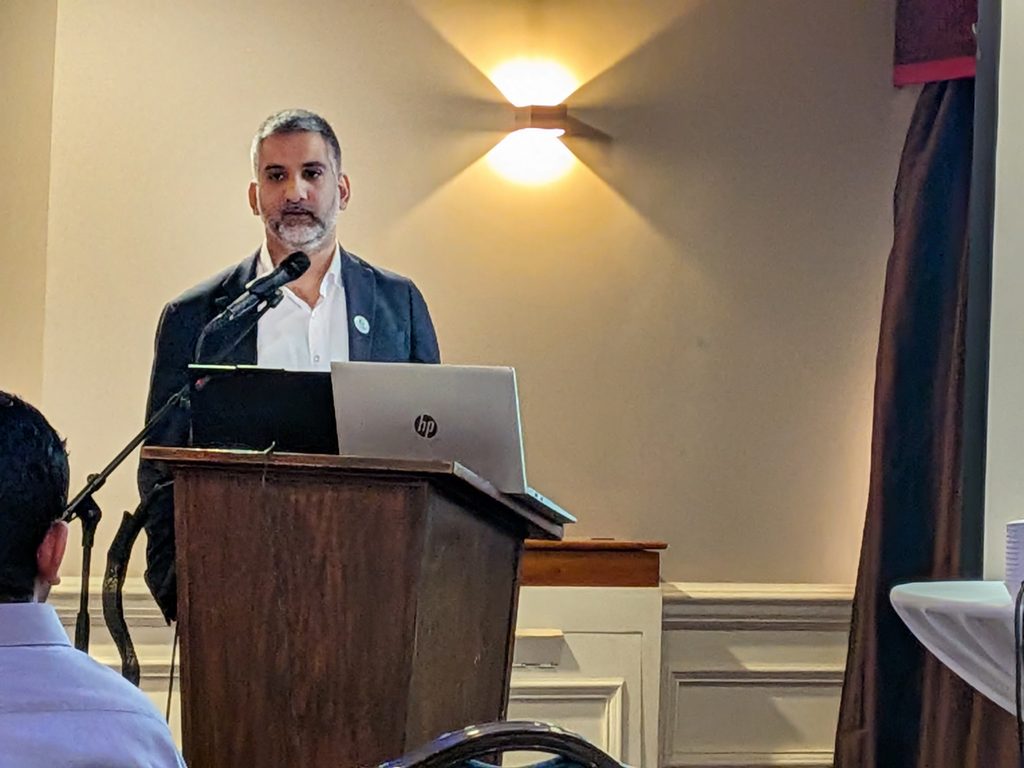
Prof Philip O’Halloran, Consultant Neurosurgeon, Mater Misericordiae University Hospital, Dublin, addressed the conference on the importance of “current and future biomarkers in traumatic brain injury”. He outlined findings from the recent BAMBI (Biomarkers of Acute Mild Brain Injury) study undertaken at the Mater Hospital.
BAMBI is a novel study taking place at the Mater, which examines the molecular signature of proteins of brain trauma via a blood test that is taken in the emergency department (ED). According to the Mater, the test can be delivered in less than one hour and has the potential to improve ED patient flow by reducing the need for CT scans for head injuries.
Some 215 patients with head injuries who presented at the Mater’s ED during July–December 2025 were part of the research. As well as undergoing a head CT scan, these patients also underwent a blood test for traumatic brain injury (TBI).
Such a blood test is much faster to administer and return results, as well as being less burdensome for patients. In the study, this test was able to correctly identify 100 per cent of the head injuries detected by CT scans. In the future, this could “dramatically reduce” the number of CT scans needed to diagnose TBI.
IAPRM President Dr John Macfarlane told the Medical Independent that the conference served several important purposes, including raising the profile of the IAPRM and providing opportunities for professional networking. He also highlighted the value of including the perspectives of people with lived experience of rehabilitation in the programme. The meeting heard a talk from a patient outlining their rehabilitation journey.
“I think it is important to see patients… as partners in rehabilitation,” said Dr Macfarlane, who is a Consultant in Rehabilitation Medicine based at Mercy University Hospital and Cork University Hospital.
“It’s not a passive role; they are there to fulfil their potential and what they want to achieve. Our role is to support them and help them achieve what they want to achieve.”









Leave a Reply
You must be logged in to post a comment.