








The unheralded but vital area of general internal medicine is under an increasing spotlight. Catherine Reilly reports
Camouflaged within health service headlines is the pressure on general internal medicine (GIM). In the medical profession, however, GIM workload and training have prompted growing scrutiny, debate, and concern.
GIM involves the assessment and management of patients with a range of conditions typically admitted through the emergency department (ED). Acute medical presentations account for nine out of the top 10 reasons for hospital bed occupancy. GIM admissions are driven by demographic pressures, population health, and changes in medical practice.
GIM is the “core business” of hospitals, according to the RCPI’s Optimise Interim Report (Review of Internal Medicine Training) published in 2023. However, it has become onerous, stressful, low-status and unattractive to trainees “who fear burnout and frustration”.
According to the report, many consultant physicians are functioning simultaneously as specialists, internal medicine physicians and increasingly as hospitalists – assuming clinical governance for patients with complex presentations that previously would have resided outside of internal medicine.
Specialties without commitments to medical take are “highly sought-after” among trainees who fear burnout and see the more generalist aspect of the role as “burdensome, unattractive, and unrewarding”.
And yet, GIM has “never been more important” to health service functioning. The preservation of general medical skills is “critical” to maintaining standards of care, particularly with rising multimorbidity, frailty, and polypharmacy.
Such a skillset is “at least equal to sub-specialist skills in the formation of the dual-trained specialist and of the greatest strategic importance to the hospital service”.
The report outlined that pressures on internal medicine are evident system-wide, through longer waiting times in EDs, increased numbers of patients placed in beds unsuited to their needs, decreased efficiency of the discharge process, increased errors, and greater workplace stress.
“In all likelihood, what is frequently described as an emergency department crisis could more accurately be described as an IM [internal medicine] crisis hosted in the emergency department,” stated the report, which was authored by Consultant Gastroenterologist and General Physician, Prof Anthony O’Connor.
These considerations are not unique to Ireland. In 2025, a submission by the Royal College of Physicians (RCP), England, to a government consultation stated: “We must ensure future physicians receive high-quality training to manage complexity and risk, maintaining their generalist abilities and expertise alongside specialisation.”
Preparedness
The Optimise Interim Report was focused on GIM basic specialist training (BST) reform. While Irish postgraduate medical training generally has an excellent reputation, several factors have redrawn the GIM training experience.
One of these is improved compliance with the European Working Time Directive (EWTD). While necessary for patient safety and doctor health, this has led to reduced clinical exposure and training opportunities (eg, trainees have often finished shift before post-take ward round).
In addition, many large hospitals now run systems of distributive take, “which means less exposure to general internal medical patients throughout the working week.”
Feedback to the Optimise team also indicated “a lot of the unselected post-take ward round work at consultant [sic] is being provided by locums (who may not be recognised, accredited trainers) while established physicians are being required to focus on their subspecialties to clear backlogs in scheduled care”. Hospitals’ prioritisation of service demands over training was also prominently raised in respect of GIM BST posts.
Consequently, many GIM trainees feel ill-prepared for the medical registrar role. An “astonishing” 94 per cent of trainees reported feeling unprepared in a trainee survey presented to the Optimise team.
Drawing on Optimise, and on foot of a Medical Council accreditation, the RCPI has proposed a major reform of GIM BST, which includes extending initial training to three years (spanning the SHO period and early registrar years). The HSE confirmed to the Medical Independent (MI) it has received a “formal proposal” from the College (see panel).
While focused on training, the Optimise report made wider recommendations to promote the status of GIM in medicine and the health system, and sustainable consultant practice.
It recommended the RCPI establish a working group or taskforce with relevant stakeholders to “champion generalism”.
The report said participation in the general medical rota, and in training of future GIM specialists, should be recognised by health service providers, training colleges, and universities as “important factors” for physicians’ academic and professional advancement. It also advised that the possibility of single specialty training in internal medicine should be explored by the RCPI in conjunction with relevant stakeholders.
In addition, it said a partial or complete decoupling of internal medicine commitments from specialty work has the potential to improve patient care, training, and reduce burnout. This should be piloted on an “appropriately resourced site”.
For example, if trainers were required to substantially reduce or fully cancel elective work during “condensed blocks of acute firm care” this would allow for a better training experience and “support the desired public policy of consultant delivered care in internal medicine”. This should be piloted on a site with “sufficient additional resources added”.
Dual specialty consultants
In Ireland, consultants in nine medical specialties are almost exclusively dual-trained (in GIM and another medical specialty).
Consultant posts in these specialties have increased in recent years. Nevertheless, as of 2024, there was an estimated shortfall of 227 consultants to meet current demand, according to a HSE National Doctors Training and Planning report.
The report described GIM as a component of the workload of “most consultants” in these specialties. Such consultants will be on the general medical on-call rota for the hospital. “On-call rotas can be done in one block in the year or on an ongoing basis. On the morning following admission, patients can be redistributed to the relevant specialty or remain with the admitting consultant. The extent to which patients are re-distributed varies widely, particularly across the model 3 hospitals.”
In recent years, MI has reported on opinion within some clinical societies that favour a stronger single-specialty focus. Advocates have pointed to growing waiting lists, increasing specialisation, and the high standards required under procedural quality assurance programmes, for example. Others say the root problem is the deficit in consultant staffing and capacity.
At the IMO AGM in April, a session was held on safe medical staffing in the hospital system. The Organisation is developing a paper detailing the criteria for a safe medical staffing framework in healthcare settings.
The NCHD Chair, Dr Rachel McNamara, told this session medical staffing levels had not kept pace with increasing complexity, treatment options, and level of demand. “There is one medical registrar on call for the wards overnight, now, in many model 3 and model 4 hospitals. There was one medical registrar on call overnight when the standard of care for a stroke was an antiplatelet and physio referral.”

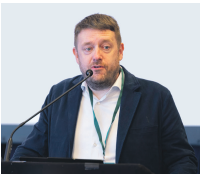
Prof O’Connor, a member of the IMO consultant committee, spoke at this session on the experience of the dual-accredited consultant delivering GIM. “Across all the domains we work, it is getting busier, and it is also getting more complicated,” he said.
Many physicians were now performing three roles – specialist, internal medicine physician, and hospitalist. “I don’t think this is sustainable for us to do three jobs. I think we can do two… that needs to be looked at,” he added.
I don’t think this is sustainable for us to do three jobs. I think we can do two…
In planning physician employment, Prof O’Connor also said hospitals should be considering how they will contribute to the acute take. He indicated a lack of ownership of GIM within hospital structures.
While valuing the contribution of other professions, Prof O’Connor also highlighted the level of training and flexibility of trainees and other doctors. He said the system “will not survive without doctors”.
Prof O’Connor emphasised that safe staffing “saves lives” and the principal considerations must be patient safety and staff welfare.
Consultant in Geriatrics, Stroke Medicine, and General Physician, Prof Rónán Collins, chaired this IMO session and echoed the remarks on workload, patient safety, and doctor burnout.
Speaking to MI last month, Prof Collins said there needs to be a recognition, “at all levels”, that the core driver of demand in acute hospitals is acute GIM.
He said hospitals needs more GIM physicians and extra capacity to cope with increasing activity.
According to Prof Collins, “the acute floor has not had the investment across the hospitals that it needs to have….”
The hospital system has “a major deficit in our estates” and the Government has “failed fundamentally to plan for the population”.
Prof Collins said the national hospital bed base must be increased and “acute general internal medicine units properly resourced across our system, which means having physicians who are dedicated in acute general internal medicine units, with support from their colleagues on call, and that needs to be resourced properly.
“At the moment we have a situation where we have up to 50, 60 patients – as happened recently – being admitted on call under the care of one consultant and that is not a sustainable issue.”
He called for the development of a national strategy for acute GIM. He added that the RCP has produced a “very good document” on safe medical staffing, which may serve as a template for the way forward.
Prof Collins said GIM should be championed by the profession and healthcare management, who must recognise it as “an area that needs prime attention in seeking resources and a strategy”.
He considers that dual accreditation in medicine is “a good thing” for both professional development and hospital care. “But we do need to increase the esteem and value that is put on acute physicians.”
While Prof Collins accepted “to a degree” some arguments by those proposing a stronger ‘subspecialty’ focus, he did not believe this was at the heart of the matter. “I think the major reason is that acute medicine is such an appalling vista of workload to face that everybody tries to get off that rota.”
By press time, the RCPI and HSE had not provided comment on whether any initiatives were planned to promote GIM.
HSE working with RCPI to ‘further refine’ training proposal
The HSE has received a “formal proposal” from the RCPI outlining proposed changes to the initial training pathway for internal medicine. The College is planning to introduce a three-year “core internal medicine training programme” in place of the two-year basic specialist training (BST) programme in general internal medicine (GIM).
A HSE spokesperson told the Medical Independent (MI): “There are important operational, workforce and financial considerations that require further examination before any recommendation on wider implementation can be made.”
The HSE is “working closely” with the RCPI to “further refine” the proposal. “This will involve ongoing engagement with relevant stakeholders, particularly HSE health regions and clinical training sites, to consider the wider implications of the proposed changes and the requirements for implementation.”
Any recommendation regarding wider implementation will be subject to the outcome of this process and consideration through the HSE’s planning and funding approval processes.
The RCPI Institute of Medicine (IOM) has also submitted a “significant change application” to the Medical Council regarding the proposed change. A spokesperson for the Medical Council said this request will be brought before the education and training committee for decision.
According to an RCPI document, training reform in GIM is required on public health and patient safety grounds. This document, dated July 2026, assessed the proportionality of the proposal, which is a requirement on the College under EU law.
“The principal objective of the proposed internal medicine training reform is the protection of public health and patient safety through the development of a medical workforce appropriately trained to meet the health needs of the Irish population,” stated the RCPI document.
The reform is intended to provide broader clinical exposure, strengthen preparedness for registrar-level practice, improve curriculum delivery, and enhance the consistency and quality of training across sites.
The RCPI’s document referenced an accreditation by the Medical Council as an initial driver for change. This accreditation visit, in late 2020, related to the IOM, GIM BST programme, and higher specialist training (HST) programmes in seven dual specialty programmes. The accreditation report was approved within the Medical Council and by the Minister for Health in late 2022.
During the accreditation, trainees reported that the quality of practice-based training in GIM BST was entirely site and trainer dependent. Trainees also highlighted issues relating to “heavy” service loads.
“It was also outlined that the structure of the BST programme was inconsistent. There appears to be considerable difference in training opportunities available at different sites, including the variety and potential duplication of rotations.”
Overall, there was little evidence the assessment for dual training ensured that the full competencies for HST GIM, as distinct from the second specialty, were fulfilled.
The Council required the RCPI to review delivery and structure of the GIM BST programme. The RCPI was also required to review how the assessment for HST dual training was undertaken to ensure full competencies were fulfilled and that equal weight was given to both specialties.
Most of the conditions attached on foot of this accreditation remain in place.
The RCPI commissioned the Optimise report, which set out 26 recommendations aimed at improving and enhancing initial GIM training. It proposed an integrated training programme running from the end of intern year to CSCST.
The report recommended a stage one three-year training programme designed to provide broader and more consistent exposure to the core competencies required for contemporary physician practice. It outlined roles and infrastructure required to support training, and proposed a set of standards and metrics for how training is evaluated on sites to ensure it is an “important corporate priority” for these hospitals.
The RCPI developed a proposal for a new stage one internal medicine programme, which also factored-in workforce planning, NCHD taskforce recommendations and feedback from key stakeholders.
The programme will place special emphasis on acute medical care, multimorbidity, frailty, integrated care, critical care exposure and other areas identified by the Optimise report as critical components of modern physician training.
According to the College website, the “highlights” of the ‘outline model’ include “reducing health-system reliance” on standalone registrar posts outside of structured training programmes; and providing registrar-level experience within the training pathway prior to HST. Increased training provision in model 3 hospitals is also referenced.
The College website includes a proposed timeline of changes. Currently, the 2028 intake are scheduled to enter the new three-year programme.
Year one of the new programme will comprise of eight six-week rotations. MI is aware of concerns among some doctors that these rotations are too short for meaningful exposure and safe integration into teams, particularly in the context of annual and study leave requirements.
An RCPI spokesperson told MI: “The proposed use of shorter first-year rotations, common in international training programmes, is currently being evaluated through a flagship programme involving trainees and trainers. This evaluation will consider educational value, patient safety, integration into clinical teams, trainee wellbeing, commuting and access to leave, as well as any operational considerations in the Irish context.”
“The reform of training in internal medicine involves extensive consultation and engagement with national governing and regulatory bodies to ensure that changes are evidence-based, implemented safely and will enhance the quality of training.”
The College’s current review is focused on the initial stage of GIM specialist training. Any future changes to training pathways would require “separate consideration, consultation and regulatory engagement”.









Leave a Reply
You must be logged in to post a comment.