







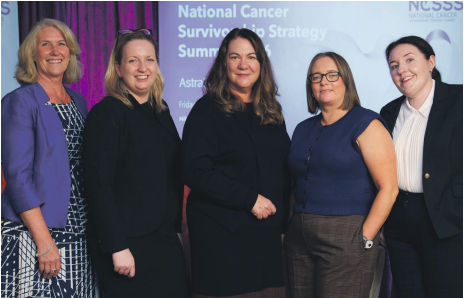
The inaugural National Cancer Survivorship Strategy Summit heard that Ireland urgently needs a standardised survivorship pathway. Danielle Barron reports
With more than 200,000 people now living with and beyond cancer, the tendency to regard cancer survivorship as an afterthought has finally begun to change.
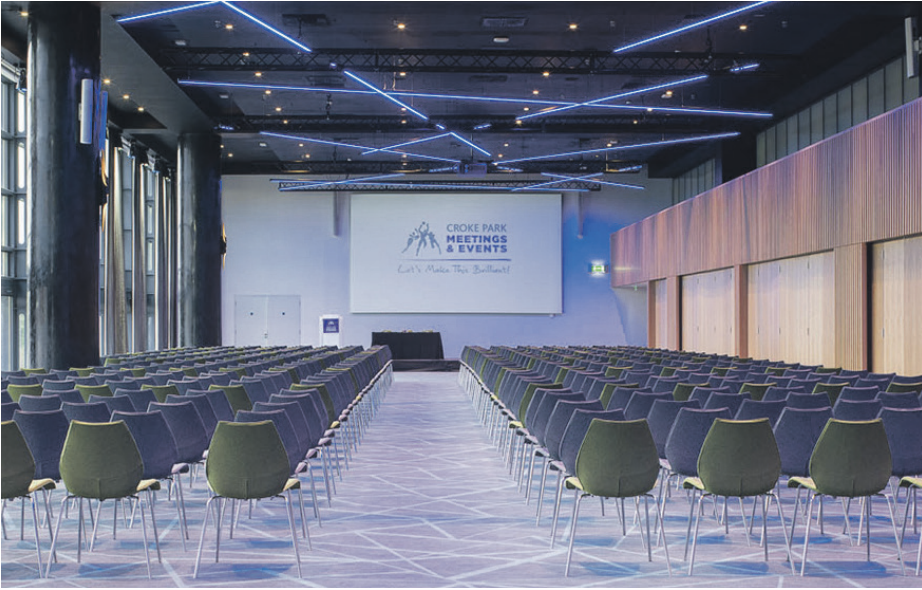
The inaugural National Cancer Survivorship Strategy Summit, which took place on 25 September in the Hilton Kilmainham, Dublin, brought together more than 100 clinicians, nurses, and allied health professionals involved in every aspect of care for cancer survivors, as well as patient representatives, to share practical models of care and help build momentum towards a more coordinated and equitable national approach to survivorship in Ireland. The take-home message was that, for survivors, quality-of-life matters as much as quantity-of-life.
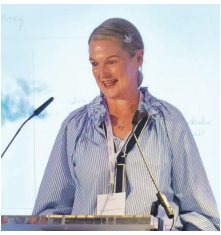
The first session focused on lifestyle medicine, with Ms Dearbhaile O’Hare offering the lived experience of a self-professed “breast cancer thriver”. She outlined why she strongly believes that empowering people to exercise safely during and after a cancer diagnosis can have an influence on mindset as well as quality-of-life. Founder of Cancer Take a Hike, a supportive hiking community, Ms O’Hare was effusive about the impact exercise had on her recovery, both physically and psychologically.
“Exercise played a fundamental role in my own recovery, it helped me mentally, spiritually, emotionally, it helped me in recovery from chemo and recovery from surgeries,” she told the audience.
“But most importantly, it just made me feel like me again and it gave me back some of that control.”
Employment
Dr Naomi Algeo (PhD), Assistant Professor in Occupational Therapy, Trinity College Dublin (TCD), discussed navigating employment after cancer, and how more needs to be done in terms of supporting people to return and stay at work.
Dr Algeo stressed that when it comes to returning to work after a cancer diagnosis and treatment, “we cannot be prescriptive about a timeframe because everyone’s so different and everyone’s job role is so different.” While the average period of time away from work is around 40 weeks, she pointed out that the range is “huge” – from zero to 200 weeks – highlighting the need for individualised plans.
A Health Research Board-funded and TCD-led randomised controlled trial called CanWork that ran six-week online programmes aimed at getting women who have had breast cancer back to work is now concluding and data will be available soon.
Dr Algeo urged people to consider a phased return to work if and when they do go back, noting that while the main hurdles are a person’s psychological health and physical fatigue, these are amenable to rehabilitation.
Nutrition
Dr Samantha Cushen (PhD), a CORU-registered Dietitian at University College Cork, covered the important topic of supplements and survivorship nutrition. High-dose supplements are a major concern, Dr Cushen told the meeting, with research showing that supplement use tends to be far higher among cancer survivors than the general population.
“At least 18 per cent use some sort of herb during cancer treatment, and that is worrying.” Many supplements contain ingredients such as curcumin or piperine that interact with treatments and usage is linked to worse outcomes; for example, taking more than 10 multivitamins per week is linked to worse colorectal cancer mortality.
Prevention of recurrence is usually among the top three reasons for why someone takes a supplement, but there is a “massive mismatch” when it comes to the evidence, Dr Cushen said.
A working group of European food safety authorities recently flagged 117 substances for tighter controls due to potential health risks, including 13 popular supplement ingredients for urgent risk assessment, including melatonin, curcumin, St John’s wort, ashwagandha, and green tea catechins. She urged healthcare professionals treating cancer patients and survivors to ask people what they are taking, what dose of it they are taking, and what they are hoping it will do.
Fatigue
In the final talk of the session on lifestyle medicine, Dr Sonya Collier (PhD), Principal Clinical Psychologist in Psycho-oncology, St James’s Hospital, Dublin, spoke about the importance of understanding and managing cancer-related fatigue.
Unhelpful thoughts about fatigue, such as believing “it’s the price of survival”, create a vicious cycle of anxiety and inactivity, Dr Collier said.
Cognitive behavioural strategies can be immensely helpful, and she outlined how psycho-education helps patients create a new “pie chart” of contributing factors, such as inactivity or low mood, which are directly targetable.
“We need to be very careful that we don’t miss a depression because we think it’s cancer-related fatigue. And also, that we don’t treat every cancer fatigue as if it’s depression, so careful assessment is important.”
Dr Collier also highlighted how attitudes to cancer survivorship have changed dramatically, with services re-orienting themselves slowly but surely.
“Back in the 2000s when I started working in this area, most of the focus was on quantity of years, not quality of years. We’ve come such a long way since then, and for many of us now, the goal is around getting people back to their lives or claiming new lives that they can be happy with, and they can be satisfied with.”
Cardio-oncology
The second session focused on supportive care. Dr Theodore Murphy, Consultant Cardiologist, Beacon Hospital, Dublin, first discussed the often lesser-understood cardio-oncology aspects of survivorship. One in 24 people is now a cancer survivor, he said.
“Survivorship is, in part, a cardiovascular diagnosis, and should be managed as one,” he told the audience.
The growing population of cancer survivors faces a high risk of cardiovascular disease (CVD) due to cardiotoxic treatments. Yet this risk, Dr Murphy noted, is often missed in the handover from oncology to primary care.
Many cancer treatments can be cardiotoxic, he explained, ranging from anthracyclines causing a depleted cardiac reserve, to HER2 therapy resulting in left ventricular dysfunction, or thoracic radiotherapy causing damage to the pericardium and myocardium, as well as valves and coronary arteries.
Yet currently in Ireland, Dr Murphy said, the focus remains on the treatment phase with no standardised survivorship pathway and no nationally linked survivorship dataset.
What is needed is a “risk-stratified pathway”, where survivors are triaged into high-, moderate-, and low-risk groups based on treatment history, and baseline CVD risk.
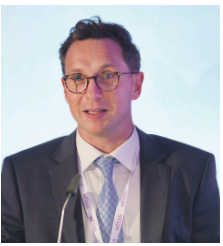
Patients also need a “cardiac passport” that they would carry throughout their cancer survivorship journey.
Depending on patient risk, surveillance would involve structured long-term cardiology-linked follow-up with defined referral triggers.
Ultimately, the goal would be to build a national survivorship registry to generate evidence and refine guidelines, Dr Murphy said.
“We have become very good at curing cancer. Our next challenge is to ensure the patients remain cardiovascularly healthy enough to enjoy that cure.”
Endocrinology
Dr David Tansey, Consultant Physician in Endocrinology, Diabetes and General Internal Medicine, Sligo, talked about obesity and diabetic disease in cancer survivors, which he termed “the next frontier in survivorship care”.
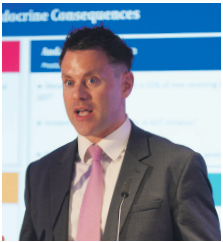
Cancer treatments drive “predictable endocrine disruption” and this is borne out in the data; for example, 55 per cent of patients on long-term androgen-deprivation therapy had developed metabolic syndrome. Immune checkpoint inhibitors can cause insulin-deficient diabetes, often presenting as diabetic ketoacidosis, Dr Tansey explained.
“The direction of impact from obesity versus normal BMI [body mass index] is clear,” he said, noting that in multiple cancers, being obese or overweight results in higher risk of adverse outcomes. Meanwhile, obesity itself drives cancer recurrence, across all tumour types.
Crucially, however, the pharmacological tools to address these now exist in the form of GLP-1s. Dr Tansey asked those in the room to “have the obesity pharmacotherapy conversation proactively”, as robust evidence exists. He also urged those working with survivors to incorporate cardiometabolic surveillance into every survivorship pathway, treating obesity as a chronic disease, and not simply a “background finding”.
“I’d like to leave you with a thought then that the next major gains in cancer survivorship may come not from treating the cancer itself, but actually from preventing and managing cardiometabolic diseases as a follow-up.”
Palliative care
Dr Suzanne Ryan, Consultant in Palliative Medicine, University Hospital Waterford, discussed selecting patients for early specialist palliative care, highlighting evidence and challenges in oncology practice.
Palliative care has undergone an evolution, she noted.
According to Dr Ryan, the traditional model saw palliative care begin when oncology treatment ended, but with the current model, early palliative care is recommended for advanced cancer, and delivered concurrently with oncology.
She pointed out the inherent challenge in defining “early,” however, and said selecting patients with the greatest need remains a key debate.
“We are still not entirely sure where the integration between medical oncology and specialist palliative care should be, and that’s only with the advanced cancer group,” Dr Ryan admitted.
The most recent American Society of Clinical Oncology guidelines recommend palliative care referral for patients with advanced solid tumours and haematological malignancies. Crucially, they also recommend referral for any cancer patient with unaddressed physical, psychological, social, or spiritual needs, regardless of prognosis. Yet these guidelines are somewhat “aspirational”, Dr Ryan said.
“In Ireland, this is my opinion, we’re not resourced at present to take on some of the survivorship unmet need, but maybe that will change into the future.”
Survivorship pathway
Building a national vision for survivorship care was the focus of the third session of the day. Ms Louise Mullen, National Lead for Cancer Survivorship, National Cancer Control Programme (NCCP), echoed previous sessions as she described the widening gap in terms of services and supports as the number of survivors continues to grow.
As Ireland comes to the end of its current National Cancer Strategy, which spanned 2017–2026, survivorship is set to be a key pillar of the next iteration, Ms Mullen told attendees.
The NCCP has recently published its cancer survivorship patient pathway. Ms Mullen said that the pathway was developed in response to the need for guidance for oncology teams going through accreditation processes for external frameworks – such as that administered by the Organisation of European Cancer Institutes – and unsure as to what the patient journey should look like.
The pathway offers practical advice and functions as a “checklist”, she said, with pillars including point of contact details, education, and information, support programmes, places, and people, as well as needs assessment and care planning.
“It’s a reflection of international and national evidence, and also we had a lot of patient and public partners,” she explained.
Implementation of the pathway is now underway and she noted that it has the full support of the Minister for Health. Integrated care, community-based services, and enduring patient equity will be hallmarks of how survivorship care is delivered, she added.
“But nobody expects any of the services to have this all at once – we’re going to be continuing to develop work underneath this pathway, and I hope you’ll work with us on that.”
But nobody expects any of the services to have this all at once – we’re going to be continuing to develop work underneath this pathway, and I hope you’ll work with us on that
Keynote speaker
The Summit’s keynote speaker was Dr Tara Sanft, Consultant Medical Oncologist, Hartford Healthcare, US. Dr Sanft began her presentation by noting that ‘cancer survivor’ emerged as a positive, inclusive term – as opposed to ‘victim’ – in the 1980s.
However, she acknowledged that this phrase “does not resonate with everyone”.
“It brings up mixed emotions as some people are living well, but others are not.”
While healthcare systems are good at the “acute” phase of survivorship, it is in the extended phase, during treatment and beyond, that standards falter, Dr Sanft noted.
“There can be a lot of uncertainty, and we have heard today how patients can feel like they are ‘falling off a cliff’.”
Survivors have “unifying, yet unique”, needs that are specific to their population. The consensus, Dr Sanft said, is that every survivorship visit should contain some element of surveillance for recurrence or new cancer, and identification and treatment of late and long-term effects. There should also be an assessment and counselling about health promotion and efforts to ensure the patient understands “who’s doing what”. Yet subpar communication is common and in a survey of more than 1,200 cancer survivors, only 24 per cent reported high-quality communication.
More than 50 per cent of specialist cancer clinics in the US offer indefinite follow-up yet there are significant workforce challenges.
“My concern, with the growing number of survivors, is that we just won’t be able to keep up.”
Challenges also abound for the more rural or non-English speaking populations, she noted, reiterating what previous speakers had said.
Dr Sanft urged those establishing survivorship programmes to consider what it is they are trying to achieve, who is delivering the care, and what resources they have at their disposal.
“Is it the extended phase that uncertainty is really high?,” she said.
“Or are you trying to handle that growing population with the long-term survivors? What are the needs that you’re trying to address?”
“Whatever you can do is better than nothing, and iterations build on each other; starting from scratch can be challenging, but leveraging networks can help.”
AI
Prof Nuala Healy, Chair and Professor of Radiology, RCSI and Beaumont Hospital, Dublin, was the final speaker of the final session on ‘future directions’.
Prof Healy’s talk focused on artificial intelligence (AI) in medical imaging applications and advances.
While AI “can be of benefit in healthcare where it is highly regulated”, Prof Healy warned there are significant “hoops” to jump through.
Radiology and pathology are leading the way in AI in healthcare, and therefore most of the evidence for its use is in those areas. Prof Healy gave several examples: AI flags subtle nodules on CT scans for early cancer detection, and it can identify subtle fractures missed by human readers.
“With AI and breast imaging, the National Screening Services are undergoing a procurement process at the moment to identify an AI tool that might be suitable for the Irish population, so watch this space,” Prof Healy said.
Yet challenges remain with its implementation, not least patient mistrust, but also the problem of poorly integrated AI increasing radiologist workload with extra clicks or false positives. Radiologists are currently trialling five different AI tools across three individual hospitals.
Disclosure will be key, she added.
“If we are to introduce this into our imaging population, then it is crucial that people are aware of what it’s doing, that it is helping us as radiologists, not replacing us.”
The ensuing question-and-answer session saw audience members and panellists speak of the need for the NCCP survivorship pathway to be implemented nationally. The goal, they said, is to now move beyond fragmented efforts within individual centres to a standardised, national system that offers diverse allied health professional support and supports clear pathways between specialist, primary, and community care. This stepped model of care would ensure that patients receive care based on need, rather than geography.
The meeting was closed by Dr Carolyn Lineen, Consultant Medical Oncologist, St James’s Hospital, and a member of the organising committee, who said the meeting had effectively showcased the broad range of expertise in Ireland across different disciplines in this area. “Hopefully, this will be the first of many national conversations on how we can improve cancer and survivorship care in Ireland.”
AstraZeneca provided funding for the journalist to attend the conference for the purpose of preparing an internal report. The journalist’s editorial was outside the scope of the contract.





Leave a Reply
You must be logged in to post a comment.