Credit: iStock.com/baranozdemir
Ms Anne Power, Advanced Nurse Practitioner in Chronic Disease Management, Wexford Residential Intellectual Disability Service, discussed bone screening options for people with intellectual disability during the Irish Osteoporosis Society (IOS) 2026 Annual Medical Conference for Health Professionals.
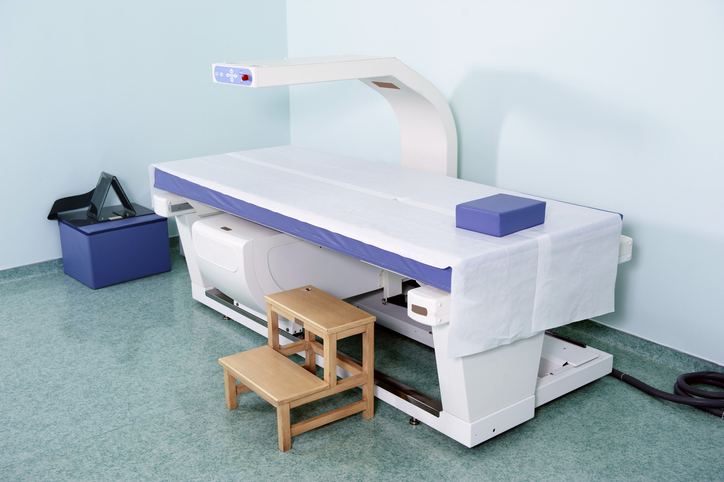
People with intellectual disability face multiple osteoporosis risk factors – sedentary lifestyle, anticonvulsant or antipsychotic medication, poor nutrition, and limited mobility – and are under-screened, leading to significant under-diagnosis and under-treatment. DXA remains the gold standard screening modality for osteoporosis and osteopaenia; however, it can be impractical for this group because of mobility, communication, or behavioural challenges, she noted.
Ms Power discussed the use of Echolight, a portable ultrasound device using Radiofrequency Echographic Multi-Spectrometry (REMS) to assess bone density.
Approved by the US Food and Drug Administration, Echolight is non-invasive, uses no ionising radiation, and can scan femoral hip and lumbar spine (L1–L4) in about two minutes, giving immediate results. In a feasibility study (n=84) supported by the HSE Nursing and Midwifery Planning and Development Unit South East, 96.4 per cent completed the Echolight assessment; 38.3 per cent had osteopaenia and 27.2 per cent had osteoporosis, meaning almost two-thirds had compromised bone health. Ms Power pointed out that the IOS now endorses the use of Echolight for people with intellectual disabilities who cannot access DXA scans.
Ms Power gave the conference an update on the use of Echolight in her region and nationally. Earlier this year, new specialist software was incorporated into Ms Power’s service, which includes a fragility score, and calculates an individual’s five-year fracture risk. “It measures bone microarchitecture independently of bone mineral density, which can help capture fracture risks in people whose DXAs appear normal.”
Echolight has now been implemented into the Intellectual Disability Supplement to the Irish Longitudinal Study on Ageing (IDS-TILDA), which tracks the health, wellbeing, and life circumstances of adults with intellectual disabilities aged 40 and older in Ireland.
In addition, Echolight devices have been purchased by two other disability services in Dublin and Sligo, which will become operational in the coming months. “Echolight has generated huge interest from health professionals working within the acute/general setting and it is likely that it will be used for other populations who have difficulty accessing DXA,” Ms Power concluded.






Leave a Reply
You must be logged in to post a comment.