NOTE: By submitting this form and registering with us, you are providing us with permission to store your personal data and the record of your registration. In addition, registration with the Medical Independent includes granting consent for the delivery of that additional professional content and targeted ads, and the cookies required to deliver same. View our Privacy Policy and Cookie Notice for further details.
The experience of founding the AMNCH in Tallaght should inform the development of the new National Children’s Hospital
t’s hard to believe that 30 years ago, the facility which would become known as Tallaght University Hospital was born. I was a medical student and a NCHD there in the early years and remember the wrestling between unions and management, arguments about space, late structural fixes, and the big move itself.
The same wrangling can be anticipated and avoided in the opening of the new National Children’s Hospital (NCH) on the St James’s Hospital campus.
A 1996 Act brought three separate historic institutions into the new build in Tallaght. The legislation amalgamated the Adelaide Hospital, which was founded to provide care for the disadvantaged Protestant population of the city, the Meath Hospital, which served the sick and poor in the Liberties, and the then National Children’s Hospital. Together they became AMNCH.
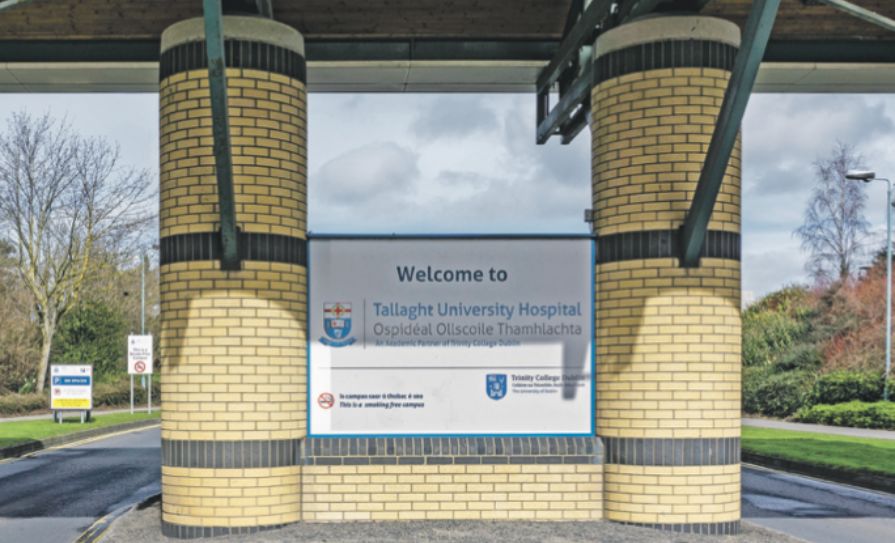
AMNCH was a clumsy name for patients and staff to manage. But, like a direct path that is worn across grass away from the formal paving, most people simply called the place Tallaght Hospital. The hospital finally gave up on the AMNCH title in 2018 and officially became Tallaght University Hospital.
Although major local employers, new hospitals take time to be accepted by the community. In moving from outdated buildings to an alternative location, hospitals also leave behind a legacy of centuries of care. This wrench was obvious in the more recent move of the Central Mental Hospital across Dublin, from Dundrum to Portrane.
It can be positive to start afresh, but there is a danger that the shared purpose, enriched in history, is lost in the move.
It can be positive to start afresh, but there is a danger that the shared purpose, enriched by history, is lost in the move
Within months of opening, Tallaght Hospital had portacabins parked beside the main building. Multiple departments migrated to these so-called temporary structures, never returning to the main block. Designed more than a decade before it finally opened, the surrounding population had dramatically increased in the meantime. Novel services not previously envisaged became necessary, such as the Reeves Day Surgical Unit, the Cardiac Risk in Young People Unit, and the onsite GP clinic.
Tallaght Hospital also saw a significant increase in the number of undergraduate and postgraduate students across different healthcare disciplines who were allocated training places there.
Future-proofing
Future-proofing a hospital is a challenge as demand and services will inevitably change between design and commissioning. They then change again over the first decade of service. But what those changes are likely to be, no one knows.
Healthcare develops rapidly and much growth is patient-led. Flexibility in how infrastructure is used and expanded is key. As the new NCH occupies a constrained, urban site, any need for expansion will be a headache and will likely mean the purchase of nearby buildings, like the way the Mater Hospital provides services along the length of Eccles Street, in a constellation of new builds and repurposed old buildings.
In addition to Tallaght, the NCH looks to have benefited from the experience of other major hospital integrations, like Beaumont Hospital and Cork Maternity Hospital, by focusing on maximising existing public transport links. It will be interesting to see if its strategy of providing 319 parking spaces for staff is sufficient for Children’s Health Ireland professionals who currently commute from more than 10 counties.
In the 10 years that I worked in Tallaght Hospital, in training jobs and later a consultant post, it was noticeable that it took a very long time before people stopped referring to the original hospital that they had come from. Mostly this was good-natured banter, but occasionally there was tension in the differences in culture between hospitals, each with its long legacy and a strong sense of pride.
Integration
Integrating three organisations successfully is really about the people, not the buildings. This insight has been arrived at around the world in every city where hospitals have been merged, from Brisbane to Glasgow. Without communication in a forum shared by frontline staff and management, where teething issues are resolved early and feedback is acted upon, a hospital merger will struggle. A 2018 paper in the Harvard Business Review summed up the difficulty with mergers, saying, “if merging cultures are incompatible, the merger will limp for a period, before spectacularly failing and descending into blame.”
New hospitals are an investment in the population, not a drain on the Exchequer. They project a vision for several generations and ought to be shaped by the experience of patients, families, and staff, providing inclusive public spaces that connect their local community and other national services.
Tallaght Hospital has enriched the community immeasurably, but it took time to gain the confidence of patients and staff. The hospital ultimately took up far more space than its original footprint and continues to grow.
Previous hospital mergers ought to inform a vigorous approach to integration, as past performance is surely the best indicator of what lies ahead.
The history of Tallaght University Hospital
At a capital cost of £140 million, the development at Tallaght was one of the largest capital investments in healthcare ever undertaken by the State.
The project amalgamated the Adelaide Hospital, the Meath Hospital, and the then National Children’s Hospital.
Planning began in 1981 when the Department of Health appointed the Tallaght Hospital Board to oversee the planning, building, and equipping of the hospital. In 1985, architectural competition results were published, with Robinson Keefe Devane Architects being appointed to design the new facility.
Construction was approved in 1993 and building commenced in October of that year. The hospital was established under a Charter, agreed in Dáil Éireann, on 1 August 1996. It was officially titled the Adelaide and Meath Hospital, Dublin, incorporating the National Children’s Hospital (AMNCH). Construction was completed in 1998.
Opening
On 21 June 1998, 115 patients were transferred to the AMNCH from the Adelaide, Meath, and National Children’s Hospitals in Dublin’s city centre. During the course of the day, 12 Eastern Health Board ambulances transported patients, accompanied by medical and nursing staff, from the city centre to Tallaght along a planned route via South Circular Road, the Naas Road, and the Belgard Road.
Intensive care and coronary care patients were transferred to Tallaght in a high-tech ambulance with its own mobile intensive care unit.
A team of medical and nursing staff was on standby at the Meath Hospital, National Children’s Hospital in Harcourt Street, and in Tallaght throughout this transfer process.
Prior to opening day, a removal company was hired to pack and move furniture, equipment, and files. The files included over 170,000 patient records and almost 50,000 x-rays.
From 23 June, new patients were admitted to the hospital and clinical activity built up steadily.
Name change
The hospital announced a formal name change to Tallaght University Hospital in March 2018. The change aimed to reflect the hospital’s position as one of the country’s leading academic teaching hospitals and its commitment to remaining at the forefront of innovative research.
Great to see this article and refresh my memories of 90’s era. Probably new generation do not know Adelaide, Meath and National children hospital names.












Great to see this article and refresh my memories of 90’s era. Probably new generation do not know Adelaide, Meath and National children hospital names.