







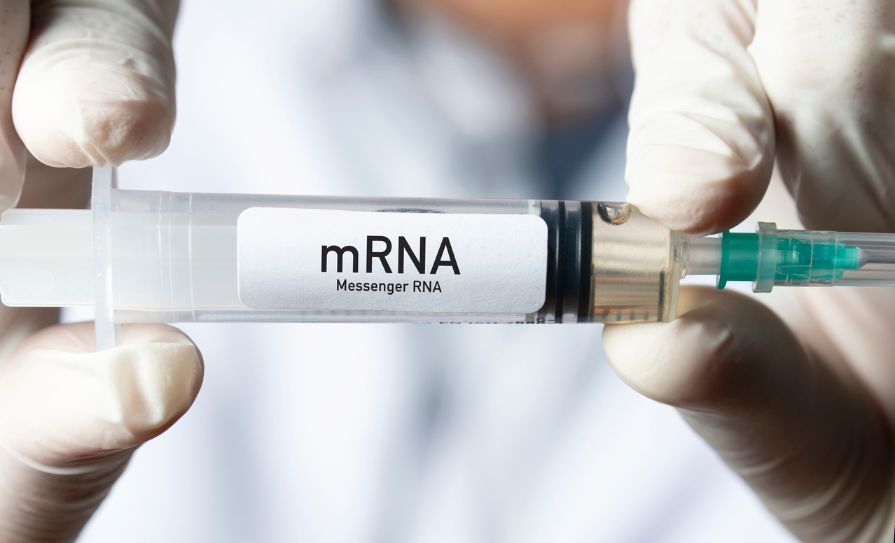
Preclinical mRNA vaccine shows promise against neuroblastoma, delaying tumour growth and reducing tumour burden
Irish researchers have reported the first preclinical evidence that an mRNA vaccine can trigger an anti-tumour immune response against neuroblastoma, the most common extracranial solid cancer in children and one of the deadliest paediatric malignancies.
The study, published in Molecular Therapy Oncology, found that an experimental mRNA vaccine targeting glypican-2 (GPC2) delayed tumour development by 10–11 days and reduced tumour volume by 70 per cent in mouse models of neuroblastoma.
Neuroblastoma accounts for approximately 15 per cent of childhood cancer deaths. Between five and 10 cases are diagnosed annually in Ireland and around 80 per cent of patients with aggressive disease do not achieve sustained responses to current therapies.
The research was led by Dr Olga Piskareva, Senior Lecturer in the Department of Anatomy and Regenerative Medicine at the RCSI, Dublin, in collaboration with researchers from the School of Pharmacy at Queen’s University, Belfast.
“This pilot study indicates promising potential in the development of anticancer vaccines for neuroblastoma, offering new hope for children and families suffering from the disease,” Dr Piskareva said.
Targeting a tumour-associated protein
The vaccine uses messenger RNA encoding GPC2, an oncofetal protein that is highly expressed in neuroblastoma and has also been identified in several other adult and paediatric cancers.
To deliver the vaccine, researchers employed a novel platform based on self-assembling peptide nanoparticles known as RALA. The nanoparticles encapsulate and protect the mRNA, facilitating delivery into cells and promoting immune activation.
Laboratory analyses demonstrated that the vaccine generated antigen-specific immune responses, with significant increases in immune signalling molecules, including interferon-gamma and interleukin-2. Vaccinated mice also showed enhanced populations of effector and memory T-cells, indicating a robust cellular immune response against GPC2.
Importantly, no differences were observed in circulating biomarkers of organ toxicity between vaccinated and unvaccinated animals.
The authors noted that mRNA vaccines offer several advantages over traditional vaccine platforms. They are relatively straightforward to manufacture, can be adapted to target different diseases, and have negligible risk of integration into the genome because their biological activity occurs in the cytoplasm.
According to the researchers, the study is the first to demonstrate anti-tumour activity with a GPC2-directed vaccine in neuroblastoma.
The findings may also have implications beyond this disease. Because GPC2 is upregulated in multiple cancer types, the platform could potentially be adapted for use in a broader range of malignancies.
Dr Piskareva likened the technology to a modular construction system. “The mRNA vaccine technology is like LEGO bricks. By combining different bricks, we can tailor the vaccine to the individual’s needs with high precision,” she said.
The authors noted that neuroblastoma that recurs after initial treatment is particularly difficult to cure because tumours frequently become resistant to existing therapies. They suggested that novel immunotherapeutic approaches such as mRNA vaccination may help address this unmet need.
The study also highlighted the flexibility of mRNA technology. The platform can potentially encode multiple tumour-associated antigens and be combined with other anticancer treatments.
While the findings remain preclinical and further work is required before translation into human studies, the researchers concluded that the results provide a strong foundation for future development of mRNA-based therapies in oncology.
The study was funded by the Irish Research Council, the Higher Education Authority, the Health Research Board, and the Conor Foley Neuroblastoma Cancer Research Foundation.
Reference
King E, Saha C, Saleem R, Jiang B, O’Donoghue E, Cottone F, McCarthy HO, Piskareva O. mRNA vaccination using peptide nanoparticles triggers a strong immune response against endogenous GPC2 in a murine neuroblastoma model. Mol Ther Oncol. 2026 Jun 18;34(2):201244.











Leave a Reply
You must be logged in to post a comment.