







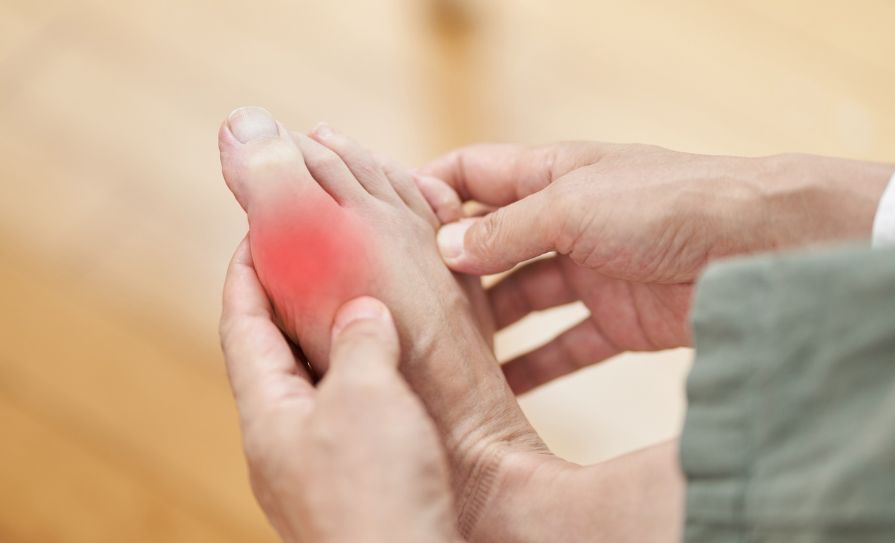
The European Alliance of Associations for Rheumatology (EULAR) held its 2026 Annual Congress in London, where gout was high on the agenda.
Current guidelines recommend lifelong urate-lowering therapy (ULT) in a treat-to-target (T2T) strategy to maintain remission, although there is some scope for discussing tapering or discontinuation if remission is achieved.
New data presented explored remission rates for ULT and T2T continuation compared to discontinuation, while other groups focused on comorbidities – specifically the association of regional body fat stores and muscle composition with risk of incident gout and rheumatoid arthritis. Despite inclusion in guidelines, evidence of superiority of a continued ULT T2T strategy during remission is lacking. In clinical practice, adherence to ULT is often poor, and discontinuation common.
At the Congress, new data were shared from an open-label, randomised superiority trial across nine rheumatology clinics in the Netherlands, assessing whether continued T2T with ULT was superior to attempting a ULT discontinuation strategy in maintaining remission in 309 gout patients.
Results showed that during the final six-month follow-up period (from a total of 24 months), a substantial proportion remained flare-free after ULT discontinuation: Remission criteria were met in 79.2 per cent in the continued ULT T2T group compared with 62.9 per cent in the ULT discontinuation attempt group.
Patients continuing ULT remained flare-free for longer over 24 months, with a cumulative flare incidence of 12.3 per cent compared with 31.8 per cent in the ULT discontinuation attempt group. In the ULT discontinuation group, 23 per cent restarted ULT after a median of 392 days, and more participants needed anti-inflammatory medication compared with the ULT T2T continuation group. There was a modest kidney function benefit observed with ULT T2T continuation during remission.
Presenting the work, Iris Rose Peeters said: “These findings support current recommendations to continue ULT during remission at the population level. The results will inform shared decision-making discussions. However, future research will need to explore longer-term outcomes and safety – and predictors of discontinuation success – given that a substantial proportion of patients remained in remission – as well as assessing cost-effectiveness.”
A separate poster from Lyn D. Ferguson and colleagues shared at the meeting used MRI scans from the UK Biobank to explore differences in body fat distribution and muscle composition to see whether this could provide insights into the role of obesity in development of gout, rheumatoid arthritis, and associated cardiometabolic comorbidities.
The findings showed that people with gout had metabolically adverse body fat distribution – with greater visceral, liver, and muscle fat, while those with rheumatoid arthritis (RA) had greater fat infiltration of muscle. These adverse body-fat distributions were associated with greater propensity to type 2 diabetes and cardiovascular disease in gout and RA compared to matched controls and warrant further study as potential mechanisms for greater susceptibility to cardiometabolic disease in rheumatic disease.
Effective weight management and helping patients increase activity to aid muscle quality should be integral to management and prevention of gout and rheumatoid arthritis, EULAR said.








Leave a Reply
You must be logged in to post a comment.