







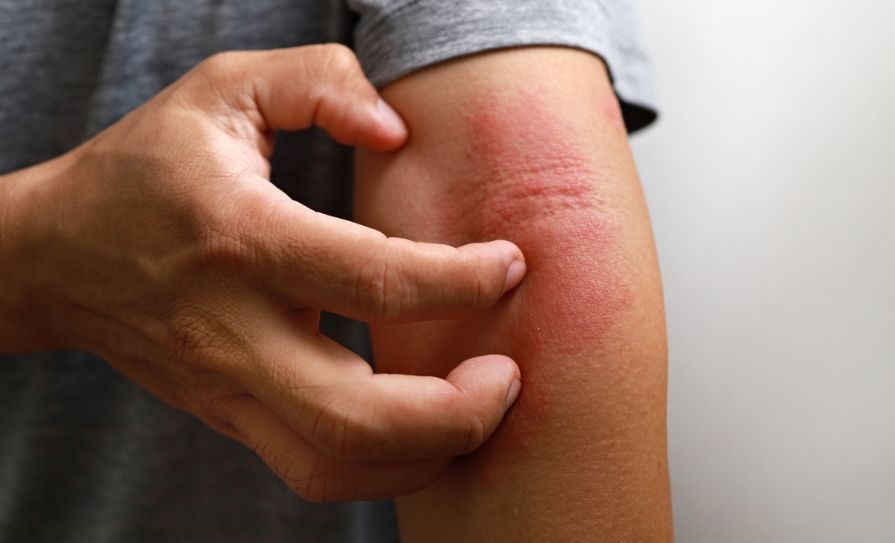
A new international study presented at the European Academy of Dermatology and Venereology Congress 2025 reveals that adults with atopic eczema (AE) are significantly more likely to experience suicidal thoughts, with researchers uncovering the key factors driving this elevated risk.
As one of the largest global investigations to examine the link between AE and suicidal ideation, the ‘Scars of Life’ study surveyed 30,801 adults across 27 countries in 2024. Among them, 15,223 were adults with physician-confirmed current AE, while 7,968 adults without AE served as controls.
Participants with current AE were grouped by age of AE onset – childhood, adolescence, or adulthood – and completed a detailed online questionnaire capturing sociodemographic information, self-reported suicidal ideation, severity of itch and skin pain, AE severity, and experiences of skin-related stigmatisation.
The results showed that 13.2 per cent of adults with AE reported suicidal ideation, compared with 8.5 per cent of adults without AE. All AE subgroups – whether the condition began in childhood, adolescence, or adulthood – had higher odds of suicidal ideation than controls, highlighting the widespread mental health burden of the condition.
AE affects more than 200 million people worldwide. Beyond the physical symptoms of dry, itchy and inflamed skin, its impact on mental health is increasingly recognised, with many experiencing anxiety, depression, and social stigma, alongside the daily challenges of managing their condition.
Importantly, the study identified several factors strongly associated with suicidal ideation in adults with AE. Younger adults, particularly those under 30, were more likely to report suicidal thoughts (OR=1.6), as were individuals with obesity (OR=1.29).
Clinical features also played a major role: Moderate-to-severe AE doubled the odds of suicidal ideation (OR=2.01), while pruritus (itching), skin pain, and high overall symptom intensity were all significantly associated with increased risk. Psychosocial and sleep factors further contributed to risk. Adults with suicidal thoughts reported higher levels of stigmatisation and more prevalent sleep disorders, with mixed insomnia – difficulty falling and staying asleep – notably linked to suicidal ideation (OR=1.78).
One of the lead authors, Dr Delphine Kerob, Consultant Dermatologist specialised in oncodermatology, Saint Louis Hospital, Paris, France, said the results highlight that the effects of AE are more than ‘skin deep’, with suicidal thoughts representing a serious and frequent concern that is often overlooked by healthcare professionals. “By identifying the main risk factors behind suicidal ideation in this population, we hope this study will help healthcare professionals better recognise and address these challenges, supporting patients’ overall wellbeing more effectively.”
Discussing the next steps for research, Dr Kerob said: “Looking ahead, we are investigating why suicidal ideation occurs at different rates across countries, which may reflect important cultural differences. At the same time, ongoing analyses from the “Scars of Life” study are enhancing our understanding of what happens beneath the surface in patients with atopic eczema.”








Leave a Reply
You must be logged in to post a comment.