



Reference: May 2026 | Issue 5 | Vol 12 | Page 27
For the first time in its history, the American Academy of Dermatology (AAD) has published guidelines on paediatric eczema. This marks a significant milestone in the treatment of one of the world’s most common childhood skin conditions.
Published in April 2026, the evidence-based recommendations provide clinicians with comprehensive guidance on both the primary prevention and treatment of atopic dermatitis in children and adolescents under the age of 18.
The new guidelines, published in the Journal of the American Academy of Dermatology, were developed by a working group of 14 experts, including 11 board-certified dermatologists and one paediatric allergist. They will guide dermatologists, both in the US and internationally, in deciding the best possible prevention and treatment options for paediatric patients.
The multidisciplinary working group conducted a systematic review and applied the Grading of Recommendations, Assessment, Development, and Evaluation approach for assessing the certainty of evidence and formulating and grading recommendations.
Conditional recommendations reflect an intervention whose benefits are closely balanced with risks and burdens. These recommendations apply to most patients, but the most appropriate action may differ depending on the patient and presentation. Strong recommendations reflect treatments in which benefits clearly outweigh the risks and burdens. These recommendations apply to most children with eczema in most circumstances.
Eczema in children
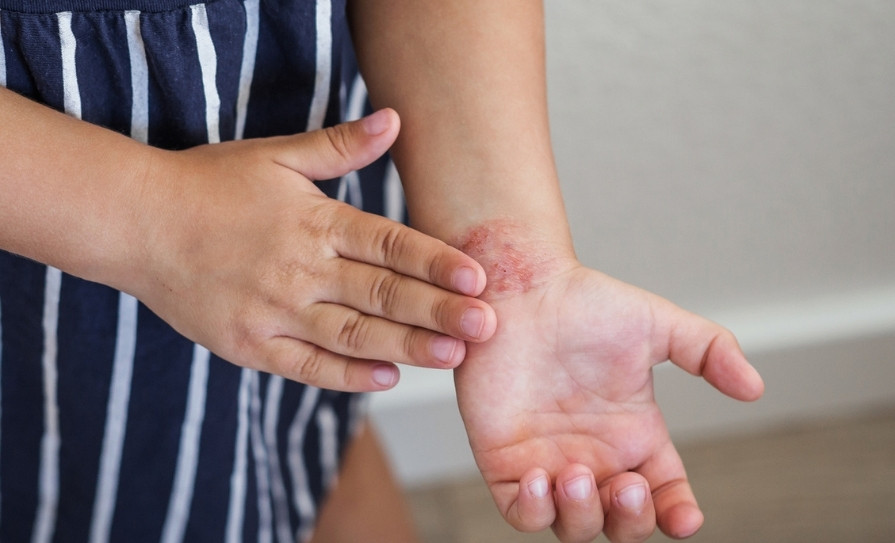
Eczema affects up to one in four children globally and is characterised by chronic inflammation, severe itching, dry skin, and recurrent flares that can significantly affect quality of life for both children and their families. In Ireland, the condition impacts around 20 per cent of children and their families. It usually develops before the age of five, with many cases appearing during infancy. Over half of all eczema cases will manifest in the first year of life.
While previous eczema guidelines largely focused on adults, the AAD emphasised that paediatric patients require distinct recommendations because of differences in safety considerations, medication dosing, and the practical challenges of treating young children.
“Eczema is extremely common in children, though it doesn’t always look or behave the same way it does in adults,” said AAD President and Dermatologist Dr Murad Alam, Vice-Chair of the Department of Dermatology and Professor at Northwestern University Feinberg School of Medicine in Chicago, Illinois. “Because eczema can decrease the quality of life of children and their families, we need dedicated guidelines just for children to ensure their best care.”
Prevention
One of the most notable aspects of the new guidelines is their focus on prevention. Following an extensive review of available evidence, the AAD concluded that many widely used preventive interventions lack convincing scientific data.
The guidelines found insufficient or no clear evidence to support strategies such as early food introduction, probiotic supplementation, vitamin D supplementation, exclusive human milk consumption, water softening, or dust mite avoidance in preventing eczema.
Moisturisers were the only treatment to receive a conditional recommendation for use to reduce the occurrence of eczema in children aged six months to three years. The guidelines reinforce the importance of maintaining the skin barrier from an early age, reflecting growing recognition that impaired skin barrier function plays a central role in eczema development.
Treatment
The guidelines provide 26 evidence-based recommendations for topical therapies (prescription and non-prescription), phototherapy, and systemic therapies based on the treatment’s reduction of eczema symptoms and itch severity.
Strong recommendations were made for the use of the following:
- Moisturisers to reduce the severity of patients’ dry, itchy skin.
- Topical calcineurin inhibitors (pimecrolimus 1% cream and tacrolimus 0.03% or 0.1% ointment) to manage patients’ flares when their dry, itchy skin worsens and as intermittent maintenance therapy.
- Topical corticosteroids, considered a first-line treatment in most cases due to affordability and accessibility, to manage patients’ flares, and as maintenance therapy.
- Phosphodiesterase-4 inhibitors to reduce patients’ itchiness and decrease the frequency of flares. When used proactively, roflumilast can keep skin clearer more consistently.
- Topical Janus kinase (JAK) inhibitors to decrease the severity of the dry, itchy skin in patients with mild to moderate eczema.
- Topical aryl hydrocarbon receptor agonists (tapinarof cream) to reduce inflammation, improve skin barrier function, and decrease the severity of dry, itchy skin in patients with mild, moderate, and severe eczema.
- Monoclonal antibodies (dupilumab, tralokinumab, and lebrikizumab) to decrease the severity of eczema symptoms, reduce flares, and improve itching in patients with moderate to severe eczema.
- JAK inhibitors (upadacitinib, abrocitinib, and baricitinib) to decrease the severity of eczema symptoms and improve itching in patients with moderate to severe eczema.
Conditional recommendations were made for the use of treatments inclusive of the following:
- Bathing for treatment and maintenance for paediatric patients, followed by a moisturiser as standard care.
- Wet wrap therapy, under the guidance of a healthcare professional skilled in eczema management, are typically encouraged for patients during eczema flares.
- Phototherapy at a dermatologist’s office can be used to treat patients with severe cases of eczema involving many body sites.
- Strong recommendations were made against systemic corticosteroids, which should be reserved exclusively for patients with sudden, severe flares and as short-term bridge therapy.
- Conditional recommendations were made against the use of topical antimicrobials and PUVA (psoralen and ultraviolet A) phototherapy for children with eczema.
The guidelines have received a strong positive response from dermatologists, researchers, and patient advocacy organisations worldwide, with many viewing them as an important milestone in advancing more consistent, evidence-based care for children with atopic dermatitis. Internationally, the recommendations are seen as reflecting a broader move toward more personalised and proactive approaches to eczema management.
Experts have commended the guidelines for successfully integrating established therapies with newer targeted treatments, while maintaining a clear emphasis on safety, early intervention, and improving quality of life for paediatric patients and their families. The guidelines are also expected to shape future paediatric atopic dermatitis guidance in other countries across the globe.
“These guidelines were developed to educate and empower patients, caregivers, and the medical community so children with eczema receive the best care possible. Early, proactive intervention allows improvement in symptoms and quality of life for patients and their families,” said Co-Chair of the AAD’s Atopic Dermatitis Guideline Workgroup Dr Dawn Davis, Departments of Dermatology and Paediatrics, Mayo Clinic, Rochester, Minnesota.
“Since 2014, the landscape for eczema care has been transformed by the approval of new therapies for adults. Our goal was to review how these advancements relate to the paediatric population so children also receive optimal, individualised care.”
References
Davis DMR, Alikhan A, Bercovitch L, et al. Guidelines of care for the management of atopic dermatitis in paediatric patients. J Am Acad Dermatol. 2026. Published online April 7, 2026. Available at: www.jaad.org/article/S0190-9622(26)00343-9/fulltext.
Sidbury R, Alikhan A, Bercovitch L, et al. Guidelines of care for the primary prevention of atopic dermatitis and awareness of comorbid conditions in paediatric atopic dermatitis. J Am Acad Dermatol. Published online April 7, 2026. doi:10.1016/j.jaad.2026.02.114.