Reference: May 2026 | Issue 5 | Vol 12 | Page 46
The issue of tanning beds has moved from a niche dermatology concern into a major national public health discussion across Ireland in recent years. Skin cancer is now the most commonly diagnosed form of the disease in the country and experts consistently warn of a rapidly escalating burden unless stronger prevention measures are introduced.
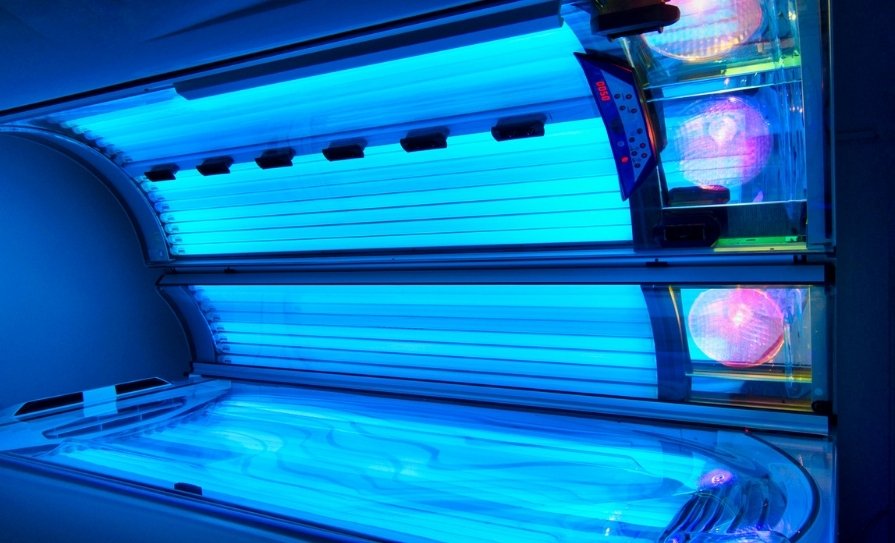
In response, the stage is being set for a total ban on commercial sunbeds. The Irish Government is actively considering a nationwide ban following a series of reports, public consultations, and mounting evidence linking artificial tanning devices to melanoma and other skin cancers. The proposed legislation has created a sharp divide between the medical community and the commercial sector.
Public health advocates argue that Ireland should follow paths already taken elsewhere. In 2016, Australia implemented one of the world’s most comprehensive commercial sunbed bans after evidence showed strong links between indoor tanning and melanoma, and Irish policymakers have repeatedly referenced Australia as a potential model.
In 2025, the HSE National Cancer Control Programme and the Institute of Public Health (IPH) held an event for health and social care professionals to discuss sunbed use in Ireland, and the lessons learned from Australia’s sunbed ban, to inform future policy options on how to reduce skin cancer risk in Ireland.
Speaking at the event, Craig Sinclair, Head, Prevention Division, Director, World Health Organisation (WHO) Collaborative Centre for UV Radiation at Cancer Council Victoria, Australia, said: “There is a precedent for the successful banning of sunbeds.
Australia introduced an outright ban on commercial sunbeds in 2016. The measure has enjoyed strong public support and has undoubtedly prevented thousands of skin cancers and delivered an estimated saving of over AU$64 million to the Australian health system.”
Skin cancer in Ireland
According to the National Cancer Registry Ireland (NCRI), more than 11,000 people are diagnosed with skin cancer in Ireland every year, making it by far the country’s most common cancer. Projections suggest this number could double by 2045 if radical intervention is not taken.
Around 90 per cent of cases are non-melanoma, while melanoma, albeit notably less common, is responsible for the vast majority of skin cancer deaths. The NCRI estimates that approximately 270 people die from skin cancer annually in Ireland, many of which are avoidable.
Despite the seriousness of the issue, there are also encouraging developments. Survival rates for skin cancer in Ireland have improved substantially over the past two decades. NCRI data published in the 2025 Cancer Trends Report shows a five-year survival rate of nearly 100 per cent in people diagnosed with non-melanoma skin cancer.
Survival rates for melanoma have also improved significantly, with 92 per cent of patients now surviving at least five years. The incidence rate of squamous cell carcinoma (SCC) is decreasing in women, and the rate for basal cell carcinoma (BCC) is stabilising.
However, the incidence rate for melanoma in women continues to increase. For men, the incidence rate of SCC is stabilising, while the BCC incidence rate is increasing at a slower pace. The melanoma incidence rate in men stopped increasing in 2015. However, men are more likely to die from skin cancer than women. They are 1.6 times more likely to die from melanoma and 2.3 times more likely to die from non-melanoma skin cancer.
Commenting on the report, Prof Deirdre Murray, Director of the NCRI, said: “Understanding the trends in skin cancer is vital for public health awareness and prevention strategies. Many of these cancers could be prevented with wider adoption of safe sun practices in our population and avoidance of sun beds.”
Existing sunbed regulation
Ireland regulates sunbeds under the Public Health (Sunbeds) Act 2014, which prohibits anyone under 18 from using, buying, or hiring sunbeds. Sunbed operators must supervise all use, provide protective eyewear, display health warnings, and ensure customers read and sign risk information before each session.
The legislation also bans misleading health claims and restricts certain promotional practices around sunbeds. In recent years, Irish health authorities, cancer charities, dermatologists, and researchers have increasingly argued that existing regulations are insufficient and that stronger legislative action is needed to reduce preventable cancers. This push for a ban is supported by stark statistics and a strong evidence-base.
A need for prohibition: The evidence
The IPH published a seminal report detailing the direct link between artificial ultraviolet (UV) radiation and melanoma in 2025. The findings demonstrated a dose-response relationship, whereby melanoma risk increases with the frequency and duration of sunbed routines. Using a sunbed even once increases the risk of developing melanoma by 20 per cent, and for those who begin using them before the age of 35, that risk escalates by 75 per cent, according to the report.
Another key finding was that underage sunbed use continues in Ireland despite existing legal restrictions. Surveys cited in the report showed that over 5 per cent of children aged 10-17 had used a sunbed at least once.
The publication also emphasised that UV radiation emitted by sunbeds is classified as carcinogenic by both the WHO and the European Commission. The WHO places them in the same cancer-causing category as tobacco smoking and asbestos. The report concluded that sunbed use is an independent cancer risk factor – prompting recommendations for a full ban on commercial sunbeds to reduce future skin cancer rates.
The Minister for Public Health, Wellbeing, and the National Drugs Strategy, Jennifer Murnane O’Connor, was among many who welcomed the IPH report, saying: “This report reinforces what we already know – there is no safe level of sunbed use. Skin cancer is the most common form of cancer in Ireland, and we must act decisively to protect our population, particularly our young people, from preventable harm.
“The evidence is clear: Sunbeds are still being used by children and young people, despite legal restrictions. This is deeply concerning. We must do everything within our power to protect people from its harms in order to save lives and reduce the burden of cancer on our health service.”
The Government launched a public consultation on a potential sunbed ban in 2025. The consultation sought feedback from both the public and industry stakeholders on how prohibition could be implemented.
Minister Murnane O’Connor also established a cross-departmental Sunbed Working Group to explore a full sunbed restriction. In March 2026, the Department of Health published findings from that working group, which did recommend a ban on commercial sunbeds, citing public health evidence, international experience, weak compliance with existing regulations, and the rising incidence of skin cancer as justification for this stronger measure.
At the same time, Minister Murnane O’Connor published The Department of Health’s Sunbeds Workshop Report, which also demonstrated broad consensus for enhanced action, integrating legislative reform, enforcement, and increased public awareness.
A third report on the Public Consultation on Sunbed Use in Ireland is being finalised and will be published soon. The three reports will be considered together, along with legal, economic, and European Union considerations, before policy proposals are brought to Government for a decision.
Advocating to close ‘carcinogenic’ salons
Medical experts and patient advocates have been the primary drivers of a complete ban on sunbeds. Specific groups that have publicly supported stronger restrictions or a total ban in Ireland include the Irish Cancer Society, the Irish Skin Foundation, the HSE through its National Cancer Control Programme and SunSmart campaign, and consultant dermatologists associated with bodies such as the Irish Association of Dermatologists.
The Irish Cancer Society has long campaigned for the closure of tanning salons, emphasising the International Agency for Research on Cancer’s classificatication of them as ‘carcinogenic to humans’. Their advocacy also focuses on debunking the idea that a ‘base tan’ protects the skin from sunburn during holidays.
Similarly, the Irish Skin Foundation has emphasised the psychological impact of ‘tanorexia’, or sunbed addiction, supporting the ban as a necessary step to protect vulnerable young adults who are heavily influenced by social media trends.
European context
Ireland is not alone in seeking to restrict tanning devices. Over the past year, the European Academy of Dermatology and Venereology (EADV) has intensified efforts to raise awareness of the health risks associated with sunbeds and to promote stronger regulation across Europe.
After the European Commission decided not to proceed with its proposed recommendation on UV exposure from sunbeds, the EADV engaged with Members of the European Parliament, the European Commission, and national health authorities to advocate for measures such as banning sunbed use by minors and strengthening rules on health warnings and advertising.
These advocacy efforts have helped drive significant progress, including Denmark’s introduction of a ban on sunbed use for minors, a European Parliament study highlighting both the cancer risks linked to sunbeds and regulatory shortcomings across Member States, and updated guidance from the WHO and the European Commission discouraging sunbed use, particularly among young people. The European Commission has also shown growing willingness to consider additional restrictions.
This year, the 2026 Euromelanoma Campaign has targeted many of the myths surrounding tanning and is one of Europe’s largest and longest-running skin cancer prevention initiatives. Founded in Belgium in 1999 by a network of dermatologists, it has since expanded to over 30 European countries, including Ireland and the United Kingdom.
The campaign is coordinated by volunteer dermatologists and supported by national dermatology societies, cancer organisations, and public health bodies. Its overall mission is to reduce the burden of melanoma and other skin cancers through prevention, education, and early detection.
A central objective of Euromelanoma is to increase public awareness about the dangers of UV radiation from both sunlight and artificial tanning devices like sunbeds. The campaign consistently emphasises that most skin cancers are preventable and that excessive UV exposure remains the single most important avoidable risk factor.
Public education campaigns therefore focus heavily on sun safety behaviours, including sunscreen use, protective clothing, and shade seeking, as well as avoiding sunbeds.
Another major goal is the promotion of early diagnosis. Euromelanoma campaigns repeatedly stress that skin cancer can often be successfully treated if detected early. The initiative encourages people to perform regular skin self-examinations and to seek medical attention for suspicious moles or changing lesions. Educational materials commonly explain the warning signs of melanoma and provide step-by-step guidance on how to examine the skin.
One of the campaign’s most distinctive initiatives is its programme of free skin cancer screenings. As part of annual awareness campaigns, participating dermatologists across Europe offer complimentary mole checks and skin examinations to the public.
Euromelanoma also actively challenges the widespread perception that tanning is synonymous with health or attractiveness. Its campaign materials regularly dispel myths surrounding ‘safe tanning’ and highlight the carcinogenic risks associated with both natural and artificial UV exposure. This approach supports wider European public health efforts aimed at reducing melanoma rates through increased awareness and behavioural change.
Euromelanoma also aims to influence policymakers and healthcare systems. Beyond public campaigns, the initiative engages with governments, healthcare professionals, and public health authorities to encourage stronger skin cancer prevention policies.
This includes advocacy around sunbed regulation, workplace UV protection, and improved access to dermatology screening services. The campaign’s messaging increasingly reflects concerns about rising melanoma incidence across Europe, particularly among younger populations exposed to indoor tanning.
Throughout Europe, countries like Belgium and Norway have already implemented stricter sunbed controls, and the EU’s Beating Cancer Plan identifies UV radiation as a primary preventable risk factor. Additionally, the European Commission’s Scientific Committee on Health, Environmental, and Emerging Risks has stated that there is no ‘threshold dose’ below which sunbed use is safe.
The pushback
Conversely, The Sunbed Association (TSA) has launched a vigorous defence. In various industry statements, it argues that a ban will drive the industry underground, leading to a rise in unregulated, domestic sunbed hire – where no safety timers or tube-strength regulations exist. TSA and other groups also point to the vitamin D argument, claiming sunbeds provide essential nutrients during Irish winters – a claim the HSE Healthy Ireland initiative has consistently refuted, noting that Vitamin D is best sourced through diet, supplementation, and safe, incidental sunlight.
A total ban would affect hundreds of small businesses across Ireland, from dedicated tanning salons to gyms and hair and beauty salons that offer sunbeds as a secondary income stream. The Government is currently under pressure to provide an agreeable transition or compensation scheme for these business owners. However, gains could be found elsewhere. As the Health and Safety Authority points out, by reducing melanoma rates, Ireland reduces the number of working days lost to illness and the immense personal cost of cancer treatment and bereavement.
Conclusion
The evidence signals that the era of the commercial sunbed in Ireland may be coming to an end. While the industry fights for survival, the medical consensus is absolute. The debate over sunbeds ultimately reflects a broader shift in Irish public health policy toward reducing avoidable cancers before they occur. With rising incidence rates, increasing healthcare pressures, and growing scientific consensus around UV risk, Ireland appears closer than ever to becoming one of the first countries in Europe to prohibit commercial sunbed use entirely.