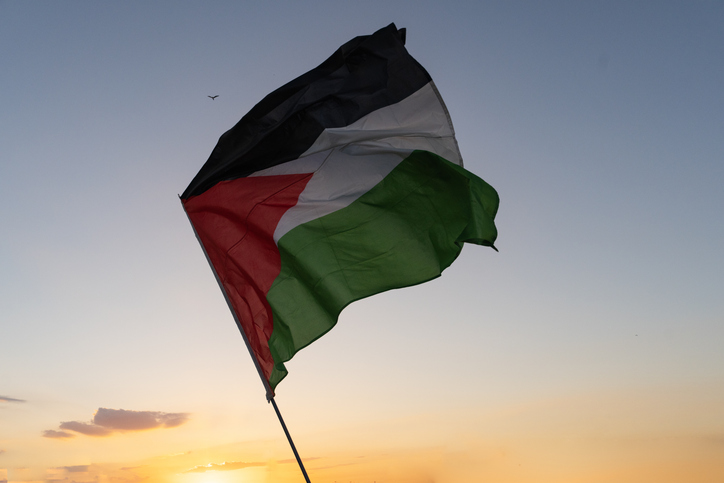
Credit: iStock.com/Raul C
The issues discussed at an IHCW4P conference late last year still have the utmost relevance
A key aim of Irish Healthcare Workers For Palestine (IHCW4P) is to advocate for our fellow healthcare workers (HCWs) and the population they serve in Palestine.
In November 2025, IHCW4P hosted a conference, titled ‘Response and Responsibility’, in Trinity College Dublin (TCD).
At that time, over 300 people had already been killed in Gaza by Israel since the so-called ‘ceasefire’, which had been announced seven weeks earlier.
As of 18 August 2026, that ceasefire death toll for Gazans stands at 1,258 and includes 10 HCWs.
Although the meeting was almost a year ago, no real change in Israel’s actions in Palestine has occurred since it was held.
By sharing this conference report, we hope to challenge the normalisation of the ongoing genocide in Gaza and to urge our political leaders to take meaningful action to protect Palestinian civilians and HCWs.
The purpose of the conference was to build solidarity, deepen understanding, and strengthen collective capacity to act in support of Palestinian health and human rights. Through a rich programme of talks and panel discussions, we explored the intersections of healthcare, justice, and international solidarity.
Speakers came from all over Ireland, Europe, North America, and, most importantly, Palestine, including Gaza. We would like to thank the Irish College of GPs, which helped facilitate the conference by providing grant support.
A recurring theme of the meeting was stories of despair followed by stories of hope.
Context
To set the context of the conference: The attacks on Gaza had been designated a genocide by an independent United Nations (UN) commission report, Amnesty International, and by two leading Israeli human rights organisations.
In addition, the Irish Government has stated that Israel is committing genocide in Gaza. Israeli leaders have been indicted by the International Criminal Court to stand trial on the issue.
Between October 2023 and the time of the conference (November 2025), the death toll in Gaza exceeded 70,000 people, of whom two-thirds were women and children. Injured Gazans totalled more than twice this number. Research indicated that the true death toll was likely to be far higher, with thousands more dying from starvation and due to the destruction of Gaza’s healthcare system. The region has suffered unprecedented attacks on HCWs and children, with life expectancy dramatically declining in the overall population.
More broadly, under international law, Israel’s presence in the Occupied Palestinian Territory is illegal.
In July 2024, the International Court of Justice (ICJ) issued an advisory opinion that found that Israel’s continued presence in the West Bank, East Jerusalem, and the Gaza Strip is unlawful. The ICJ stated Israel “is under an obligation to bring to an end its unlawful presence in the Occupied Palestinian Territory as rapidly as possible”.
Speakers
This conference was held shortly after the so-called ‘ceasefire’. Several speakers – including Irish Consultant Trauma Surgeon Mr Morgan McMonagle (who had returned from Gaza two weeks previously) – outlined that the killing of civilians had slowed, but had not come close to stopping.
The conference was opened by Prof Colin Doherty, a Consultant Neurologist and Head of the TCD School of Medicine.
The first speaker was Dr Rupa Marya, a Professor of Medicine from California, US.
Dr Marya’s talk related to the importance of telling the truth and finding ways to move healthcare beyond the hospital.
Several speakers, including Public Health Specialist Ms Walaa Al Abssi, who had only recently arrived to Ireland from Gaza, gave harrowing first-hand accounts as to how the constant drone strikes on civilians meant that HCWs sometimes ended up having to treat their own relatives.
Mr Faress Arafat, a Nurse, also from Gaza, described how HCWs were caught between two wars every day: One in the treatment rooms of Gaza’s hospitals under attack, and the other as they made their way home through devastation, trying to care for their families, and find food and safety for another night.
Many Israeli attacks are carried out at night when families are all together in one room.
He said the families knew the risks, but would rather take their chances together, despite the dangers.
Mr McMonagle gave a very powerful speech on his experiences, having made several journeys to Gaza in the previous years.
He stated the number of children killed and maimed was unprecedented in any war in recent history.
The use of high-energy military grade explosives, initially on civilian homes and then on tents, resulted in mass casualty multi-trauma events daily. Many children died for lack of simple surgical tools, a clean bed, or antibiotics – “the smell of pseudomonas is everywhere”. More recently, the man-made famine had resulted in previously survivable injuries becoming death sentences for the children of Gaza.
An expert in international law and human rights, Dr Caroline Jagoe Sherman (PhD), explained that deliberate mutilation is prohibited under the international law governing war.
However, deliberate mutilation has been documented in many of the attacks on the people of Gaza and appears to be a deliberate strategy
She pointed out ‘medical neutrality’ is a misnomer used today to silence medics who witness breaches of international law.
Impartial treatment in care is not the same as remaining silent about injustice.
Under the Geneva Convention, medical staff, patients and medical facilities are specifically protected, and must never be attacked. There are very few exceptions to this protection and those rare exceptions must provide: Adequate warning, evacuation assistance, and continued medical care at a new medical facility.
Dr Jagoe Sherman, who is Associate Professor of Clinical Speech and Language Studies at TCD, stated this is not what happens in Gaza when Israel bombs a hospital with no warning.
She also noted that UN investigations found Israel’s justifications for attacks on medical facilities and HCWs provided “insufficient information” and “in some cases contradict public evidence”.
Israel’s ongoing denial of entry to international HCWs to Gaza is an attempt to deny witness to genocide, deny testimony to the genocide, and deny the gathering of evidence by independent parties.
It is also an attempt to deny the Palestinians the means by which they can rebuild their health services.
The resilience of the Palestinians was mentioned many times both by speakers and from the floor during the panel discussions.
However, it was also stated that we need to remember that Palestinians are just ordinary humans and they do not have an endless capacity for recovery.
They will need multi-decade support to help them to rebuild their state.
Most of all, they need the genocide and occupation to end. Only then can the people and society, including the healthcare system, function properly.
The targeting of civil society was highlighted by the Palestinian Psychotherapist Mr Talha Al Ali. He said that many of the drone strikes on families while they slept in the makeshift tents were based on Israeli intelligence to destroy any new beginnings of a community. Parents who were running programmes for sport, children’s play groups, or education seemed to be particular targets.
Hope
So to the cause for hope. Along with many stories of the sheer fortitude of the Palestinian people, we heard about the tools of boycott, divestment, and sanctions.
Dr Sara Galli from the Netherlands explained how her group, Doctors for Gaza, persuaded an insurance company to divest from the “very geopolitically unstable” region and remove €1.5 billion from the Israeli war economy. Every industry and company in Israel pays the government taxes, which help maintain the illegal occupation and its military campaign.
Dr Galli said the tide of world public opinion is turning and indeed is ahead of the policies of many governments. The goal is divestment, not placating statements from corporations.
She stated at least 50 per cent of all resources, time, and money should be spent on the root causes of the genocide, not on humanitarian aid. Dr Galli said: “You must turn off the tap before you dry the floor.”
Prof Veronica O’Keane, a retired Psychiatrist and Professor of Psychiatry, was part of the then recent Gaza flotilla. She gave an account of her motivations and journey.
And GP Dr Angy Skuce gave the final and inspiring presentation on the formation and development of IHCW4P.
Our visions and how to pursue the central aim of helping our fellow HCWs in Palestine formed the basis of the concluding discussion with the delegates.
The message is simple: The occupation of Palestine is illegal and the genocide will only stop with tangible actions. As was said many times, silence during a genocide is complicity. Condemnation without concrete action is meaningless.
The worst genocide is always the current one. This is because we cannot correct and undo previous genocides. However, we can take the correct and lawful action today, tomorrow, and the day after.
Along with many stories of the sheer fortitude of the Palestinian people, we heard about the tools of boycott, divestment, and sanctions
Conference presentations, and the IHCW4P declaration, which can be signed and acted upon by all HCWs (not just conference attendees), can be accessed at: www.globalhealth.ie/ihcw4p












Leave a Reply
You must be logged in to post a comment.