







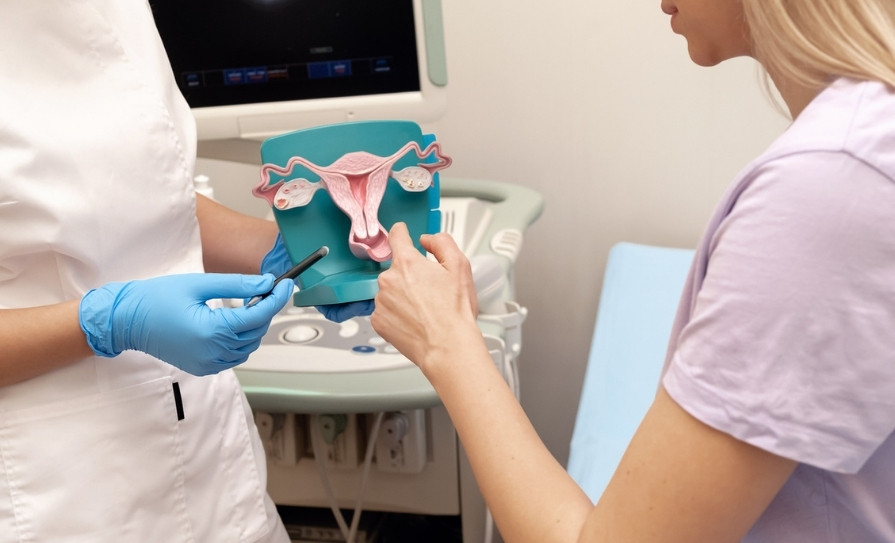
Cervical screening is a population-based health measure that aims to reduce the incidence and mortality of cervical cancer in Ireland. This article explores a quality improvement project (QIP) to improve screening uptake. The initiative included pre- and post-intervention audits, and the implementation of several practical, cost-effective interventions.
Cervical screening
CervicalCheck, the national cervical screening programme, began in 2008. In 2020 the screening programme changed from cytology-based screening to primary human papilloma virus (HPV) testing, with follow-up cytology for those who need it. This was in response to evidence that HPV screening is better at detecting cervical abnormalities before they develop into cancer.
HPV cervical screening, together with HPV vaccination and access to timely treatment, will make cervical cancer rare in Ireland by 2040.1 The national cervical screening programme is administered via a call-recall system by CervicalCheck. The eligible population – women and people with a cervix aged 25 to 65 – is identified through public service records and via self-registration. The screening programme contacts eligible women living in Ireland via letter when their screening tests are due. The majority of screening tests are carried out in primary care settings, with some tests also being taken in non-primary care and other clinical environments.
The success of CervicalCheck depends on the uptake and ongoing participation of women from the target population. CervicalCheck aims to achieve at least 80 per cent coverage of the target population.2 Health professionals in primary care and other cervical screening settings have a pivotal role in identifying eligible women and encouraging them to participate in regular free cervical screening.3 General practice nurses, in particular, play a crucial role in the successful promotion and implementation of the cervical screening programme in Ireland.
Step 1: Audit
A single-centre audit was undertaken in a general practice setting in order to:
1) Examine the practice’s compliance with screening eligible women for HPV, according to the national cervical screening programme guidelines.
2) Identify women between the age of 26–27 years in October 2024 within the practice who had not received screening.
Methodology: Included in this audit was every woman aged 26 and 27 years within our practice in October 2024, using Health One IT system. This allowed 12 months for women to have had their recommended cervical screening performed. The 27-year-olds were included to increase the sample size.
A manual chart review was performed to record the following variables: Screening status and the attendance of the women to the practice within the previous six months. The screening status was verified using the CervicalCheck eligibility website. Any woman who had not attended the practice within the previous 10 years was excluded from the audit.
Results: The audit findings included:
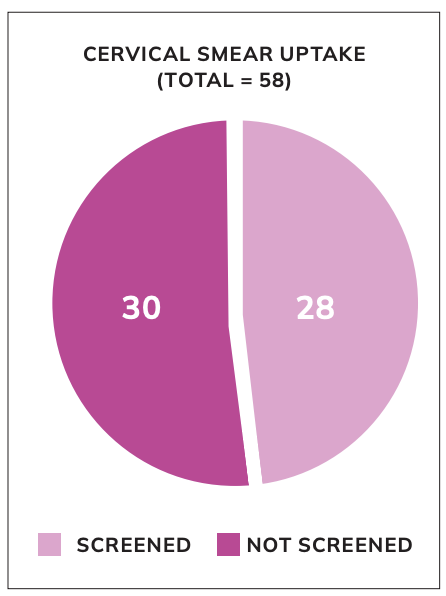
✽ Women aged 26 or 27 in October 2024: n=77
✽ Excluded (did not attend practice in last 10 years): n=19
✽ Women eligible for screening: n=58
✽ Women screened: n=28 (48.28%)
✽ Eligible women not screened: n=30 (51.72%)
✽ Eligible women not screened, but who had attended the surgery within the previous six months: n=15 women (62.5%).
Note: Eligible for screening but not registered on the national CervicalCheck register: n=3
Discussion: Our compliance rate at the practice was 48.28 per cent, and hence, did not meet the recommended national target of 80 per cent. These findings led to a range of measures that were implemented in a bid to improve compliance and increase the number of eligible women being screened.
Step 2: Implementing a practical intervention
Measures taken to improve compliance and help achieve targets included:
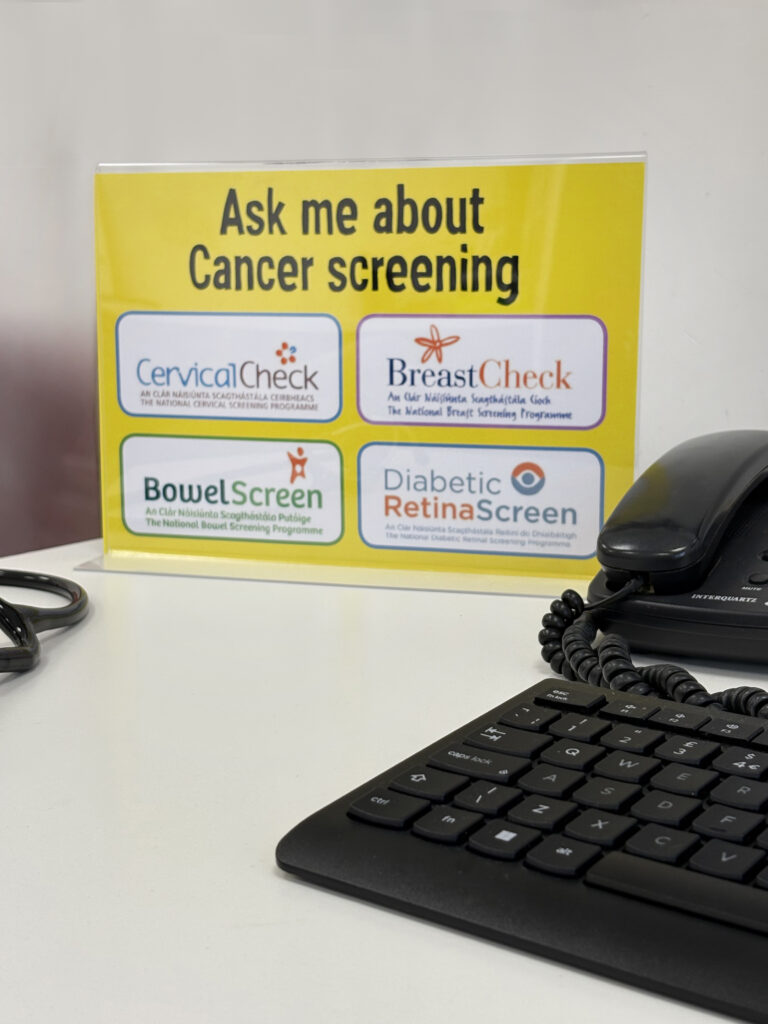
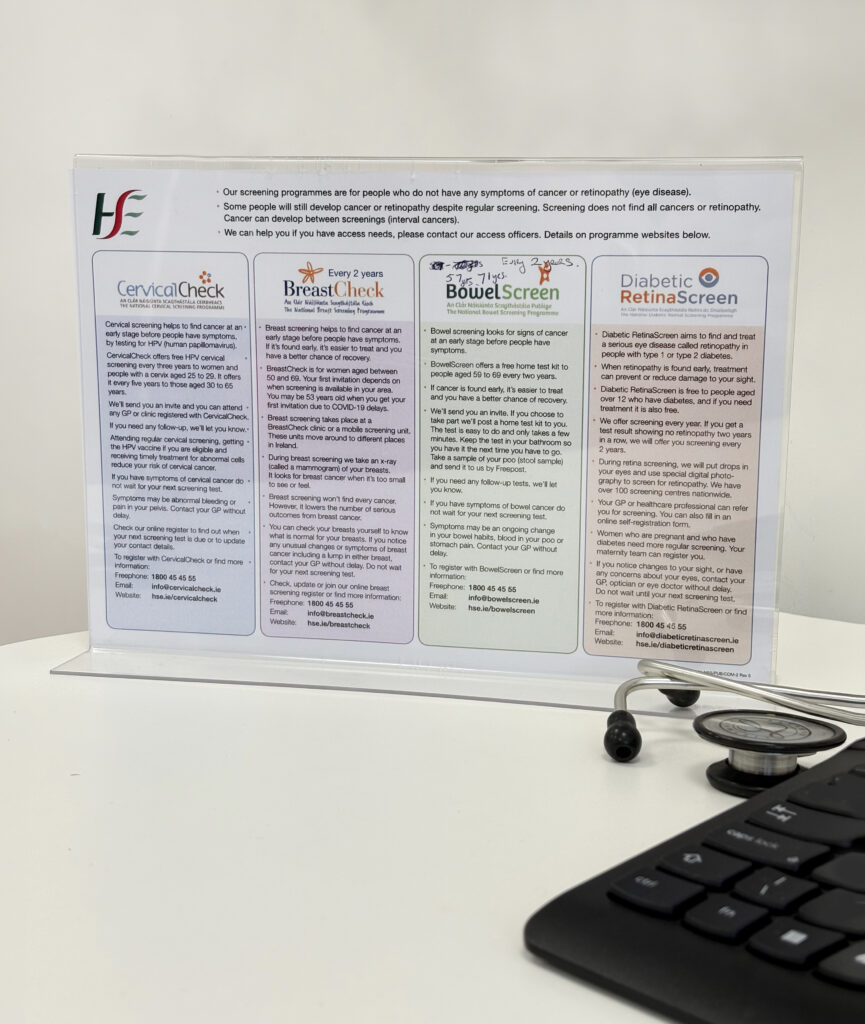
✽ An ‘Ask me about cancer screening’ initiative. Measures included a desktop prompt (Figures 2 and 3), which sits within a clear frame on each desk at the practice. The desktop prompt was designed in response to results of the audit. It displays screening information and is placed on each doctor’s/nurse’s desk to encourage both clinicians and patients to ask about screening programme status during a regular GP or nurse consultation. The opportunity to include other screening programmes in the health promotion initiative was also taken (Figure 3).
✽ The national screening programmes being offered within the practice were also displayed on the waiting room digital noticeboard.
✽ Monthly five-minute discussions with all staff members were scheduled to address any queries that staff may have and to facilitate feedback and suggestions regarding additional ways to promote screening uptake.
✽ Follow-up phone calls with the women who were not screened took place.
✽ A dedicated cervical screening recall system was already in situ and was utilised.
✽ Staff members were delegated to make telephone calls and invite women who are on the IT recall cervical screening system and due screening – confirming each client is due their screening on the national CervicalCheck website.
A follow-up audit was planned to take place 12 months after these measures were implemented in order to determine whether objectives to improve uptake rates, ideally to the nationally recommended targets, had been achieved.
Step 3: Re-auding uptake of cervical screening
Regular re-audit of cervical screening practices is essential to ensure adherence to current clinical guidelines, maintain high standards of patient care, and identify areas for improvement in uptake, documentation, and follow-up. The re-audit took place 16 months after the first one; data were collected in February 2026. Improved screening uptake was anticipated in response to the additional measures which had been implemented, as well as the high levels of staff engagement that had been noted.
The second audit not only evaluated current performance against established benchmarks, but also reviewed the changes that had been implemented since the previous audit cycle and assessed their effectiveness in improving screening coverage and patient outcomes within the practice population.
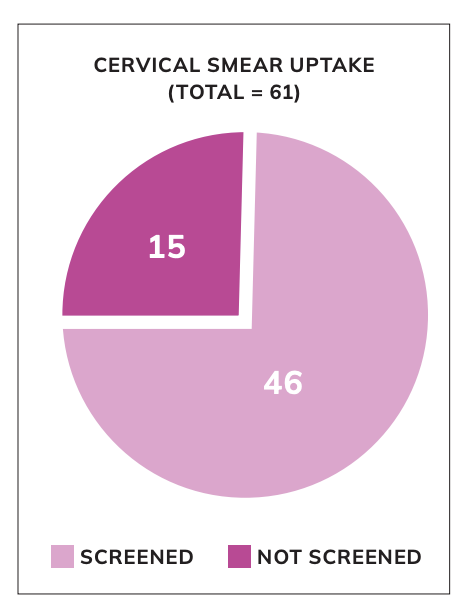
Results of the re-audit (Figure 4):
✽ Women aged 26 and 27 in February 2026: n=67
✽ Women excluded (pregnant, refused, No PPS available): n=6
✽ Women screened: n=46 (75.41%)
✽ Women not screened: n=15 (24.59%).
Discussion
In response to the initial audit, which revealed unacceptable compliance with national cervical screening targets, a number of practical, user-friendly, low-cost measures were implemented in order to improve uptake and reach recommended targets of cervical screening at the practice. While the national screening programme’s target of 80 per cent has yet to be achieved, the practice did markedly improve screening uptake from 48.28 per cent to 75.41 in a relatively short space of time, and efforts continue.
In order to determine the perceived effectiveness and usability of the implemented measures, as well as individual engagement in promoting screening at every opportunity, staff at the practice were surveyed (eight team members including GPs and nurses).
The survey was short, easy to use, and contained only four yes/no questions to encourage participation. Results are outlined in Table 1.
The questions were:
✽ Question 1 ‒ Have you referred to the desktop prompt during consultations over past two weeks?
✽ Question ‒ Have you ever shown the desktop prompt to discuss with clients?
✽ Question ‒ Has any client asked you about cancer screening in the past two weeks?
✽ Question ‒ Have you ever asked a client to take the details/photo of the prompt?
Feedback from our team in Kings Island Medical Centre suggests that the desk prompt, in particular, was extremely useful. Survey results also indicated that the use of the desk prompt during consultations was useful in promoting all four of the national screening services being offered. Findings from both the audits and survey suggest that regular reminders for staff to promote health screening is beneficial in improving uptake among patients.
Acknowledgement:
Thank you to Dr Richard Murray, MB, BCh, BAO, MICGP, DCH, D Obs,for your support and advice on this QIP.
| SURVEY RESULTS | ||
|---|---|---|
| Q1 | Yes = 6 | NO =2 |
| Q2 | Yes = 7 | NO = 1 |
| Q3 | Yes = 2 | NO = 6 |
| Q4 | Yes = 4 | NO = 4 |
TABLE 1: Results of the post-audit survey
Click the link below to get further information on the free HSE screening programmes from the national screening service website.4
www2.healthservice.hse.ie/organisation/nss/
References
- Russel N. Gleeson G. Cervical Check Programme Report 2022-2023. Dublin: HSE; 2025.
- Health Service Executive. Standards for quality assurance in cervical screening, quality assurance in primary care, and other cervical screening settings 2.1 promoting awareness of cervical screening. Dublin: HSE; 2025. Available at: www.cervicalcheck.ie/health-professionals/quality-assurance.16284.html.
- Health Service Executive. Standards for Quality assurance in cervical screening, quality assurance in primary care, and other cervical screening settings 2.2 promoting uptake and participation. Dublin: HSE; 2025. Available at: www.cervicalcheck.ie/health-professionals/quality-assurance.16284.html.
- Health Service Executive. National Screening Service. Dublin: HSE. Available at: www2.healthservice.hse.ie/organisation/nss/.










Leave a Reply
You must be logged in to post a comment.