







Reference: September-October 2026 | Issue 5 | Vol 19 | Page 62
A retrospective review of a quality improvement project implemented over a three-year period in a Model 3 hospital
Peripheral intravenous catheters (PVCs) are the most commonly used invasive device in nursing practice but are frequently linked to complications.¹ Up to 60 per cent of hospitalised patients receive at least one cannulation during an admission.² PVC-related bloodstream infections (PVC-BSIs) can significantly impact patients by increasing morbidity and mortality, prolonging hospital stays, and leading to serious complications such as intensive care admission and death.3,4,
Infection prevention and control (IPC) measures have evolved to reduce PVC-BSI rates and include the introduction of aseptic non-touch technique (ANTT); care bundles; visual infusion phlebitis scores; and intravenous (IV) care teams. In Model 4 hospitals in Ireland, IV teams have been established in eight sites, in collaboration with the HSE Antimicrobial Resistance and Infection Control (AMRIC) Team, to improve surveillance and national practice.
One of the core objectives of the HSE’s RESIST campaign for prevention of peripheral and central venous catheter (CVC)-related infection is to reduce the use of venous catheters in situations where they are not strictly required. The Health Protection Surveillance Centre Point Prevalence Study (2023) reported that 19.7 per cent of 12,650 patients had at least one invasive device in situ, an increase from 18.7 per cent in 2017 and 16.3 per cent in 2012 – indicating that the prevalence of invasive device use among Irish hospital inpatients has increased over time.5
Quality improvement projects (QIPs)/initiatives that implement, measure, and monitor outcomes are essential to sustain improvements. However, factors such as hospital model, organisational structure, leadership, patient acuity, and practice gaps must be addressed to improve patient outcomes.
This study examines the impact of an IPC QIP, implemented over three years to decrease the incidence of PVC-BSIs, with specific emphasis on Staphylococcus aureus (S aureus), in a Model 3 hospital serving the Midlands region of Tullamore, Co Offaly.
PVCs and BSI
Peripheral vascular catheterisation is a fundamental component of modern hospital care – however, it carries a recognised risk of BSI if not managed optimally. PVC-BSIs contribute significantly to patient morbidity but are largely preventable through adherence to evidence-based insertion and maintenance practices.6,7,8
With increasing emphasis on healthcare-associated infections (HAIs), surveillance has become a core function of IPC. Authors highlight the importance of sustained institutional efforts to maintain HAIs – including PVC-related bacteraemia – at the lowest achievable levels.8,9,10 Healthcare organisations now routinely collect standardised HAI data to monitor internal performance and benchmark outcomes against national and international standards.
Robust surveillance systems facilitate early trend detection, inform targeted interventions, and strengthen accountability and patient safety.8 Key performance indicators (KPIs) for acute hospital HCAIs are closely monitored, including structured review processes for rates exceeding targets. These reviews require hospital commentary, root cause analysis where appropriate, and documentation of corrective actions undertaken by the IPC team.
Sustained improvement depends on continuous monitoring, visible leadership support, multidisciplinary collaboration, and the integration of IPC practices into routine clinical care. Embedding these strategies within organisational culture promotes long-term compliance, reinforces quality improvement, and supports the maintenance of low infection rates over time.6
This QIP aimed to review PVC-associated infection rates over a three-year period. It compared outcomes before and after the introduction of a comprehensive multimodal prevention strategy that maintained a constant focus on improving infection rates at every quarter (Q).
The QIP
The project took place in a Model 3 hospital (Midlands Regional Hospital Tullamore [MRHT]) that provides a broad range of acute and regional services to the population of the midland region in Ireland. A retrospective review of hospital infection surveillance data was conducted from January 2022 to December 2025. Aims of the QIP
were as follows:
✽ To reduce the number of hospital-acquired and healthcare-associated S aureus BSI
✽ To reduce the use of venous catheters
✽ To reduce the incidence of other adverse effects resulting from use of venous catheters
✽ To promote the use of the review tool for hospital acquired S aureus BSI.
✽ To educate staff on ANTT and PVC care
✽ To update the care bundle process.
Implementation of the multimodal interventions began in Q4 2022 (Table 1) with the introduction of the following actions:
✽ Structured staff education and competency
✽ Standardised skin antiseptic and PVC insertion packs
✽ Audit and feedback mechanisms and surveillance.
The evaluation occurred in cycles as each new action was introduced.
| Recommendation | Responsible person |
|---|---|
| Ensure medical staff are appropriately trained | Clinical Director |
| Action plan to IPCN from CNMs following circulation of care bundle results | CNMs |
| Full completion of PVC documentation on all patients to include insertion/ongoing maintenance details | NCHD/S/N |
| Incident form to be completed on all patients who develop a SABSI | IPCN/CNM/NCHD |
| Education of staff on ANTT relating to PVC insertion | IPCN |
| Sharing of learning from RCA recommendations | Clinical Director/IPC committee |
| Promote HSeLanD modules on ANTT | IPCN/Clinical Director |
| Risk assessment of risks associated with PVC | IPCN/IPC Committee |
| Quarterly validation in all areas of care bundle compliance | IPCN |
| Display of AMRIC PVC poster in all wards | IPCN |
| Display of patient information poster on PVC care | IPCN |
TABLE 1: IPC strategy including roles and responsibilities
STAFF EDUCATION AND COMPETENCY
The staff education component of the QIP was implemented over a three-month period inclusive of February 2023 to April 2023 and occurred in a series of steps:
Step 1: February 2023 was designated as ‘PVC and ANTT Awareness Month’ across the hospital to raise awareness of best practices in PVC care and ANTT. Educational materials and guidance on best practices from HSE eLearning portal on hand hygiene, aseptic technique, and prevention of PVC- and CVC-related infections were recommended to all staff to support this training.
Step 2: In February 2023, a hospital-wide awareness day was also held to promote the initiative and highlight the importance of preventing PVC-BSIs. The IPC team held an education stand outside the canteen at the start and middle of February to discuss and promote ANTT with all staff. Over 100 healthcare professionals engaged with the stand and feedback was positive.
Step 3: Ward-based nursing staff received ANTT training, focusing on aseptic practice during PVC insertion and ongoing catheter care during this initial period.
INTRODUCTION OF STANDARD SKIN ANTISEPTIC, PVC PACKS, AND TROLLEYS
Step 1: In Q1 2023, a business case was submitted to the drugs and therapeutics department for approval for chlorhexidine 2 per cent in 70 per cent alcohol (ChloraPrep) as the standard skin antiseptic for blood culture collection, PVC insertion, and CVC insertion, in line with national AMRIC guidance. While no financial support was received from the providers of ChloraPrep, the company did assist with the rollout of this initiative by providing education and support to all nursing and medical teams across the hospital.
The business case was approved in Q1 of 2023, and Nursing Grand Rounds – formal learning forums that bring together nursing and healthcare professionals to analyse challenging clinical cases, share evidence-informed approaches, and engage in professional development discussions – was scheduled for Q2 in April to introduce this to all healthcare professionals that had a role in PVC insertion and its management in MRHT.
Step 2: The key personnel in clinical areas were then contacted to arrange training on best practice in skin antisepsis for all nursing and medical teams. This education ran from April to July (2023). A refresher day was then held in MRHT in October to support IPC Awareness Day.
Step 3: Standardised PVC insertion packs were then introduced to ensure that all staff had access to the required equipment (Q3 2023 – Q4 2023). The packs contained the following:
✽ Single use tourniquet
✽ Sterile drape
✽ Sterile gauze
✽ Transparent semi-permeable dressing.
Step 4: Existing blood culture packs were aligned with the new PVC packs to promote a consistent approach to skin disinfection and aseptic practice across all vascular access procedures.
Step 5: (Q2 2023 – Q4 2023) Each ward was provided with a PVC trolley to ensure ease of access for staff inserting cannulas and taking blood cultures. Managers were provided with advice about ordering the ChloraPrep and PVC/ blood culture packs. Images of what the trolleys should look like with appropriate labels attached were provided to each ward manger and the IPC team assisted in the setup of the trolley also.
Step 6: (Q2 2023) With the support of the patient safety nurse, a patient information poster was also developed on how to care for their own cannula. The images were created and shared to the wards for patients and staff to view.
AUDIT, FEEDBACK, AND SURVEILLANCE
The audit and feedback component of the QIP was implemented as follows: The previous audits and surveillance rates were reviewed for every Q for years 2022, 2023, 2024, and 2025. All results were reported to the IPC committee and to the business intelligence unit, where results are compared with data from the Dublin Midland Hospital group for further learning, and surveillance rates were recorded as a KPI.
Step 1: To gain an understanding of how many PVCs were in use, a PVC audit was completed in MRHT in September 2022 (Figure 1). A total of nine inpatient wards housing 157 patients were included in the audit. Results: 90 patients had a PVC inserted on the day of the audit (57%). Other concerns noted at the time of the audit were signs of infection and soiled dressings, which highlighted the need to review current practices and the care bundle process that was already in place.
Step 2: The existing PVC insertion care bundle was reviewed and updated to ensure alignment with current evidence-based practice and infection prevention guidelines (Q1 2023 and Q1 2024). This required daily assessment of catheter necessity, inspection of the insertion site for signs of infection or complications, assessment of dressing integrity, documentation of ongoing catheter care, and prompt removal of PVCs that were no longer clinically required.
Step 3: The PVC care bundle audit process was revised for nursing staff (Q1 2023). Staff nurses were responsible for completing care bundle audits, while clinical nurse managers implemented an action plan if their ward did not achieve 100 per cent compliance.
Step 4: In Q2 2024, the MEG audit tool was introduced to the nursing staff to electronically record audit findings, monitor compliance trends, and facilitate data collection.
Step 5: Audit results were reported quarterly to the IPC committee. Quarterly reports were, and still are, also communicated to the ward managers. The results are discussed with their teams and displayed on the notice boards. Areas of non-compliance were identified, and feedback was provided to clinical teams to support quality improvement and sustained adherence to best practice.
Step 6: Working closely with the surveillance scientists, an enhanced observation of PVC-BSIs was maintained throughout the project to monitor outcomes and evaluate the impact of the interventions.

Interventions and the evidence base
PVC CARE BUNDLE PROCESS
Although the care bundle process was already established within the hospital, a review identified opportunities to strengthen compliance monitoring, documentation, feedback mechanisms, and staff engagement. As a result, the existing process was updated as part of the QIP.
Rationale: Evidence has demonstrated that the implementation of PVC care bundles, together with staff education, audit, and feedback, can reduce catheter-related BSIs and improve patient safety.6,7 Effective measures include hand hygiene compliance, staff education and training, surveillance and monitoring, audit and feedback, use of evidence-based care bundles, and improved catheter and device management.7 Therefore, the rationale for reviewing and strengthening the PVC care bundle process at MRHT was to reduce variation in practice, improve compliance with evidence-based care, enhance patient safety, and ultimately reduce the incidence of PVC-BSIs.
SKIN ASEPSIS
The introduction of 2 per cent chlorhexidine in 70 per cent alcohol for pre-procedure skin asepsis formed an important component of the prevention strategy.
Rationale: Research indicates that appropriate skin preparation or cutaneous antisepsis prior to PVC insertion plays a key role in preventing PVC-BSIs.9,10,11 The micro-organisms most frequently associated with cannula-related infections are those naturally present on the skin, particularly staphylococci.11 Evidence supporting the use of chlorhexidine-alcohol has continued to grow. Findings of the CLEAN randomised controlled trial, involving 1,181 patients and 2,612 catheters, demonstrated that chlorhexidine-alcohol was associated with a lower incidence of catheter-related infections when compared with povidone-iodine alcohol.11
Current best practice guidance therefore recommends the use of a single-use application of 2 per cent chlorhexidine in 70 per cent alcohol isopropyl to disinfect the skin at the insertion site.9,11
DRESSING AND CATHETER SECUREMENT
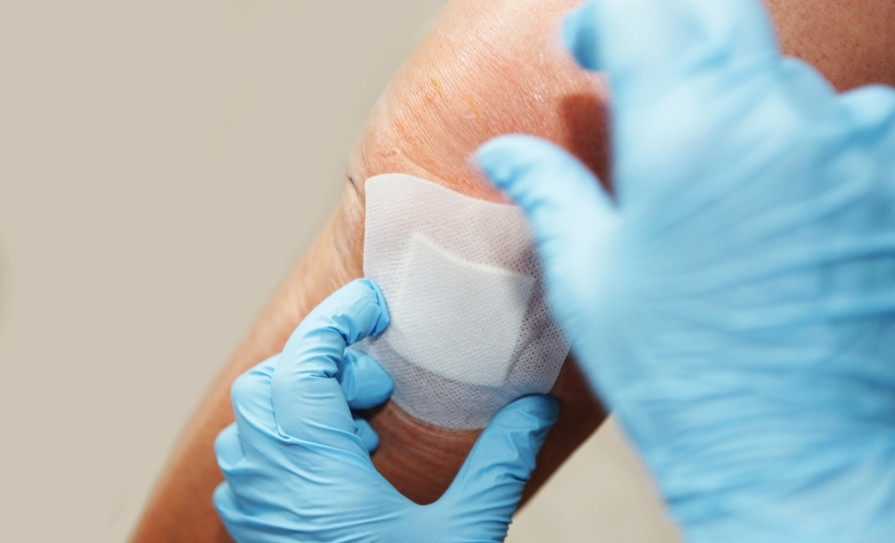
Transparent sterile dressings replaced gauze dressings to secure PVCs post insertion. Images of the appropriate dressings were displayed in clinical areas.
Rationale: Gauze dressings do not facilitate observation of the insertion site. Transparent dressings allow healthcare staff and patients to easily inspect the site and help to control moisture.12,13,
EDUCATION AND DOCUMENTATION
Evidence-based cannulation training was delivered to appropriate staff. Approaches included Centre for Nurse and Midwifery education delivered by the IPC team and evidence-based cannulation training with simulation and supervised practice.
The patient information poster was developed to teach patients and carers to recognise early signs of infection. They were distributed to patients with a PVC in situ and outlined how to recognise signs of infection such as redness, swelling, pain, or discharge, and when to seek medical review.11
Rationale: Staff education and training are key strategies in reducing PVC-BSIs. Cannulation training which includes theoretical teaching, simulation practice, and supervised competency assessment supports safe insertion practices and adherence to aseptic technique.11,12 Patient education about signs of infection, and advising that the cannula insertion site should be covered with a sterile dressing to prevent contamination and reduce the risk of infection, is also important for early detection of infection.10,13,14,15
HAND HYGIENE
The emphasis on hand hygiene within this QIP was intended to strengthen compliance with evidence-based infection prevention practices and minimise the risk of PVC infection. Additional measures to minimise infection risk included the consistent presence of IPC nurses (IPCNs), monthly hand hygiene audits, and consistent and strong support from hospital management and director of nursing on the ‘bare above the wrist’ policy.
Rationale: Hand hygiene is the most effective measure for preventing healthcare-associated infections and reducing the transmission of micro-organisms between patients.15 Inadequate hand hygiene among healthcare workers is a well-recognised risk factor for PVC-associated infections.12 When hand decontamination is not performed effectively, healthcare workers’ hands can act as vectors for the transmission of micro-organisms between patients.15
PVC REPLACEMENT
The introduction of clinically indicated PVC replacement, supported by a standardised care bundle, aimed to reduce PVC-BSI by ensuring that catheters were inserted, maintained, and removed according to best practice. No further changes were recommended apart from the ongoing use of the PVC care bundle process.
Rationale: Recent evidence suggests that routine replacement does not significantly reduce infection rates and may lead to unnecessary procedures and patient discomfort. Current guidance from HSE-AMRIC recommends that PVCs should not be routinely replaced at fixed intervals, but instead removed or replaced when clinically indicated, such as in the presence of phlebitis, infiltration, occlusion, suspected infection, or when the device is no longer required.9 This change coincided with the introduction of a PVC care bundle process at MRHT.
Results
The baseline PVC audit demonstrated variation in both device utilisation and maintenance practices across the hospital. Of the 157 patients audited prior to implementation of changes, 90 (57%) had a PVC in situ (Figure 1). The findings suggested opportunities to reduce unnecessary catheter use, as some PVCs remained in place without a clear ongoing clinical indication. Of the patients with a PVC in situ, 28 (31.1%) exhibited signs of local infection, including redness and pain at the insertion site. In addition, 14 patients (15.6%) had a soiled or compromised dressing, indicating deficiencies in catheter maintenance and ongoing monitoring.
Variation in these findings between wards highlighted inconsistencies in adherence to best practice. These baseline audit results informed the development of targeted interventions, including staff education, enhanced surveillance and audit processes, regular feedback to clinical teams, and reinforcement of the PVC care bundle. Collectively, these measures aimed to improve adherence to evidence-based practice, reduce variation in care, and minimise the risk of PVC-associated complications and BSI.
Following a detailed review of the infection prevention measures, PVC-related S aureus BSI incidence decreased from 14.8 per cent in 2023 to 5.7 per cent in 2025 per 1,000 PVC days. This resulted in reduction of 9.1 percentage points. In 2023, there was a significant decline in hospital-acquired BSI from 202214 to 2023.4 The target rate was at 0.5 which is below the newly revised national target rate of 0.7. This number has stayed consistently low throughout 20244 and 20254. The current number for Q1 2026 is 0.
In addition to these improvements, compliance with hand hygiene and aseptic insertion practices improved significantly. The hand hygiene compliance audit results increased from 85.5 per cent in 2023 to 87.9 per cent in 2024, and then up to 92.1 per cent in 2025. This represents a total improvement of 6.6 percentage points over three years. A positive finding from the care bundle audit was that the wards were achieving compliance rates of over 90 per cent.
The care bundle audits also demonstrated that there were no signs of infection at the time the assessment was completed. In addition, substantial improvements in PVC care bundle audit results were also demonstrated. PVC audit results increased from 64 per cent compliance in 2022 to 87 per cent in 2025.
No other major confounders or environmental changes were observed, suggesting direct correlation with the QIP.
Conclusion
The IPC team in MRHT successfully implemented a quality improvement initiative to optimise patient safety and quality of care for patients with PVCs. This multimodal quality improvement approach significantly reduced the incidence of PVC-associated S aureus BSIs, demonstrating the effectiveness of policy, targeted education, procedural, and monitoring-based interventions in promoting patient safety.
There is a requirement to continuously monitor, evaluate, re-adjust, and adapt interventions to achieve desired results, sustain improvements in patient outcomes, and investigate reasons for non-adherence as keys to achieving desired outcomes. Sustained implementation and ongoing reinforcement of these interventions are vital to maintaining improvements.
Continued education, leadership, good governance, regular audit and feedback, and organisational support should be embedded into routine practice to ensure long-term compliance and patient safety outcomes.
References
- Alexandrou E, Ray-Barruel G, Carr PJ, et al. Use of short peripheral intravenous catheters: Characteristics, management, and outcomes worldwide. J Hosp Med. 2018;13(5):10.12788/jhm.3039. doi:10.12788/jhm.3039.
- Chopra V, Flanders SA, Saint S, et al. The Michigan appropriateness guide for intravenous catheters (MAGIC): Results from a multispecialty panel using the RAND/UCLA appropriateness method. Ann Intern Med. 2015;163(6 Suppl):S1-S40. doi:10.7326/M15-0744.
- Drugeon B, Guenezan J, Pichon M, et al. Incidence, complications, and costs of peripheral venous catheter-related bacteraemia: A retrospective, single-centre study. J Hosp Infect. 2023;135:67-73. doi:10.1016/j.jhin.2023.02.012.
- Marsh N, Larsen EN, Ullman AJ, et al. Peripheral intravenous catheter infection and failure: A systematic review and meta-analysis. Int J Nurs Stud. 2024;151:104673. doi:10.1016/j.ijnurstu.2023.104673.
- Health Protection Surveillance Centre. Point prevalence survey of healthcare-associated infections and antimicrobial use in Irish hospitals: National Report 2023. Dublin: Health Protection Surveillance Centre; 2024. Available at: www.hpsc.ie/a-z/microbiologyantimicrobialresistance/infectioncontrolandhai/surveillance/hospitalpointprevalencesurveys/2023/.
- Ray-Barruel G, Xu H, Marsh N, et al. Effectiveness of insertion and maintenance bundles in preventing peripheral intravenous catheter-related complications and bloodstream infection in hospital patients: A systematic review. Infect Dis Health. 2019;24(3):152-168. doi:10.1016/j.idh.2019.03.001.
- World Health Organisation. Guidelines for the prevention of bloodstream infections and other infections associated with the use of intravascular catheters. Part 1: Peripheral catheters. Geneva: WHO; 2024. ISBN: 978-92-4-009382-9. Available at: www.who.int/publications/i/item/9789240093829.
- Harbarth S, Sax H, Gastmeier P. The preventable proportion of nosocomial infections: An overview of published reports. J Hosp Infect. 2003;54(4):258-321. doi:10.1016/s0195-6701(03)00150-6.
- Health Service Executive. Antimicrobial Resistance and Infection Control (AMRIC) Action Plan 2022-2025. Dublin: HSE; 2021. Available at: catalogue.nli.ie/Record/vtls000906521.
- Health Information and Quality Authority. National standards for the prevention and control of healthcare-associated infections in acute healthcare services. Dublin: HIQA; 2017. Available at: www.hiqa.ie/hiqa-news-updates/hiqa-publishes-revised-national-standards-prevention-and-control-healthcare.
- Mimoz O, Lucet JC, Kerforne T, et al. Skin antisepsis with chlorhexidine-alcohol versus povidone iodine-alcohol, with and without skin scrubbing, for prevention of intravascular-catheter-related infection (CLEAN): An open-label, multicentre, randomised, controlled, two-by-two factorial trial. Lancet. 2015;386(10008):2069-2077. doi:10.1016/S0140-6736(15)00244-5.
- Loveday HP, Wilson JA, Pratt RJ, et al. epic3: national evidence-based guidelines for preventing healthcare-associated infections in NHS hospitals in England. J Hosp Infect. 2014;86 Suppl 1:S1-S70. doi:10.1016/S0195-6701(13)60012-2.
- Rickard CM, Webster J, Wallis MC, et al. Routine versus clinically indicated replacement of peripheral intravenous catheters: A randomised controlled equivalence trial. Lancet. 2012;380(9847):1066-1074. doi:10.1016/S0140-6736(12)61082-4.
- Gorski LA, Hadaway L, Hagle ME, et al. Infusion Therapy Standards of Practice, 8th Edition. J Infus Nurs. 2021;44(1S Suppl 1):S1-S224. doi:10.1097/NAN.0000000000000396.
- Pittet D, Allegranzi B, Sax H, et al. Evidence-based model for hand transmission during patient care and the role of improved practices. Lancet Infect Dis. 2006;6(10):641-652. doi:10.1016/S1473-3099(06)70600-4.









Leave a Reply
You must be logged in to post a comment.