







Reference: July-August 2026 | Issue 4 | Vol 19 | Page 56
The evolving recognition of psoriasis as a systemic inflammatory disorder has driven a shift towards more integrated and multidisciplinary models of care
Psoriasis is a chronic, immune-mediated inflammatory disease that represents a significant burden within both primary and secondary care settings. Although traditionally regarded as a disorder confined to the skin, it is now widely recognised as a systemic condition with multisystem involvement and important, long-term health implications.1 This broader understanding reflects its association with a range of comorbidities, including psoriatic arthritis, cardiovascular disease, metabolic syndrome, and psychological morbidity.
Psoriasis is characterised by immune dysregulation leading to keratinocyte hyperproliferation and persistent cutaneous inflammation. Advances in immunological research, particularly the identification of the interleukin (IL)-23/Th17 pathway as a central driver of disease activity, have been key in reshaping therapeutic strategies. The development of targeted biologic and small-molecule therapies directed at this pathway has significantly improved clinical outcomes, especially in patients with moderate to severe disease.2
Clinically, psoriasis follows a relapsing and remitting course, with exacerbations often precipitated by environmental or physiological triggers. Beyond its physical manifestations, the condition carries a substantial psychosocial burden. Patients frequently report experiences of stigma, reduced self-esteem, and impaired quality of life, with evidence suggesting an impact comparable to other chronic diseases like diabetes and cardiovascular disease.1,3,4
The evolving recognition of psoriasis as a systemic inflammatory disorder has driven a shift towards more integrated and multidisciplinary models of care. This approach emphasises comprehensive assessment, early identification of comorbidities, and long-term disease management.
Epidemiology, pathophysiology, and disease burden
Psoriasis affects over 100 million people worldwide, with a global prevalence of approximately 4.4 per cent.1,3 It affects approximately 2-3 per cent of the population in Ireland, although underdiagnosis may mean the true prevalence is higher.4 The Burden of Psoriasis Report estimated approximately 73,000 people in Ireland living with psoriasis, with at least 9,000 individuals affected by severe forms of the disease.4
The condition demonstrates a characteristic bimodal age of onset, with peak incidence occurring in early adulthood, typically between 20 and 30 years of age, and a second peak later in life, usually between 50 and 60 years. These patterns are often described as type I (early-onset) and type II (late-onset) psoriasis, with early-onset disease more strongly associated with genetic susceptibility, and often exhibiting a more severe clinical course.1, 5
The pathophysiology of psoriasis reflects a complex and dynamic interplay between genetic susceptibility, environmental exposures, and immune dysregulation, which collectively underpin both disease onset and progression.
Epidemiological patterns, including the characteristic bimodal age of onset and familial clustering, support a strong genetic contribution to disease development. Early-onset psoriasis, in particular, is more closely associated with specific genetic markers and often demonstrates a more severe clinical phenotype, highlighting the biological heterogeneity of the condition.1,5
As mentioned, psoriasis is driven by dysregulation of the IL-23/Th17 immune axis at a molecular level. Activation of dendritic cells leads to the release of IL-23, which promotes differentiation of naïve T-cells into Th17 cells. These cells produce pro-inflammatory cytokines, including IL-17A, IL-17F, and IL-22, which stimulate keratinocyte hyperproliferation and sustain chronic inflammation. Tumour necrosis factor-alpha (TNF-α) increases the inflammatory response, contributing to both cutaneous symptoms and inflammation throughout the body.2
This immune-mediated process results in markedly accelerated epidermal turnover, reducing the normal keratinocyte lifecycle from approximately 28 days to fewer than seven days.1 The consequent accumulation of immature keratinocytes leads to the formation of the characteristic erythematous, scaly plaques observed clinically.
These pathological changes are not confined to the skin, but reflect a broader systemic inflammatory state, which is consistent with the recognised association between psoriasis and comorbid conditions such as cardiovascular disease and metabolic syndrome.7
Genetic predisposition plays a central role in this process, with susceptibility loci identified within the PSORS1 region, particularly the HLA-C*06:02 allele.5 However, genetic risk alone is insufficient to account for disease expression.
Environmental triggers, including infections, psychological stress, medications, smoking, and alcohol consumption, are well-established precipitants of disease onset and exacerbation.2 The interaction between these triggers and an underlying genetic and immunological predisposition explains the relapsing and remitting nature of psoriasis.
Emerging evidence also highlights the contribution of epigenetic mechanisms and alterations in the skin and gut microbiome, which may further influence immune responses and disease activity. These advances are particularly relevant given the substantial global and national burden of psoriasis.
The systemic inflammatory processes driving psoriasis are closely linked to its broader disease burden. Patients frequently experience not only physical symptoms such as pruritus and pain, but also considerable psychosocial distress, with increased rates of depression, anxiety, and suicidal ideation reported in more severe cases.6 This reinforces the need to understand psoriasis pathophysiology not solely in biological terms, but within the wider context of patient impact and holistic care.
Clinical presentation
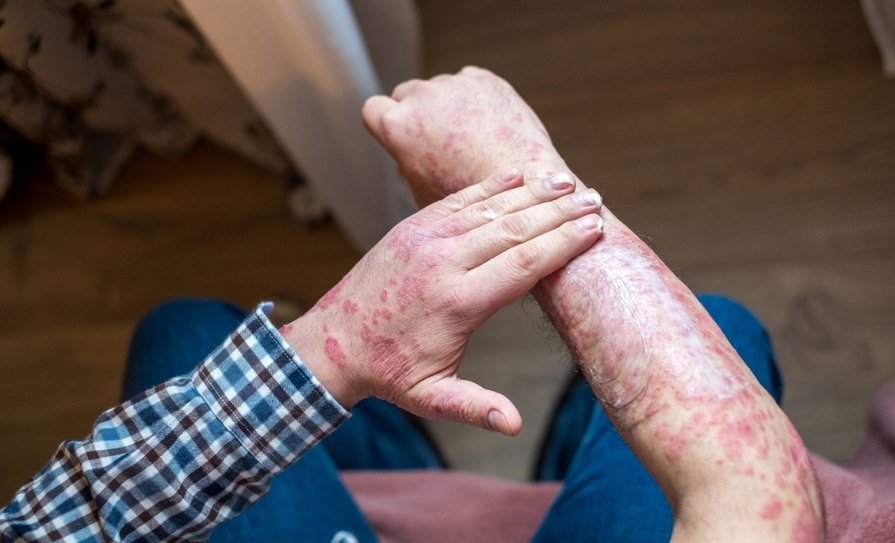
Psoriasis is a clinically heterogeneous, chronic inflammatory dermatosis with a wide spectrum of cutaneous and systemic manifestations. Although the disease shares common morphological features, erythema, scaling, and induration, its clinical presentation varies significantly according to subtype, anatomical distribution, and severity.
Chronic plaque psoriasis (psoriasis vulgaris): This is the most prevalent clinical subtype, accounting for approximately 80-90 per cent of cases. It typically presents as well-demarcated, erythematous plaques covered with thick, silvery-white scale. Lesions are symmetrically distributed and most commonly affect extensor surfaces, particularly the elbows, knees, scalp, and lumbosacral region.1,4,7,8 Lesions may vary in size from small papules to large confluent plaques, and can persist for long periods with slow progression or intermittent remission. Pruritus is common and may be clinically significant, contributing to sleep disturbance and impaired quality of life. In some cases, lesions demonstrate classic physical signs such as the Auspitz phenomenon (pinpoint bleeding following scale removal), although this is not routinely required for diagnosis in modern practice.1,4,7,8 Plaque psoriasis is also associated with a high burden of comorbidity, including psoriatic arthritis and cardiometabolic disease, reinforcing its systemic inflammatory nature.7
Guttate psoriasis: This form of the disorder is characterised by the acute onset of multiple small, droplet-like erythematous papules, typically measuring 2-10mm in diameter. It is most commonly seen in children, adolescents, and young adults, and is frequently triggered by streptococcal upper respiratory tract infection.7,8 Lesions are typically distributed over the trunk and proximal limbs and may be widespread. In many cases, guttate psoriasis is self-limiting, resolving within weeks to months; however, a proportion of patients go on to develop chronic plaque psoriasis, particularly those with genetic susceptibility such as HLA-C*06:02 positivity.1,7,8 This subtype highlights the role of infection as an environmental trigger in genetically predisposed individuals, reinforcing the gene-environment interaction central to psoriasis pathogenesis.8
Inverse (flexural) psoriasis: Affects intertriginous areas, including the axillae, inframammary folds, groin, perineum, and gluteal cleft. Clinically, it presents as smooth, shiny, erythematous plaques with minimal or absent scaling due to the moist environment of skin folds.1,7,8 The absence of scale can make diagnosis more challenging, and inverse psoriasis is frequently misdiagnosed as candidiasis, intertrigo, or dermatophyte infection. Lesions are often painful, rather than pruritic, due to friction and maceration. This subtype may have a disproportionate impact on quality of life due to its sensitive anatomical distribution.1,7,8
Pustular psoriasis: A less common, but clinically significant, subtype characterised by sterile pustules on an erythematous background. It may present in localised or generalised forms. Generalised pustular psoriasis is a rare, severe variant associated with systemic symptoms such as fever, malaise, and laboratory evidence of inflammation. It is considered a dermatological emergency.1,7,8 Localised forms include palmoplantar pustulosis and acrodermatitis continua of Hallopeau, which are typically chronic and relapsing. Recent advances in pathophysiology have identified the IL-36 signalling pathway as a key driver in pustular variants, distinguishing it from plaque psoriasis and informing emerging targeted therapies.4,7,8
Erythrodermic psoriasis: The most severe and potentially life-threatening form of the disease, characterised by widespread erythema and scaling involving more than 75-90 per cent of body surface area.7,8 Patients often present with systemic symptoms including fever, chills, tachycardia, malaise, and fluid and electrolyte imbalance due to impaired skin barrier function. Thermoregulatory dysfunction and high-output cardiac stress may occur, making urgent hospital admission necessary.7,8 This subtype may arise from the beginning or as a complication of unstable plaque psoriasis, particularly following withdrawal of systemic corticosteroids or triggering infections. Mortality risk is significant without prompt intervention, highlighting the need for rapid recognition and escalation of care.7,8
Nail and scalp psoriasis: Nail involvement occurs in up to 50 per cent of patients and may include pitting, onycholysis, subungual hyperkeratosis, and nail plate dystrophy. Nail psoriasis is strongly associated with psoriatic arthritis and may serve as a marker of more severe disease.1,7,8 Scalp psoriasis is also common and may be the initial or sole manifestation of disease. It presents with well-demarcated scaling plaques, extending beyond the hairline, and is often associated with significant pruritus and distress.1,7
Distributional and atypical presentations: Psoriasis may also affect palms, soles, genitalia, and other high-impact anatomical sites. Palmoplantar psoriasis can be particularly disabling due to pain and functional impairment. Genital psoriasis, although often underreported, significantly affects sexual health and psychological wellbeing.1,5 A key diagnostic feature across subtypes is the potential for the Koebner phenomenon, whereby lesions develop at sites of skin trauma. This reflects ongoing disease activity and heightened inflammatory responsiveness.1,7,8
Clinical variability and disease course
Psoriasis is characterised by significant variability in disease course. Patients may experience stable disease, intermittent flares, or progressive worsening over time. Multiple subtypes may coexist within the same individual, and phenotypes may shift during the disease trajectory.7
Disease severity ranges from mild, localised plaques to extensive systemic involvement. Clinical severity does not always correlate with patient-reported burden, as even limited disease in high-impact areas such as the face, hands, or genitals may have profound psychosocial consequences.7
Diagnosis and assessment
Diagnosis is primarily clinical, supported by structured assessment of disease severity, impact on quality of life, and screening for systemic comorbidities. Modern practice emphasises that psoriasis is not solely a dermatological diagnosis, but a systemic inflammatory disorder requiring holistic evaluation across physical, psychological, and functional domains.8,9
Psoriasis is usually diagnosed on the basis of characteristic cutaneous morphology and distribution. The typical presentation includes well-demarcated erythematous plaques with overlying scale, most commonly affecting extensor surfaces such as the elbows, knees, and scalp. Diagnosis is generally straightforward in classical plaque psoriasis; however, atypical variants such as inverse, guttate, or pustular psoriasis may require greater diagnostic scrutiny due to overlapping features with other dermatoses.1,7,8
Dermoscopy can support clinical diagnosis by identifying vascular patterns such as regularly distributed dotted vessels and diffuse white scaling. While skin biopsy is rarely required, it may be indicated in cases of diagnostic uncertainty, particularly to exclude conditions such as eczema, cutaneous lymphoma, or drug eruptions.1,7,8
Contemporary guidelines emphasise that psoriasis diagnosis should not be based solely on morphology but should incorporate assessment of disease distribution, chronicity, and associated systemic features, including joint symptoms suggestive of psoriatic arthritis.8,9
Laboratory investigations are not required to diagnose psoriasis but are important for baseline assessment and safe use of systemic therapies. A full blood count, renal profile, and liver function tests should be performed before initiating treatments such as methotrexate, ciclosporin, or acitretin, with ongoing monitoring as clinically indicated.1,7,8
Inflammatory markers, including erythrocyte sedimentation rate and C-reactive protein, may be elevated in severe forms such as erythrodermic and pustular psoriasis. Serum uric acid can also be raised but is non-specific.7,8 Where diagnosis is uncertain, particularly with palmoplantar disease, skin scrapings should be taken to exclude fungal infection.1,8
Additional tests are guided by treatment choice and risk assessment. Pregnancy testing is required in women of childbearing age prior to teratogenic therapy. Hepatitis B and C screening and tuberculosis testing are recommended before biologic treatment, with interferon-gamma release assays increasingly preferred over purified protein derivative testing.1,7
Treatment and management
The treatment and management of psoriasis requires a structured, individualised, and stepwise approach, guided by disease severity, clinical phenotype, patient comorbidities, and impact on quality of life. Contemporary practice increasingly adopts a treat to target approach, aiming for meaningful clinical improvement, ideally minimal disease activity or complete skin clearance, while also addressing systemic inflammation and long-term comorbidity risk.1,7,8
In mild disease, topical therapies remain the cornerstone of treatment. These include topical corticosteroids, which are the most commonly prescribed anti-inflammatory agents and are effective in reducing erythema, scaling, and pruritus. Potency and duration are selected according to anatomical site and disease severity, with careful attention to adverse effects such as skin atrophy with prolonged use.
Vitamin D analogues, including calcipotriol, are frequently used either as monotherapy or in combination with topical corticosteroids to enhance efficacy and reduce steroid exposure. In sensitive areas such as the face, flexures, and genital skin, topical calcineurin inhibitors such as tacrolimus or pimecrolimus may be used off-label in specialist practice due to their steroid-sparing properties.4,10,11,12
Where topical therapy is insufficient or disease is more extensive, phototherapy is an effective next-line option. Narrowband ultraviolet B (NB-UVB) phototherapy is the most widely used and is effective in inducing remission in moderate plaque psoriasis. It is well established within Irish dermatology services, although access may vary geographically, which can influence treatment selection and waiting times.
Phototherapy is generally well tolerated but requires regular attendance and carries a cumulative long-term risk of photo-ageing and non-melanoma skin cancer, particularly with prolonged exposure.4,10,11,12
For moderate to severe disease, systemic therapies are indicated. Conventional systemic agents remain important, particularly due to cost-effectiveness and long-standing clinical experience.
Methotrexate is the most commonly used first-line systemic agent, acting as an immunomodulator through inhibition of dihydrofolate reductase and downstream anti-inflammatory effects. It is effective in both skin and joint disease, but requires stringent monitoring due to potential hepatotoxicity, bone marrow suppression, and renal impairment.
Ciclosporin is highly effective for rapid disease control, particularly in acute flares or erythrodermic psoriasis; however, its use is limited by nephrotoxicity and hypertension, necessitating close monitoring of blood pressure and renal function. Acitretin, a systemic retinoid, is particularly useful in pustular and hyperkeratotic variants but is highly teratogenic and associated with mucocutaneous side effects, requiring careful patient selection and counselling.7,8,10,11,12
The introduction of biologic therapies has fundamentally transformed the treatment landscape for psoriasis. These treatments work by targeting key immune pathways involved in the disease, particularly TNF-α, IL-17, and IL-23. TNF inhibitors were the first biologic therapies introduced and are still effective, especially for patients who also have psoriatic arthritis.
More recently, IL-17 inhibitors such as secukinumab and ixekizumab, and IL-23 inhibitors such as guselkumab and risankizumab, have demonstrated high rates of skin clearance and sustained efficacy. Bimekizumab, a dual IL-17A and IL-17F inhibitor, represents a further advancement in biologic therapy, with clinical trials showing rapid onset of action and high levels of complete skin clearance.4,7,8,10
Alongside biologic therapies, targeted oral small-molecule agents have expanded treatment options within specialist psoriasis services, particularly for patients who prefer oral therapy or have contraindications to injectable biologics. Apremilast, a phosphodiesterase-4 inhibitor, is associated with a favourable safety profile, moderate efficacy, and minimal laboratory monitoring requirements compared with conventional systemic therapies.
More recently, deucravacitinib, a selective tyrosine kinase 2 (TYK2) inhibitor, has emerged as a novel oral agent for moderate to severe psoriasis. Clinical trial data demonstrate improved efficacy compared with placebo and some established oral therapies, alongside good tolerability, reflecting its more targeted mechanism of action compared with broader Janus kinase (JAK) inhibitors.7,8,11
Despite advances, challenges remain, including long waiting times in Ireland for dermatology services and disparities in access to specialist care. Addressing these issues is essential to optimise patient outcomes.
Comorbidities
Psoriasis is associated with a significant burden of comorbidity. In the Irish context, patients with psoriasis have increased rates of psoriatic arthritis, which is one of the most clinically important associations, affecting approximately one-third of individuals with cutaneous disease and contributing to pain, functional impairment, and long-term disability. Cardiovascular disease is also strongly associated, reflecting the systemic inflammatory milieu and increased cardiometabolic risk profile observed in this patient population.4
Metabolic comorbidities are frequently encountered, including obesity, hypertension, dyslipidaemia, and diabetes mellitus, all of which contribute to the increased cardiovascular risk observed in moderate to severe psoriasis. Gastrointestinal inflammatory conditions, particularly Crohn’s disease, have also been identified as associated comorbidities, supporting a shared immune-mediated inflammatory pathway.1,4,7,8
Respiratory and hepatic conditions, including chronic obstructive pulmonary disease and non-alcoholic fatty liver disease, are increasingly recognised in patients with psoriasis, particularly those with more extensive or severe disease. Sleep disturbance is also commonly reported and may be related to pruritus, psychological distress, and systemic inflammation. 1,4,7,8
Emerging research and future directions
Recent advances in psoriasis research are increasingly focused on precision medicine approaches aimed at stratifying disease based on molecular, genetic, and clinical phenotypes. This reflects a broader shift away from a ‘one-size-fits-all’ model towards targeted therapeutic strategies that align treatment selection with individual patient disease biology.
Developments in genomics and transcriptomics have enhanced understanding of disease heterogeneity, identifying distinct inflammatory signatures that may predict treatment response, disease severity, and long-term prognosis. This evolving molecular classification has important implications for future treatment algorithms, particularly in guiding biologic selection and sequencing.1,2,8,11
A major therapeutic advancement in recent years has been the emergence of targeted oral small-molecule therapies, particularly TYK2 inhibitors. Deucravacitinib represents the first oral selective TYK2 inhibitor approved for moderate to severe plaque psoriasis and has demonstrated robust efficacy in clinical trials, with a favourable safety profile compared with broader JAK inhibitors.
Its mechanism of action, selectively targeting intracellular signalling within the IL-23/Th17 pathway, reflects a more refined immunomodulatory approach and represents an important step towards oral targeted precision therapies.13
The gut and skin microbiome has emerged as a significant area of investigation in psoriasis pathogenesis. Alterations in microbial diversity and composition have been associated with disease severity and systemic inflammation, suggesting a potential role in modulating immune responses. Although this field remains in its early stages, it is increasingly recognised that microbiome-targeted interventions, including dietary modulation, probiotics, and microbiota-based therapies, may represent future adjunctive treatment strategies.14
Real-world evidence from large-scale patient registries is also playing an increasingly important role in informing clinical practice. Registries such as BADBIR (British Association of Dermatologists Biologics and Immunomodulators Register), which includes Irish participation, provide valuable long-term safety, effectiveness, and pharmacovigilance data beyond the controlled environment of clinical trials. These datasets are particularly important in understanding treatment durability, rare adverse events, and comparative effectiveness across biologic classes in routine clinical practice.15,16
Digital health technologies are further transforming the landscape of psoriasis management. Mobile health applications, telemedicine, and remote patient monitoring systems are increasingly being integrated into clinical pathways, improving access to specialist care and enabling more continuous disease monitoring.
Artificial intelligence and machine learning tools are also being explored for their potential to support diagnostic accuracy, predict disease flares, and personalise treatment selection based on large-scale clinical and imaging datasets. These innovations are particularly relevant in the context of chronic disease management, where long-term follow-up and patient engagement are important.17
Collectively, these emerging developments signal a transition towards a more individualised, data-driven model of psoriasis care. The integration of molecular medicine, real-world evidence, microbiome science, and digital health technologies is expected to significantly enhance future therapeutic precision and improve long-term outcomes for patients with psoriasis.16,17
References
- Griffiths CEM, Armstrong AW, Gudjonsson JE, Barker JNW. Psoriasis. Lancet. 2021;397(10281):1301-15. doi:10.1016/S0140-6736(20)32549-6.
- Rendon A, Schäkel K. Psoriasis pathogenesis and treatment. Int J Mol Sci. 2019;20(6):1475. doi:10.3390/ijms20061475.
- World Health Organisation. Global report on psoriasis. 2016-2018. Geneva: WHO; 2016. Available at: www.who.int/publications/i/item/global-report-on-psoriasis.
- Tobin AM. Psoriasis in Ireland: Epidemiology and management. Medical Independent. 2021. Available from: www.medicalindependent.ie/societies/primary-care-dermatology-society-of-ireland/psoriasis-in-2021/.
- Iskandar IYK, Parisi R, Griffiths CEM, Ashcroft DM. Global Psoriasis Atlas. Systematic review examining changes over time and variation in the incidence and prevalence of psoriasis by age and gender. Br J Dermatol. 2021;184(2):243-258. doi:10.1111/bjd.19169.
- Lada G, Chinoy H, Heal C, et al. Depression and suicidality in patients with psoriasis and the role of psoriatic arthritis: A cross-sectional study in a tertiary setting. J Acad Consult Liaison Psychiatry. 2022;63(4):372-83. doi: 10.1016/j.jaclp.2021.12.007.
- Armstrong AW, Read C. Pathophysiology, clinical presentation, and treatment of psoriasis: a review. JAMA. 2020;323(19):1945-60. doi:10.1001/jama.2020.4006.
- Nair PA, Badri T. Psoriasis. In: StatPearls [Internet]. Treasure Island (FL): StatPearls Publishing; 2026. Available at: www.ncbi.nlm.nih.gov/books/NBK448194/.
- Nast A, Altenburg A, Augustin M, et al. S3 guideline for the treatment of psoriasis vulgaris, adapted from EuroGuiDerm – part 1: Treatment recommendations and monitoring. J Dtsch Dermatol Ges. 2026;24(1):122-37. doi:10.1111/ddg.16002.
- Irish Skin Foundation. What you need to know about psoriasis. 2022. Available at: irishskin.ie/wp-content/uploads/2022/11/ISF-Psoriasis-Booklet-22.11.2022.pdf.
- Smith CH, Yiu ZZN, Bale T, et al. British Association of Dermatologists guidelines for biologic therapy for psoriasis 2020: A rapid update. Br J Dermatol. 2020;183(4):628-637. doi:10.1111/bjd.19039.
- Health Service Executive. Treatment of psoriasis. Dublin: HSE; 2023. Available at: www2.hse.ie/conditions/psoriasis/treatment/.
- Armstrong AW, Gooderham M, Warren RB, et al. Deucravacitinib versus placebo and apremilast in moderate to severe plaque psoriasis: Efficacy and safety results from the 52-week, randomised, double-blinded, placebo-controlled phase 3 POETYK PSO-1 trial. J Am Acad Dermatol. 2023;88(1):29-39. doi:10.1016/j.jaad.2022.07.002.
- Hidalgo-Cantabrana C, Gómez J, Delgado S, et al. Gut microbiota dysbiosis in a cohort of patients with psoriasis. Br J Dermatol. 2019;181(6):1287-1295. doi:10.1111/bjd.17931.
- Girolomoni G, Feldman SR, Egeberg A, et al. Long-term real-world evidence of SB5 (adalimumab biosimilar) treatment in patients with moderate to severe psoriasis from the British Association of Dermatologists Biologic and Immunomodulators Register (BADBIR). J Dermatolog Treat. 2024;35(1):2434091. doi:10.1080/09546634.2024.243409.
- Alabas OA, Mason KJ, Yiu ZZN, et al. Age and biologic survival in patients with moderate-to-severe psoriasis: A cohort study from the British Association of Dermatologists Biologics and Immunomodulators Register (BADBIR). Br J Dermatol. 2025;192(5):907-916. doi:10.1093/bjd/ljaf017.
- Topol EJ. High-performance medicine: The convergence of human and artificial intelligence. Nat Med. 2019;25(1):44-56. doi:10.1038/s41591-018-0300-7.









Leave a Reply
You must be logged in to post a comment.