








Democratic engagement is not only good for society, it can also boost our health, according to research. Bette Browne reports
When we in Ireland went to the polls recently to choose a President, we might not only have been doing our part in strengthening our democracy. According to recent research, such activity can enhance our physical and mental health. Studies have found that democratic engagement and vigilance help to create an environment where the health of communities tends to be prioritised, leading to a generally healthier population.
However, on the negative side, elections can also be stressful and even traumatic for some voters, especially when the result is unexpected and people find themselves on the losing side.
There are examples of this in recent years across Europe, especially the success of the Brexit vote in the UK, and in the US the election of President Donald Trump in 2016 and again in 2024. While Republican sup- porters were jubilant, a number of voters on the losing Democratic side openly admitted to feelings of depression and stress. Similarly, the history-making election of President Barack Obama in 2008 as the first US black President sparked unprecedented scenes of celebration among most – but certainly not all – American voters.
“Psychological science shows that politics can harm our physical and mental health, but the positive aspects of political engagement can lead to greater well- being,” according to the American Psychological Association (APA).
The Association’s Stress in America survey for 2024 found that for 77 per cent of US adults the political future of the country was a significant source of stress in their lives. Assassination attempts, a late candi- date change, debate drama, and legal battles all contributed to causing such distress, the survey found, resulting in negative impacts on their health.
“Research shows the distress we feel around politics can harm our physical and mental health – and it’s only getting worse,” according to the Association.
“In general, we know that chronic stress harms psychological wellbeing and physical wellbeing. It takes a toll on our bodies,” Dr Brett Ford (PhD), Associate Professor of Psychology at the University of Toronto, Canada, told the Association’s journal.
“There’s a strong case to be made that for many people, politics is a form of chronic stress.”
But studies also point to resilience in the face of election stress, finding that anxiety and depressive symptoms can tend to fade in the days or weeks after an election.
“Interestingly, longitudinal work tracking people over time suggests that these hits we take to wellbeing, on average, don’t last very long,” Dr Ford said.
Healthcare in democracies
A 2019 study looked at the link between democracy and healthcare in the US and over 100 other countries.
Published in The Lancet, this research found that life expectancy improved more quickly in countries that had switched to democracy over the past 50 years and that there were fewer deaths from cardiovascular disease and diseases such as cancer and cirrhosis.
These diseases are known to cause a quarter of the total death and disability in people under 70 in low- and middle-income countries.
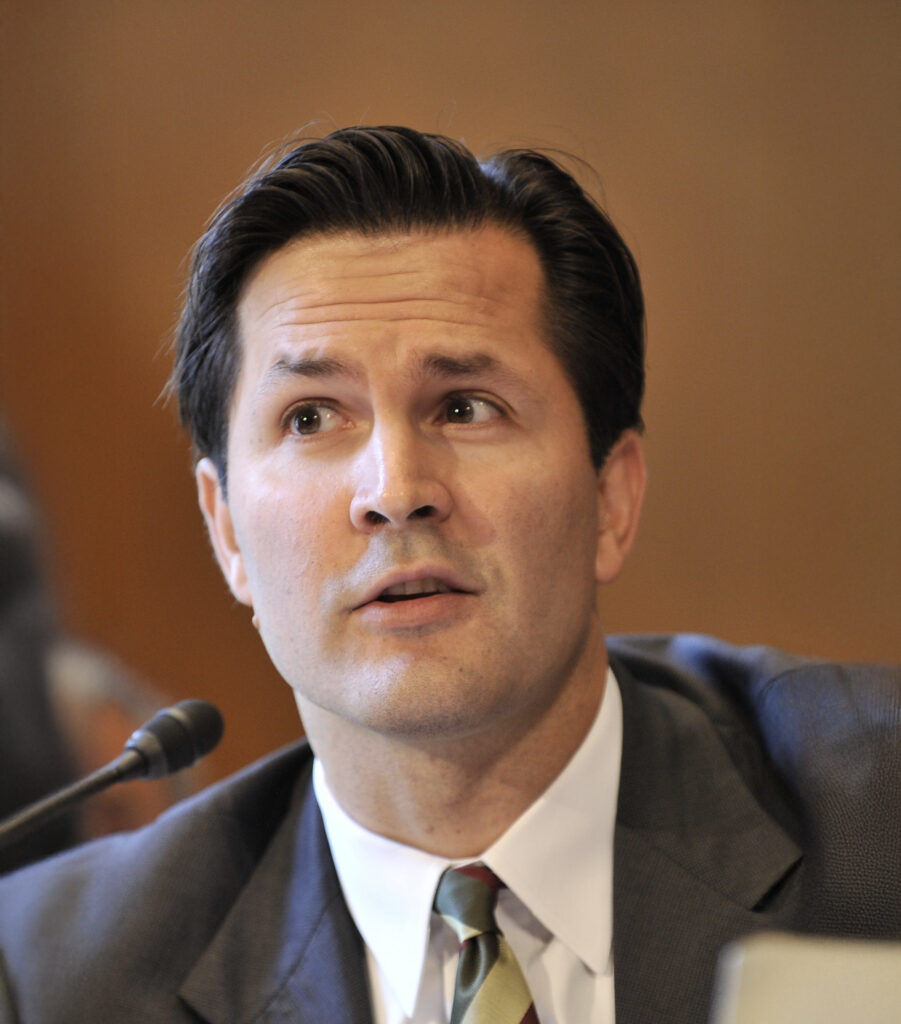
“We estimate that, between 1994 and 2014, the increases in democratic experience resulted in 16 million fewer deaths from cardiovascular disease globally,” according to lead author Dr Thomas Bollyky (PhD), of the US Council on Foreign Relations.
He added that if China had experienced the same democratic transition as a country such as Poland over that period, it would have saved 10 million lives of people who died from that one illness.
“Free and fair elections appear important for improving adult health, most likely by increasing government accountability and responsiveness,” the study said. “Democracies are more likely than autocracies to lead to health gains. Health and elections are inevitably linked.”
Democracy is sustainable, the study emphasised, “when its constituents believe that the system will work over the long run to raise living standards and create a more healthful, more prosperous, and fairer society. When that belief wavers, the groups within that democracy no longer share a stake in safeguarding the system and become susceptible to the appeals of quicker fixes and populism.”
But disaffected voters who expect autocrats to deliver better results for healthcare than democrats are usually disappointed, the study said. “Without pressure from fair elections or accountability to a free media, autocratic leaders have less incentive than their democratic counterparts to engage in the work of sustaining healthcare infrastructure and improving care for chronic diseases. Instead, autocrats exploit ethnic and class divisions and resort to patronage to keep power.”
Noting that the threats to democracy can come from both the right and the left, the study cautioned that whoever is in power in the US should recognise that “the health of American democracy may depend on its ability to deliver more affordable and equitable healthcare to its constituents”.
US
US President Thomas Jefferson is often credited with the advice that “eternal vigilance is the price of liberty”. It is argued that without such vigilance and oversight, a democrat in office can usurp power to his or her advantage and erode people’s rights.
The US non-profit organisation, Freedom House, which was formed 80 years ago and advocates for democratic rights, found that the political engagement of Americans has been declining alongside their health. Over the past decade, the US has experienced a sharper decline in Freedom House ratings for political rights and civil liberties than any other major Western democracy.
“In recent years its democratic institutions have suffered erosion, as reflected in rising political polarisation and extremism, partisan pressure on the electoral process, mistreatment and dysfunction in the criminal justice and immigration systems, and growing disparities in wealth, economic opportunity, and political influence,” ac- cording to findings in the 2025 Freedom House report on the US.
“Various interest groups have come to play a potent role in the nominating process for President and members of (the US) Congress, partly because the expense and length of political campaigns place a premium on candidates’ ability to raise large amounts of funds from major donors,” the report noted. “Attempts to restrict the role of money in political campaigning have typically been thwarted or watered down as a result of political opposition, lobbying by interest groups, and court decisions that cite the constitutional right to freedom of speech.”
When President Obama introduced the Affordable Care Act in 2010, ensuring health insurance for over 40 million more Americans, it was hailed as a landmark in advancing access to healthcare across the country. But the law, while still in place, has since faced numerous court challenges and its protections have been weakened by Republican actions in Congress.
Recent legislation, regulation, tariffs, and other changes by the Trump administration are now all adding up to making health coverage less affordable for millions of Americans.
In June this year, the Centre for American Progress policy institute estimated that between 750,000 and two million fewer people will be able to afford health insurance coverage in 2026. It predicted that new rules would reduce enrolment among healthier individuals, weakening the risk pool and pushing premiums higher for those who remain insured.
Free and fair elections appear important for improving adult health, most likely by increasing government accountability and responsiveness
Back in 2019, the impact of such pro- posed changes was already clear – they would fundamentally weaken the affordability of health insurance for millions of Americans. This was highlighted especially in a paper by three experts, including Dr Bollyky, ‘The future of American democracy depends on improving US health.’
The article, which was published on Think Global Health – a website backed by the US Council on Foreign Relations together with the Institute for Health Metrics and Evaluation – noted that “high health- care bills and catastrophic medical expenditures are major sources of financial insecurity and impoverishment for American families. Rising drug prices disproportionately affect the uninsured and people with high-deductible insurance plans, con- tributing to economic inequality.”
But it also emphasised the fact that the decline in access to affordable US health- care predated the Trump administration.
Trust
In May 2025, The Lancet published a study titled ‘The role of health and health systems in shaping political engagement and rebuilding trust in democratic institutions’. It reviewed decades of interdisciplinary research to describe how health and health systems are linked to democratic trust and engagement.
“When individuals or communities experience a decline in their health, they feel let down by the health system and other public institutions meant to support their wellbeing,” the study found.
“Consequently, they are less likely to vote. Those who continue to vote are increasingly drawn to anti-establishment, anti-democratic parties that promise to radically reform the system.
“Once in power, however, these parties often weaken public health protections or exclude select populations from the health system. The result can be a self-reinforcing feedback loop between declining health and political discontent.”
It emphasised, however, that a person’s experience with the healthcare system is not the only determinant of their politics, nor are clinicians solely responsible for solving a crisis of democracy.
“There have been years of studies show- ing the impact of health status on the economy, educational attainment, and poverty. Now, they are matched with research on the benefits of better health for political engagement – and the negative impact of declining health on democratic societies. Given that population health improvements in Europe and the US might be levelling off or even declining in some areas, even before the Covid-19 pandemic, the political relevance of health should have our attention as we try to understand and learn from seismic political events such as Brexit, the rise of far-right parties in Europe, and the continued popularity of politicians like Donald Trump.”
Policy action is essential for promoting both health and inclusive politics, accord- ing to the study. “The public is more likely to reward political actors for health-promoting policies when those policies are universal, rather than means-tested or buried in complex tax codes. Several crises threaten population health across the world, including the aftermath of Covid, climate change, forced migrations, and more. How governments and health systems respond to these crises will be telling, with implications for not only the public’s health, but also its engagement in participatory democracy.”
The study pointed out that beyond its impact on the health system, political mis- trust also affects other public institutions. It said, for many people, the health system is the government institution they engage with most directly. In surveys across countries, majorities – or near-majorities – of respondents say the government should be responsible for caring for the sick and believe it should play a larger role in health care. This holds true even in countries with heavily privatised systems, such as the US, according to the study.
“Consequently, negative experiences with the health system can damage perceptions of public and democratic institutions more generally. Poorer assessments of health system performance have been linked with decreased trust in government across 38 countries. Similarly, a study of 19 European countries found that people in poor health reported less trust in not only the health system, but also the political system as a whole. In this way, experiences with the health system can have a ripple ef- fect that extends far beyond it.”
Health and politics exist in a self-reinforcing cycle, the study stressed.
“Decisions that clinicians and policy- makers make about the health system or other health-related policies shape not only patients’ wellbeing but also their politics, which then feed back into the political system via elections and other civic engagement. Meeting the needs of patients – or failing to do so – can loom over our democratic institutions. Several crises threaten population health across the world, including the aftermath of Covid, climate change, forced migrations, and more.”
It concludes: “How governments and health systems respond to these crises will be telling, with implications for not only the public’s health, but also its engagement in participatory democracy”.
A 2023 report by the Brookings Institution, a US non-profit public policy organisation, found that democracy in the US was being eroded by election manipulation and executive overreach.
The report was highlighted in a July 2025 article in The Progressive, a US journal focusing on social justice issues. The title of the article was ‘The Erosion of Democracy Threatens our Health’.
The article stated that since the Brookings Institution report was published, dangers to democracy have escalated sharply.
“But what we may not realise is these threats to democracy also endanger our health,” according to the article.
“At its core, democracy is designed to empower citizens, giving them a voice in decisions that shape their lives. When this voice is stifled, the consequences rever- berate through society, directly affecting health outcomes.”
The article pointed out that even before President Trump’s changes to Medicaid programmes for the poor, and those with disabilities, and changes to the Affordable Care Act, the US was unique among indus- trialised countries in not affirming that ac- cess to healthcare is a human right.
“We have had fledgling movements for healthcare equity in the US, but their ability to succeed is directly proportion- ate to the strength of our democracy,” the article stated.
“Authoritarian regimes deny citizens the right to self-determination, divert resources, prioritise political loyalty over public need, and ignore demands for better health services. The result is often a decline in healthcare quality, increased disparities,
Consequently, negative experiences with the health system can damage perceptions of public and democratic institutions more generally
and a sicker population.”
The Progressive article noted that in many democracies, public health is closely tied to environmental health. Regulations that en- sure clean air and water typically arise from public pressure and democratic oversight.
Without a strong democratic framework, industries may act with little accountability and pollute communities.
Disaster preparedness and emergency response systems also depend on trans- parent governance and public trust. When trust deteriorates and information is restricted, effective public health responses become unattainable.
“Living under a government that disregards civil liberties, suppresses dissent, or spreads misinformation fosters an environment of chronic stress, anxiety, and fear. The uncertainty about the future, the feeling of powerlessness, and the breakdown of social cohesion can lead to widespread depression and mental anguish.”
The article explained that growing political polarisation fractures communities, increasing social isolation and weakening the supportive networks vital for mental wellbeing. It also noted that democratic governance – grounded in transparency and accountability – is essential for effective public health policy. Public health efforts, from vaccination programmes to disease surveillance, depend on public trust and cooperation.”
“Without question, the health of a nation is inextricably linked to the health of its democracy. The erosion of democratic principles is not merely a political abstract. It is a tangible threat to our physical vitality, mental wellbeing, and collective health. When public services land on the chopping block, so does democracy. Safe- guarding democracy is a fundamental act of public health, demanding our vigilance and active participation.”
Such vigilance was apparent during US protests sparked by President Trump’s de- cision to name Mr Robert F Kennedy to lead the Department of Health and Human Services. Nevertheless, despite grave con- cerns among both Republican and Dem- ocratic lawmakers, doctors and scientists about his scepticism of health science and especially life-saving vaccines, Mr Kennedy was confirmed in the post.
Vigilance and participation in democracy remains strong in Ireland, though just how strong can be debated. For example, only 45.83 per cent of voters voted in the recent Presidential election.
It should also be remembered that access to healthcare here faces major challenges. Our two-tier system means that public and private patients experience very different waiting times. Indeed, in 2022, Ireland was one of the countries ranked with the worst access to healthcare and with significant waiting times, and the only western European country that does not offer universal coverage of primary care. A report by Social Justice Ireland noted that the people who are poorest, sickest and with disabilities, in other words those who are most in need, often wait the longest because they “find it hardest to pay charges, to negotiate access”.
So, while democracy has been shown to be positive for healthcare, the relationship is not always straightforward.









Leave a Reply
You must be logged in to post a comment.