Credit: istock/ Maria Rzeszotarska
The Annual Meeting of the Irish Endocrine Society saw Prof Pratik Choudhary deliver the prestigious Hadden Lecture to attendees. Prof Choudhary is Professor of Diabetes, University of Leicester, UK, and his talk asked ‘Is hypoglycaemia still a barrier to optimal glucose control?’.
Prof Choudhary briefly discussed previous research and touched on a previous experiment that showed the important role of the hypothalamus in regulating hypoglycaemia. “The challenge, I think, is the difference between humans and animals [in studies],” said Prof Choudhary. “That is, what you can’t measure in animal experiments is the emotional and cognitive response to hypoglycaemia, which seems to be quite important.”
This hypothesis prompted a study involving neuroimaging in hypoglycaemia, which showed that people with normal ‘hypo-awareness’ after 20 years of diabetes do not produce the same adrenaline response as people who have never had a ‘hypo’, which is described as a low blood sugar episode, accompanied by the body’s natural warning signs. People with ‘hypo-unawareness’ produce almost no adrenaline, the study also showed.
The neuroimaging research involved people without diabetes, patients with normal hypo-awareness, and those with unawareness. “When you are hypoglycaemic, there is more blood flow than when you are euglycaemic,” Prof Choudhary told the conference. “If you are non-diabetic, brain blood flow goes into the thalamus, which is kind of our sensory awareness station and monitors what’s going on.” Certain areas of the brain that are activated inform the patient that they need to act on a particular symptom, Prof Choudhary said. “There is also something we call ‘emotional salience’,” Prof Choudhary continued. “That is, ‘How important is that symptom for me?’ The hypo-unaware people had a very strong thalamic response and they picked up the hypoglycaemia very strongly, but the emotional frontal executive function signal was much lower.”
The research went on to probe which parts of the brain are ‘firing’ in these circumstances and in which order. “You find that this thalamic response is driven by an area that is responsible for shifting intention,” he continued. “We never truly multi-task – this part of the brain just switches attention from one stimulus to another.” This is important in terms of whether a patient ‘listens’ to the symptoms of hypoglycaemia or not, he said. “There is no intervention yet to deal specifically with people who have a high fear of hypoglycaemia.”
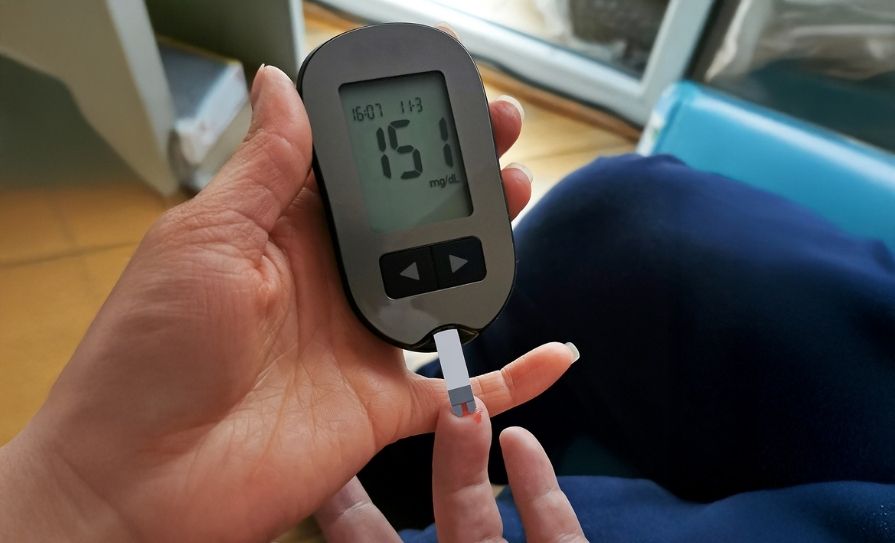
Fear of hypoglycaemia is often a ‘hangover’ from the era of regular finger-pricks and the patient anxiety that was associated with that process. A continuous glucose monitor should alleviate much of that fear, he said.
“What I would like people to take away, maybe in your conversations with patients, is that hypoglycaemia has four different categories now,” Prof Choudhary told attendees. “You have preventive hypo, where there is a sense that it is going to go down and you take preventive action. It impacts negatively on quality-of-life, but there is no physiological impact. Then you have a hypo alert value of 4 – this is not hypoglycaemia, but again it’s getting close and you have to do something. A value of 3 is what you want to avoid, and also the duration of the 3, and you can have a prolonged event under 2.2, some of which will be artefacts, and some of which will be true.”
Prof Choudhary concluded: “The risk of hypoglycaemia with technological advances is dramatically reduced. We need to work to reduce the fear of hypoglycaemia, so that people can avail of the benefits of those technologies. [We need to] focus on the individual barriers to control and identifying the beliefs that drive those unhelpful behaviours. We need to be far clearer when someone says ‘hypoglycaemia’, that I understand what they mean, by disentangling the inconvenience and burden of living with diabetes and having hypoglycaemia, from actual risks and fears. Hypoglycaemia, of course, places a burden on people with diabetes, but technology can reduce that burden. Hypoglycaemia was a huge barrier to [glucose] control, but at the moment it’s fear and it’s our job to reduce it.”












Leave a Reply
You must be logged in to post a comment.