







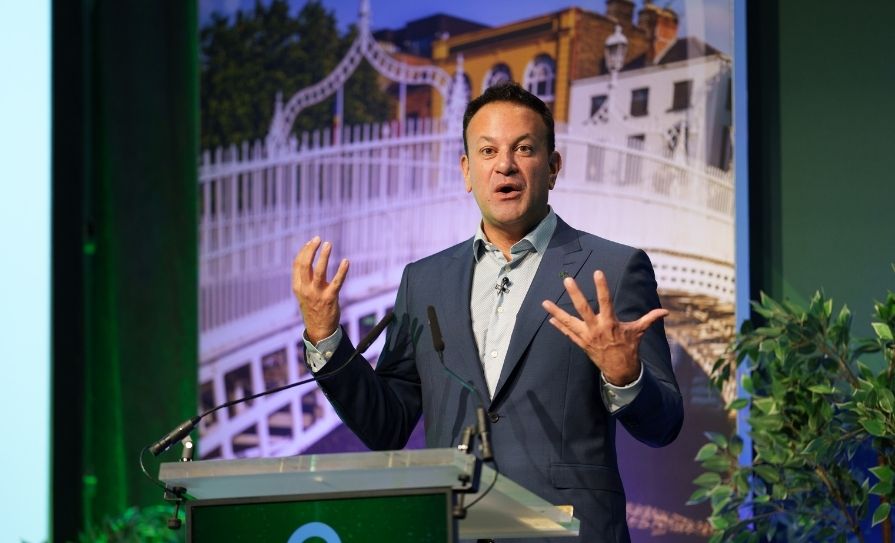
International Conference on Medical Regulation, Clayton Hotel, Burlington Road, Dublin, 3-6 September 2025
The practice of open disclosure is still not “the norm” in Irish healthcare, former Taoiseach Leo Varadkar has stated.
Mr Varadkar, a trained GP and former Minister for Health, was speaking at the International Conference on Medical Regulation in Dublin on 4 September. The event was organised by the International Association of Medical Regulatory Authorities and hosted by the Irish Medical Council.
“I went to college in the 1990s – I studied medicine between 1997 and 2003 – so it is a long time ago, and we were told about the duty of candour, about open disclosure, about how when doctors are sued or when complaints are made against them, it is more often about how they dealt with it afterwards than the mistake they actually made,” Mr Varadkar told the conference.
“I don’t think that penny has dropped, quite frankly, across the professions. We have introduced legislation [in 2024] requiring open disclosure in certain cases where a serious mistake has been made, but I am not convinced we are in a much better place than we were 10 or 20 years ago. I would be interested to know if that is the international experience, but it is something that worries me,” added Mr Varadkar, who is working in consultancy and academia since stepping down as Taoiseach in April 2024.
Mr Varadkar also suggested healthcare regulators should engage in some degree of “surveillance” to proactively identify serious failures in practice.
“I know some regulators can only act on complaints, others are able to do a bit of surveillance, but I think if you can, you should. And I don’t think you should necessarily wait for legislation to do it; you can do things without a legislative framework.
“We had a situation that we are dealing with now here in Ireland where it became apparent that a very large number of children were having hip surgeries they didn’t need and it is a very serious issue and quite a scandal in my view….”
Mr Varadkar said there should be “adequate surveillance to throw up those red flags”. He said society should not have to rely on whistleblowers or a series of complaints from patients to identify issues of serious concern.
Mr Varadkar also made strong comments in relation to private healthcare. Based on anecdotal information, he expressed concern about the extent to which “unnecessary” investigations and procedures, driven largely by profit, were taking place in private healthcare.
“I think we need to open our eyes to the fact that happens in our society. And an unnecessary operation is an assault and we need to treat it as exactly that.”
Separately, Mr Varadkar pointed to a “real challenge” in the system of undergraduate medical education. He noted that a “huge number” of overseas students are trained in Irish medical schools and most return to their home countries.
“We also export a huge number of Irish-trained doctors and therefore have a disproportionate number of people working in our health service who come from abroad. And that is great, but not really ideal when we train so many doctors and at the same time have to invite so many doctors in from other parts of the world.”
Mr Varadkar also spoke about gender bias in healthcare and in the medical profession internationally.
He noted that heart attack symptoms can present differently in women, but this is often not recognised in healthcare settings. He also referred to underdiagnosis of conditions such as endometriosis and migraine in women.
Mr Varadkar added there was a “significant gender gap” in the medical profession in regard to the most senior roles.








Leave a Reply
You must be logged in to post a comment.