NOTE: By submitting this form and registering with us, you are providing us with permission to store your personal data and the record of your registration. In addition, registration with the Medical Independent includes granting consent for the delivery of that additional professional content and targeted ads, and the cookies required to deliver same. View our Privacy Policy and Cookie Notice for further details.
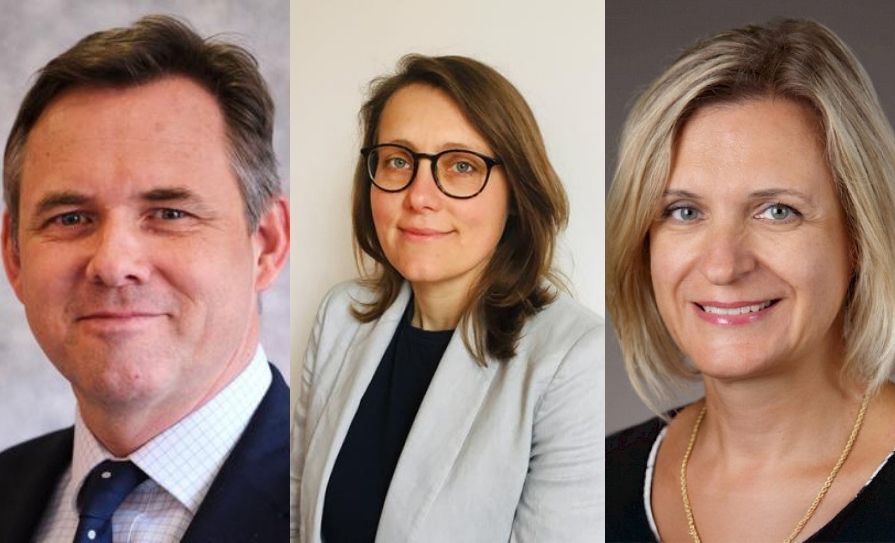
Prof Chris Edwards, Dr Barbara Hauser and Dr Ivona Aksentijevich
Irish Society for Rheumatology Autumn Meeting, Radisson Blu Hotel, Little Island, Cork, 18-19 September 2025
The upcoming Irish Society for Rheumatology Autumn Meeting will showcase expert talks and the latest research in the field
The Irish Society for Rheumatology (ISR) Autumn Meeting takes place later this month in the Radisson Blu Hotel, Little Island, Cork, on 18-19 September. A highlight of the ISR calendar, the meeting will once again bring together experts and emerging researchers in rheumatology to present on some of the most current and innovative developments in the field.
The meeting will once again bring together experts and emerging researchers in rheumatology to present on some of the most current and innovative developments in the field
Proceedings begin on Thursday 18 September with a Clinical Affairs Group meeting chaired by Prof David Kane, Consultant Rheumatologist, Tallaght University Hospital, Dublin. This session will focus on clinical matters, special interests, and practical updates.
Opening talks
The main conference will then be formally opened by ISR President Dr John Ryan, Consultant Rheumatologist, Cork University Hospital (CUH).
A graduate of the RCSI, Dr Ryan completed his postgraduate training in rheumatology and general internal medicine in Ireland, followed by a Fellowship at the National Institute of Arthritis, Musculoskeletal, and Skin Diseases, National Institutes of Health, US. His special interests include inflammatory arthritis, connective tissue diseases, and vasculitis.
Following Dr Ryan’s address, six oral presentations will showcase the best research abstracts submitted for the meeting.
After a short break for tea and coffee, the first keynote lecture will be delivered by Prof Chris Edwards, Consultant Rheumatologist and Honorary Chair of Clinical Rheumatology, NIHR Southampton Clinical Research Facility, University Hospital Southampton, UK.
Prof Edwards is an internationally recognised clinician and researcher with expertise in inflammatory rheumatic diseases, including rheumatoid arthritis (RA), lupus, psoriatic arthritis, and ankylosing spondylitis (AS).
He has contributed to international guideline development, including work with the European Alliance of Associations for Rheumatology on the use of radiology in RA. As clinical lead of the Southampton musculoskeletal research unit, he has established extensive local and international collaborations in trial design and delivery.
Prof Edwards will speak about B-cell depletion in RA and lupus treatment.
The period after his presentation will be devoted to poster presentations, which will be followed by lunch.
The next keynote speaker is Prof Pedro Machado, Professor of Rheumatology and Neuromuscular Diseases, University College London, and Consultant Rheumatologist, University College London Hospitals (UCLH) and Northwick Park Hospital, UK.
Prof Machado runs both specialist spondyloarthritis and myopathy/myositis clinics. He also leads the needle muscle biopsy service at UCLH, which he implemented in 2023.
His research interests include the investigation of new therapeutic strategies and the assessment and prediction of outcomes in rheumatic diseases, with a focus on muscle diseases and AS. He also has an interest in Covid-19, particularly in the outcome of Covid-19 in patients with rheumatic and neuromuscular diseases.
He has been awarded a number of Fellowships and scientific prizes, including the prestigious Michael Mason Award presented by the British Society for Rheumatology to recognise excellence in clinical and scientific research.
The title of Prof Machado’s talk is ‘Inclusion body myositis update’.
The next items on the itinerary will be the ISR AGM and additional poster presentations.
Satellite symposium
The first day of the conference will conclude with a satellite symposium sponsored by AbbVie. At this session, Dr Sarah Mackie, Consultant Rheumatologist, Chapel Allerton Hospital, UK, will deliver a presentation on giant cell arteritis (GCA).
Dr Mackie specialises in GCA and polymyalgia rheumatica (PMR), two related conditions that predominantly affect older people. In GCA, inflammation of the arterial wall can lead to blocked blood flow, with the potential to cause irreversible complications such as blindness or stroke if left untreated. PMR, meanwhile, is characterised by widespread inflammation of the soft tissues around the shoulders and hips, resulting in severe pain and stiffness that can make even basic daily activities, such as dressing or turning in bed, extremely difficult.
The mainstay of treatment for both conditions has traditionally been long-term oral glucocorticoid therapy. However, extended steroid use carries significant risks, including diabetes and osteoporosis with consequent fracture.
Dr Mackie’s research focuses on these two conditions, with a particular interest in how glucocorticoid therapy affects patients and how new scientific insights can be translated into improved clinical care and outcomes.
A conference dinner will be held in the evening.
Final day
The second day of the conference will begin with a satellite meeting sponsored by Alfasigma. The subject of the symposium is preparing RA patients for advanced therapies, and it will be delivered by Prof James Galloway, Professor of Rheumatology, King’s College London, and Honorary Consultant in Rheumatology, King’s College Hospital, UK.
Prof Galloway’s work focuses on leveraging big data and data science approaches to understand disease mechanisms, treatment responses, and healthcare delivery. He leads a research group at King’s College London, comprising clinical lecturers, postdoctoral researchers, research nurses, and trials coordinators. His research spans disease epidemiology, predictive modelling for health outcomes, and pharmacovigilance. As the methodology lead for a UK national audit programme, he plays a key role in evaluating and improving the quality of care for people with rheumatic diseases.
Clinically, he has a strong interest in inflammatory arthritis and rare diseases, running multidisciplinary subspecialty clinics for sarcoidosis, IgG4-related disease, and VEXAS syndrome.
Following the symposium, a keynote address will be delivered by Dr Michael Henry, Consultant Respiratory Physician and Director of the Regional Interstitial Lung Disease Service, CUH.
The title of his lecture is ‘Interstitial lung disease demystified’.
Dr Barbara Hauser, Consultant Rheumatologist, Western General Hospital, Edinburgh, Scotland, will then deliver a lecture titled ‘Anabolic therapies for osteoporosis: Recent advances and clinical experience’.
Dr Hauser’s research interests focus on the mechanisms of systemic bone loss in rheumatic disease and vasculitis. She has published widely on osteoporosis in RA, including the prevalence and predictors of the condition, as well as the role of bone-specific autoantibodies in both RA and AS. Her current work examines the impact of antirheumatic treatments – including glucocorticoids, methotrexate, and tumor necrosis factor inhibitors – on bone health and fracture risk, with the aim of preventing treatment-related adverse effects.
After a tea and coffee break, the next keynote will be given by Dr Ivona Aksentijevich, Associate Investigator, National Human Genome Research Institute, Bethesda, Maryland, US. Her presentation – ‘Autoinflammatory disease – A primer’ – will explore recent advances in this field.
Dr Aksentijevich earned her medical degree from the University of Belgrade and, in 1990, joined the Intramural Research Programme at the National Institute of Arthritis, Musculoskeletal, and Skin Diseases as a postdoctoral Fellow under Dr Daniel Kastner. She played a central role in the positional cloning of the gene responsible for familial Mediterranean fever and has since contributed to the discovery of several genes underlying both known and newly recognised autoinflammatory conditions. Dr Aksentijevich is a past-President of the International Society on Systemic Autoinflammatory Diseases. The next keynote lecture will be delivered by Dr Matthew Colquhoun, Consultant Rheumatologist, CUH. This presentation – ‘IgG4-related disease: Clinical insights and the expanding role of B cell therapies’ – will close the scientific programme.
The meeting will conclude with a prize-giving ceremony before the official close.











Leave a Reply
You must be logged in to post a comment.