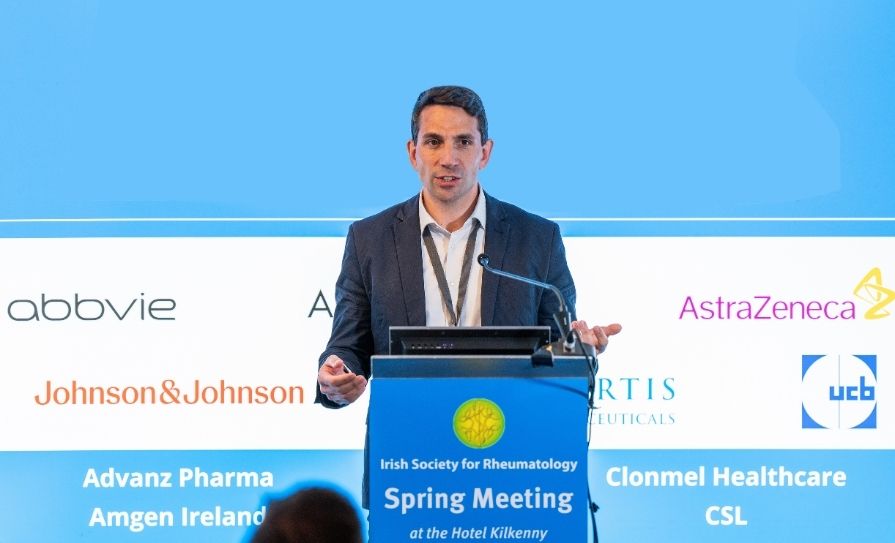
Prof Max Yates
The latest knowledge on the epidemiology of polymyalgia rheumatica (PMR) and the associated condition of giant cell arteritis (GCA) was the focus of a detailed presentation at the Irish Society for Rheumatology 2026 Spring Meeting by an internationally recognised expert and researcher in the area.
Prof Max Yates, Associate Professor, Norfolk and Norwich University Hospitals NHS Foundation Trust, and University of East Anglia, UK, specialises in the epidemiology of rheumatic and vasculitic diseases, particularly PMR and GCA.
His doctoral research investigated risk factors for onset and progression in PMR and GCA and laid the foundation for his ongoing work using large, population-based datasets to better understand disease mechanisms, comorbidity, and vascular risk in inflammatory conditions.
Despite PMR and GCA being the commonest forms of inflammatory rheumatic disease and vasculitis, respectively, surprisingly little is known of the risk factors for their onset and progression nor of the complications of current treatment, he noted.
PMR is a high volume, low acuity disease, while GCA is low volume, but high risk. GCA is associated with permanent visual loss in up to 35 per cent of cases.
Prof Yates said robust data is needed to better determine the benefits and risks of specific treatments such as biologics, “and we really need biomarkers,” as well as optimum service design.
As a result, he emphasised the importance of further research.
Prof Yates discussed the key findings of some of his major research projects in the area, including the cardiovascular risk factors associated with PMR and GCA in a prospective cohort: The EPIC-Norfolk Study.
The study found that PMR and GCA share common risk factors with vascular disease onset, suggesting a common underlying propensity. This may indicate a potential for disease prevention strategies through modifying cardiovascular risk.
Recent epidemiology changes in the area of PMR and GCA, including the ‘imaging revolution’ of ultrasound and PET-CT, have helped redefine the understanding of GCA, he noted.
The advent of biologics has changed the course of these diseases and there is also an ongoing primary versus secondary care shift in PMR, with an increased push forward (in the UK) for rapid access pathways for GCA, and potentially PMR.
He added this is a somewhat controversial proposal given the workforce implications and the difference in disease severity.
“So perhaps we need different models based on the diseases themselves. Not every condition in rheumatology needs to be treated the same in terms of logistics and how services are structured,” Prof Yates stated.
He also asked could a better stratified approach for referring cases of PMR work instead.












Leave a Reply
You must be logged in to post a comment.