







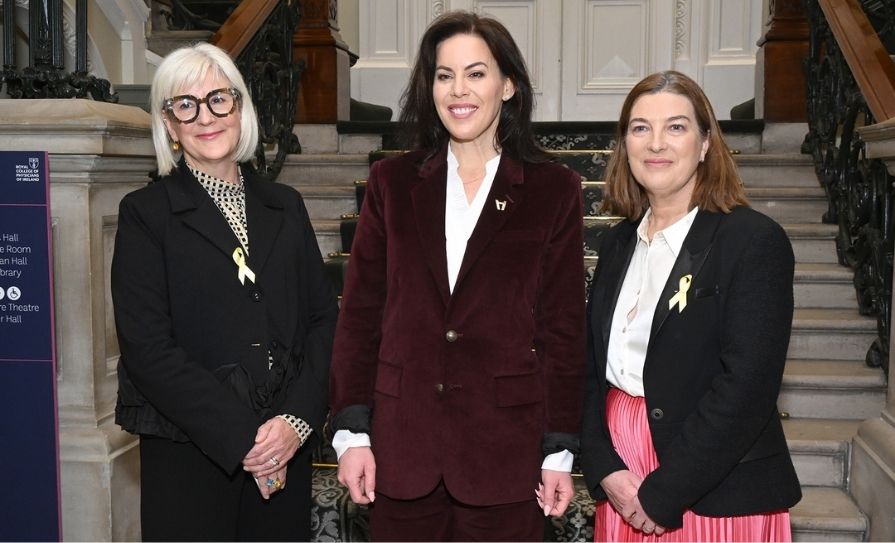
The Institute of Obstetricians and Gynaecologists’ Spring Conference highlighted international best practice and the lived experience in endometriosis care
“I think today is a great marker that we are listening to women,” said Ms Sarah Bissett, an endometriosis patient, in her address to the RCPI Institute of Obstetricians and Gynaecologists (IOG) Spring Conference on 6 March.
A student on RCSI’s Doctor of Medicine programme, Ms Bissett shared her experience of being diagnosed with endometriosis and undergoing four subsequent surgeries for treatment. “We’re just asking to be believed, to be heard, and to have appropriate multidisciplinary teams set up within our hospitals,” she said. “That includes pain management, physiotherapy, dietetics – the same way it would for any other whole-body disease.”
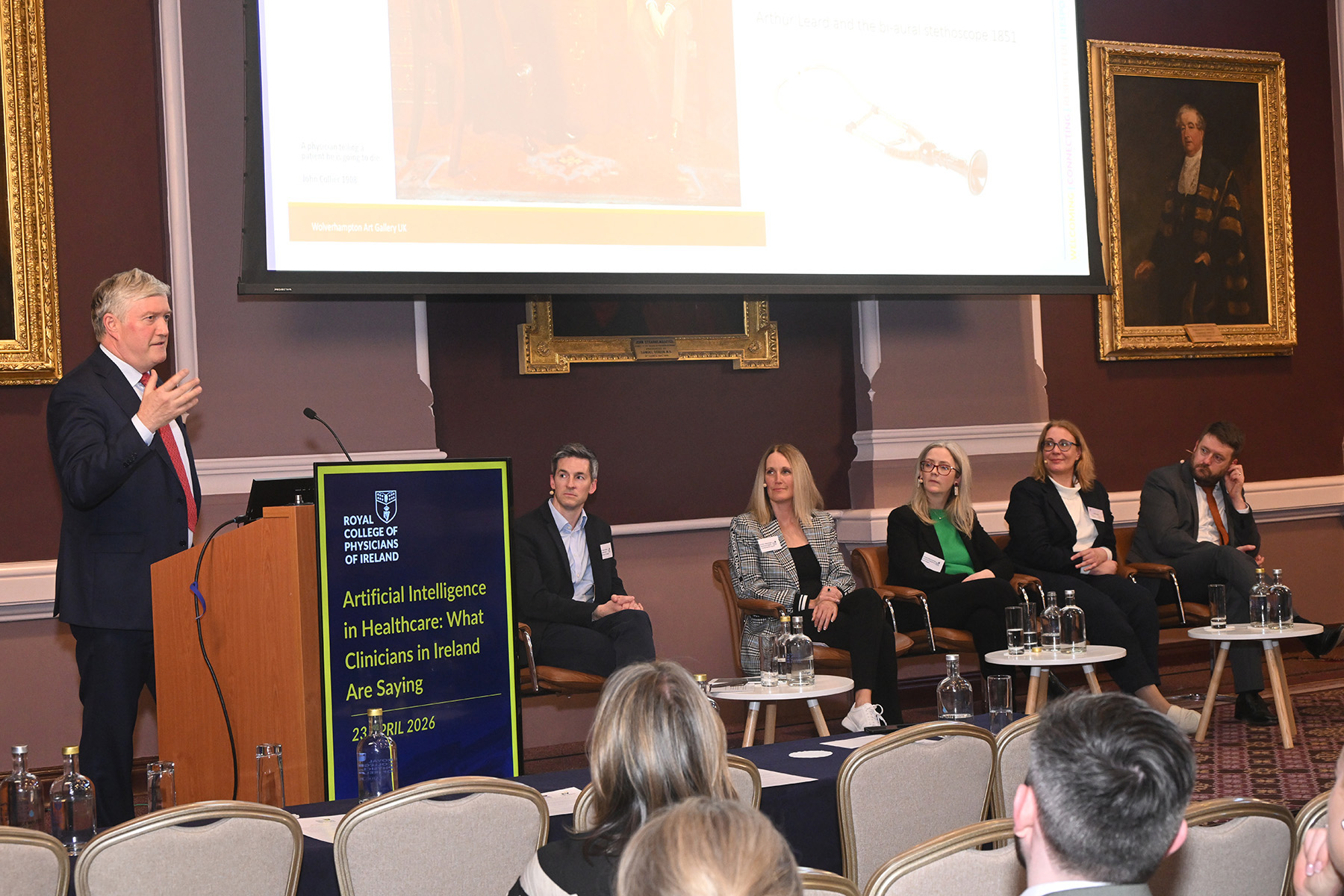
The IOG’s 2026 Spring Conference focused on endometriosis – a long-term condition affecting one in 10 women in Ireland. The conference was opened by Minister for Health Jennifer Carroll MacNeill.
Resources
At the conference, the Minister announced funding has been ringfenced in 2026 for an additional 65 posts for endometriosis services, which represents a 180 per cent increase in the dedicated endometriosis workforce. A total of €2 million in research funding for women’s health, including endometriosis projects, was also announced.
Minister Carroll MacNeill said the volunteer-run education programme Menstrual Information Specialising in Endometriosis, which includes a focus on endometriosis, will be supported by the Department of Health for a national roll-out to schools, sports clubs, and workplaces.
The Minister also confirmed the appointment of a colorectal surgeon at Cork University Maternity Hospital (CUMH), the country’s second supra-regional endometriosis centre after the establishment of a service at Tallaght University Hospital (TUH).
These interventions follow the launch of the HSE National Framework for the Management of Endometriosis last year. The framework advises that women presenting with relevant symptoms should be treated on the presumption they have endometriosis.
Experts
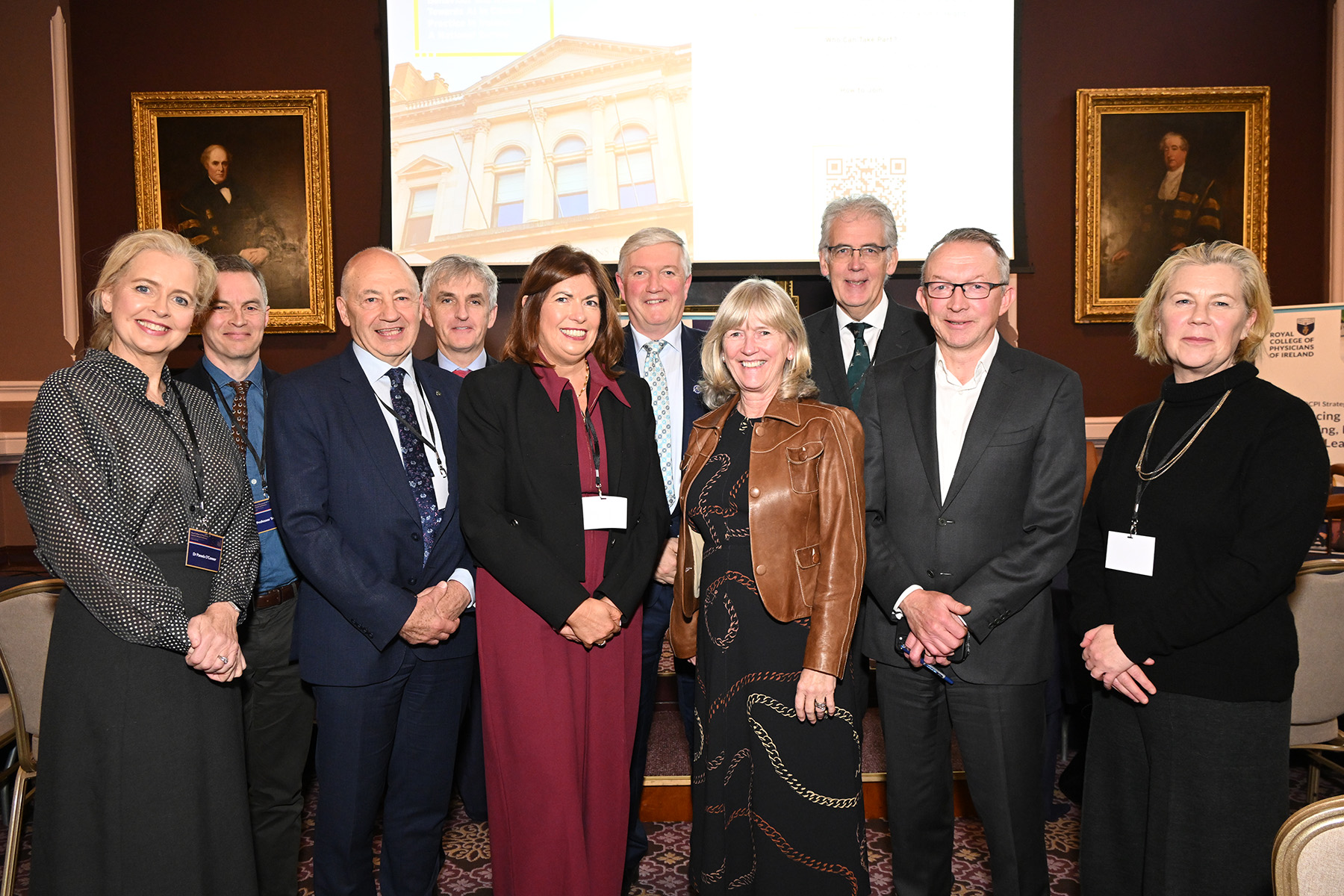
The IOG conference brought together national and international experts in the field to discuss surgery and future trends in treatment.
The first session began with a talk from Dr Ciara McCarthy, HSE GP Clinical Lead in Women’s Health. Dr McCarthy explained how the new HSE framework integrates a pathway for GP referral. She said that GPs are well-placed to develop a long-lasting and trusting relationship with patients, and may introduce a possible diagnosis of endometriosis at an early stage.
A radiologist’s perspective was provided by Dr Maeve O’Sullivan, TUH, who explained the role of imaging in diagnosing endometriosis. Dr O’Sullivan said the first line of investigation is a transvaginal ultrasound. A magnetic resonance imaging (MRI) scan is recommended if the ultrasound is inconclusive or negative.
An insight into how an Irish-based obstetrician/gynaecologist may subspecialise in treating endometriosis was given by Dr Laurentina Schaler, Rotunda Hospital, Dublin, who secured a Fellowship to train in Germany for two years.
“You’ll improve knowledge of instruments and technology,” Dr Schaler said. “You’ll gain [exposure to] advancements in technology that you might bring home to your own unit. You’ll experience collaboration with multidisciplinary teams, with pain management, gastrointestinal units, urology, and mental health.”
A colorectal surgeon’s perspective was provided by Mr Cillian Clancy, TUH, who discussed how the multidisciplinary team structure allows colorectal surgeons to be involved in pre-operative decision-making and planning.
Among the points highlighted by Mr Clancy was how sharing MRI imaging with patients had a therapeutic effect on patients finally seeing their disease.
International expertise and perspectives were shared by obstetricians/gynaecologists from Portugal and Scotland. Dr Nuno Martins, Consultant Obstetrician/Gynaecologist, Viseu Dão-Lafões Hospital, and Congress President of the European Board and College of Obstetrics and Gynaecology, spoke to the complexity of laparoscopic surgery for endometriosis, and how to manage risk and complications.
Prof Andrew Horne, an Academic Gynaecologist, University of Edinburgh, UK, and President of the World Endometriosis Society, looked at the evolving evidence relating to potential future trends in endometriosis care.
The conference also heard from the clinical leads of the country’s two supra-regional endometriosis centres. Surgical approaches in endometriosis care were discussed by Consultant Obstetrician/Gynaecologist Dr Cathy Burke, Clinical Lead, supra-regional endometriosis centre, CUMH. The modelling of endometriosis services within the new HSE framework was outlined by Dr Aoife O’Neill, Clinical Lead, supra-regional endometriosis centre, TUH.
Patient partnerships
In a session focused on patient partnerships, Clinical Director of the HSE National Women and Infants Health Programme, Dr Cliona Murphy, shared a recorded interview with Fianna Fáil Councillor Áine Smith, elected to Cavan County Council, who has endometriosis. Cllr Smith described how she spent her thirties searching for medical professionals to help treat long-term pain she experienced after coming off birth control pills. She described receiving incorrect diagnoses from several health professionals before finally a fertility nurse suggested she consider endometriosis.
Eventually, an obstetrician/gynaecologist and surgeon confirmed stage four endometriosis. “It was quite a shock, but it was such a relief. Finally, somebody knew what was wrong with me,” she said. Upon election in 2023, Cllr Smith’s first motion to Cavan County Council was to call on the Department of Health to invest more in endometriosis treatment.
The conference heard how it is essential to improve women-centred care. Prof Louise Kenny, internationally renowned researcher in women’s and childhood health, and Pro Vice-Chancellor, University of Liverpool Faculty of Health and Life Sciences, UK, quoted a survey by the Department of Health and Social Care, UK. This stated that 84 per cent of female participants felt they were not listened to by their doctor. Dr Minna Geissler, Consultant Obstetrician/Gynaecologist, CUMH and South Infirmary Victoria University Hospital, Cork, spoke of the impact of endometriosis on fertility and how best to protect fertility while treating endometriosis.
Research
A final session dedicated to endometriosis research in Ireland began with a presentation by Dr Mariarosaria Cuozzo, Department of Anatomy and Neuroscience, University College Cork. She discussed a new pilot multi-system biomarker exploring links between stress, pain, microbiome, and inflammation in endometriosis. An audit at TUH by Dr Barbara Burke, Higher Specialist Trainee in Obstetrics/Gynaecology, found that, after endometriosis surgery, the gonadotropin-releasing hormone agonist for suppressing production of sex hormones was appropriately reserved for the most complex cases.
A joint study by Dr Mary Barrett, Consultant Obstetrician/Gynaecologist, CUMH; and Dr Bernard Kennedy, Higher Specialist Trainee in Obstetrics/Gynaecology, CUMH, reviewed all surgeries at the Cork site for presumed endometriosis between 2014–2023. The study found 78 per cent of patients experienced symptomatic improvement post-surgery for endometriosis. But it also urged that symptomatic improvement is not related to pain cyclicity. The recurrence of endometriosis symptoms post-operatively is well-documented, and repeat surgeries are often performed.
The conference concluded with Dr Radka Fahey, National Institute for Bioprocessing Research and Training, University College Dublin. Supported by Marie Skłodowska-Curie funding, Dr Fahey discussed the evidence for glycome – the sugar complement of an organism – being used as a potential biomarker for endometriosis. Dr Fahey said next steps will involve validating and extending research in this area.
IOG Chair Dr Suzanne O’Sullivan said the Institute was delighted to bring together Irish and international clinical leaders in endometriosis and to highlight groundbreaking research happening in Ireland. Most of all, it welcomed the continued opportunity to work with patient partners and the Department of Health in advancing expertise and care in all aspects of health for women and girls in Ireland.
This article was produced by the RCPI.
To find out more about the IOG, visit www.rcpi.ie/Faculties-Institutes/Institute-of-Obstetricians-and-Gynaecologists



Leave a Reply
You must be logged in to post a comment.