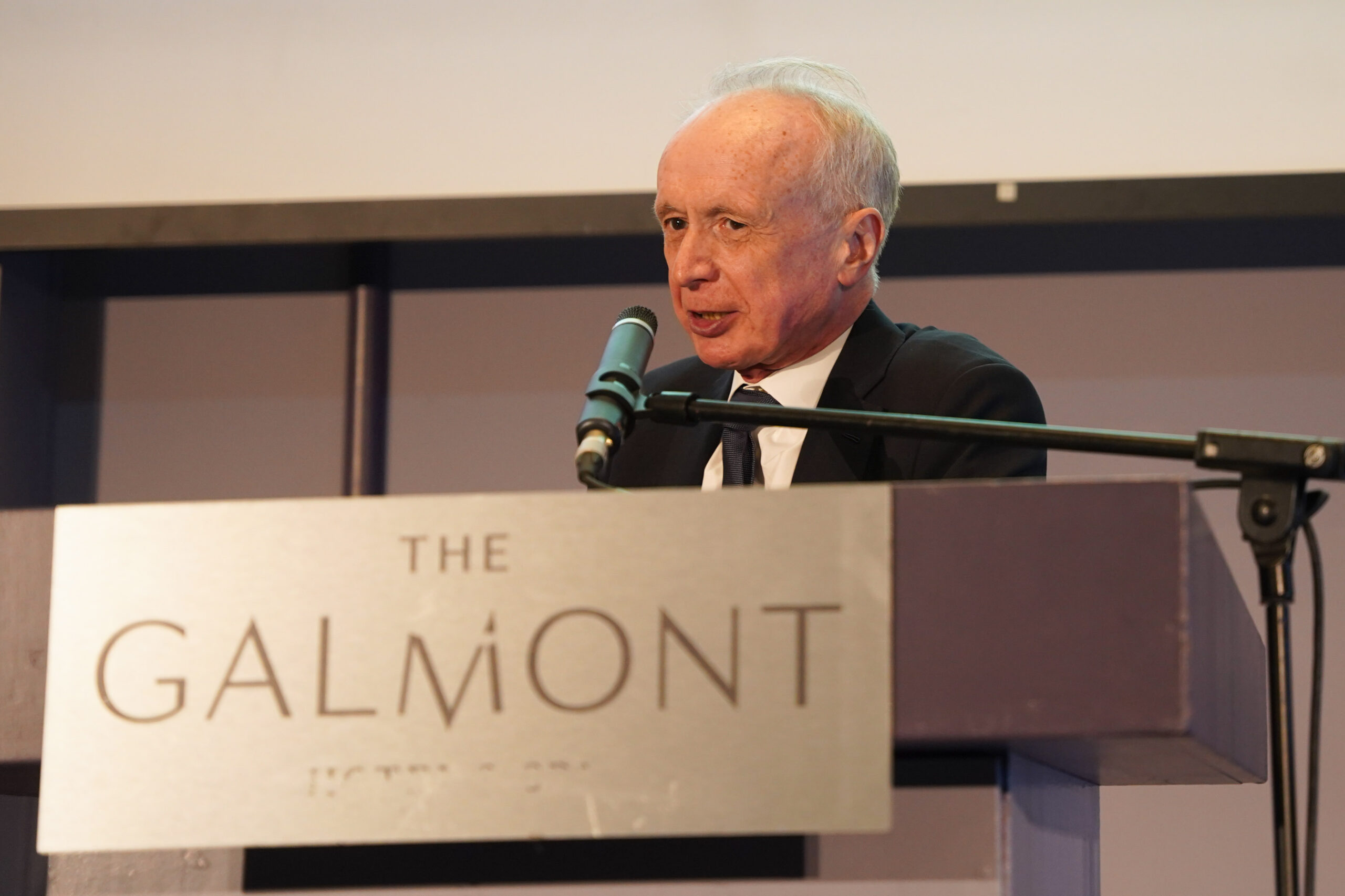
Prof Keith Barton
It is vital that patients with advanced or complex glaucoma are treated appropriately and not just given “easier” treatments that will never achieve the best potential outcomes, according to Prof Keith Barton, Consultant Ophthalmic Surgeon, Moorfields Eye Hospital London, UK.
Prof Barton is an internationally renowned expert and innovator in complex glaucoma surgery, who has pioneered surgical treatments for advanced and complex glaucoma, as well as minimally invasive techniques. He presented the prestigious Annual Mooney Lecture on ‘The challenge for surgeons managing glaucoma’ at the Irish College of Ophthalmologists (ICO) 2026 Annual Conference in Galway.
Prof Barton acknowledged that while it can be hard to argue with safety and predictability concerns when deciding how to treat complex glaucoma, efficacy and achieving the best outcome have to be balanced in the approach. Carrying out multiple minimally-invasive procedures can actually be riskier and cause more issues for these patients, he said.
“A lot of clinicians do minimally-invasive procedures saying ‘they might work’, but these patients need something that will work and that is worth emphasising,” Prof Barton told the Medical Independent (MI).
Newer and better-quality glaucoma drainage devices with less manufacturing variability are on the way that will be “game-changing”, he said.
In a separate presentation at the conference, Prof Barton also outlined the results to date of the iTrack Global Data Registry (iTGDR).
This is a prospective, multicentre study established to collect comprehensive real-world clinical outcomes on the efficacy and safety of canaloplasty using the iTrack and iTrack Advance microcatheter devices for the treatment of glaucoma.
The cloud-based dataset collects surgeon data across approximately 20 sites in the US, Canada, Europe, Asia, and Australia, and Prof Barton is one of its co-founders.
To date, the iTGDR has found that canaloplasty performed via an ab-interno approach significantly reduces intraocular pressure and medication burden safely in patients with primary and secondary open-angle glaucoma up to 18–24 months post-operatively.
“The whole aim of the registry was to provide a bigger prospective picture of the glaucoma landscape as there are so many procedures; a lot of them doing the same thing in slightly different ways, making it much more difficult to get a perspective on what is working better. So we hoped by having large data on many procedures we would get a feel for what the reality is,” Prof Barton explained.
The data confirms the clinical effectiveness of canaloplasty in mild glaucoma, and that it makes sense to choose this minimally-invasive option where possible, he commented.
The iTGDR is continuing to collect data to further strengthen its findings.
Prof Barton said it should be viewed by all glaucoma surgeons to support evidence-based decision-making.
During the ICO 2026 Annual Conference, there was a dedicated glaucoma symposium, which highlighted both surgical complexity and evolving models of care.
During the symposium, Prof Barton presented on challenging glaucoma cases, encouraging discussion around surgical strategy and outcomes.
Prof Uday Devgan, Consultant Ophthalmic Surgeon, Devgan Eye Surgery, Los Angeles, US, led an interactive session on combining cataract and glaucoma surgery, focusing on complication management and decision-making.
Prof Devgan is known as the ‘cataract coach’ and has a large online following.
He recently co-led the world’s first human clinical trial of robotic-assisted cataract surgery.
Prof Devgan emphasised that complications are an inevitable part of surgical practice and that what matters most is how surgeons respond when they occur.
He said that, regardless of experience, surgeons should never be afraid to acknowledge a complication, pause, carefully consider the next step, and seek assistance when needed.
Prof Devgan presented a series of cataract surgery video case studies, inviting the audience to decide how they would respond when specific complications arose. Speaking to MI, he said detailed surgical videos are an invaluable learning tool for both trainee and experienced surgeons.
He added that modern surgical trainees are likely to acquire skills more rapidly than previous generations, owing to advances in surgical training techniques and the widespread sharing of educational content online.
Dr David Gildea, Consultant Medical Ophthalmologist, HSE Dublin South, explored the growing need for innovative glaucoma service delivery.
These include hub-and-spoke models, virtual clinics, and multidisciplinary involvement to meet rising demand.
He noted that Ireland has the fastest ageing population in Europe, and that virtual clinics are an effective way of discharging less complex patients.
Clinics for low-risk patients led by other team members such as advanced nurse practitioners, orthoptists, and optometrists can also increase access once done correctly.












Leave a Reply
You must be logged in to post a comment.