







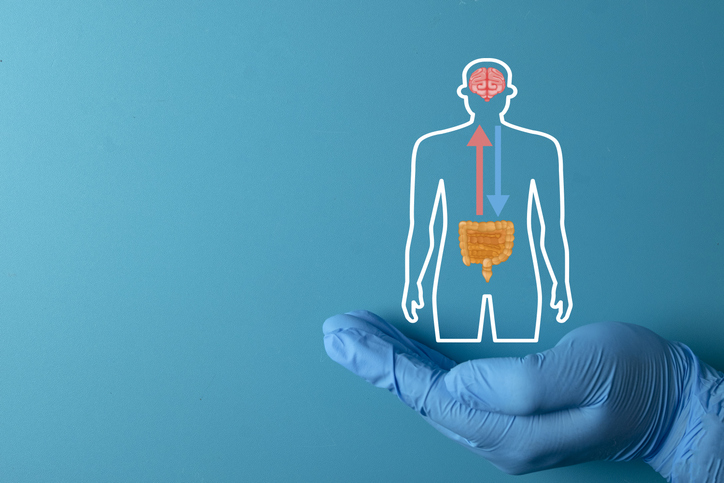
Consultant Gastroenterologist Dr David Prichard speaks with Pat Kelly about transnasal endoscopy and its impact in reducing waiting times
Upper endoscopies (OGDs) are among the most frequently performed endoscopic procedures in Ireland, with over 130,000 carried out in 2025.
St James’s Hospital, Dublin, recently announced that access to the hospital’s diagnostic upper endoscopy services increased by 35 per cent after the commencement of a transnasal endoscopy service.
The service, which was introduced just over a year ago, has dramatically improved patient throughput and reduced pressure on traditional endoscopy services. This has meant a steep drop in waiting times – a reduction of 11 months – for diagnostic upper endoscopy procedures.
Dr David Prichard, Consultant Gastroenterologist, St James’s, spoke with the Medical Independent (MI) to describe the impact the service has had for both patients and healthcare professionals.
“This is an initiative to balance the demand-capacity situation in the endoscopy unit,” Dr Prichard said.
“St James’s Hospital performs approximately 9 per cent of all public upper endoscopies nationally and so there is a massive demand for procedural capacity in this institution.”

High demand
Dr Prichard explained that, initially, he and his colleagues looked at ways to better manage capacity in response to the high demand for procedures.
Two pilot studies were conducted, the first of which assessed the quality and acceptability of a standard OGD performed without sedation.
“Surprisingly, it was relatively well tolerated and patients said they would be willing to have it done again,” Dr Prichard said.
“The problem was that the quality of the examination was poor. When patients are gagging and retching, you don’t get a high-quality examination.”
The second pilot study evaluated transnasal endoscopy. The hardware used for the procedure is very similar to a standard adult gastroscope, but a little thinner, and the cost is also similar.
Unlike conventional upper endoscopy, transnasal endoscopy is performed through the nose rather than the mouth, using topical anaesthesia and avoiding the need for sedation. This approach permits high-quality diagnostic examination with minimal patient discomfort.
“Because the procedure is performed through the nose, it doesn’t stimulate the gag reflex as much as when it goes through the mouth,” Dr Prichard explained.
“Almost all of those transnasal procedures were both technically complete and adequate and patient feedback was that most of them would be willing to have it again.”
As sedation is not required, it also reduces the need for monitoring and eliminates the need for recovery time.
Patients spend less time in the endoscopy department and output can increase without significant infrastructural investment.
The results of the pilot studies were presented to the HSE. The Executive subsequently supported the acquisition of transnasal endoscopes for the department.
Initial service
Dr Prichard outlined how, last July, his team started a one-day-per-week transnasal clinic, which increased productivity in upper endoscopies on the day by 50 per cent.
“That has been running for 12 months now. Waiting lists have fallen by 40 per cent and we are now compliant with national access targets.”
In July 2026, 67 per cent of patients were on a waiting list for upper endoscopy for less than 12 weeks.
“Our average waiting time is now well within the [HSE’s] targets,” Dr Prichard told MI.
Patients were asked for their feedback, and more than 85 per cent had a ‘positive’ or ‘neutral’ experience, of which 75 per cent were positive about the procedure. From September of this year, the transnasal endoscopies will be conducted in St James’s five days per week.
“We are working smarter, not longer,” said Dr Prichard.
“We are now doing a greater number of procedures in the same number of hours.”
The waiting list for an upper endoscopy in the gastroenterology department at St James’s has fallen from 541 in July 2025 to 290 in July 2026. The waiting times have also improved significantly. The percentage of patients on a waiting list for less than 12 weeks has increased from 36 per cent to 67 per cent.
Speaking on the impact of the transnasal clinic on other aspects of the gastroenterology department, Dr Prichard said: “When demand for diagnostic upper procedures is addressed, the department plans to use the excess capacity to begin addressing the waiting list for surveillance procedures.”
Dr Prichard also noted the importance of early diagnosis.
“Using transnasal endoscopy, we are diagnosing cancer in one in every 100 procedures. The detection rate is 2 per cent in patients with high-risk symptoms and 0.5 per cent in patients without. This is equivalent to data from the UK’s national endoscopy database. It supports the quality of the examinations we are performing.”
Stepwise development
Dr Prichard said the service has been developed pragmatically “in a stepwise fashion”.
“We’ve performed the pilot study and shown that it [the service] worked. We have commenced the service on one list a week, so that the entire department could safely learn the procedures.”
Ms Sharon Hough, Advanced Nurse Practitioner in Endoscopy, currently performs the majority of the procedures.
“But she has now taught most of our trainees how to perform the test and we will expand to a five-day-a-week service,” according to Dr Prichard.
The next part of the process, he explained, is to move the service out of the endoscopy unit.
“We are conservatively estimating that we could move 2,000 OGDs out of the endoscopy unit each year,” he said.
“That massively increases the capacity for colonoscopy in the unit. We have everything in place to move, but don’t have adequate numbers of endoscopy nurses or physicians.”
The final step will be to provide the service outside of St James’s Hospital and in the community. Dr Prichard and his team have a potential location identified, but staff and patients will need to be acclimatised to that new way of working, he said.
“This decreased footfall in the hospital increases capacity for what truly needs to be done in the endoscopy unit, which is colonoscopies and therapeutic procedures.”
Dr Prichard referenced the Japanese model of care where unsedated transnasal endoscopies are performed in medical clinics within shopping centres to make it as convenient as possible for patients.
“Waiting lists have fallen by 40 per cent and we are now compliant with national access targets”
Potential impact
This raises the question of the potential impact if transnasal endoscopy clinics were to be rolled out nationally and also how this might ease pressures on busy gastroenterology departments.
Currently, thousands of people are waiting for endoscopy around Ireland and that figure is increasing month-on-month at the current time, according to figures from the National Treatment Purchase Fund.
“There are approximately 130,000 OGDs performed in Ireland each year, and if 70 to 85 per cent of those could be transferred to transnasal endoscopy, the impact on waiting lists nationally could be substantial very quickly,” Dr Prichard told MI.
Winter surge
Dr Prichard also commented on the potential of transnasal endoscopies in mitigating the effects of the ‘winter surge’ on endoscopy waiting lists.
“At the moment, when endoscopy units are repurposed to ‘surge’ wards each winter, endoscopy lists are cancelled. Everything stops. Colonoscopies, sigmoidoscopies, OGDs, everything. With a transnasal endoscopy service in place, the upper endoscopies could continue, for example, in a clinic room. This would definitely buffer the effect of the winter surge on endoscopy waiting lists.”
Dr Prichard pointed out the service has been “strongly supported” by the hospital’s Chief Executive Officer Ms Mary Day “and all the operations team from day one”.
“It has very quickly performed and proven itself,” he said in conclusion.
“One year after starting the service, the investment in endoscopes is already substantially below what the cost would be to outsource these procedures. Now, we need the support of the HSE to move this service out of endoscopy, so that we can tackle the thousands of patients on our colonoscopy waiting list.”






Leave a Reply
You must be logged in to post a comment.