iStock.com/Vuk Saric
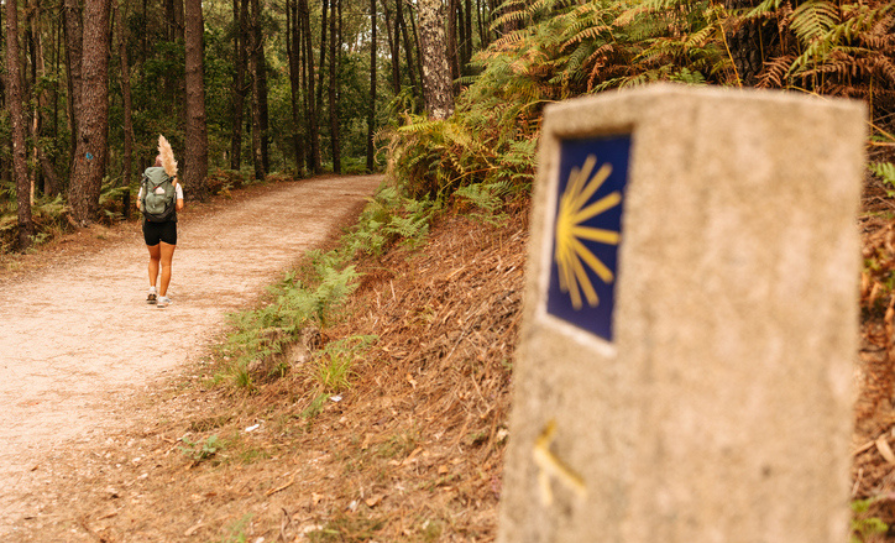
The Camino de Santiago walk is a good example of how non-clinical experiences can support wellbeing
There are few journeys that carry as much symbolic and practical weight as the Camino de Santiago. For centuries, the Camino has drawn pilgrims for a month-long hike across northern Spain toward Santiago de Compostela.
In recent decades, the Camino has evolved into something broader: A convergence of spirituality, psychology, physical endurance, and personal narrative. For clinicians, it offers a compelling lens through which to consider health, ageing, and meaning-making.
At its core, pilgrimage is an intentional journey that is undertaken not merely to arrive somewhere, but to find something different along the way. Contemporary motivations are rarely purely religious. Instead, they blend spiritual curiosity, cultural interest, and a search for wellbeing. A recent study of older Camino walkers highlights just how varied and clinically relevant these motivations can be.
Five themes emerge with striking clarity.
First, challenge and adventure. Many older adults embark on the Camino not despite their age, but because of it. The walk becomes an exercise of physical and psychological resilience. It is a deliberate confrontation with perceived limits. This is not trivial. In an era where ageing is often framed in terms of decline, the Camino offers a counter-narrative: One of capability, endurance, and growth. The physicality of the walk, with its long distances and variable terrain, requires adaptation. In doing so, it reinforces self-efficacy.
Second, spirituality and intrinsic motivation. Not all pilgrims are religious, but many describe a sense of “call” or inner compulsion. This language is clinically interesting. It suggests that meaning is not always consciously constructed, but may emerge from less articulate psychological processes. Walking, in this sense, becomes a form of embodied reflection, sometimes described as “thinking with the feet”. The repetitive rhythm of walking, combined with reduced distractions, may facilitate a form of mindfulness or even meditative awareness.
Third, cultural and historical engagement. The Camino is not only a route, but a narrative landscape, layered with history, architecture, and shared human experience. For some, the appeal lies in this continuity as they walk paths that have been traversed for centuries. This sense of connection to something larger than oneself can be profoundly grounding, particularly in later life.
Fourth, life review and gratitude. The study highlights how many older walkers undertake the Camino at key transition points such as retirement, bereavement, or recovery from illness. In this context, the journey becomes a structured space for reflection. Life-course theory suggests that later adulthood involves integrating past experiences into a coherent narrative. The Camino, with its physical progression and symbolic milestones, provides an ideal framework for this process.
Finally, relationships. Some people walk to strengthen existing bonds; others to process loss. Many describe the unique social environment of the Camino, where transient yet meaningful connections form quickly. This has implications for loneliness, which can be a significant concern for some people. The Camino fosters a form of community that is deeply felt.
From a medical perspective, several points stand out.
The Camino combines sustained physical activity with psychological engagement and social interaction. This triad is associated with improved health outcomes.
The Camino also offers what might be termed “existential exercise”: A structured opportunity to engage with questions of meaning, identity, and purpose. These are not abstract concerns; they are closely linked to mental health, particularly in later life.
Moreover, the unpredictability of the journey, its “element of surprise”, appears to be central to its impact. Outcomes are not always aligned with initial motivations. Instead, the experience itself reshapes expectations and priorities. This aligns with broader understandings of narrative identity, where meaning is often constructed retrospectively rather than prospectively.
For clinicians, the Camino is not a prescription and older adults might consult their GPs to ensure that their plans and pacing are appropriate to their state of health. On the Camino, there is no hurry. The path will take as long as it takes.
The Camino is a powerful example of how non-clinical experiences support wellbeing. It reminds us that health is not only the absence of disease, but the presence of purpose – and the simple act of taking the next step.
Reference: Nelson-Becker et al. ‘Adventure and spiritual
restoration: Older adult motivations for undertaking
a pilgrimage on El Camino de Santiago’. Journal of Gerontological Social Work 2023; 66: 822-38 (doi:org /10.1080/01634372.2023.2181906) (Link to licence: http://creativecommons.org/licenses/by/4.0/)
Prof Brendan Kelly is Professor of Psychiatry at Trinity College Dublin and author of Buddhism and Psychiatry: Moving Beyond Mindfulness in Mental Health Care (Open access: https://link.springer.com/book/10.1007/978-3-031-96045-1)












Leave a Reply
You must be logged in to post a comment.