







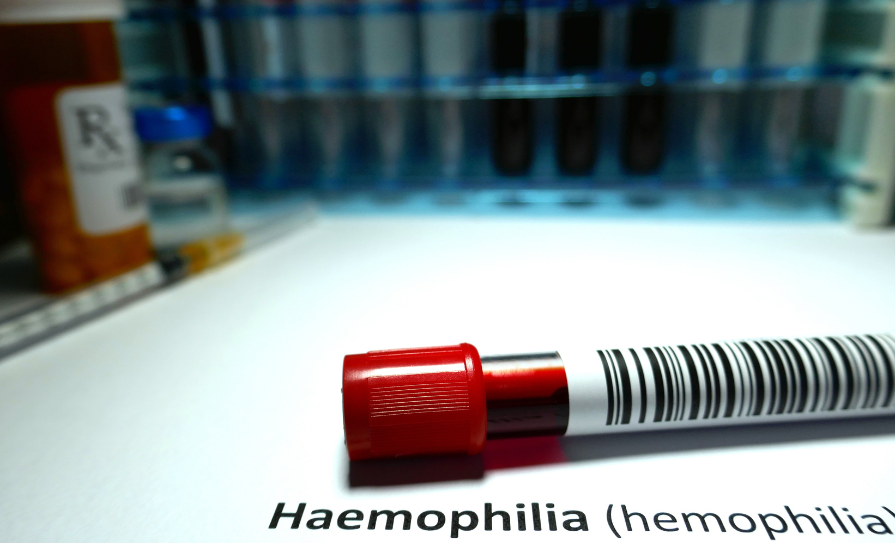
The 19th annual European Association for Haemophilia and Allied Disorders Congress took place in Dublin from 3 to 6 February 2026 and was attended by over 2,000 delegates from over 77 countries
The 19th annual European Association for Haemophilia and Allied Disorders (EAHAD) Congress highlighted the continued progress being made in haemophilia and bleeding disorder care, while also acknowledging the evolving challenges facing the community. Through multidisciplinary collaboration, the meeting showcased the vital contributions of clinicians, nurses, physiotherapists, and researchers in improving patient outcomes.
This year marks 100 years since Finnish physician Erik von Willebrand first described von Willebrand disease (VWD), the most common inherited bleeding disorder. A special session titled ‘VWD: 100 Years of Progress. Explore a century of breakthroughs and the latest advancements shaping patient care today and into the future’ was a highlight of the Congress, where delegates heard about the latest positive treatment developments in VWD.
Prof Niamh O’Connell, Consultant Haematologist, National Coagulation Centre, St James’s Hospital, Dublin, and EAHAD Congress President, said: “The annual congress is the cornerstone of EAHAD’s mission to ensure the highest quality care for those living with haemophilia and other bleeding disorders, through multidisciplinary collaboration, research and education. Innovative solutions to improve clinical care and health outcomes are discovered and implemented by working in partnership with people and families living with bleeding disorders, healthcare providers and institutions, academia, and the pharmaceutical industry.”
Successful ageing in haemophilia
A key session at the Congress focused on evidence-based strategies for successful ageing in haemophilia, which was delivered by Chair of Medical Gerontology, Trinity College and St James’s Hospital, Dublin, and founding principal investigator of the Irish Longitudinal Study on Ageing, Prof Rose Anne Kenny.
She outlined the realities of ageing in 2026 and noted that while lifespan is increasing substantially, healthspan (the number of years a person lives without disability) is not keeping pace, while many people live their last decade of life in ‘sickspan’. Prof Kenny cited data showing the gap between life expectancy and health-adjusted life expectancy widened by 13 per cent from 2000 to 2019. Breaking down the data, women had a mean healthspan/lifespan gap of 2.4 (0.5 years) wider than men (p<0.001).
Prof Kenny highlighted the issue of frailty, stressing that this needs to be properly recognised and treated (including promoting the benefits of activity and strength/resistance for older adults), especially as the number of people living with frailty in Ireland is expected to increase five-fold over the next 15 years. Prof Kenny also touched on the issue of multimorbidities and the need to treat them holistically as part of patients’ overall care.
Women and bleeding disorders
A number of speakers at the EAHAD Congress highlighted that women frequently experience significant bleeding symptoms, but remain under-diagnosed and under-recognised in clinical practice. Sessions addressed several aspects of care for women with bleeding disorders, including the evolving role of haemophilia nurses in supporting menstrual health, reproductive care, and psychosocial wellbeing. These sessions emphasised the importance of multidisciplinary collaboration between haematology, gynaecology, and obstetrics services to ensure coordinated care across the entire lifespan.
The specifics of musculoskeletal health issues in women was discussed. While joint disease is commonly associated with severe haemophilia in men, emerging evidence suggests that women with mild factor deficiencies or carrier status may also experience joint bleeding and long-term joint complications. Early recognition of symptoms and the integration of physiotherapy and musculoskeletal monitoring are key components of comprehensive care for women with bleeding disorders.
Speakers also explored pregnancy and childbirth, particularly in the context of rare bleeding disorders such as Glanzmann thrombasthenia. They discussed the challenges of managing bleeding risk during pregnancy and delivery and reviewed strategies to give mother and baby sufficient support and minimise complications for both.
Digital health
Dr Guido Giunti, Chief Data Officer from St James’s Hospital, Dublin, gave a presentation on the potential role of digital health tools and artificial intelligence in improving the diagnosis of patients with unexplained bleeding symptoms. He explained that many individuals experience significant bleeding, but do not meet the diagnostic criteria for a known bleeding disorder, sometimes described as a bleeding disorder of unknown cause. Dr Giunti described how digital health platforms could support clinicians by enabling more structured bleeding history collection, integrating laboratory data, and analysing complex clinical datasets to help identify patterns within patient data that could help clinicians in recognising possible bleeding disorders earlier.
Gene therapy for haemophilia
During several sessions at the Congress, researchers presented long-term data on gene therapy for haemophilia B and haemophilia A, highlighting both the progress made and the challenges that remain. Five-year clinical trial results for the gene therapy now licensed as Hemgenix showed lasting benefits for many participants, including a significant reduction in bleeding rates, and continued production of factor IX (FIX) several years after treatment. By year five, most participants experienced no treated bleeds and maintained FIX levels high enough to reduce or eliminate the need for regular factor infusions.
Separate data from a gene therapy programme licensed and marketed in China also showed encouraging early results, with most participants achieving factor IX levels above 5 per cent after one year.
Developments in gene therapy for haemophilia A were also discussed. While early increases in factor VIII (FVIII) levels are often seen after treatment, longer-term results show greater variability, with levels sometimes declining over time before stabilising. One possible explanation discussed is that liver cells, which are targeted by current gene therapy approaches, do not naturally produce FVIII. Ongoing research is therefore focused on improving the design of gene therapy vectors, promoters, and transgenes to achieve more stable FVIII expression at lower doses, and to reduce the need for additional treatments such as steroids.
References
EAHAD 2026 Conference website. https://eahadcongress.com/
Irish Haemophilia Society. Spring Magazine 2026. Available at: https://haemophilia.ie/wp-content/uploads/2026/04/Spring-Magazine-2026.pdf





Leave a Reply
You must be logged in to post a comment.