







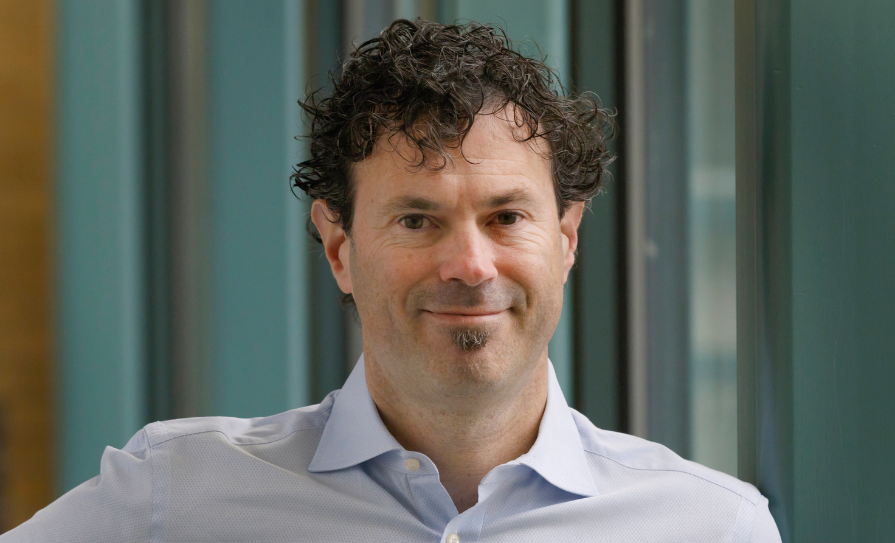
Expert on public health and infectious diseases Prof Kevin Winthrop spoke with the Medical Independent about the need to prioritise healthy ageing and disease prevention
Prof Kevin Winthrop is internationally regarded as a leading expert on public health and infectious diseases. A US physician, Prof Winthrop has worked with the Centres for Disease Control during his distinguished career and is an expert on the topic of vaccination, particularly for patients with immunocompromising conditions, and people with underlying chronic diseases.
Prof Winthrop visited Ireland last month to deliver a series of special medical education meetings to Irish hospital specialists under the theme, ‘Vaccination of patients with immunocompromising and underlying conditions.’
His visit came against the backdrop of a significant amount of discussion on adult vaccination at the Oireachtas health committee. Shingles and respiratory syncytial virus (RSV) vaccinations are not reimbursed in Ireland on the basis of cost-effectiveness, despite recommendations from the national immunisation advisory committee.
During his trip to Ireland, Prof Winthrop spoke with the Medical Independent (MI) about his visit and the importance of protecting older adults from preventable diseases.
On his meetings with Irish healthcare professionals, Prof Winthrop commented: “I have given talks in Tallaght University Hospital and in [Our Lady’s Hospital] Navan in recent days. Tallaght is obviously a bigger facility, but rheumatologists and also other specialists attended the meetings, as well as ancillary staff, such as nurses, among others.”
“It was a nice mixed group and there were a lot of questions, particularly about vaccines; how to give them, and so on. People were genuinely interested in the topic.”
In terms of awareness of the importance of vaccinations such as for RSV, Prof Winthrop drew a comparison between Ireland and the US.
“It’s different here than in the US, but my sense is that the specialists here might be a little less aware… historically, the GPs here have been doing most of the vaccinations. In the US, that was also true to an extent, but recently more [vaccinations] are being done by specialists who are taking care of patients who often have chronic diseases.
“Having spoken with some of the specialists here in Ireland, some of them are acutely aware, but some others were unsure,” he continued.
“We did talk about RSV, but I don’t think a lot of people are using that vaccine yet, or perhaps they are getting it through their GP… and of course the patients have to pay for it, so it’s harder to encourage people to get it.”
Ageing population
Ireland’s rapidly ageing population means the country is heading for a tsunami of conditions that target those patients who are immunocompromised, immunosuppressed, or living with chronic diseases.
Hospitalisations associated with RSV in Ireland are high for older adults. RSV is associated with complications, such as adverse cardiovascular effects, and exacerbations of underlying disease, such as chronic obstructive pulmonary disease, particularly in older adults over 75 and those with underlying chronic disease.
Bearing this in mind, Prof Winthrop was asked about the importance of vaccinating older people to protect them from the disease.
“Certainly, the target for RSV [vaccination] is the elderly, and particularly those with chronic diseases, including cardiovascular conditions,” Prof Winthrop told MI. “Those are the priority populations.”
Prof Winthrop explained that before he visited Ireland, he looked at Irish public health surveillance data on respiratory diseases.
“You can see that RSV causes quite a bit of morbidity,” he said.
“Around half of the people hospitalised with a respiratory infection in Ireland in the month before I visited had RSV… it’s interesting that here we are, in the last six weeks of respiratory [illness] season, and RSV is the dominant condition in the hospitals.”
These people may have avoided hospitalisation if they were vaccinated, he added.
“In an ageing population, we really should be thinking about shingles prevention and RSV, as well as the usual suspects, such as flu and so on.”
In an ageing population, we really should be thinking about shingles prevention and RSV, as well as the usual suspects, such as flu and so on
Immunisation
Prof Winthrop had previously noted the excellent paediatric immunisation schedule in place in Ireland. But when it comes to vaccination for older adults, namely to prevent shingles, he was asked if older people are falling through the cracks of the healthcare system, and how this problem was addressed in the US.
“We have a kind of anti-vaccine movement going on in the US right now, and that has been focused more on paediatrics than adults,” he said.
“I agree that we don’t need to be vaccinating absolutely everybody for Covid, for example. There is a certain subgroup of people who should probably get a yearly vaccination.”
He noted that in the US, there is greater connectivity between healthcare professionals via shared electronic health records, for example.
“There is a vaccine record in there that is updated regularly and tells me what they have had and what they need,” said Prof Winthrop.
“That kind of system can be really useful in terms of improving awareness of what vaccines someone is recommended to have and when to have it.”
He was also asked whether it makes sense in terms of health economics to vaccinate people and prevent illness, rather than having them end up with a costly stay in the hospital system.
“Obviously, from a societal or public health standpoint, we do make policy recommendations for certain vaccines to be used in certain groups of people and it generally has to be cost-effective, and if it’s not, it’s often not recommended for that group, or it’s more optional,” he said.
“Obviously, in the US, our healthcare system is a lot more expensive than yours, so the equations can be different. In the US, you can rack up between $10,000 and $20,000 for a hospital stay, so just saving one day of a hospital stay can be very cost-saving, so that makes preventive vaccination even more cost-effective.”
‘Preventive mindset’
Prof Winthrop summarised by outlining his approach to vaccination for vulnerable adults and the potential health benefits.
“One of the challenges we have in the US is where we see people for, say, 15 minutes and we don’t really have the time or even sometimes the ancillary supports, such as nurses and others, to remind people that they need to be vaccinated,” he said.
“We might suggest they go to the pharmacy to have it done, but that doesn’t always happen, or there may be a lack of communication with the pharmacy, for example. There are a lot of challenges in the context of… a healthcare delivery system and I’m sure these challenges exist in Ireland too, such as GP availability.
“My advice would be to reinforce that preventive mindset and have that mindset built into the patient too,” said Prof Winthrop.
“You could have a questionnaire for them and have a vaccine question built into that – we need to find some way to keep that at the forefront of people’s minds.”
Electronic health records are very useful in this regard, he reiterated.
“If you are using paper-based records you have to do that manually. But those kind of reminders can really help.”
The goal of any preventive medication is to prolong not just the length of a person’s life, but also the amount of time that a person lives with as little disease and inflammation as possible.
“What can’t be underestimated is the cost of hospitalisation to people’s quality-of-life and livelihood,” he emphasised.
“If you have a serious illness and you’re in hospital for a few days or weeks, the debility associated with that is quite high, particularly in older individuals. They can atrophy in a few days and it can take weeks and weeks of rehab, and that really takes a lot out of people and their quality-of-life for weeks, or even longer.
“Things that we can do to keep people out of hospital are very important,” he continued.
“A lot of the patients that I work with are immunosuppressed and they already have a 3 to 5 per cent chance of ending up in hospital each year due to infection. If I can minimise that and help that percentage to go down, that would be great, and vaccines are really an important part of that strategy.”
Prof Winthrop concluded by emphasising how much he enjoys Ireland.
“I have been here several times and really love it,” he told MI.
“I have some really nice colleagues here whom I have worked with and known for years and I couldn’t think more highly of them or their institutions. There are a lot of great doctors and great people here.”







Leave a Reply
You must be logged in to post a comment.