Reference: August 2026 | Issue 8 | Vol 12 | Page 8
Nuclear medicine consists of imaging which displays the functional information of various organs and tissues, and radionuclide/radioligand therapy (RLT), mainly for cancer, but sometimes for benign disease such as inflammatory arthritis or hyperthyroidism.
Images are obtained by injection of a radionuclide tracer intravenously, followed by subsequent mapping of the distribution of the tracer to gather clinical information that cannot be obtained by other methods (diagnostic nuclear medicine). It differs from radiology in that the source of the radiation comes from the patient. In addition, the unique physiological handling of each tracer gives specific information on the nature of health and disease of an individual patient at the time of imaging. Diagnostic radionuclides are often fully or partly reconstituted daily in nuclear medicine laboratories attached to imaging departments. This article is a short summary of some of the developments in this area relevant to cancer management.
Nuclear medicine is a standard medical subspecialty worldwide, often located within the radiology department. In most countries it is not considered a subspecialty of radiology. Around the world, the majority of nuclear medicine departments are separate from radiology.
PET/CT scanning for oncology
In 2000, the first PET/CT scanner in Ireland was opened at the Blackrock clinic. This needed a cyclotron to produce the associated main diagnostic radiopharmaceutical, F18 fluorodeoxyglucose, an analogue of glucose. This has provided a reliable supply of PET tracers in Ireland since. However, it is currently operating at maximum capacity (as Curium Pharma). A second company, Alliance Healthcare, is now building a larger capacity cyclotron in West Dublin, opening in 2027.
Tracers are shipped from Dublin to Belfast, Cork, and Galway. Ireland has a lower number of PET/CT scanners per capita compared to most European countries and, in general, performs less FDG and PSMA PET/CT scans than most countries. Some cancer centres have individual access to PET/CT imaging, but other hospitals have used off-site access for over two decades, which is not optimal for cancer and radiotherapy management.
eg, bone scintigraphy (metastasis, arthritis, thyroid imaging, ventilation and perfusion SPECT imaging (CTEPH), renal tract imaging, and orthopaedic SPECT/CT. See: www.eanm.org
See: www.petscanhub.ie
eg, Lu-177 PSMA RLT for prostate cancer amd Yttrium-90 colloid radiosynovectomy.
TABLE 1: Types of nuclear medicine
There is disparity in the approach of individual clinicians regarding use of PET scanning, with some still regarding this standard modality as an expensive, high radiation, poor access modality. There are different approaches in other health services, eg, in France there has been discussion regarding FDG PET/CT scans being used for all oncology imaging, replacing CT entirely. This would be inappropriate because the low but cumulative external dose rate of radiation from patients having PET scans to staff would not be justifiable for all routine scans. In the US, PSMA PET/CT imaging has taken over for prostate cancer staging. PET/CT imaging for non-cancer indications, such as beta-amyloid imaging in dementia and cardiac sarcoidosis imaging, have shown a moderate increase in demand in the past five years.
The workhorse agent for PET/CT imaging is F18 fluorodeoxyglucose, which mirrors glucose metabolism and is usually increased in high grade malignancy. A small number of aggressive tumour types are negative on this study due to variations in GLUT-1 receptor expression, intra-cellular hexokinase activity and tumour micro-environmental factors (Table 2). Benign or well differentiated tumours are also typically FDG PET negative. FDG PET/CT significantly changes a cancer management plan in 30 per cent of patients.
| FDG PET/CT +ve | High grade malignancy Rare in low grade or benign tumours, eg, pilocytic astrocytoma, pleomorphic adenoma |
| FDG PET/CT -ve | Prostate carcinoma (Gleason <8) Some lobular breast carcinomas Some mucinous tumours 40% of renal cell carcinomas |
| Ga68 DOTATOC | Low grade neuroendocrine tumours (Ki<20) |
| F18 PSMA/Ga68 PSMA | Prostate cancer (Gleason >6. Some de-differentiated Gleason 9/10 tumours are PSMA negative, but FDG positive) Some renal tumours |
| I-124 (Not available in Ireland) |
Well differentiated thyroid cancer |
| F18 FAPI (Not available in Ireland) |
Outperforms FDG PET/CT in some pancreas carcinomas and some solid tumours/sarcomas |
TABLE 2: Diagnostic PET/CT tracers
PSMA PET/CT scanning has become a major modality internationally, with 500,000 PSMA PET/CT scans performed in the US in 2024. This can identify recurrence of prostate cancer 18 months before conventional CT or nuclear medicine imaging. PSMA PET/CT has potential to spot prostate cancer recurrence at prostate-specific antigen (PSA) levels of 0.2µg/dl compared to a level of 20µg/dl for conventional CT and bone scan imaging.
It has been shown that imaging at a level of 0.2µg/dl affects patients’ outcomes and, therefore, this should be a standard point for restaging. Access to PSMA imaging in Ireland is suboptimal. There is currently a limited supply of this tracer, which will improve with the introduction of a second private sector cyclotron. However, there is no specific health service funding for this imaging and no National Cancer Control Programme (NCCP) plan to improve access.
There are many other specific agents for PET scanning, for example, F18 fluoroestradiol imaging, which could show the distribution of hormone receptor positive breast carcinoma metastases. It outlines a map of hormone positive disease which can show if a hormone deprivation strategy is safe in an individual patient, rather than using an isolated biopsy of one metastatic tumour site and presuming that this represents all sites. PET scan takes away the guesswork.
This type of radiopharmaceutical is not available in Ireland and will not be available in the near future because it is not commercially viable for the private sector cyclotrons to produce. The solution is a government-run cyclotron/national radiopharmacy which would have many other benefits, including driving down costs. There are many other specialised agents that will not become available unless there is better HSE or NCCP support (Table 3).
| Available in Ireland | Not available in Ireland (short selection of many) |
|---|---|
| F18 flourodeoxyglucose | F18 FAPI |
| F18 NaF | F18 FES |
| F18 PSMA/Ga68 PSMA (limited supply) | F18 Tau |
| Ga68 DOTATOC (very limited supply) | I-124 |
| I-124 MIBG |
TABLE 3: Diagnostic tracers used in cancer management
Radioligand therapy
Clinicians and patients are familiar with the concept of radiation therapy being used to treat cancer. Most of this is in the setting of external beam radiation, which has been modified with great success to 3D conformational stereotactic body radiation therapy (SBRT) and indications where brachytherapy is used, eg, cervical carcinoma or prostate carcinoma. External beam radiation travels through normal healthy tissue to get to its target, although with advanced 3D modelling the crossfire of radiation has improved and means that much more of the therapy is concentrated in the target than healthy tissues.
Radiopharmaceutical therapy is different and delivers radiation intracellularly or from a tumour membrane at point blank range following IV injection or ingestion of a tablet. Since 1941, nuclear medicine departments around the world have used radioactive iodine (I-131) as a treatment for metastatic well-differentiated thyroid cancer. I-131 was first given by Saul Hertz at the Massachusetts Institute of Technology, a so-called ‘magic bullet’ treatment. A high percentage of the tablet or liquid therapy given goes directly to the cancer and is incorporated into cancer cells, slowly destroying the cells by direct short range radiation damage to the nucleus.
This type of treatment has been used for decades successfully to keep thyroid cancer patients with extensive disease alive for prolonged periods of time. There have been many other agents used, for example yttrium-90 ibritumomab tiuxetan (Zevalin) – an anti-CD20 antibody aggregated with the high energy beta particle-releasing radioisotope yttrium, which was used to treat recurrent treatment-resistant lymphoma from 2002 onwards.
This treatment had a complicated history and was probably underutilised. Although antibodies theoretically make sense as a therapeutic vector, it takes up to four days for an antibody to move from the bloodstream to a tumour and, on this route, a lot of crossfire radiation occurs to other structures. In addition, antibodies have an affinity for bone marrow and the reticuloendothelial system, sometimes prolonging anaemia and thrombocytopenia.
Twenty-five years ago, a team in nuclear medicine at the Erasmus Medical Centre in Rotterdam conjugated very small peptides (20 KD range) that were agonists or antagonists of somatostatin receptors (similar to the imaging agent octreotide) and yttrium-90, using this to treat neuroendocrine tumours (NETs) that had failed other lines of treatment. They used the somatostatin receptor as a target. Initially the peptides were bound to yttrium-90, but this was subsequently switched to lutetium-177 because of concerns regarding renal impairment. This treatment has been very effective and forms part of the standard European Neuroendocrine Tumor Society guidelines as a third-line treatment.
These products were conjugated by radiochemists, radiopharmacists and individual doctors in major teaching hospitals in Europe. What is unusual is that the products were not produced or developed by pharmaceutical companies, but by hospital staff. This process is called in-house or generic production and still continues in many countries in northern Europe (see Table 1). In 2010, pharmaceutical companies started taking more interest in the idea of RLT and purchased the rights to some compounds. These products are now manufactured to good manufacturing practice standards in dedicated facilities and shipped similar to other pharmaceuticals. In many countries, in-house production continues, similar to non-radioactive pharmaceutical compounding, due to its lower cost.
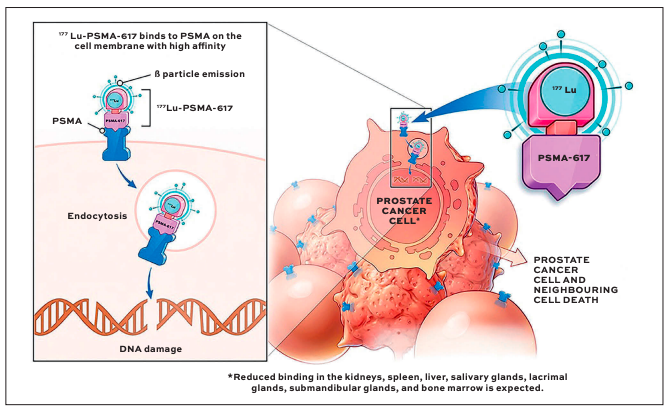
The products fall under the umbrella of radiopharmaceuticals. Lutetium-177 (Lu-177) peptide receptor radionuclide therapy (PRRT) has been shown to be effective in prolonging progression free survival and survival in metastatic NETs, and Lu-177 prostate-specific membrane antigen (PSMA)-617 has been shown to prolong survival in patients with metastatic castration-resistant prostate carcinoma who have failed other lines of treatment.
The combination of a diagnostic PET/CT radiopharmaceutical and an RLT pair (similar chemical structure) is often referred to as theranostic treatment.
When prostate cancer recurs, there are effectively four lines of treatment only: Conventional hormones, advanced hormones, chemotherapy, and RLT. So far in 2026, Ireland and the UK have been the only countries in the Western World that do not cover RLT for prostate cancer, although the National Centre for Pharmacoeconomics (NCPE)/HSE did approve Lu-177 PRRT for NET in 2023, many years after most other countries. The NCPE has recommended not covering Lu-177 PSMA RLT for prostate cancer in Ireland. Outside of the economic issues, which are debatable, the recommendation is contrary to most expert opinion internationally. This was the subject of a letter sent to the HSE last year by 40 Irish expert clinicians who work with patients with prostate cancer.
As a result of the absence of specialty development of radiopharmacy in Ireland, there is no alternative option and, therefore, patients do not get access to RLT for prostate cancer, outside of a self-paying, non-reimbursed environment. In the US, a large number of patients have switched from getting chemotherapy for metastatic prostate cancer to getting RLT and therapy initially, due to its greatly reduced side effect profile compared to chemotherapy. In 2024, over 10,000 patients received Lu-177 vipivotide tetraxetan (Pluvicto) in the US. RLT for prostate cancer is standard practice in most European countries. A large number of new radioligand therapies are currently under development, yet the Irish health service remains poorly prepared.
To more widely implement RLT in Ireland would require limited structural changes to meet radiation safety measures. Most of these measures would be at low cost.
There is a complexity involved in managing these patients, as they are radioactive for a period of up to seven days post treatment, with most of the radioactivity excreted within the first two days through the renal tract. This provides a significant challenge when dealing with patients with a higher Eastern Cooperative Oncology Group (ECOG) status who may not be able to mobilise, leading to low-level radiation exposure to carers and sometimes hospital staff. A cohort of patients will have a substantial response to these treatments, with a subsequent improvement in quality of life.
In our own experience, we have had one patient survive three years after having failed all lines of prostate cancer treatment. In general, the response rate to Lu-177 PSMA is 50 per cent, with a 15 per cent super-responder rate. Super-responders may get more prolonged survival over months to years. Newer treatments, some involving alpha particles and some involving Auger electron-emitting radiopharmaceuticals, may have higher response rates, eg, terbium-161 PSMA used in the VIOLET trial had significantly higher response rates than Lu-177 PSMA in a phase 1 investigator-led trial.
Ireland has lagged significantly behind European countries in the development of radionuclide therapies. While this mainly concerns appropriate resourcing, it also has its roots in the lack of development of the nuclear medicine specialty. For the assessment of patient suitability as well as calculation of distribution of the radioisotope and therefore therapeutic doses, radionuclide therapies require close cooperation between the medical team, medical physicists and radiographers.
The lack of support for providing services in Ireland has led to patients travelling abroad for many years, for example, to Sweden for Lu-177 peptide radionuclide therapy (PRRT) for metastatic NET. This was unsatisfactory, as some patients were not psychologically prepared to travel and others were too unwell to travel abroad. It also placed a very significant financial burden on the patient as treatments, which may have multiple courses, necessitate numerous visits to centres abroad, including for follow-up clinical review. For NETs, this problem was largely solved by the HSE agreeing to cover Lu-177 PRRT (Lutathera) in 2021, with the first treatment administered in 2023. The commercial product was approved by the European Medicines Agency in 2015.
More serious than delays in HSE coverage of radiopharmaceutical therapies is the resistance to the overall development of RLT in Ireland, which affects research opportunities. The resistance to prostate cancer RLT in Ireland is regarded very negatively by industry and this is leading to advanced procedures not being promoted in Ireland. If we cannot demonstrate flexibility, pharmaceutical companies will look elsewhere to provide these products or run trials. Very large markets, like the US, can give them adequate returns and industry has no requirement to bring these to Ireland at any stage.
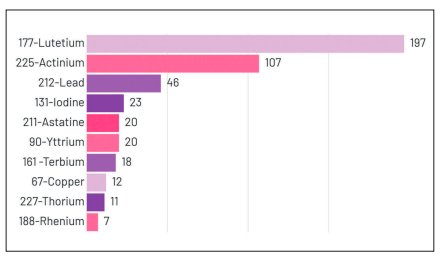
There are currently 350 active trials in the area of RLT. These involve a wide range of products, none of which are available in Ireland, but which could be available in the future. This needs a proactive approach from the HSE, the NCCP, Cancer Trials Ireland (CTI) and Irish pharmacists to decide to work with nuclear medicine specialists to move the area forward.
Radiation emissions used in radiopharmaceuticals are broadly divided into beta particles, Auger electrons, and alpha particles. Lu-177 is a beta particle emitter which acts intracellularly, in conjunction with oxygen radicals, to cause nucleus DNA damage. Beta particles travel a longer distance in tissue than some other radiation types and therefore can cause a ‘cross fire’, which is more effective at treating larger tumours or tumours with heterogenous tracer receptor distributions. Alpha particle emitters deposit much larger amounts of radiation at a short range, causing irreversible tumour DNA damage, without the need for oxygen radicals. This means that they are effective against hypoxic tumours, which are resistant to external beam and some beta particle treatments. Actinium-225, for example, can deposit 650 times dose-for-dose the amount of radiation deposited by Lu-177. However, because of shorter radiation path length, these treatments may be less effective in larger or heterogenous tumours. A combination of alpha and beta therapies has been examined in research trials, with effective outcomes. Alpha emission leads to the development of ‘daughter’ products, which may have different chemical binding properties and emissions compared to the baseline radioisotope.
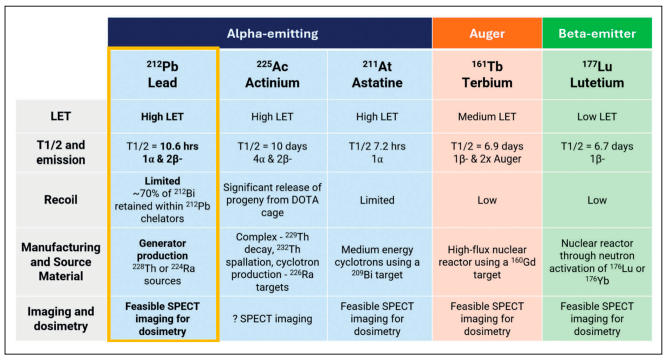
Auger electron emission (terbium-161) combines with beta emission from the same isotope to give a halfway efficacy between alpha and beta particles. This has advantages in terms of lower toxicity and the lower cost of terbium-161. Terbium-161 PSMA imaging and therapy (I&T), which is a generic product, has shown very promising results in trials.
It may be possible to deliver these treatments under industry-, investigator/HRB- or European Union (EU)-sponsored trials. Again, the lack of engagement and progress in this area in Ireland will make it a challenge to deliver these products to Irish patients.
Alpha particles have the advantage of having less external radiation emission from the patient and being, in general, easier to administer, which would go a long way towards improving access to these treatments, especially for patients with unfavourable ECOG status.
Radiation safety
Recent EU legislation requires that dosimetry be performed on patients having RLT and this will become the standard of care. This requires complex calculations (often done on SPECT/CT scans) to check the distribution of an isotope and also to ensure that there is no atypical distribution of dose. This can be used to calculate the therapy dose given to patients. This is a nuclear medicine procedure, supported by medical physics and radiography colleagues.
Worldwide, RLT procedures are performed mainly by nuclear medicine specialists (95%). In this country, these clinicians are also usually radiologists. The importance of this is that the development of these procedures is through nuclear medicine, not radiation oncology. The core competencies of the therapies are nuclear medicine-based and continuing medical education for the procedures is through nuclear medicine meetings. However, the involvement of radiation oncology colleagues in delivering these treatments and helping in clinical management will have a big impact and lead to a more robust patient service. Therefore, combined care is likely to lead to the best outcomes.
Radiopharmacy
A national HSE radiopharmacy unit would facilitate research, in cooperation with the third level sector, and would give the potential for early patient access to therapeutic radioisotopes that are under development, and at substantially lower costs (30-40 per cent). This would also, potentially, give more early access to associated trials. This has been the model in many European teaching hospitals for decades. Despite being a European leader in pharmaceutical manufacturing, Ireland is unrepresented in radiopharmaceutical production and development. This means that Irish universities are not researching in this area.
More importantly, Irish patients are consistently the last in Europe to benefit from therapeutic radiopharmaceuticals, which could be manufactured or reconstituted locally. There is a great opportunity for the technical university sector to engage in a niche area and to develop their own specialist expertise.
Denmark, Finland, Netherlands, Sweden
TABLE 5: Coverage of RLT for prostate cancer in Europe
Leadership
Medical physicists have already played a major role in the development of radioligand therapies in Ireland, in addition to regulation through the Health Information and Quality Authority (HIQA). This starts with radiation safety measures and continues with dosimetry imaging and dealing with radioactive waste. Radiographers perform diagnostic PET/CT studies and post-therapy theranostic imaging.
There is great potential for hospital-based pharmacists to play a role in radiopharmacy development in Ireland. So far, they have not been active in this role. Irish pharmacists have been the main drivers in NCPE decisions and in regulation of the sole commercial radiopharmacy through the HPRA, but they have not sought out their own knowledge base specific to radioisotope-based products. The regulatory and economic roles are important, but the more difficult, scientifically complex and professionally rewarding role is to innovate, take responsibility, and bring new treatments to Irish patients. Their involvement in this area would be welcomed.
For the first time, patient organisations are beginning to understand the extent to which Irish cancer patients are being disadvantaged, compared to European peers. They are engaging more with European cancer patients and can see what developments are in the pipeline. A new generation of cancer organisations has decided to ensure their rights to access advanced therapies. Many patients with advanced cancer are too unwell to lobby for a chance at a better outcome, so they need others to do this on their behalf.
Novel uses of radioisotopes
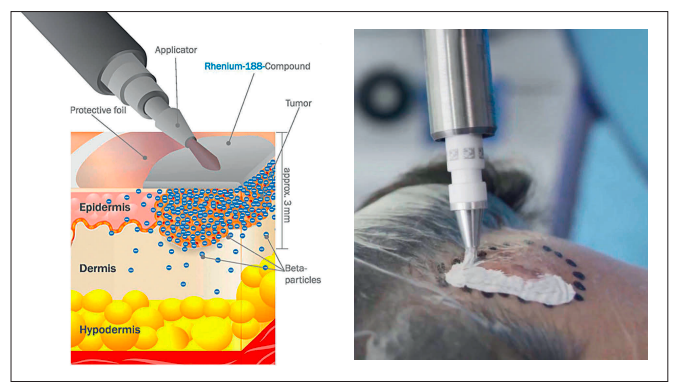
Skin treatments using rhenium-188 isotope pastes are a potential alternative to surgery in treating basal cell and some squamous cell carcinomas in elderly patients. This is a service currently not offered in Ireland, which could be made available with the appointment of additional nuclear medicine specialists.
The future
Progress is slow. The HSE has started the process of examining the role of the NCPE in approving coverage of new medications, including RLT. A robust Lu-177 PRRT RLT service is now available to Irish patients, but with incomplete coverage of rare indications. Prostate cancer RLT will have to occur through trials, but these are often only open to patients at an earlier stage of disease. Investigator-led trials are an option, but the HSE and CTI need to support this, with doctors leading this on top of an already full caseload.
In summary – some progress, but a lot of work to be done.