







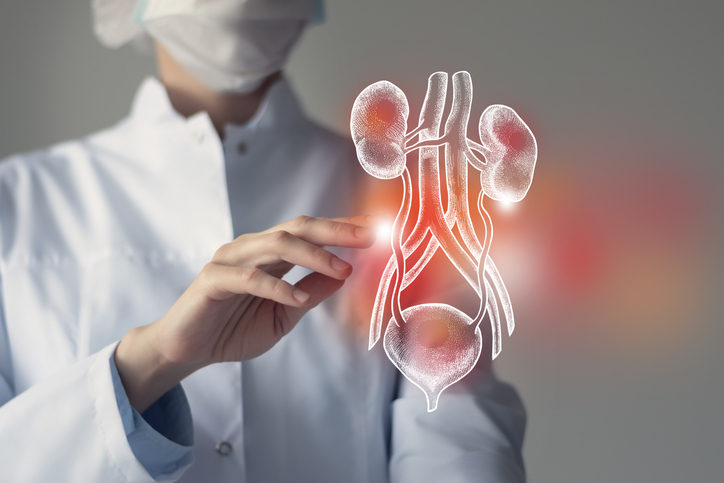
Welcome to the latest annual edition of Update Nephrology and Urology. As both specialties continue to evolve, their commitment to minimally invasive treatment, person-centred medicine, and improved quality of life are redefining management strategies for a range of historically burdensome disorders and diseases – from chronic kidney disease (CKD) and IgA nephropathy (IgAN) to prostate cancer and lower urinary tract symptoms (LUTS), to name but a few.
After decades of under-representation in clinical trials, limited inclusion in European health initiatives, and few therapeutic advances, nephrology is experiencing what Dr Sam Kant, Irish Nephrology Society (INS) Secretary, described as a “massive renaissance” at this year’s INS Annual Meeting. This transformation is reflected in our conference coverage, which highlights areas including advances in anti-neutrophil cytoplasm antibodies-associated vasculitis, the management of highly sensitised transplant patients, obesity and CKD, and new insights into acute kidney injury.
Highlights from the European Association of Urology 2026 Annual Congress are also featured in this issue of Update. Held in London, the congress showcased the latest research and innovations in patient care, spanning pre-operative virtual reality, mobile health applications, and PSMA PET/CT imaging. Key talks included the role of early investigation in acute haematuria, approaches to addressing the psychological aspects of premature ejaculation, and comparisons between breast and prostate cancer screening strategies.
At national level developments, this edition of Update introduces the Irish Prostate Cancer Outcomes Research Project and its potential to transform prostate cancer care in Ireland and beyond. Mr David Galvin, Principal Investigator, and Wasfa Farooq outline the project’s aims and objectives, as well as the significant milestones achieved to date.
Also featured are updates from the KEYNOTE trials, which are reshaping the treatment landscape for muscle-invasive bladder cancer. The findings demonstrate that the first non-platinum perioperative regimen in more than two decades – enfortumab vedotin combined with the PD-1 inhibitor pembrolizumab – significantly improves outcomes for patients.
Also in urology-related content is a clinical review on the management of urinary tract infections by pharmacist, Eamonn Brady, and a comprehensive CPD module on the contemporary management of male LUTS. Mr Donnacha Hogan and Prof Niall F Davis provide an engaging overview of the underlying pathophysiology, surgical interventions, and medical management of these common, and often bothersome, symptoms.
Nephrology content also features clinically-focused articles by a range of distinguished experts from across Ireland, including an informative analysis of pregnancy-related acute kidney injury (AKI) and its global burden by Dr Sorcha O’Brien, Dr Susan McAnallen, and Dr Claire Kennedy. They highlight the striking disparities in causes and outcomes of pregnancy-related AKI between women living in high- and middle-income countries versus those in low-income regions.
In a separate article, Dr Kanza Ashraf, Dr Haider Ali, and Dr Caitriona McEvoy discuss the ‘golden era’ of IgAN and the updated 2025 KDIGO clinical guidelines for managing this historically challenging condition. They describe the advances in understanding of disease pathophysiology that have translated into targeted, disease-modifying therapies, and a greater focus on early intervention.
Also in this issue, Dr Ikhwan Marion and Dr Vladimir Stoyanov examine the challenges of clinical decision-making in CKD among older adults. Their article explores key issues including renal ageing, overdiagnosis, and frailty, while offering practical guidance and a conceptual model of geriatric CKD.
Finally, as hypertension remains a leading driver of kidney disease, this edition also explores the latest developments in blood pressure management. Consultant Cardiologists Prof Ali Aldujeli and Dr Neasa Starr examine the controversy surrounding, and the ‘qualified comeback’ of, renal denervation in the management of resistant hypertension. Additionally, Dr Odharna Ní Dhomhnalláin and Dr Cormac Kennedy provide a comprehensive review of the most recent European Society of Cardiology hypertension guidelines, outlining key recommendations for clinical practice and their evidence-base.
We hope you enjoy another packed edition of Update Nephrology and Urology. A huge thank you to all our contributors for sharing their knowledge and expertise to promote clinical excellence and optimal patient outcomes.
If you would like to comment or write an article for Update, please contact denise@greenx.ie.







Leave a Reply
You must be logged in to post a comment.