Reference: 2026 | Issue 7 | Vol 12 | Page 53
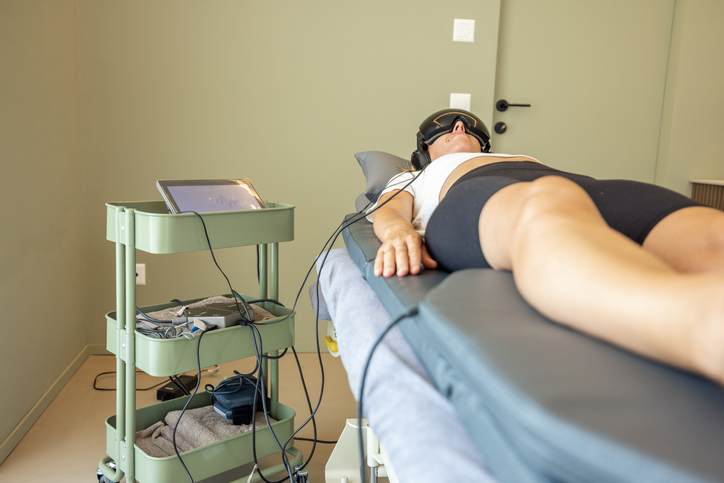
Novel research presented at the 2026 European Association of Urology Congress suggested that using virtual reality (VR) to explain what to expect ahead of a medical procedure could help patients better understand their treatment and reduce anxiety. The new research tested using VR as part of the consent process for shockwave lithotripsy.
During the VR experience, patients stood in a virtual operating room and watched a 3D demonstration of the procedure that zoomed into the kidneys to show the shockwaves and how they affect the kidney stones. Patients could also move around the room to see the patient’s anatomy and the surgical instruments from different angles. The animation highlighted key risks and benefits.
The researchers used questionnaires to compare how patients felt before and after taking part in the VR experience. After VR, patients said they better understood what to expect from shockwave lithotripsy. They also felt less anxious about undergoing the procedure. The impact was particularly pronounced in the oldest group of patients, aged 65 and above. There was no difference between male and female participants.
A total of 150 people aged 22 to 80 took part in the study at University Hospital Southampton, UK, as part of their consent process ahead of planned lithotripsy. The study was led by Consultant Urological Surgeons Prof Bhaskar Somani and Dr Amelia Pietropaolo. The technology was developed by Phoebe Reynolds, Director of UK-based medical technology company Surgassists. As there are known links between anxiety, understanding, and pain tolerance, the researchers are now looking to further explore whether VR consenting could also help to reduce pain for patients.
Solomon Bracey, a medical student at the University of Southampton, UK, presented the research at EAU26. He said: “There is currently a mismatch between the complexity of information provided to patients and the level which most people can comprehend. This risks people consenting to procedures they don’t fully understand. VR has been shown to improve learning and knowledge retention, and our study suggests it could be used to help people to make more fully informed decisions about their health. We were also encouraged by what we saw in pain questionnaires, which gives us an important question to explore in future research.”