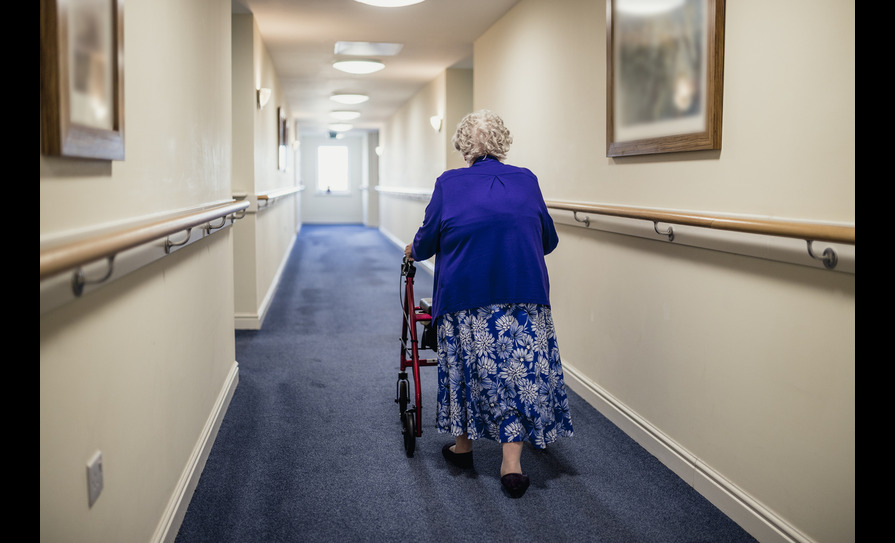
The number of long-term residential care (LTRC) beds and home support hours provided to the older population will need to increase by at least 60 per cent by 2040, according to a new Economic and Social Research Institute (ESRI) report.
Even at the lower end of the projections, the report highlights that “substantial increases” in LTRC beds and home support hours for older people will be required.
The research, funded by the Department of Health, considers a range of scenarios based on varying assumptions about population growth and ageing, the effects of healthy ageing and policy choices.
The projected rise in LTRC and home support requirements is largely driven by the increase in size of the older population.
In 2022, there were an estimated combined 33,324 short stay and long stay beds in LTRC homes. Of these one in eight beds in residential care homes were used for short-term care, such as step-down care following discharge from hospital and rehabilitative care. A further seven in eight beds in residential care homes were for long stay care, with the majority of these beds used by residents funded through the Nursing Home Support Scheme (commonly known as Fair Deal).
According to the new report, short-stay bed requirements are projected to grow from 3,745 beds in 2022, to between 6,430 to 7,265 beds by 2040, growth of between 72 to 94 per cent. Long-stay bed requirements are projected to grow from 29,579 beds in 2022, to between 47,590 to 53,270 beds by 2040, growth of between 61 to 80 per cent.
“Ireland has experienced tremendous improvements in life expectancy in recent decades, driven mainly by reductions in mortality at older ages,” said Dr Brendan Walsh, Senior Research Officer at the ESRI and lead author of the report.
“This means there is, and will be a much larger population at older ages who require long-term care services to support them at home, or within residential facilities. Therefore, plans and policies are needed for long-term care to ensure the health system is in a position to meet the increasing care needs of the older population. Our findings provide policymakers with an important evidence base to help develop these plans and policies.”
Minister for Health Jennifer Carroll MacNeill and Minister for Older People and Housing Kieran O’Donnell, “welcomed” the report.
“I thank the ESRI for this report…it will help us plan better and be better prepared to respond to the challenges we face in meeting the needs of our growing and ageing population,” said Minister Carroll MacNeill.
“The 2025 Programme for Government promises to build more public nursing home beds, create a homecare scheme to help people stay in their homes longer, and increase home care hours.
“We are already making progress in increasing both residential care capacity and home support hours for our older population. This is shown by the €4 million allocated in Budget 2025 to staff and open 615 new community beds. The Department of Health and the HSE are also working on a new long-term residential care additional capacity plan, to be published in 2025.”