







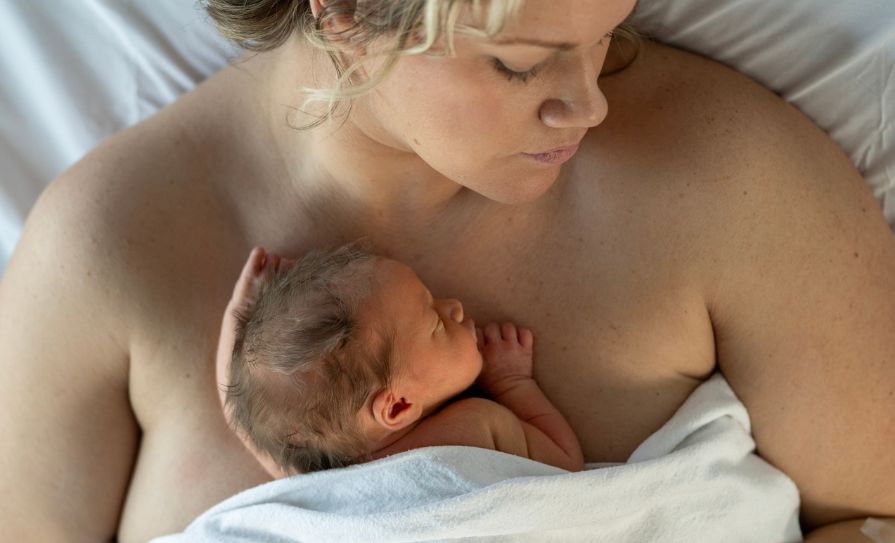
The HSE emphasised the benefits of safe skin-to-skin contact during National Breastfeeding Week
The practice of placing a baby directly on their mother’s chest is an important moment immediately after birth. Skin-to-skin contact between mother and baby, or kangaroo care, is associated with multiple benefits, such as helping the newborn to adjust to the outside world and stimulating brain development. Research shows that the more skin-to-skin contact an infant experiences during their first year of life, the better their overall physical and mental health outcomes, including into adulthood.
Skin-to-skin is important for all babies, whether breastfed, bottle fed, or a mix of both. From birth and beyond, the practice also boosts the growth of a healthy infant microbiome by facilitating the transfer of the mother’s microbes to the baby’s skin, gut, and oral cavity. Studies have shown that early skin-to-skin contact is particularly beneficial for premature babies.
According to UNICEF, research has shown that the general benefits of skin-to-skin contact include that it:
- Helps infants adapt outside the womb
- Stimulates digestion and an interest in feeding
- Stimulates the release of hormones to support breastfeeding and mothering
- Calms and relaxes both mother and baby
- Regulates the infant’s temperature, heart rate, and breathing,
- Enables development of a healthy microbiome and subsequently improved immunity.
Reported benefits for babies in the neonatal unit include that it:
- Improves oxygen saturation
- Reduces cortisol levels, particularly following painful procedures
- Encourages pre-feeding behaviour
- Assists with growth and development
- May reduce hospital stay
- Improves milk volume if the mother expresses following a period of skin-to-skin contact, with the expressed milk containing the most up-to-date antibodies.
The HSE emphasised the benefits of safe skin-to-skin contact during this year’s National Breastfeeding Week, which took place from October 1-7. This year’s theme was ‘Hold me close: The power of skin-to-skin contact’.
According to the latest HSE data, 89 per cent of mothers and babies had the opportunity to have skin-to-skin contact immediately after birth. All midwives are trained in supporting safe skin-to-skin contact. It is covered in antenatal classes for parents-to-be and the HSE’s mychild.ie website includes information on how to do it safely, including a video.
Breastfeeding rates improving
Breastfeeding rates continue to increase in Ireland after notably low figures in recent years. Data indicates a rise from 60.3 per cent in 2023 to 61.9 per cent in 2024 at the first public health nurse (PHN) visit, and from 42 per cent in 2023 to 44 per cent in 2024 at the three-month PHN check.
The HSE, in partnership with the National Perinatal Epidemiology Centre (NPEC), is also launching a new infant feeding survey for parents to share feedback on their experiences of feeding support from maternity and community healthcare professionals during pregnancy and after birth.
Clare Kennedy, HSE Baby Friendly Initiative Lead, said: “We put the mother’s voice at the centre of developing care and services for infant feeding. This survey will be available online and will be used for local and national service improvement and planning.”
Skilled breastfeeding supports are available in all maternity units and hospitals and through local health services. Parents or parents-to-be can ask questions by email or live chat through the ‘Ask our breastfeeding expert’ service on mychild.ie.
Over the last year, 2,250 questions have been answered online by HSE experts. Most common queries this year were about expressing breast milk, sore nipples, low milk production, phasing out breastfeeding, and breastfeeding support groups.
There is now a total of 225 free breastfeeding groups listed on mychild.ie. Details of local breastfeeding support groups and ‘Ask our breastfeeding expert’ support service are available on mychild.ie/breastfeeding, as well as practical advice across a wide range of breastfeeding and other pregnancy, parenting, and child health topics.







Leave a Reply
You must be logged in to post a comment.