








Despite the growing recognition of gambling as a serious public health issue, doctors believe not enough is being done to address the problem. Niamh Cahill reports
At the end of 2024, The Lancet Public Health Commission on Gambling called for stronger policy and regulatory controls to tackle the issue of gambling and gambling addiction, which it described as a serious public health concern.
The Commission said the harms to health and wellbeing that result from gambling were more substantial than previously understood.
These extended beyond gambling disorder to include loss of employment, broken relationships, health effects, and crime-related impacts. Gambling can heighten the risk of suicidality and domestic violence, according to the Commission.
“Research evidence and firsthand accounts from individuals affected by gambling corroborate the association between gambling and these many and various detrimental effects,” it stated.
The Commission also noted how the evolution of the gambling industry, which was rapidly growing and increasingly digital, was at a crucial juncture.
“Decisive action now can prevent or mitigate widespread harm to population health and wellbeing in the future,” according to the Commission.
Decisive action now can prevent or mitigate widespread harm to population health and wellbeing in the future
“Thus far, globally, governments have paid too little attention to gambling harms and have not done enough to prevent or mitigate them.”
Due to the global nature of the industry, “international coordination on regulatory approaches will be necessary.”
CPME
More recently, the Standing Committee of European Doctors (CPME), a non-governmental organisation representing medical associations across Europe, stated that gambling was “a public health issue of urgent concern in Europe, causing addictive behaviour with devastating effects for some individuals and families”.
In March, the group published a document titled Policy on Gambling and Gaming. The document warned that the gambling industry “has experienced significant and continuing growth due to the rise of online gambling and increased legalisation”.
The CPME urged the World Health Organisation (WHO) to introduce a global public health day to raise awareness about gambling and gaming addiction.
It also called on policymakers to treat gambling as a growing and urgent public health issue that required immediate action.
Public health
The CPME document defines gambling as “risking money or something else of value on an event of uncertain outcome, with the possibility of gaining an increased return”.
Examples included betting, slot machines, casino games, lotteries, and bingo, which are available both in physical venues and online.
In terms of its effects, the document highlighted how gambling can lead to financial problems, relationship breakdown, family violence, stress, mental illness, and suicide.
“The harm can continue throughout one’s life and transmit intergenerationally.”
The document noted that the WHO estimates around 1.2 per cent of the world’s adult population has a gambling disorder.
“Studies show that while substance use among 15–16-year-old students in Europe continues its long-term decline, new behavioural and health risks are on the rise, particularly with online gaming and gambling, and notably among girls,” according to the CPME.
“Gambling is already common among adolescent boys. This is evident in sports betting, loot boxes in video games, and other reward systems that blur the line between playing and paying. Moreover, gambling shows up in social media feeds through algorithmic recommendations.”
The CPME document highlighted that the WHO’s International Statistical Classification of Diseases and Related Health Problems recognises gambling and gaming disorders “as health disorders and classifies them as such due to addictive behaviours”.
“People with gambling disorders have a higher suicide risk than the general population,” according to the document.
“The risk is comparable to patients with anxiety disorders, personality disorders, and depression. However, harm from gambling is experienced not just by those classified as suffering from a gambling disorder.”
According to data from the All-Island Institute of Public Health, for every one person with a gambling problem, six people are adversely affected.
The Institute has also said that Northern Ireland has the highest rate of problem gambling in the UK.
According to Economic and Social Research Institute (ESRI) research, published in October 2023, there are an estimated 130,000 adults with a gambling problem in Ireland. At the time, Prof Pete Lunn (PhD), Head of the ESRI’s Behavioural Research Unit, said the figure suggests that the issue “is much more widespread than we thought”.
Views of doctors
Despite the seriousness of the problem, many doctors believe little is being done to prevent, raise awareness of, and treat, gambling addiction.
Prof Ray Walley, Treasurer and board member of CPME, told the Medical Independent (MI) he was extremely concerned about the inaction surrounding problem gambling.

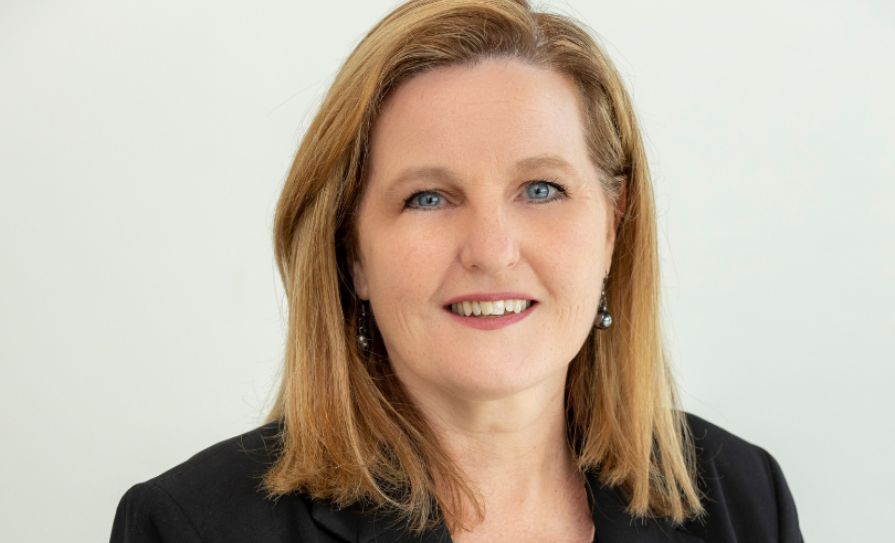
Prof Ray Walley
The Dublin GP said that even with the Lancet Commission’s call for a public health response to gambling over a year ago, there have been little to no serious moves to improve treatment and prevention, either in Ireland or internationally.
“This is manifesting in waiting rooms of practices, be it individuals with cross-addiction problems with gambling, alcohol, cannabis and other drugs, and manifesting as massive debt for families,” Prof Walley said.
“It’s getting no attention. This is throughout Europe and throughout the world.”
It’s getting no attention. This is throughout Europe and throughout the world
Prevention
According to IMO President Prof Matthew Sadlier, gambling addiction is not being treated as a priority by the Irish Government “in any way, shape, or form”.

Prof Matthew Sadlier
Prof Sadlier, who is Consultant Psychiatrist in the Mater Misericordiae University Hospital, Dublin, and member of the Health Professionals for Safer Screens Group, told MI that services for behavioural addictions, such as gambling, are practically non-existent in this country.
He argued that primary prevention around problem gambling should be a key focus of Government.
“We don’t think there’s enough being done, we don’t think there’s enough treatment available…. The best treatment for addiction is primary prevention, which is to reduce the person’s exposure,” Prof Sadlier said.
“…. Advertising is the big one.”
He said the IMO would like to see similar restrictions applied to gambling as those introduced to reduce smoking.
Prof Sadlier is particularly concerned about gambling advertising to children and the use of ‘gamification’ tactics in digital games. Gamification is generally described as the process of adding games or game-like elements to a task to encourage participation.
“Gamification and use of gambling strategies are actually found in childhood products, outside of specific gambling [products],” he explained.
“But they can lead to the development of gambling addictions. You mightn’t be gambling money, but you might be gambling for credit within a game or an award. That’s actually still gambling and it’s sensitising the reward pathway to this process.
“Your brain learns a habit, a behaviour, and it gets someone habituated to an activity… we know that if you get a reward in an unpredictable way, you are more likely to continue the behaviour to give you the reward.”
He described this as “anticipatory euphoria”, pointing out that anticipation is a stronger emotion than completion.
“For example, you’re more euphoric on Christmas Eve than you are on Christmas Day – and that’s how gambling works.”
In a motion at this year’s IMO AGM, Prof Walley called for greater action from the Department of Health on synthetic derivatives of banned substances.
The motion recommended the establishment of a unit led by specialists in public health, which would report to the Minister, to deal “with dynamic, significant threats to population health”.
Prof Walley told MI that such a unit could also help address other addictive behaviours, such as gambling.
“The most important thing is we need to be dynamic, and we need to be timely because we are dealing with industries which… only have one interest and it is making money,” Prof Walley stated.
He argued for a comprehensive clampdown on advertising, marketing, promotion, and sponsorship of gambling and gaming.
“We also need a harmonised and mandatory EU-wide age verification solution…. It is time to position gambling and gaming as commercial determinants of health where profit-driven strategies contribute to significant health harms.”
Lobbying
Gambling and betting companies regularly lobby public officials, with details of these activities published on lobbying.ie, the State’s official register of lobbying.
For example, according to the register, Boyle Sports sent emails to, and held meetings with, public officials earlier this year.
The meetings concerned “clarity and views” on measures in the Gambling Act, as well as the 2027 pre-Budget process.
The public officials lobbied between 1 January and 30 April 2026 included Senator Mary Fitzpatrick; Independent Deputy Gillian Toole; Fianna Fáil Deputy Shay Brennan; Minister of State at the Department of Agriculture, Food, and the Marine Noel Grealish; and Sinn Féin Deputy Pearse Doherty.
The register states that the intention of Boyle Sports “is to maintain and continue dialogue with public officials” by sharing information while discussing issues such as the Gambling Act, betting tax, the Budget, and National Lottery draws.
The lobbying register also includes disclosures from Flutter Entertainment PLC, the company which owns Paddy Power.
According to recent returns, the company held two meetings with public officials between 1 September and 31 December 2025.
A virtual meeting was held in which “Flutter representatives met with officials from the Gambling Regulatory Authority of Ireland [GRAI] to discuss licensing plans and understand the process for applying”.
A separate meeting was also held in the Department of Enterprise, Trade, and Employment “to discuss Flutter’s operations in Ireland and internationally”.
During the meeting, Flutter’s support for the recently established GRAI “was briefly discussed”.
The designated public officials lobbied during this period were: Ms Anne Marie Caulfield, GRAI CEO; Ms Laura Mannion, Special Advisor at the Department of Enterprise, Tourism, and Employment; and Minister for Enterprise, Tourism, and Employment Peter Burke.
Regulation
The GRAI is responsible for awareness raising and public education about gambling harms, alongside its wider regulatory and licensing functions.
It was established under the Gambling Regulation Act 2024 and became operational in March of last year.
The 2024 Act regulates gambling in-person and online and provides for the regulation of gambling advertising, websites, and apps.
A spokesperson for the GRAI told MI that protecting the public interest and society, in particular minors, from gambling harms is a core function of the Authority and that building an evidence-base is critical to achieving this.
“The GRAI is investing in research to inform our approach to regulation, policy development and to ensure the public has the most up to date, relevant, and accessible information relating to gambling harm and addiction,” the spokesperson said.
They listed a number of reports the Authority has produced, in partnership with the ESRI, around problem gambling and childhood gambling experiences.
“There is also further GRAI-commissioned research due to be released, conducted by the ESRI, relating to the consumption patterns in relation to in-person and online gambling in Ireland,” the spokesperson added.
“The Social Impact Fund, which will be funded by licensees, will support research and education initiatives to help consumers better protect themselves from gambling harm once established.”
The spokesperson said that Ireland will have the heaviest penalties in the European Union for allowing children to engage in gambling, once the Gambling Regulation Act 2024 has fully commenced.
Child protection is one of the key principles of the Act and will be a major focus of the GRAI’s work.
Once the legislation is fully commenced at the end of 2027, allowing a child to participate in a gambling activity will be an offence punishable by up to eight years’ imprisonment.
Licensed gambling operators will also be banned from sponsoring events, organisations, and activities aimed primarily at children.
Furthermore, the licensee/owner of a gambling website will be required to have a parental control programme displayed on their homepage and on each online platform where a gambling activity can be accessed.
Advertising that targets children and portrays gambling as attractive will be illegal and it will be an offence for gambling companies to target children with branded clothes and merchandise.
In addition, advertising that promotes gambling will not be permitted to be shown on TV or radio between the hours of 5.30am and 9.00pm.
When determining the suitability of a premises in which it is proposed to provide gambling activities, its vicinity to both schools and other premises that offer gambling activities “will be considered”, the spokesperson explained.
They highlighted that, in 2023, the Institute of Public Health published a study which found that 23 per cent of children aged 15–16 years had gambled for money online in the past 12 months.
“The report also found that online gambling was associated with both excessive gambling and problem gambling. It found that 16-year-olds who gamble online have 4.2-fold higher odds of excessive gambling.
“The accessibility of gambling apps together with high levels of marketing exposure through social media means that young people are at increased risk of having negative experiences from gambling.”
The GRAI has published advice for parents on how best to approach the topic of gambling and associated dangers with their children. This advice, which is available on its website, was developed in collaboration with the HSE Addiction Services. The GRAI plans to launch an awareness campaign later in the year highlighting the advice.
Support
According to a spokesperson for the Department of Health, the new National Drug Strategy, which was published in draft form earlier this year, “has a focus on treatment for gambling addiction.”
The spokesperson told MI that a key action in the Strategy, which covers the years 2026 to 2029, is to “provide tailored services for people with dual diagnosis led from a mental health perspective, and for those who experience homelessness, domestic or sexual violence, and gambling addiction”.
In 2023, the Department provided €1 million to the HSE to develop eight new bespoke services across the country to support people experiencing problem gambling and gaming.
“These services provide a number of interventions, including one-to-one counselling, family support, and peer and group support,” according to the spokesperson.
Information on these services is available on the Health Research Board’s interactive services map. However, the map illustrates that there are no publicly funded support services north of Dublin anywhere in the country. Services exist in the southern half of the country only.
The €1 million funding was also used to commission an evidence review on interventions, approaches, and guidelines for gambling and gaming addiction which was published in 2025.
“The HSE’s National Social Inclusion Office has worked with the Gambling Regulatory Authority of Ireland leading to the development of content around gambling and young people for concerned parents and guardians,” the spokesperson added.
Public Health Strategy
A HSE spokesperson said, currently, people experiencing problem gambling present across a range of services, including mental health and addiction services.
“In response, there is growing recognition of the need for more specialised care,” the spokesperson told MI.
They highlighted that the HSE Public Health Strategy 2025–2030, which was published last year, commits to addressing gambling as a public health problem. It will do this “by focusing on the underlying determinants of gambling behaviour and reducing the burden of gambling-related harms across Irish society”.
The spokesperson pointed out “a coordinated, cross-sectoral approach” is required “that addresses the broader social, environmental, and commercial factors driving harm”.
They emphasised the importance of early implementation and enforcement of advertising restrictions under the Gambling Regulation Act, including measures to limit gambling advertising and promotions on social media platforms.
“There is a growing body of evidence that exposure to gambling advertising leads to increased gambling behaviour and a higher rate of gambling harm,” according to the spokesperson.









Leave a Reply
You must be logged in to post a comment.