







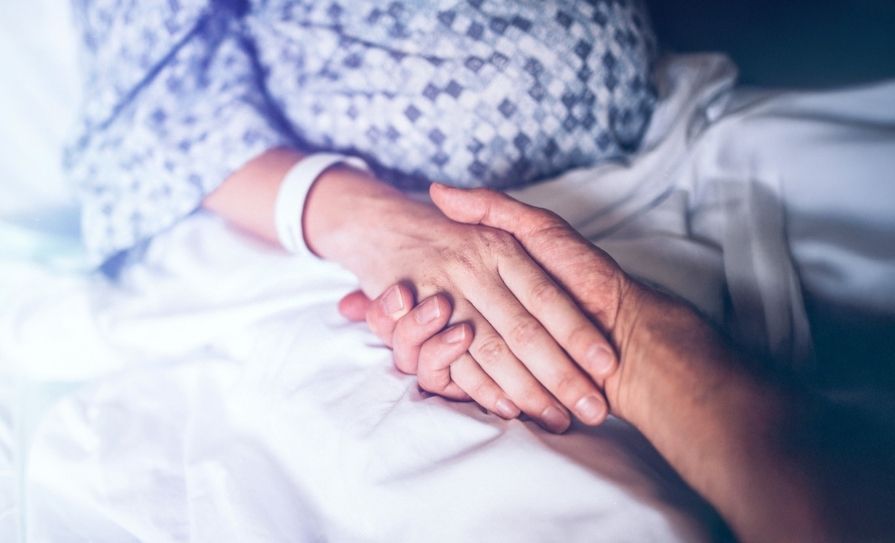
Niamh Cahill examines national plans to provide more comprehensive palliative care to patients at home in face of increasing demand
In 2001, Ireland became one of the first countries in the world to publish a national policy on
palliative care.
Since then, significant progress has been made to improve services, including the recruitment of additional consultants – with 59 approved posts now in place.
However, despite these advances, inequities in access and ongoing capacity challenges persist across both specialist and general palliative care services. Difficulties are particularly acute in the community, where specialist supports and services are unevenly spread across the country.
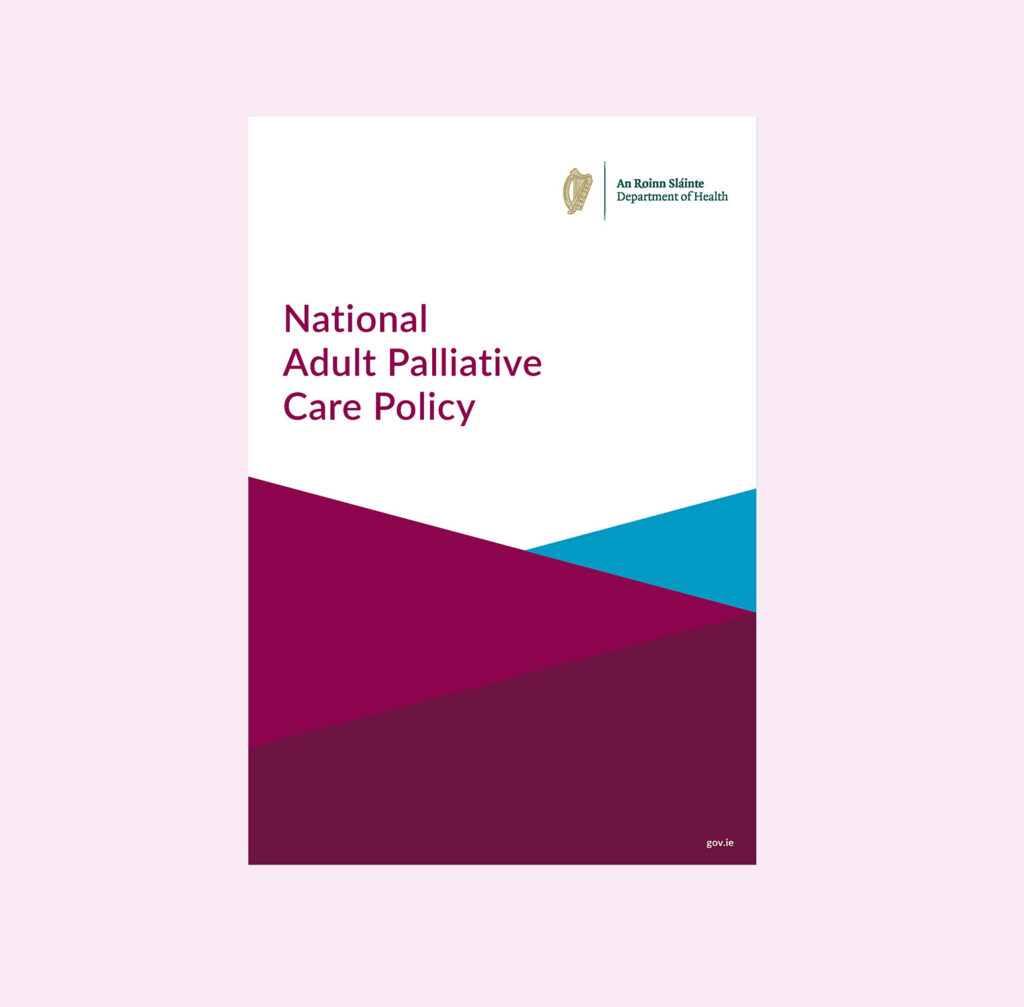
The latest National Adult Palliative Care Policy was launched in 2024. Data provided in the recently published National Adult Palliative Care Implementation Plan 2025-2026 outlines that 83 per cent of people would prefer to receive care at home at the end-of-life.
However, due to gaps that exist in service provision currently, only 22 per cent of people die at home. Around 40 per cent of people die in hospital, 27 per cent in a nursing home, and 11 per cent in a hospice.
Background
The national policy defines palliative care as “an interdisciplinary approach that improves quality-of-life for people with a life-limiting illness and those important to them through a focus on expert pain and symptom management, improved communication and goals-of-care discussions, and the provision of psychosocial, spiritual, and bereavement support”.
The policy has 25 recommendations and 104 actions. The HSE palliative care budget has increased from €73 million in 2015 to €183 million in 2025.
Despite the increase in funding, need is increasing. The number of projected deaths in Ireland in 2026 is 32,860. But this is expected to rise to 48,631 in 2046. The number of referrals to community palliative care services has risen from 10,000 in 2016 to 15,000 in 2024.
Among the policy’s recommendations was the requirement for out-of-hours (OOH) and emergency palliative care supports to be improved.
This is because, as the policy states, many people should have “the majority of [their] palliative care needs met by their GP and community services”.
While there are services available, the extent of supports varies from region to region, according to GPs.
In some areas urgent referrals for community palliative care are seen quickly. However, in other regions, waiting lists exist and in certain cases patients die before they are seen by community palliative care teams due to staff shortages.
“We have an amazing palliative care consultant who is absolutely overstretched in the sense that he is the only one for Cavan and Monaghan,” according to Monaghan-based GP Dr Illona Duffy.
“He provides telephone advice, at any stage day or night to GPs, but we are aware that there is a complete shortage of palliative services in the region. There are not enough nurses or consultants.
“The difficulty is we are trying to look after people in their homes and offer them the ability to die comfortably at home. But we just don’t have the resources there. GPs are trying to do their best – but the reality is we need more supports.”
Occasionally, the system has been pushed to breaking point.
“A couple of years ago,” Dr Duffy told the Medical Independent (MI), “services were so stretched that palliative services had to close their books in the lead-up to Christmas.”
Although such incidents have not recurred, waiting lists remain, and even patients with acute requirements can face delays in being seen.
“We’re very lucky in that our local service will always try to see patients quickly and the nurses are great and will often stay on working late to see someone when we have contacted them to say they are deteriorating fast. But … there should be full services, seven days a week.”
Dr Regina McQuillan, Consultant in Palliative Care, Beaumont Hospital, Dublin, informed MI that the specialist community palliative care team in her area includes clinical nurse specialists who work closely with GPs.
“We have some capacity for specialist physiotherapy and occupational therapy to see patients at home, which is very much focused on symptom management with progressive illnesses,”
Dr McQuillan said.
“It’s not the same as, and is not replacing, community physiotherapy and occupational therapy, which are very vital parts of the service. Social workers are another important part of the service and who see people at home,” Dr McQuillan said.
However, on the northside of Dublin the specialist palliative care service Dr McQuillan works with has no specialist dieticians, speech and language therapists, or psychologists, for inpatients or patients at home.
“Part of the challenge for people with palliative care needs is the need for basic care and basic support. Patients may end up coming into hospital because they need more basic care rather than specialist community palliative care input. They need more hands-on care, which can be provided at home. Although the HSE provides home care packages, sometimes people might need more than 21 hours a week which is usually [the maximum] the HSE can provide. That’s the thing that can be a challenge for people at home,” she said.
Patients may end up coming into hospital because they need more basic care rather than specialist community palliative care input
Another challenge, Dr McQuillan stated, are discussions on future care planning and what happens when a patient’s condition deteriorates.
“The wishes of a patient may get lost or miscommunicated between home and hospital, which can cause difficulties,” she said.
Out-of-hours
In recognition of the gaps that exist, the HSE is planning to improve the provision of OOH home-based specialist palliative care services.
In recent months, the HSE released a tender seeking information to inform the development of an enhanced model of care.
The HSE outlined plans to engage a provider to conduct a 12-month review, which will include engagement with stakeholders and providers of specialist palliative care and of primary care
by researchers.
Community-based palliative care services are fragmented, with some services provided in certain locations, but not in others, according to tender documents.
Access to specialist palliative care during OOH “is highly variable”, the HSE wrote.
“Some, but not all, specialist palliative care services in the Republic of Ireland provide telephone advice services out-of-hours. In addition, some services provide out-of-hours home visits or ‘face-to-face care’ and some provide admission to inpatient hospice care out-of-hours.”
The HSE admitted that people who are unable to access adequate palliative care “in a timely fashion” frequently have to attend an
emergency department.
This situation is at odds with the principles of Sláintecare, according to the tender.
The HSE outlined that there is evidence that access to specialist palliative care reduces symptom distress and improves the chances of dying at home.
The Executive added: “The strongest evidence for improved patient outcomes was linked to specialist palliative care services offering face-to-face care and 24/7 telephone advisory services out-of-hours. Outcomes studied included, hospital utilisation, place of death, and emergency department visits.”
Dr Duffy reiterated how GPs in the region encounter difficulties OOH when patients deteriorate and when prescriptions for medication need to be rewritten.
Unlike Northern Ireland, there is no 24/7 telephone advice service within palliative care services currently.
Dr Duffy pointed out that palliative care nurses are on call in the North during OOH if someone is ill.
“They are there to talk to and support the family and visit them if needed. We don’t have this in [the South],” she said.
“Here, if someone deteriorates rapidly and at weekends, there can be difficulties in how to manage that patient and to keep them comfortable.
“Supports on the ground and access to extra carers and nurses just isn’t there. For night nurses, the majority of funding is based on fundraising to provide those supports. A lot of the night nurses aren’t necessarily HSE nurses.
“A lot of funding comes from local palliative associations. There can be limits on how long a night nurse is available to a family with someone who is dying. What tends to happen is staff go over and above what they are meant to be doing and support patients.
“But there should be full palliative services in hospice and community settings for patients when and where they need it, but that isn’t necessarily happening.”
GP Dr Ray Walley said the service provided in north Dublin, where he is based, operated effectively.
However, he also highlighted challenges during OOH, in terms of continuity of care and difficulties accessing prescriptions in a timely manner.
Often, staff on teams work part-time and when a staff member goes off-shift there is no way of contacting them, he said.
Most specialist palliative care services are resourced to operate Monday to Friday, with some on-call services at weekends and OOH, but this differs across the country, Dr McQuillan said.
“If someone has an incident of pain during the night or an episode of incontinence, for example, and they need their bed changed there is no specialist support and there is no basic support,”
she explained.
“There is no public health nursing service overnight and the GP service overnight is under pressure, so there are limitations to the service out-of-hours.”
Plans and policy
The National Adult Palliative Care Implementation Plan 2025-2026 is “ambitious”, HSE CEO Mr Bernard Gloster wrote in the plan’s foreword.
The plan states that: “It is essential to appropriately staff the National Clinical Programme for Palliative Care in order that the many activities under its remit can be achieved.”
It adds that gaps in specialist palliative care staffing, for both adults and children, must be addressed to ensure equitable distribution of staffing levels across all health regions.
A sectoral register will be established to monitor workforce capacity, distribution, and flow in specialist palliative care services.
Also, an in-depth analysis of nursing night care services will be conducted to identify opportunities for improving productivity, as well as identifying specific capacity gaps, staffing needs, and other infrastructure requirements.
“The provision of an appropriately resourced, efficient night nursing service, which has the capacity to respond to increased demands, will enable choice whenever possible regarding place of care and place of death,” the document states.
These aspirations illustrate the depth of improvements which are required to create a fully comprehensive service in the community.
A spokesperson for the Department of Health told MI: “As part of Programme for Government, the Government will continue to invest in palliative care to achieve full national coverage of hospice and community services. This includes funding the National Adult Palliative Care Policy and developing a new national policy on palliative care for children, alongside increased funding to children’s hospice care.”
An evaluation of the 2009 children’s policy (Palliative Care for Children with Life-Limiting Conditions – A National Policy) is currently being commissioned, according to the Department.
The evaluation will review and assess the implementation of the policy, identify areas of progress, and highlight any gaps that should be addressed in future policy development. Based on their findings and the evidence gathered, the evaluation team will make recommendations on key priorities for the new policy.
The Department spokesperson also referred to the policy implementation plans.
“The Department of Health adult palliative care policy oversight committee has been established to support, monitor, and evaluate progress towards implementation. The committee will report to the Minister for Health, and its inaugural meeting will be held shortly.”
Staffing
According to a HSE spokesperson, there are currently 59 consultant posts approved in palliative medicine.
The consultants lead the community specialist palliative care teams who provide care in patients’ homes, residential care settings and other community locations.
Nationally, there are 286 nursing whole-time equivalent posts on community palliative care teams, including 238 clinical nurse specialists (CNSs).
“This is in line with existing workforce recommendations of one CNS for palliative care per 25,000 population,” according to the spokesperson.
They added, however, that the national policy recommends that workforce planning for nursing is updated to reflect changing demographics and trends in palliative care, including earlier access to specialist palliative care and an increase in non-cancer referrals.
There are 32 community palliative care teams in Ireland and referrals to the service are increasing.
In 2024, patient numbers in community specialist palliative care increased by 7.2 per cent when compared to 2023, rising from 14,227 to 15,253. The same year specialist palliative care teams treated 17,239 patients in hospital, 4,395 patients in hospices, and 15,253 patients in their own place of residence.
The HSE spokesperson stated that all referrals to community specialist palliative care should be triaged within one working day.
“Referrals are prioritised and triaged to one of three categories based on clinical need,” according to the spokesperson.
“Each category of referrals has an associated key performance indicator target. At a national level, services were on target for 2024 in relation to response times, but there is variance in performance across the country, particularly concerning category two and three patients.”
Category one patients, who require an appointment within two days, met the target of 90 per cent, with an average of 94 per cent seen on time. For category two patients, who should be seen within seven days, the national average was 91 per cent, against a target of 90 per cent. Category three patients, who require an appointment within 14 days, achieved an average of 86 per cent, exceeding the target of 80 per cent.
According to the spokesperson, the role of the specialist palliative care services is to treat patients with “complex symptoms of high intensity and manage pain and other symptoms through a holistic and multidisciplinary approach to care”.
“Specialist palliative care is provided in acute hospitals, specialist palliative care inpatient units (level 3 hospices), and in the community. Consultants in palliative medicine contractually work across the acute hospital, specialist palliative care inpatient units (hospices) and the community, with the support of a specialist palliative care team in
each setting.”
Charity
Voluntary organisations, such as the Irish Hospice Foundation (IHF), continue to provide valuable and much needed community support in local areas for palliative care patients.
Charitable groups provide funding for night nurse provision, offer bereavement support, and advocate for improvements in services.
In 2024, for example, the IHF provided 3,130 nights of nursing care and distributed 11,500 Thinking Ahead planning packs. Its bereavement support line managed 1,181 calls.
Regional services offer another vital avenue of care.
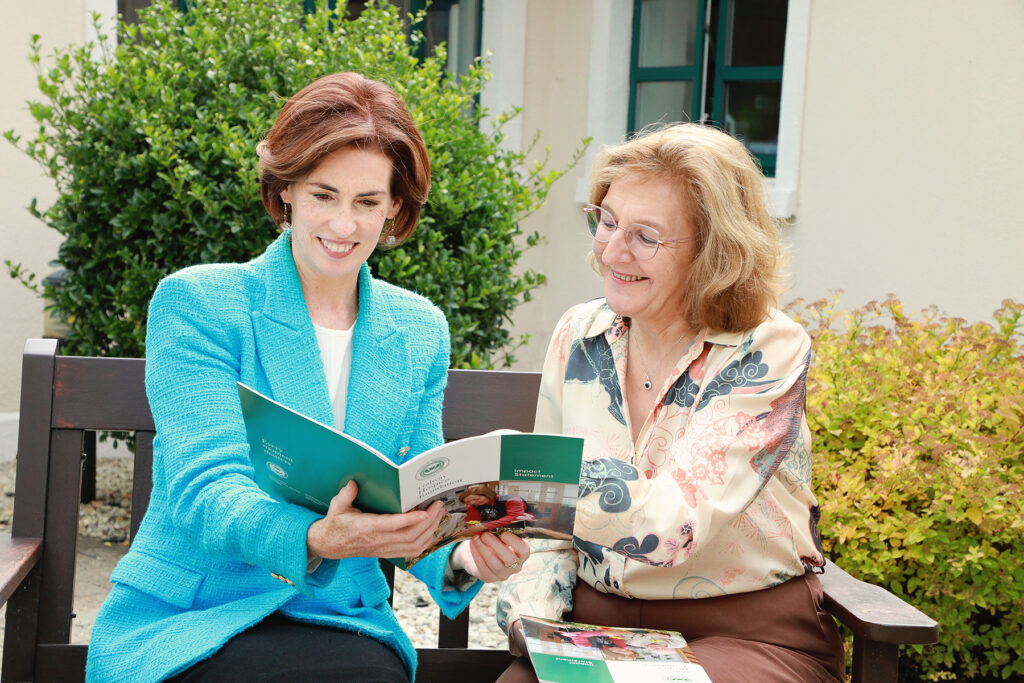
The Galway Hospice Foundation supported 1,344 patients and their families across Galway and Mayo in 2024, a 6 per cent increase on the previous year, according to its recently published Impact Statement – Annual Report 2024.
Serving a population of more than 400,000, Galway Hospice operates services from its units in Renmore and Castlebar and continues to expand access through inpatient, day care, and community programmes. A significant development during the year was the completion of the transition to section 38 status under the organisation’s agreement with the HSE and Department of Health, giving greater certainty around future State funding.
In 2024, 160 patients attended day care services – 82 in Galway, recording 576 attendances, and 78 in Mayo, recording 415. These services offer nursing, medical and therapy support, including physiotherapy, aromatherapy, occupational therapy, and art therapy, and often provide a first point of contact for people engaging with hospice care.
Inpatient activity increased notably, with occupancy up 10 per cent in Galway and 25 per cent in Mayo. The Galway unit, with 18 beds, cared for 340 patients during the year, while the 14-bed Mayo unit, in its fourth year of operation, supported 335. Forty-six per cent of Galway inpatients and 27 per cent in Mayo were discharged home or to another community setting, reflecting the focus on symptom management and rehabilitation that enables patients to return home where possible.
The community palliative care team supported 1,017 patients in their own homes and care facilities across Galway, receiving 921 referrals, making 21,916 patient calls, and carrying out 6,981 home visits. The team, which is available seven days a week, works with families, GPs, public health nurses, and hospital consultants to provide pain and symptom management along with practical and emotional support.
Eighty-seven per cent of patients under the team’s care died at home.
There has also been progress in services delivered in Kerry. Chair of the Kerry Hospice Foundation Mr Jack Shanahan told MI that the facility was expanded in 2017 with a new 15-bed inpatient unit. Five more beds are being added to the unit in another extension and will be completed in 2027.
Almost €15 million has been raised by local people for the hospice, which has three full-time consultants, Mr Shanahan said. The hospice is run by the HSE, but is fully funded through local charitable efforts.
However, other areas, such as county Monaghan where Dr Duffy practices, do not have a hospice.
Dr Duffy pointed to a continuing lack of investment.
“[Palliative care] has to be one of the most under-resourced areas of medicine and yet one would say it should be one of the most important,” Dr Duffy argued.
“Who advocates for these people? Nobody knows what it’s like until they are faced with it themselves or their family. Then you realise how important it is to have the supports and to have someone available to change medications and help at home with physical and emotional support to families.
“Often people fear dying and pain. But now with medications we should be able to control most of those symptoms to allow people to be comfortable at home and be with the people they want to be with. That will only happen if they have early access to palliative services and comprehensive palliative services. That includes nurses, access to a consultant, carers and night supports.”
Study highlights gaps in public awareness of palliative care supports
A recent study has found that while people on the island of Ireland rank among the most informed globally about end-of-life care, significant gaps remain in awareness of local supports and services.
The research, carried out by Queen’s University Belfast in collaboration with the All Ireland Institute of Hospice and Palliative Care, surveyed more than 400 people between November 2024 and March 2025 to measure levels of ‘death literacy’ – the understanding and skills needed to make informed choices about end-of-life and death care.
Overall, the island of Ireland recorded a death literacy score of 68.1 per cent, higher than the UK (47.6 per cent), Belgium (51.5 per cent), and Australia (61.2 per cent). Within the island, the Republic of Ireland scored 75.8 per cent, ahead of Northern Ireland at 67.5 per cent.
The lowest-scoring area was “support in my community” at 60.4 per cent, showing limited public awareness of local services for people with serious illnesses, their carers, and those who are bereaved.
Experience was found to be a key factor in knowledge levels. People living with a life-limiting illness or those who had cared for someone recorded higher scores (72.9 per cent) than those without such experience (53.8 per cent). Volunteering or working alongside people with life-limiting illnesses also increased awareness to 78 per cent.
Nearly one in three respondents (27.7 per cent) overestimated their knowledge, while more than
four in five (83.7 per cent) said they wanted to learn more about end-of-life care options.
Researchers said the findings highlight the need for better public information and engagement at community level to ensure people can access appropriate support when needed.
Commenting on the findings, Dr Feargal Twomey, Consultant in Palliative Medicine and HSE National Clinical Lead for Palliative Care, said: “Though this study reports high levels of ‘death literacy’ in Ireland, there is no guarantee that this necessarily translates to each person with a serious illness receiving the palliative care that they need.
“For many of the public and the staff working in our healthcare services, the term ‘palliative care’ is often only associated with death and dying, and not also with enabling people to live as well as they can for as long as possible. I encourage the public and all healthcare professionals to ask, talk, and speak up about palliative care so that our patients and their families can receive the right palliative care, in the right place, and at the right time, as soon as they need it.”









Leave a Reply
You must be logged in to post a comment.